 Mount Vernon
 Why West Mount Vernon Roofs Take More of a Beating Than People Expect
West Mount Vernon sits close enough to Skagit Bay and the Puget Sound corridor that homes here deal with a combination most inland Washington towns don't have to think about: salt-laden air moving in off the water, long stretches of driving rain pushed sideways by wind, and a moss season that barely lets up between October and May. None of that shows up as one dramatic event most years — it's the accumulation that gets people. Then a windstorm rolls through, knocks a branch loose, or lifts a row of shingles that were already weakened, and a slow problem turns into a fast one.
Storm damage repair in this part of Skagit County isn't just about patching what a single storm broke. It's about recognizing that the storm usually exposed something the climate had already been working on for months or years, and fixing both the sudden damage and the underlying weak point, not just the visible part.
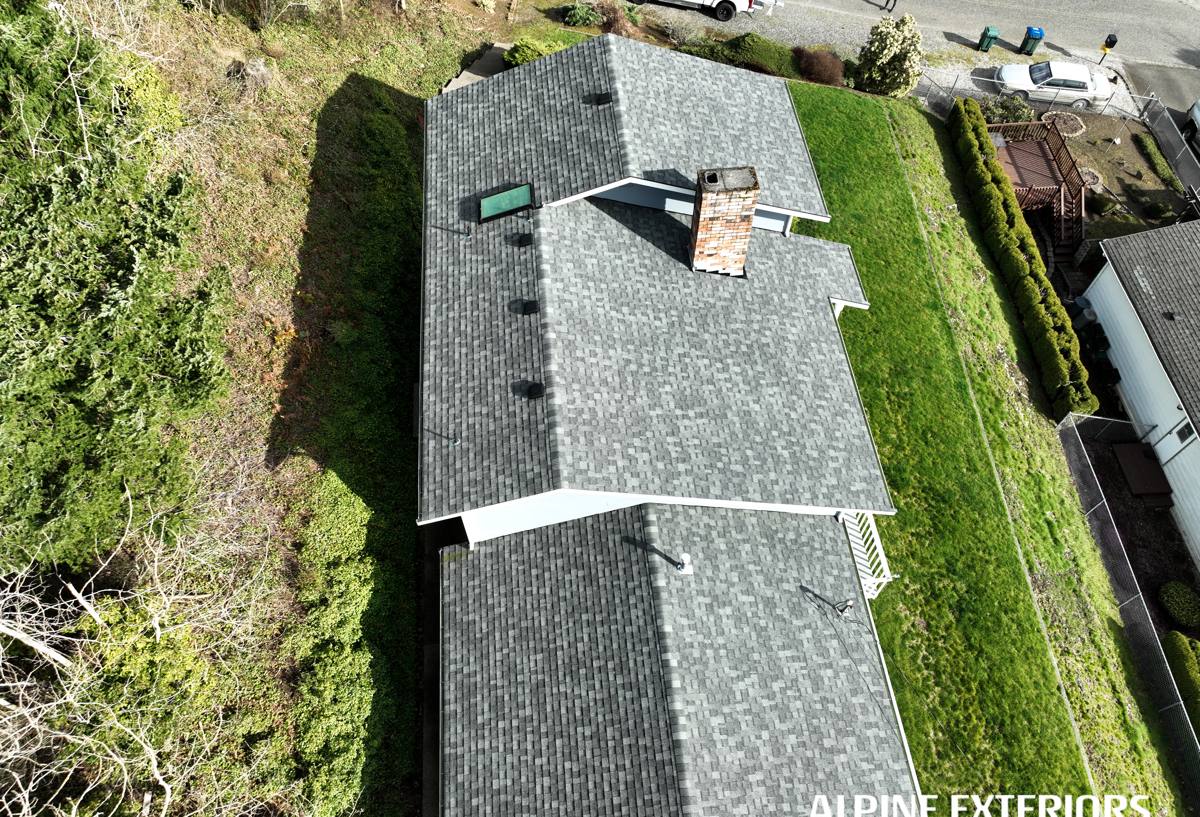
Signs Your Roof Took Storm Damage (Even If Nothing Looks Wrong From the Ground)
Most storm damage isn't obvious from the driveway. Wind can lift a shingle tab just enough to break its seal without tearing it off, and a slow leak can travel sideways along the roof deck for weeks before it ever shows up as a stain on your ceiling. That gap between when damage happens and when you notice it is exactly why a post-storm check matters, especially after the kind of wind-driven rain that comes through this area a few times most winters. After any significant wind or rain event, it's worth checking for:
- Granules collecting in gutters or at downspout outlets — a sign shingles are losing their protective surface
- Shingles that look curled, cracked, or slightly out of alignment compared to the rest of the roof
- Missing or bent flashing around chimneys, skylights, and vent pipes
- Soft or spongy spots when walking the roofline (if it's safe to check) or sagging visible from the ground
- New or growing water stains on interior ceilings, especially near exterior walls or after wind-driven rain
- Debris — branches, twigs, needles — packed into valleys or against the chimney, holding moisture against the roof
- Gutters pulling away from the fascia or overflowing during rain
If you notice any of these after a storm, it's worth having someone look at it before the next round of rain, not after.
What a Correct Storm Damage Repair Actually Involves
Matching materials, not just patching
A repair that doesn't match the existing shingle profile, color, and exposure will stand out, and a poor match can also create a weak seam where old and new material meet. We source shingles as close to the original as the manufacturer's current line allows, and where an exact match isn't possible, we'll tell you honestly rather than promise something we can't deliver.
Checking what's underneath
Wind and rain damage rarely stops at the shingle. Before closing anything back up, we check the roof deck for rot or soft spots, especially in valleys and around penetrations where water tends to pool during driving rain. Repairing shingles over a compromised deck just delays the real fix and adds to the eventual cost.
Flashing, fasteners, and sealant
A lot of storm leaks trace back to flashing, not shingles — around chimneys, skylights, dormers, and wall-to-roof transitions. Close to the water, salt air accelerates corrosion on exposed nail heads and older galvanized flashing faster than it would further inland, so we check metal condition as part of every repair, not just the shingle layer sitting on top of it.
The Slow Damage Between Storms: Moss and Salt Air
Skagit County's mild, wet climate is close to ideal for moss, and a roof that stays damp through a long moss season is a roof that's wetter, longer, than the shingles were designed for. Moss doesn't just sit on top — its root structure works into shingle granules and seams, lifting edges and holding water against the surface even after the rain has stopped. Left alone through a few wet seasons, that's enough to turn what should have been a simple repair into a full section replacement.
Salt air adds a second, quieter factor. It speeds up corrosion on fasteners, flashing, and gutter hardware. It's rarely the reason a roof fails outright, but it's often why the metal components fail years before the shingles around them do, which is why a proper storm inspection includes those parts and not just the field of the roof.
Ventilation and Moisture: The Part That's Easy to Miss
When we open up a section of roof after storm damage, we're also looking at how well the attic underneath is venting. A roof that can't breathe properly holds moisture from the inside as well as the outside, which speeds up deck rot and gives moss even more of a foothold from below. Blocked soffit vents, undersized ridge venting, or insulation packed against the roof deck are common in older homes and easy to overlook during a quick repair. Fixing the leak without addressing poor ventilation is a bit like bailing water without patching the hole. It won't necessarily fail again from the same storm, but the underlying moisture problem keeps working on the roof year-round.
Repair or Replace? How We Make That Call
Not every storm-damaged roof needs to come off. We look at the extent of the damage, the roof's age, and how much of the underlying material is still sound before recommending either option, and we'll show you what we found rather than just tell you.
| Factor | Points Toward Repair | Points Toward Replacement |
|---|---|---|
| Age of roof | Under 10-12 years, or recently replaced | Near or past expected shingle lifespan |
| Extent of damage | Isolated to one slope or section | Spread across multiple slopes or the whole roof |
| Deck condition | Solid, dry decking under the damaged area | Rot or soft spots found in more than one spot |
| Moss/algae history | Light, recently treated | Heavy, long-term growth with granule loss underneath |
| Material availability | Close match still manufactured | Discontinued profile or color, mismatch would be obvious |
| Insurance scope | Adjuster approves targeted repair | Adjuster or inspection supports full replacement |
When the honest answer is "repair," we repair. When the roof's condition means a repair would just be a temporary fix on borrowed time, we'll say that too, along with why, so you can weigh the cost of a repair now against a replacement later.
Our Storm Damage Repair Process
- Fast initial contact and, if needed, temporary weatherproofing — tarping or sealing an active leak so the damage doesn't spread while we schedule a full look.
- On-roof inspection — checking shingles, flashing, decking, gutters, and ventilation, not just the spot that's obviously damaged.
- Written estimate — a clear breakdown of what's damaged, what needs replacing, and what it will cost, before any work starts.
- Insurance coordination, if you're filing a claim — documentation and photos that match what an adjuster needs to see.
- Repair work — matched materials, corrected flashing, and attention to the deck underneath, not just a shingle swap.
- Cleanup and final walkthrough — debris cleared, gutters checked, and a chance for you to ask questions before we consider the job done.
Working With Your Insurance Company
Most wind and storm damage claims come down to documentation: clear photos of the damage, a written scope of what needs to be fixed, and an estimate that lines up with what an adjuster will actually see on the roof. We provide that documentation as a matter of course on storm repairs, and we're comfortable meeting an adjuster at the property to walk the damage together. We don't inflate scopes to pad a claim, and we don't shrink them to make a sale. The goal is an estimate that matches the real damage, because that's what holds up under review and what actually gets your roof fixed right.
Why It Matters That We Already Work in West Mount Vernon
A crew that already works this part of Skagit County has seen how the local combination of salt air, wind-driven rain, and a long moss season actually plays out on roofs here, season after season, not in a training manual but on real jobs. That matters when you're deciding whether a repair will hold or whether it's a stopgap, and it matters when timing repairs around the wettest months of the year so a temporary fix isn't left exposed through another round of storms. We're not driving in from out of the area to write a one-time estimate; we're planning to still be answering the phone in West Mount Vernon next storm season, which is part of why we stand behind the repairs we make now.
If your roof took a hit in the last storm, or you're just not sure whether that curled shingle or granule buildup in the gutter is worth worrying about, we're happy to take a look. Fill out the form below for a free, no-pressure estimate, and we'll tell you honestly what we find.