 Mount Vernon
 Big Lake's Exterior Challenge: Moisture That Doesn't Let Up
Big Lake sits in a pocket of Skagit County where water is never far away — the lake itself, the surrounding wetlands, and the tree canopy that shades much of the shoreline and the roads leading into it. That combination creates a microclimate that's noticeably damper and shadier than open farmland just a few miles north around Mount Vernon. Homes here spend more of the year under wet, filtered light than homes in town, and that has real consequences for whatever material is covering the walls.
Add in the broader Skagit County picture — marine air pushing in off the Salish Sea, long stretches of driving rain from fall through spring, and a moss season that can run eight or nine months out of twelve — and you've got an exterior environment that punishes anything porous, anything that traps water, or anything that depends on a paint film to stay sealed. We've worked on enough homes around Big Lake, Clear Lake, and the rest of the Mount Vernon service area to know which products hold up under those conditions and which ones just look good on the day they're installed.
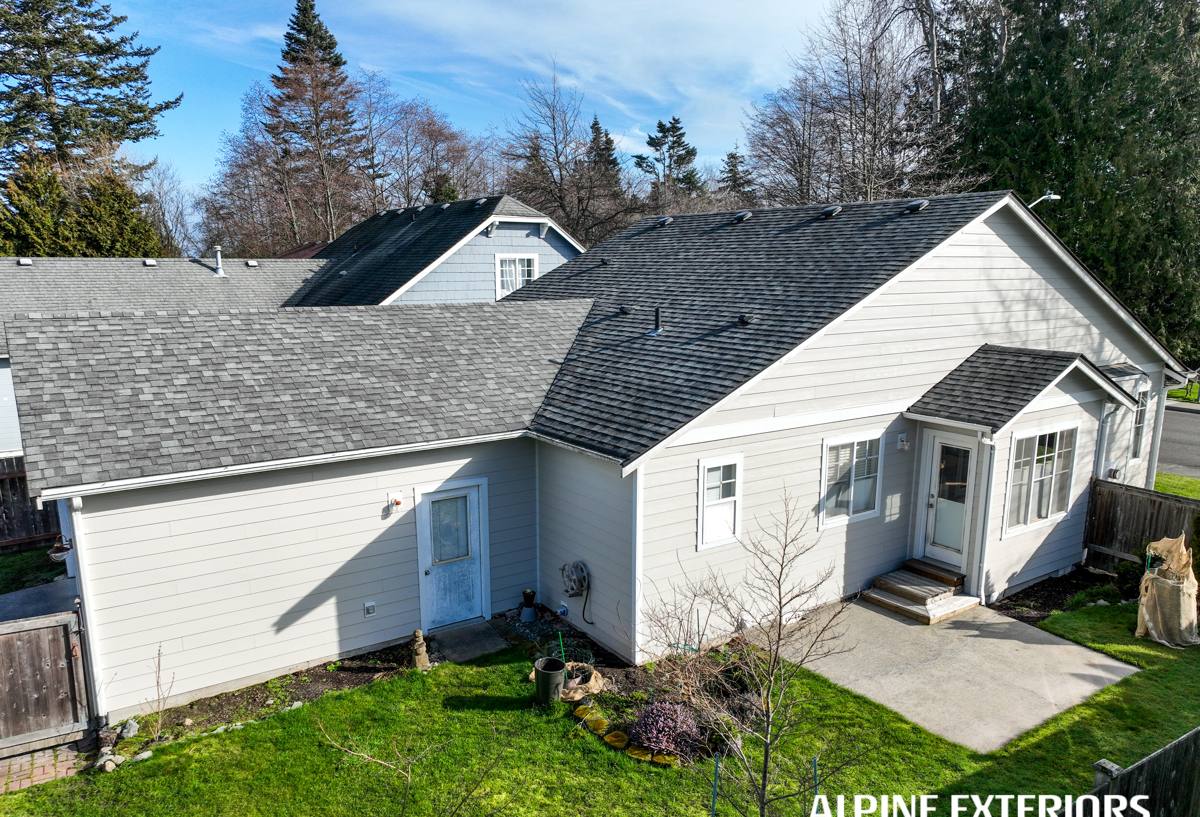
Why Lakeside and Tree-Covered Lots Are Harder on Siding
Shade Slows Drying Time
A wall that gets full sun after a rain dries out in a few hours. A wall shaded by tall firs or cedars near the lake can stay damp for days. That extended dampness is exactly what moss, algae, and mildew need to establish themselves, and it's exactly the condition that causes wood-based and wood-fiber siding products to swell, delaminate, or rot from the inside out over time.
Moss Isn't Just Cosmetic
Homeowners tend to think of moss as an appearance issue — something to pressure-wash off once a year. In reality, moss holds moisture directly against the siding surface, and on products with organic content (wood, particleboard-based composites) that constant contact accelerates decay at the seams, edges, and fastener points long before it's visible from the ground.
Driving Rain and Wind-Driven Moisture
Skagit County storms often come with sideways rain, which pushes water into laps, joints, and butt seams that a straight-down rain would never reach. Siding systems with weak seam design or that rely on caulk and paint to stay watertight are the first to show problems in exactly these conditions.
Our Position: James Hardie Fiber Cement, and Nothing Else
We install James Hardie fiber cement siding exclusively. We don't install vinyl, LP SmartSide, Cemplank, Allura, or primed wood products like spruce or cedar lap. That's a deliberate standard, not a sales preference, and it comes down to how these products behave over years of exposure to exactly the conditions Big Lake gets more of than most: shade, standing moisture, and moss pressure.
Vinyl can warp and fade, and its seams and J-channels give moss and grime plenty of places to grab hold. Wood-fiber composite products are more moisture-resistant than raw wood, but they're still an engineered wood product at the core — get water behind the surface layer through a bad seam or a missed caulk joint, and swelling follows. Primed wood siding needs a maintenance schedule most homeowners underestimate; paint failure on a shaded, damp wall happens faster than on a sunny one, and once the paint film goes, the wood underneath is exposed to the same moss and rot risk as anything else.
Fiber cement is different because it's made from cement, sand, and cellulose fibers — there's no wood core to swell or rot, and it's non-combustible, which matters in a county that also deals with wildfire smoke and occasional dry-season burn risk. James Hardie's ColorPlus factory finish is baked on and warranted separately from the substrate, so you're not depending on a field-applied paint job to keep water out for the next decade. Their HZ5 product line is engineered specifically for climates like the Pacific Northwest's — freeze-thaw cycles, sustained moisture, and everything in between.
James Hardie Lines We Work With
| Product | Best Use | Why It Fits Big Lake |
|---|---|---|
| HardiePlank lap siding | Standard wall siding, most home styles | Engineered moisture and impact resistance for wet, shaded lots |
| HardieShingle | Accent gables, cottage and craftsman styles | Holds detail and color without the rot risk of cedar shingle |
| HardiePanel | Modern and board-and-batten looks | Clean vertical lines, factory-sealed edges |
| HardieTrim | Corners, fascia, window and door trim | Matches siding durability at the seams most prone to water intrusion |
Beyond Siding: Roofing, Windows, and Decks for the Same Conditions
Siding is only one piece of a home's defense against Big Lake's climate, so we handle the rest of the exterior too — roofing, windows, and decks — with the same moisture-first mindset.
Roofing
A roof under tree cover deals with the same moss and slow-drying issues as shaded siding, plus the added burden of needles and debris collecting in valleys and gutters. Proper ventilation, ice-and-water shield at vulnerable points, and moss-resistant roofing materials matter more here than on an open, sunny lot.
Windows
Old, single-pane or poorly flashed windows are one of the most common points of water intrusion we find during siding tear-offs. When we're already opening up a wall, it's often the right time to address failing window flashing or upgrade to better-performing units — especially on the shaded, weather-exposed sides of a house.
Decks
Lakeside living usually means outdoor living, and decks near Big Lake take a beating from the same shade and moisture that affects siding. Proper board spacing, ledger flashing, and material choice all determine whether a deck lasts five years or twenty-five in this environment.
What a Local Crew Actually Changes
A crew that works across Skagit County regularly — not just occasionally passing through — knows which sides of a Big Lake house typically take the worst weather, where moss tends to establish first, and how local permitting and inspection work in Mount Vernon and the surrounding unincorporated county. That local knowledge shows up in small decisions during installation: flashing details around windows, extra attention to seams on the shaded elevations, and siding profiles chosen with this specific climate in mind rather than a generic install.
It also means faster response if something needs a look after the fact, and a crew that's still around — and still local — years after the job is done.
What Affects the Cost of a Big Lake Siding Project
| Factor | Why It Matters Here |
|---|---|
| Extent of moisture damage found at tear-off | Shaded, lake-adjacent homes more often need sheathing or framing repair once old siding comes off |
| Home size and wall complexity | Gables, dormers, and multiple elevations mean more cuts, seams, and trim work |
| Siding profile and accent choices | Mixing lap siding with shingle or panel accents adds labor and material cost |
| Trim and flashing scope | Full trim replacement adds cost but reduces future water-entry points |
| Access and site conditions | Tree cover, slopes, and lake-adjacent lots can affect staging and scaffolding needs |
Maintenance That Actually Matters in This Climate
- Rinse siding and trim at least once a year to prevent moss and algae buildup, especially on north-facing and shaded walls
- Keep tree branches and shrubs trimmed back from siding so airflow can help walls dry after rain
- Clean gutters and downspouts before the fall rains start, so water isn't overflowing onto siding below
- Check caulking around windows, doors, and trim joints annually — this is the first place failure shows up
- Inspect the bottom few feet of siding near grade and near decks, where splashback and standing moisture do the most damage
- Address any moss or dark streaking early rather than waiting for a full cleaning cycle
Signs Your Current Siding Is Losing the Fight
If your Big Lake home still has its original wood, composite, or vinyl siding, a few warning signs are worth acting on before they become bigger repairs: soft or spongy spots when you press on the siding, paint that's peeling or bubbling rather than just fading, persistent moss that returns within weeks of cleaning, visible warping or buckling, or gaps opening up at seams and corners. Any of these point to moisture getting past the surface, and in a climate like this, that problem doesn't fix itself.
Get a Straightforward Look at Your Home
Every Big Lake property is a little different depending on tree cover, lake proximity, and sun exposure, so we don't quote siding, roofing, window, or deck work without walking the property first. If you're noticing moss buildup, paint failure, or just want an honest read on how much life is left in your current exterior, we're happy to take a look. Reach out for a free, no-pressure estimate — we'll tell you what we actually see, not just what sells a job.