 Mount Vernon
 What Sedro-Woolley's Climate Does to a Home's Exterior
Sedro-Woolley sits at the edge of the Skagit Valley where the flat farmland starts climbing into the Cascade foothills, and that location shapes what happens to a house here over time. The valley traps moisture. Weather systems roll in off Puget Sound and stall against the mountains, which means Sedro-Woolley often sees more rain, and more days of low cloud and drizzle, than towns closer to the water. Add the tree cover that comes with being this close to the foothills, and you get yards and rooflines that stay shaded and damp long after a storm has passed elsewhere in the county.
That combination — driving rain, marine-influenced humidity carried in from the Sound, and shade that slows drying time — is exactly the environment that grows moss, feeds mildew, and breaks down exterior materials that can't handle sustained moisture exposure. We see it every siding season: north-facing walls and anything shaded by mature trees hold moisture longer, paint fails first in those spots, and any siding product with a wood or wood-fiber core that gets a nick in its factory coating starts absorbing water and swelling well before the rest of the wall shows a problem.
None of this means Sedro-Woolley is a bad place to own a home — it's a beautiful part of Skagit County precisely because of the trees and the river valley. It just means the exterior materials on that home need to be chosen and installed with this specific climate in mind, not a generic one.
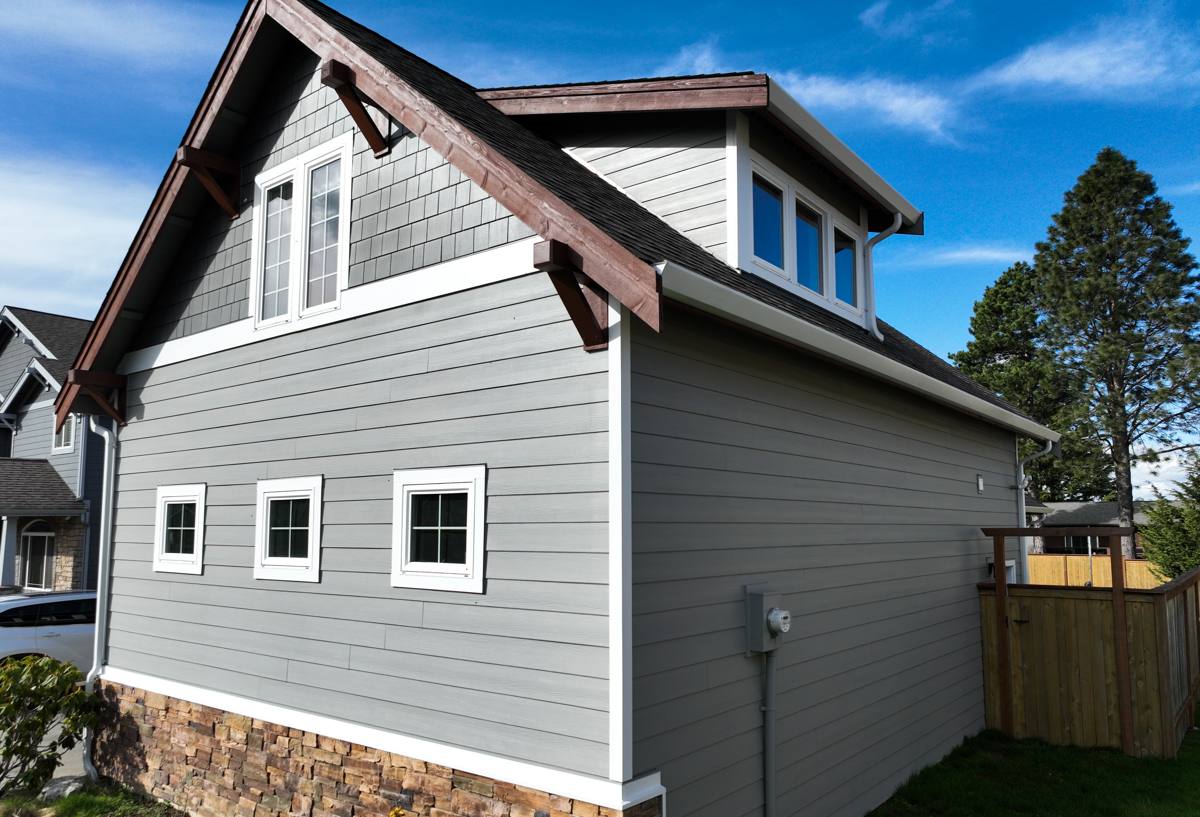
Why We Install Only James Hardie Fiber Cement
We are a Mount Vernon-based exterior contractor and we install James Hardie fiber cement siding — full stop. We don't install vinyl, LP SmartSide, Cemplank, Allura, primed spruce, or cedar lap. That's not because those products can't be installed well by someone; it's because after years of doing exterior work in Skagit County's wet, moss-prone climate, we standardized on the one product line that best matches the conditions we actually see on jobsites out here.
Fiber cement is made from cement, sand, and cellulose fibers, pressed and cured into planks. It doesn't have a wood core to swell, rot, or feed insects. It's non-combustible, which matters more every year as wildfire smoke and ember exposure become a bigger part of Pacific Northwest summers. And James Hardie engineers its HardieZone products by climate region — homes here fall into the HZ5 zone, which is formulated for the freeze-thaw cycles and sustained moisture exposure typical of western Washington, rather than a one-size-fits-all product sold the same way in Arizona and Alaska.
James Hardie's ColorPlus finish is baked on in a factory-controlled process, not brushed on at the jobsite. That matters in a place like Sedro-Woolley where field-applied paint has to cure in a climate that doesn't always cooperate — humidity and cool temperatures slow drying and can trap moisture under a coat of paint applied on-site. A factory finish sidesteps that problem entirely, and it comes with a substantial, transferable warranty that follows the house if it's sold.
How the Common Alternatives Compare
| Material | Core moisture risk | Finish | Fire performance | Typical trade-off in this climate |
|---|---|---|---|---|
| James Hardie fiber cement | Cement-based, does not swell or rot | Factory-baked ColorPlus | Non-combustible | Higher upfront cost than vinyl; heavier, requires correct fastening |
| Vinyl siding | Doesn't absorb water, but panels flex and can trap moisture behind them | Color molded through, fades and chalks over time | Combustible, can deform in heat | Lowest upfront cost; shorter realistic lifespan, hard to patch invisibly |
| LP SmartSide | Engineered wood strand core, can swell at cut edges and fastener points if not sealed correctly | Factory primed or pre-finished | Combustible | More installation-sensitive; edge sealing is critical in wet climates |
| Cedar lap | Natural wood, absorbs and releases moisture constantly | Field-applied stain or paint, needs recoating | Combustible | Attractive but high maintenance; moss and mildew show fastest on cedar in shaded, damp settings |
| Primed spruce / Cemplank / Allura | Varies by product; some fiber cement alternatives, some wood-based | Varies | Varies | We've moved away from these for consistency of supply, finish quality, or long-term warranty support |
What Correct Installation Actually Involves
Fiber cement performs the way it's supposed to only when it's installed to manufacturer spec, and that's true everywhere but especially in a climate that gives water every opportunity to find a gap. Correct installation means proper clearance between the siding and grade or roofing, correctly flashed and caulked window and door penetrations, rain screen or drainage gap where called for, and fasteners driven to the right depth and spacing — over-driven nails crack the board's edge and create an entry point for moisture over time.
We also pay close attention to the details that don't get noticed until they fail: butt joints sealed or backed correctly, kick-out flashing at roof-to-wall intersections so runoff doesn't dump behind the siding, and starter strips set level so the whole first course reads straight. These aren't optional extras — they're the difference between siding that looks and performs well for decades and siding that needs attention again in five years.
Roofing, Windows, and Decks — The Rest of the Exterior
Siding rarely fails in isolation. A roof that's shedding granules or has a compromised flashing detail will send water down behind even well-installed siding. Windows with failed seals or old flashing let moisture into the wall assembly right where siding meets the frame. Decks exposed to the same rain and shade as the rest of the house need materials and fastening that account for standing water and constant damp-dry cycling.
Because we handle siding, roofing, windows, and decks, we look at a Sedro-Woolley home as one connected exterior system rather than a set of unrelated projects. If we're replacing siding and notice a roof-to-wall flashing detail that's letting water in, or a window that's been quietly rotting the framing around it, we'll tell you before it becomes a bigger job. That's a practical advantage of working with one crew that understands how these systems interact, instead of coordinating separate contractors who never see the whole picture.
Why a Local Crew Matters Here
Sedro-Woolley isn't a suburb of Seattle with a generic exterior problem — it's a specific place with specific weather, specific soil and drainage patterns near the river, and a housing stock that ranges from older farmhouses to newer construction, each with its own quirks. A crew that works this part of Skagit County regularly knows which details tend to fail first on homes shaded by fir and cedar trees, which drainage patterns show up near the river bottom, and how to sequence a job around the wetter months without leaving a house exposed.
Being based in Mount Vernon also means we're a short drive away if something needs a follow-up look after the job is done — not a warranty claim routed through a call center for a crew that worked here once and moved on.
Signs Your Siding Needs a Closer Look
- Persistent moss or dark streaking on north-facing or shaded walls that keeps returning after cleaning
- Soft spots, bubbling paint, or visible swelling near butt joints and corners
- Caulking that's cracked, shrunk, or pulled away from window and door trim
- Boards that feel spongy or show delamination at the edges when pressed
- Visible daylight or drafts around window and door casings
- Fascia or trim boards that are darker or discolored compared to the rest of the wall
Choosing a Contractor for This Kind of Work
Whether you go with us or someone else, a few basics protect you. Confirm the contractor carries active Washington State contractor licensing and adequate liability insurance, and ask for it in writing rather than taking it on faith. Ask specifically how they handle flashing at windows, doors, and roof intersections — a vague answer is a red flag, since these details are where most real-world siding failures start. And ask what happens if something needs attention after the job wraps; a contractor who's still local and still answering the phone in five years is worth more than one offering the lowest bid today.
What to Expect From an Estimate
| Factor | Why it affects your project |
|---|---|
| Existing wall condition | Rot or water damage found once old siding comes off can add repair scope |
| House size and complexity | More corners, gables, and trim detail mean more labor and material cuts |
| Siding profile and color | Lap width and ColorPlus color selection affect material cost |
| Access and site conditions | Tree cover, slope, or tight side yards common in this area can affect staging and timeline |
| Scope beyond siding | Bundling roofing, window, or deck work can affect sequencing and overall pricing |
Every Sedro-Woolley home is different, and the only way to give you real numbers is to look at your house in person — the shaded side that's held moisture for years often tells us more than the side that looks fine. If you're weighing a siding project, or wondering whether what you're seeing on your walls is cosmetic or something more, we're happy to come take a look and give you a straight, no-pressure estimate.