 Mount Vernon
 Vinyl Siding Isn't a Bad Product — It's a Poor Fit for This Climate
We want to be upfront about something: vinyl siding isn't junk. It's inexpensive, it's produced by reputable manufacturers, and on paper it checks a lot of boxes homeowners care about — low sticker price, no painting, and a fast install. If you live somewhere hot and dry, vinyl can do a perfectly reasonable job for a long time.
Mount Vernon isn't that climate. Between the salt air drifting in off Padilla Bay and Puget Sound, the driving rain that comes sideways off the water for months at a stretch, and a moss season that can run from October through May in the shadier parts of Skagit County, we've watched vinyl siding take a beating on homes here that it simply wouldn't take somewhere drier and further inland. This page explains what we've seen, why it matters, and why our crews install James Hardie fiber cement instead.
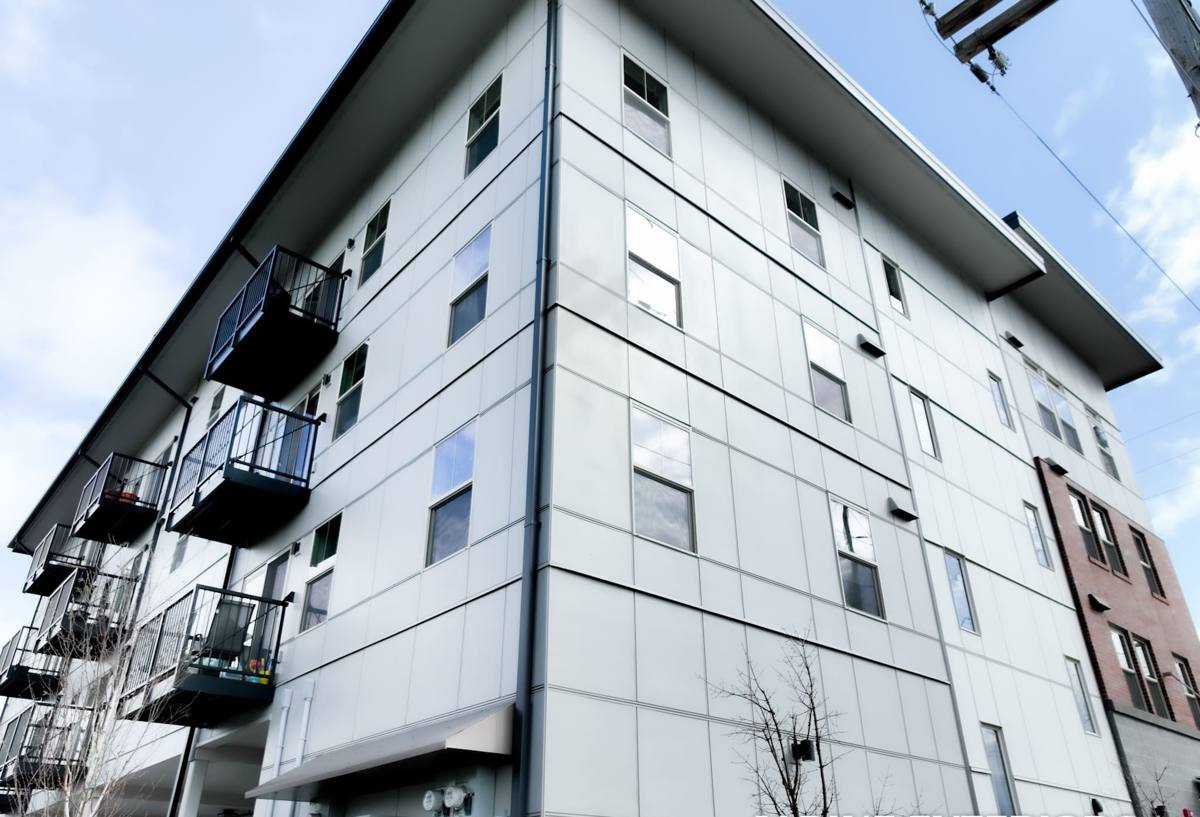
What Vinyl Siding Actually Gets Right
Before we get into the trade-offs, credit where it's due:
- Lower upfront material and labor cost than most other siding types
- Never needs to be painted — the color runs through the panel
- Lightweight, which makes it fast to install and easy on the structure
- Widely available in a range of colors and profiles
- Resists rot, since it doesn't absorb moisture the way wood does
These are real advantages, and for the right project — a budget rental, a detached garage, a climate without our wind-driven rain and salt exposure — vinyl can be a reasonable call. Our objection isn't to the product in the abstract. It's to what happens when it goes on a Skagit County home and has to perform for 20-plus years against our specific weather.
The Climate Vinyl Has to Survive Here
Salt Air and Corrosion
Mount Vernon sits close enough to Puget Sound and Padilla Bay that salt-laden air is a real factor, especially on homes with west and southwest exposure. Salt air doesn't damage vinyl panels directly the way it corrodes bare metal, but it accelerates wear on the fasteners, trim accessories, and any exposed metal flashing behind and around the siding. Over time that speeds up the small failures — loose panels, gaps at trim — that let water get where it shouldn't.
Driving Rain and Water Behind the Panel
Vinyl siding is installed as an overlapping "rain screen" that's designed to shed water on the surface while allowing drainage behind it — it is not a sealed, watertight skin. That works fine in light rain. It's a different story with the kind of sustained, wind-driven rain Skagit County gets off the Sound for weeks at a time in fall and winter. Under enough wind pressure, water can be driven up and behind panel laps, and vinyl's reliance on gravity drainage and loose-fit installation gives it less margin for error than a rigid, factory-sealed material.
Moss, Algae, and the Shade Problem
Anyone who's lived in Skagit County through a wet winter knows moss season. Vinyl's slightly textured, porous surface gives algae and moss spores something to grip, particularly on north-facing walls, under eaves, and near mature trees where panels stay damp for days between rain breaks. It's a cosmetic issue more than a structural one, but it means regular washing to keep a vinyl-sided home looking presentable — which cuts against the "no maintenance" pitch vinyl is usually sold on.
Where Vinyl Struggles Beyond the Weather
Heat and Sun Exposure
Vinyl softens and can warp or buckle in direct, sustained heat — including reflected heat off dark-colored surfaces, energy-efficient low-E windows, or nearby BBQ grills. Mount Vernon doesn't get brutal summer heat, but we do get enough sun exposure on south and west walls that we've seen panel warping on homes with darker vinyl colors, which absorb more heat than lighter shades.
Impact Damage and Cold-Weather Brittleness
Vinyl gets more brittle as temperatures drop. A stray branch, a ladder bump, or a thrown object that would leave a light mark in summer can crack a panel outright on a cold January morning. Cracked panels aren't a simple touch-up repair — they usually need to be replaced, and matching an older, sun-faded panel color years later is rarely clean.
Color Fade
Vinyl's color is mixed into the material, which sounds durable, but UV exposure still fades it over the years — usually unevenly, since sun exposure varies wall to wall. There's no repainting a faded vinyl panel to bring it back; the only fix is replacement, and by then the manufacturer's color line has often moved on, making an exact match difficult.
The Installation Sensitivity Problem
Vinyl siding has to be installed "loose" — nailed in the center of the nailing slot, not tight, with room to expand and contract with temperature swings. Nail it too tight and panels buckle. Nail it too loose and it rattles in wind or blows off in a storm. It also depends heavily on correct flashing, starter strips, and J-channel work at every window, corner, and penetration to manage water behind the panel.
None of that is impossible to do right. But it means vinyl's real-world performance is unusually dependent on installer discipline, and a rushed or corner-cut install is often invisible from the curb — the problems show up years later as water intrusion or panel failure, well after the crew that installed it has moved on. We'd rather install a product where correct installation is more forgiving and the failure modes are less silent.
Cost and Lifespan, Side by Side
| Factor | Vinyl Siding | James Hardie Fiber Cement |
|---|---|---|
| Upfront cost | Lower | Higher |
| Typical realistic lifespan | 15-25 years in this climate | 30-50+ years when installed to spec |
| Painting required | Never, but fades unrepairably | Factory ColorPlus finish; repaintable if desired |
| Fire performance | Combustible plastic | Non-combustible |
| Moisture behavior | Relies on drainage behind loose-fit panels | Engineered HZ formulation for wet climates |
| Impact resistance | Brittle in cold, cracks on impact | Rigid, resists denting and cracking |
| Resale perception | Often viewed as a budget material | Widely viewed as a premium upgrade |
The upfront cost gap is real and we won't pretend otherwise. But when you divide total cost by years of actual service life in a wet, coastal-adjacent climate like ours, the gap narrows — and that's before factoring in maintenance washing, panel replacement after impact damage, or a full re-side when fading and warping catch up to a vinyl-clad home.
Why We Standardized on James Hardie Instead
We made a decision a while back to only install James Hardie fiber cement siding, and it comes down to matching the product to the climate we actually work in. Hardie's HZ5 formulation is specifically engineered for regions with heavy moisture exposure — which describes Skagit County well. Fiber cement doesn't warp in the sun, doesn't go brittle in cold snaps, and won't burn. The ColorPlus factory finish is baked on under controlled conditions rather than mixed into a thermoplastic panel, which gives more consistent, longer-lasting color and backs it with its own dedicated finish warranty.
It's also a rigid, dimensionally stable material, which means the installation isn't fighting the same expansion-and-contraction tightrope vinyl requires. That translates into fewer of the silent, install-quality-dependent failure points we see with vinyl over time.
What to Weigh Before You Decide
If you're comparing siding options for a Mount Vernon home, here's a practical checklist worth working through before you sign a contract with anyone:
- Which direction do your most exposed walls face — south/west sun, or north-facing shade prone to moss?
- How close is your home to open water or exposed to prevailing wind-driven rain?
- Do you plan to stay in the home long enough for a 15-20 year lifespan gap to matter to you?
- Is resale value or buyer perception a factor in your decision?
- Are you comfortable with periodic washing to manage moss and algae growth?
- Does your contractor install to manufacturer flashing and fastening specs, or just "get panels up"?
These aren't trick questions designed to steer you toward a particular product — they're the same questions we ask ourselves before recommending anything for a specific house.
Making the Right Call for Your Home
We turn down vinyl siding jobs not because we're chasing a bigger ticket, but because we've seen how it performs on real homes in this specific climate over a real number of years, and we don't want our name on an installation we don't expect to hold up. Every property is a little different — sun exposure, tree cover, proximity to the water, how long you plan to own the home — and those details matter more than any general rule.
If you're weighing siding options for a home in Mount Vernon or elsewhere in Skagit County, we're happy to walk your property, talk through what we're seeing, and give you a straight answer — even if that answer points you toward a different contractor for a product we don't install. Reach out for a free, no-pressure estimate and we'll give you our honest read on your home.