 Mount Vernon
 Exterior Work Built for East Mount Vernon's Climate
Homes on the east side of Mount Vernon deal with a specific combination of weather that wears down exterior materials faster than most homeowners expect. Skagit County sits in the path of driving rain off the Sound, damp marine air that carries salt inland on windy days, and long stretches of gray, low-sun months that never quite dry a house out. Add tree cover on many East Mount Vernon lots and you get shaded siding and roof sections that stay wet longer after every storm — prime conditions for moss, algae, and slow moisture damage.
None of this is dramatic on its own. It's the accumulation that gets homeowners: a north-facing wall that never fully dries, a fascia board that starts showing green in February, caulking that gives out a year or two before it should. Exterior materials in this region either handle that grind or they don't, and the difference shows up in ten to fifteen years, not month one.
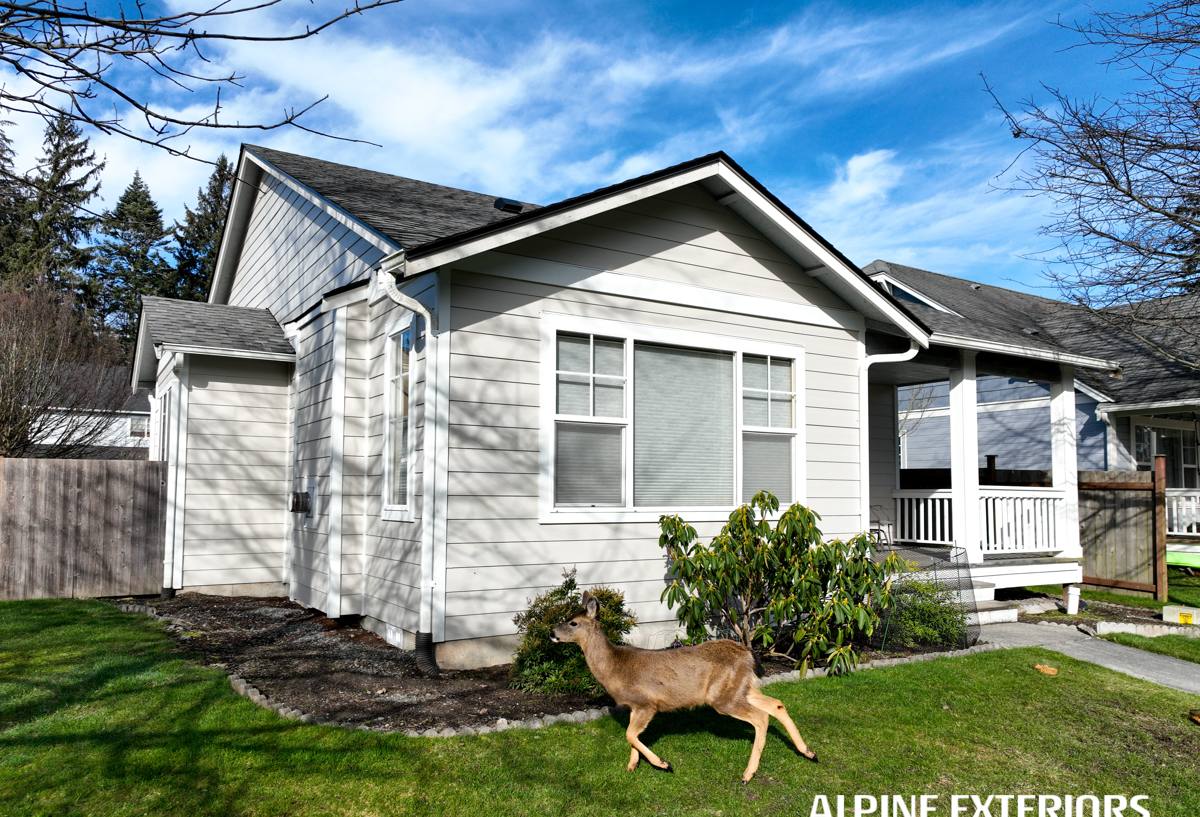
What Sun, Rain, and Moss Season Actually Do to a House
It helps to break down the damage mechanism rather than just say "it's wet here."
- Driving rain forces water sideways into seams, laps, and trim joints — not just straight down onto a roof.
- Salt-laden air accelerates corrosion on fasteners, flashing, and any metal component that isn't rated for coastal exposure.
- Shaded, low-airflow walls (common on tree-lined East Mount Vernon lots) stay damp for days after a storm, which is exactly the environment moss and mildew need to establish.
- Freeze-thaw swings, while milder here than inland Washington, still stress any siding material that absorbs water and expands.
Siding, trim, and roofing that aren't engineered for this cycle tend to fail from the inside out — swelling, delaminating, or rotting behind a surface that still looks okay from the curb. That's the failure mode we build against on every job.
Why We Install James Hardie Fiber Cement — and Nothing Else
We made a deliberate call to install only James Hardie fiber cement siding. We don't install vinyl, LP SmartSide, Cemplank, Allura, primed spruce, or raw cedar. That's not a marketing line — it's a standard we hold because we've seen how each of those materials performs, or fails to perform, in exactly this Skagit County climate.
Vinyl is inexpensive and easy to install, but it expands and contracts with temperature swings, can warp or crack in wind-driven weather, and its finish is baked in — once it fades, there's no refinishing it short of replacement. Wood-based composite products like LP SmartSide use engineered wood strand technology that performs reasonably well when detailing is perfect, but wood-based cores are inherently more moisture-sensitive than cement-based ones, and moisture is the one thing this region never runs short of. Primed spruce and raw cedar are real wood, full stop — beautiful, but they require an ongoing maintenance commitment (recoating, caulking, moisture monitoring) that most homeowners underestimate until the first signs of rot show up at year six or seven.
James Hardie fiber cement is cement, sand, and cellulose fiber — not wood, not plastic. It doesn't absorb water the way wood-based products do, it's non-combustible, and it holds paint and factory finish far longer than wood substrates because the material itself doesn't swell and crack the coating from underneath. Hardie's ColorPlus factory-applied finish is baked on in a controlled environment, which gives more even, durable color than field-applied paint, and it comes with a real transferable limited warranty. For a climate that punishes anything moisture-sensitive, it's the material that holds up to spec — which is why it's the only one we put on homes.
How the Materials Compare in This Climate
| Material | Moisture behavior here | Maintenance burden | Typical service life |
|---|---|---|---|
| James Hardie fiber cement | Does not absorb/swell; holds finish well in damp shade | Low — periodic wash, no recoating | Decades with correct install |
| Vinyl siding | Doesn't rot but warps/cracks with temperature swings and wind | Low, but no refinish option once faded | Moderate; UV and impact-limited |
| LP SmartSide / engineered wood | Wood-strand core is moisture-sensitive at cut edges and seams | Moderate — caulking and edge sealing matter a lot | Good if detailing stays perfect |
| Cedar / primed spruce | Absorbs water, prone to rot in shaded, damp wall sections | High — recoating, caulking, ongoing monitoring | Shorter without diligent upkeep |
Our Siding Installation Process
Inspection and Tear-Off
Every job starts with a real look at what's under the existing siding — sheathing condition, evidence of past moisture intrusion, and how the previous installation handled flashing around windows, doors, and roof lines. In a climate like this, what's behind the siding matters as much as what's on top of it.
Weather Barrier and Flashing
This is where most siding failures actually originate, and it's the step that gets rushed on cut-rate jobs. We install a proper weather-resistant barrier and flashing detail at every penetration and horizontal transition — window heads, deck ledgers, roof-to-wall intersections — so wind-driven rain has nowhere to get behind the cladding.
Installation to Manufacturer Spec
James Hardie siding has specific fastening, clearance, and caulking requirements, and those requirements exist because the manufacturer engineered the product around them. Proper ground clearance, correct nail placement, and gaps at butt joints aren't optional details — skip them and you undercut the product's own warranty and performance, no matter how good the material is.
Finish and Cleanup
Trim, caulking, and touch-up finish work close out the job, along with a full site cleanup — nails, cutoffs, and packaging don't get left behind.
Beyond Siding: Roofing, Windows, and Decks
Siding doesn't work in isolation — it's one piece of the building envelope. We also handle roofing, window replacement, and deck construction, because a house in East Mount Vernon's climate needs all of it working together. A new roof means nothing if the wall flashing behind the siding leaks. New windows are wasted if the trim and weather barrier around them aren't detailed correctly. And decks here take the same driving rain and moss exposure as siding does, so ledger flashing and material choice matter just as much.
Handling all four trades under one crew means the details that connect them — roof-to-wall flashing, window trim integration, deck ledger waterproofing — are handled by people who understand how the whole envelope is supposed to work, not just their one piece of it.
What Drives Cost on an East Mount Vernon Siding Project
| Factor | Why it matters |
|---|---|
| Tear-off scope | Full removal of existing siding vs. install over existing sheathing changes labor significantly |
| Sheathing/moisture repair | Rot or water damage found during tear-off has to be repaired before new siding goes on |
| Home size and wall complexity | Dormers, multiple gables, and cut-up wall lines add labor time beyond simple square footage |
| Hardie product line and finish | Lap width, texture, and ColorPlus finish selection affect material cost |
| Trim and accessory scope | Fascia, soffit, and trim replacement alongside siding adds to the total project |
| Access and site conditions | Tree cover, tight lot lines, and multi-story walls affect staging and labor |
Why a Local Crew Matters Here
A crew that works Skagit County day in and day out knows what East Mount Vernon walls actually face — which sides of a house hold moisture longest, how much clearance a deck ledger needs given the rain volume here, where moss tends to establish first. That's not something you get from a national install team passing through on a route. It shows up in the small decisions: extra attention to a shaded north wall, a flashing detail sized for actual driving-rain exposure rather than a generic spec sheet.
It also matters for accountability. A local, licensed and insured crew is answerable to the same community it works in — reachable next year if a question comes up, not a phone number that changes with each region's marketing push.
What to Expect After Installation
Properly installed James Hardie siding is low-maintenance, not zero-maintenance. A periodic gentle wash keeps shaded, moss-prone areas in check, and it's worth a visual check of caulking and trim joints once a year, especially after the wet season. Because the ColorPlus finish is factory-applied and warrantied, you're not signing up for a repainting cycle the way you would with wood siding — but keeping gutters clear and vegetation trimmed back from walls still goes a long way toward keeping moisture exposure down in a climate that doesn't give a house much of a break.
If you're weighing a siding, roofing, window, or deck project for a home in East Mount Vernon, we're glad to take a look and walk through what your house specifically needs — no pressure, no pushy sales pitch. Reach out for a free estimate using the form below.