 Mount Vernon
 Decks in East Mount Vernon Face a Specific Kind of Wear
A deck in East Mount Vernon doesn't fail the way a deck in a dry climate fails. Skagit County's marine-influenced air, long wet winters, and driving rain off the valley mean decks here are almost never dealing with a single problem — they're dealing with a slow combination of moisture cycling, organic growth, and UV exposure that adds up over years. Wood swells when it's saturated, shrinks when it briefly dries out between storms, and that repeated movement works fasteners loose, opens up seams at the ledger board, and lets water into places it was never designed to sit.
Add in the moss and algae that thrive here for most of the year, and you get a deck surface that looks fine from a distance but is quietly losing structural integrity underneath. We repair decks all over Mount Vernon, and the East Mount Vernon homes we work on tend to show the same patterns: shaded areas that never fully dry out, ledger connections that were built before current flashing standards, and boards that were treated once at installation and never sealed again.
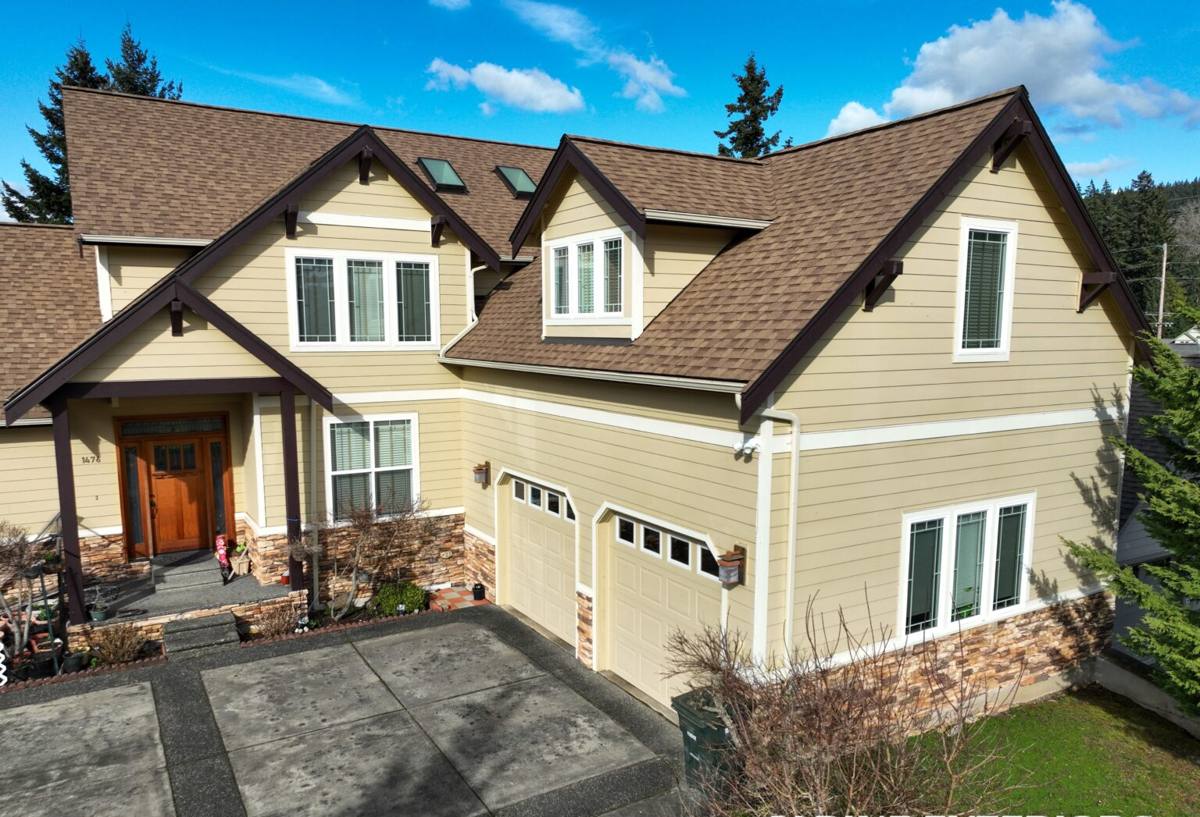
Signs an East Mount Vernon Deck Needs Repair
Most deck repairs get more expensive the longer they're put off, because water damage spreads underneath the decking long before it's visible on top. Homeowners usually call us after noticing one or more of the following:
- Boards that feel spongy, springy, or noticeably softer underfoot in one area
- Visible gaps, cupping, or splitting in the decking boards
- Rust streaks running from fastener heads, which usually means the fastener is corroding inside the wood
- A railing or post that wobbles more than it should
- Green or black staining that keeps coming back within weeks of cleaning
- A ledger board (where the deck attaches to the house) that looks separated, stained, or has gaps behind the flashing
- Stair stringers that flex or creak under weight
Any one of these on its own might be a minor fix. Several at once, especially near the ledger or support posts, usually means the damage has moved past the surface and into the framing.
What a Correct Deck Repair Actually Involves
Start With the Structure, Not the Surface
The biggest mistake in deck repair is treating it as a cosmetic job — sanding and staining over boards without checking what's underneath. We start every repair with an inspection of the parts that actually hold the deck up: the ledger board attachment, the support posts, the footings, and the joists. In our climate, joists near the ground or under low decks are especially prone to rot because they sit in a damp, shaded microclimate that rarely gets direct sun to dry out.
We check for:
- Soft or crumbling wood at joist ends and post bases (probed, not just looked at)
- Proper flashing behind the ledger board where the deck meets the house
- Corroded or undersized fasteners and connectors
- Footings that have shifted, settled, or cracked
- Adequate ventilation and drainage under the deck
Then Address the Surface
Once the structure is sound, surface repair — replacing individual boards, resetting fasteners, repairing railings and stairs — is straightforward. Doing it in this order matters: a deck with fresh boards over a rotting joist is a deck that will fail again within a season or two, and it hides the problem instead of fixing it.
Repair Versus Replacement: How We Make the Call
Not every deck problem needs a full rebuild, and not every deck is worth patching. We walk homeowners through the tradeoffs honestly rather than defaulting to whichever job is bigger.
| Factor | Favors Repair | Favors Replacement |
|---|---|---|
| Framing condition | Joists and posts test solid, damage is isolated | Rot or soft wood found in multiple structural members |
| Age of deck | Under 15 years, built to reasonable original standards | Older deck with outdated connections or undersized framing |
| Extent of surface damage | A handful of boards or one section | Most boards showing cupping, splitting, or soft spots |
| Ledger board and flashing | Flashing intact, ledger attachment sound | No flashing, or ledger separating from the house |
| Homeowner plans | Staying several more years, budget-conscious | Wanting a size, layout, or material change anyway |
In practice, most of the East Mount Vernon repair calls we get fall into the "repair" column — isolated board replacement, ledger flashing correction, and post or joist sistering to reinforce a weak spot. Full replacement becomes the honest recommendation when the framing itself is compromised in more than one place, since replacing boards over bad framing just delays the real cost.
Our Repair Process
1. On-Site Inspection
We walk the full deck, probe suspect areas, and check the ledger, posts, and accessible framing before quoting anything. This is a visual and physical inspection — we're not guessing from the driveway.
2. A Clear Scope, in Writing
We tell you what's structural and what's cosmetic, and price them separately so you can decide how far to go. There's no pressure to upgrade a simple board swap into a full rebuild.
3. Structural Repair First
Any compromised framing, connectors, or flashing gets corrected before surface work starts. This includes proper flashing and fasteners rated for exterior and ground-contact use where required.
4. Surface and Finish Work
Damaged boards are replaced to match the existing decking as closely as possible, railings and stairs are tightened or rebuilt as needed, and the deck is left ready for sealing or staining.
5. Walkthrough
We go over what was found, what was fixed, and what maintenance will keep it in good shape given our wet-season conditions.
Moss, Algae, and the Long Wet Season
Skagit County's moss season runs long, and a deck that stays shaded through fall, winter, and much of spring rarely gets a real chance to dry out between rains. Moss and algae aren't just cosmetic — they hold moisture directly against the wood surface and make boards slick and dangerous underfoot, especially on stairs. Part of a proper repair is looking at why moss keeps coming back: it's often a drainage or sunlight issue as much as a cleaning issue. Where we can, we address the underlying cause — trimming back overhanging growth, improving under-deck airflow, or adjusting drainage — rather than just cleaning the surface and leaving the same conditions in place.
Materials: What We Use and Why
For repairs, matching existing materials matters more than most homeowners expect. Mixing a different wood species or a composite board into an all-wood deck can create uneven weathering, color mismatch, and in some cases different expansion behavior that stresses the surrounding boards. Our standard approach:
| Material | Best Use in Repair | Maintenance Tradeoff |
|---|---|---|
| Pressure-treated lumber | Structural framing, joists, posts | Needs sealing on exposed cuts; standard for framing in this climate |
| Cedar decking | Matching existing cedar decks | Needs periodic sealing/staining to resist moisture and graying |
| Composite decking | Full board replacement sections where the owner wants lower upkeep | Higher upfront cost; won't visually match wood boards nearby |
| Stainless or coated fasteners | All repair work, especially near ground contact | Costs more than standard fasteners but resists the corrosion we see from repeated wet cycles |
We use fasteners and hardware rated for exterior and wet-climate exposure as our standard, not an upsell — in a region where wood spends a large share of the year damp, undersized or uncoated hardware is the single most common repeat-failure point we find when we open up an old deck.
After the Repair: Keeping It That Way
A repaired deck still needs seasonal attention in this climate. We give every customer a simple maintenance rhythm:
- Sweep debris off the deck regularly, especially in fall when leaves and needles trap moisture against boards
- Clean moss and algae buildup at least once a year, before it gets thick enough to hold water
- Check and reseal or restain wood decking every 1–3 years depending on sun and shade exposure
- Look under the deck once a year for standing water, blocked drainage, or new soft spots
- Tighten or replace any fasteners showing rust streaks before they fail
- Keep vegetation trimmed back from the deck edges to improve airflow and sun exposure
Why a Crew That Already Works East Mount Vernon Matters
Deck problems here aren't generic — they're shaped by this specific valley climate, and a crew that works East Mount Vernon regularly recognizes the patterns quickly: which framing details tend to fail first in homes of a certain age, how moss behaves on shaded lots, and what a properly flashed ledger board should look like versus one that's starting to separate. That familiarity shortens the inspection, sharpens the diagnosis, and means the repair addresses the actual cause instead of just the visible symptom. It also means we're a known, local presence if a question comes up after the work is done — not a crew that drove in from out of the area for one job.
If your deck has soft spots, loose railings, recurring moss, or you're just not sure whether it needs a repair or a rebuild, we're glad to take a look. Reach out for a free, no-pressure estimate using the form below — we'll give you an honest read on what your deck actually needs.