 Mount Vernon
 Little Mountain's Exterior Climate Reality
Little Mountain sits in a part of Skagit County where the weather doesn't do anything extreme, but it doesn't let up, either. Homes here deal with a marine-influenced climate: cool, damp air moving in off Puget Sound and the Skagit River delta, long stretches of gray drizzle from fall through spring, and enough humidity most of the year to keep anything organic — moss, algae, mildew — comfortably growing on north-facing walls and shaded siding. Add wind-driven rain during winter storms and salt-tinged air working its way inland from the Sound, and you've got an exterior envelope that's under quiet, constant pressure even when nothing dramatic is happening.
None of this is unique to Little Mountain specifically, but it's the reality for houses throughout this part of Mount Vernon, and it's the backdrop for every material and installation decision we make when we work on a home here. The goal isn't to survive one bad storm — it's to hold up through forty or fifty of these damp, mossy winters in a row.
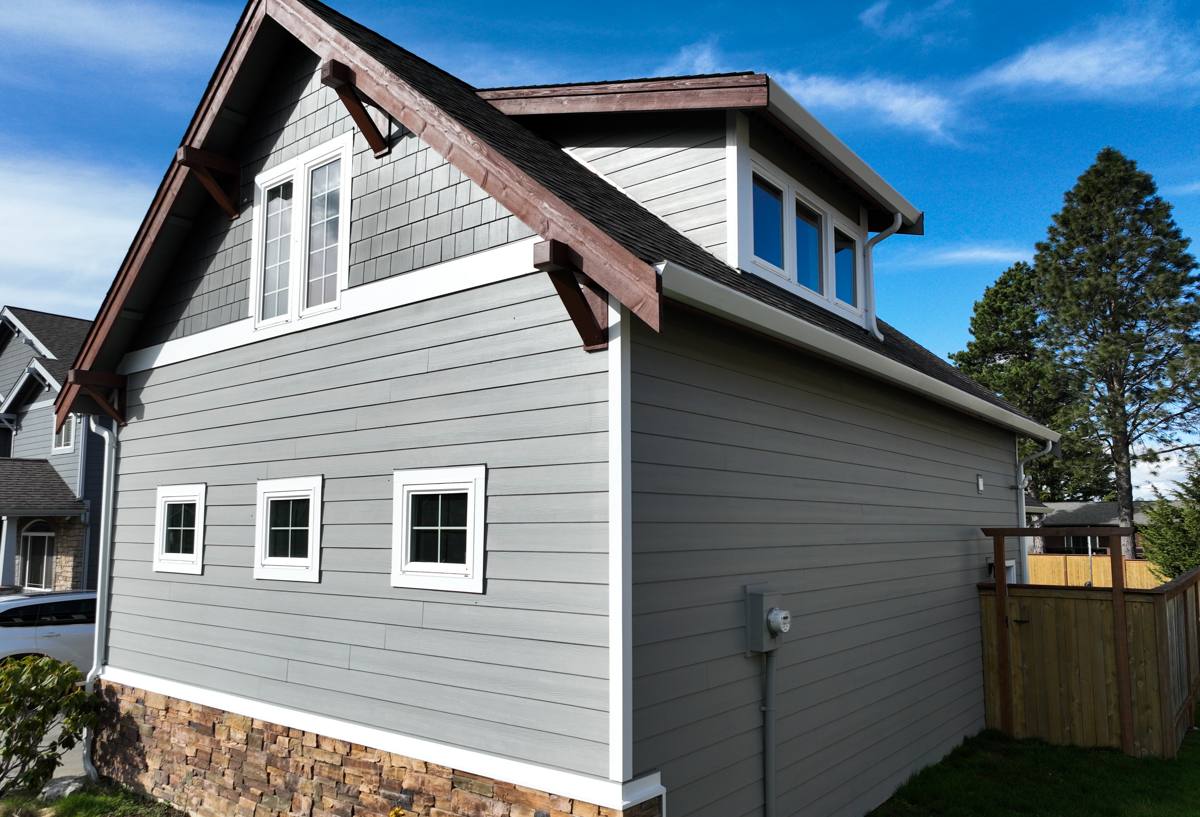
What This Climate Does to Siding Over Time
Moisture is the root issue behind almost every siding failure we see in this region. It's rarely a single event — it's cumulative. Rain gets driven against a wall by wind, sits in a seam or behind a poorly flashed window, and slowly works into material that wasn't built to handle sustained dampness. Combine that with our short, mild summers that don't give siding much of a chance to fully dry out, and you get a slow-motion problem: swelling, delamination, paint failure, and rot that often isn't visible until it's well established.
The moss and algae factor
Shaded, north- and west-facing walls in Skagit County spend a good part of the year damp. That's exactly the environment moss and algae need. On some siding materials this is mostly cosmetic — a cleaning issue. On others, especially wood-based products, trapped moisture under organic growth can accelerate rot at the surface level over years of exposure.
Salt air's slow effect
Mount Vernon isn't oceanfront, but it's close enough to Puget Sound and the Skagit delta that airborne salt is part of the equation, particularly on homes with more open exposure. Salt-laden moisture accelerates corrosion on fasteners and metal trim, and it works against paint and finish systems faster than dry inland air would.
Why We Only Install James Hardie Fiber Cement
We made a decision as a company to install one siding system — James Hardie fiber cement — and not offer vinyl, LP SmartSide, primed spruce, cedar, or fiber cement alternatives like Cemplank or Allura. That's not a marketing position; it's a practical one built around exactly the climate problems described above.
Fiber cement is made from cement, sand, and cellulose fibers, which means it doesn't have the wood-based core that engineered wood siding products rely on. It won't swell when it absorbs moisture, it doesn't feed fungal growth the way wood fiber can, and it holds its shape and paint line over decades of wet Skagit County winters. James Hardie backs its products with a factory-applied ColorPlus finish that's baked on and warranted against peeling and cracking, and the company engineers regional product lines (HZ5 for our climate zone) specifically for areas that see a lot of moisture cycling. That combination — the base material, the factory finish, and the climate-specific engineering — is why we standardized on it rather than offering a menu of options with different long-term risk profiles.
We're upfront that other products have real strengths. Vinyl is inexpensive and low-maintenance in dry climates. Cedar has a natural look some homeowners love. Engineered wood siding installs quickly and holds paint reasonably well when properly maintained. But when we weigh those advantages against what we watch this climate do to siding over a 20-30 year window, fiber cement is the material we're willing to put our name behind and warranty our labor on.
Roofing, Windows, and Decks: The Rest of the Envelope
Siding doesn't work in isolation — a home's exterior is a system, and we treat it that way. We handle roofing, window replacement, and decks alongside siding because a gap in any one of them undermines the others.
Roofing
A roof that's shedding water properly, with clean flashing at valleys, walls, and penetrations, is the first line of defense for the siding below it. Roof-to-wall flashing failures are one of the more common sources of hidden water intrusion we find behind siding during tear-offs, especially at dormers and roof-wall intersections that see a lot of runoff.
Windows
Window flashing and integration with the siding plane is where a lot of long-term leaks originate — not from the window unit itself, but from how it was sealed and flashed into the wall assembly. When we replace siding around existing windows, we pay close attention to this transition, and when we replace windows, we make sure the surrounding siding is properly reintegrated rather than just caulked over.
Decks
Decks in this climate deal with the same sustained moisture exposure as siding, plus standing water and foot traffic. Proper ledger flashing where a deck meets the house is critical — it's another common point where water finds its way into a wall assembly if it's not detailed correctly.
How We Approach a Siding Project in This Area
Every project starts with a look at the existing wall assembly, not just the siding surface. We want to know what's underneath before we talk about what goes on top.
- Assess existing siding and sheathing for hidden moisture damage, particularly at wall penetrations and low-slope trim
- Check and correct flashing at windows, doors, roof-wall intersections, and deck ledgers as part of the siding scope
- Confirm proper water-resistive barrier and rain-screen detailing behind new siding, especially on shaded or wind-exposed walls
- Install James Hardie panels or lap siding to manufacturer specifications, including fastener spacing, clearances, and caulk joints
- Address moss-prone areas with attention to ventilation and drainage gaps, not just the visible finish
- Walk the finished exterior with the homeowner to review workmanship and warranty coverage
Installation quality matters as much as material choice. Fiber cement performs the way it's designed to only when it's installed to spec — proper gaps, correct fastening, and flashing that actually directs water away from the wall rather than behind it. A good product installed poorly can fail just as fast as a mediocre one installed well, which is why we treat the installation details as seriously as the material decision.
Siding Material Comparison for Skagit County Homes
| Material | Moisture Behavior in This Climate | Maintenance Over Time | Our Position |
|---|---|---|---|
| James Hardie Fiber Cement | Doesn't swell or rot; resists sustained damp exposure | Repaint cycle 15+ years with ColorPlus finish; occasional wash | What we install |
| Vinyl | Doesn't absorb water but can warp, and seams allow moisture behind panels | Low, but limited repair options if damaged | Not offered |
| LP SmartSide / Engineered Wood | Wood-based core is more moisture-sensitive; edge swelling is a known risk | Regular paint upkeep, careful caulk maintenance | Not offered |
| Cedar | Natural material, absorbs and releases moisture; prone to moss and rot without upkeep | High — refinishing, sealing, moss treatment | Not offered |
| Cemplank / Allura (fiber cement alternatives) | Similar base material to Hardie, but different finish systems and warranty terms | Varies by finish quality and installation | Not offered — we standardized on Hardie specifically |
Cost Factors Homeowners Should Understand
Every home is different, so we won't quote a number without seeing the project, but the factors that move a siding estimate up or down are fairly consistent:
- Square footage and the complexity of the home's shape (corners, gables, and trim detail add labor)
- Condition of the existing sheathing and framing once old siding is removed
- Whether flashing at windows, roof lines, and decks needs to be corrected as part of the job
- Siding profile chosen — lap siding, panel systems, and shingle-style products carry different material and labor costs
- Color and finish selection, including factory ColorPlus versus field-applied paint
- Access and site conditions, including height, landscaping, and staging space
Hidden damage is the biggest variable. A home that's been dealing with a slow moisture problem behind old siding may need sheathing repair before new siding goes on, and that's something we can only quantify once the old material is off the wall.
Why a Local Crew Matters
A siding contractor who works throughout Skagit County sees the same failure patterns repeat house after house — the same moss buildup on the same wall orientations, the same flashing shortcuts that show up as rot five or ten years later, the same wind exposure issues on homes near open ground. That pattern recognition is worth more than a generic installation checklist. It shapes where we pay extra attention on a given home before problems start, not after.
It also means we're not guessing at what "regional" siding means. We know what a Skagit County winter does to a wall assembly because we've opened up enough of them to see it firsthand, and we build every project around avoiding the failure modes we've already watched play out on other homes in this area.
Get a Straightforward Estimate
If you're weighing a siding, roofing, window, or deck project on a home in the Little Mountain area, we're happy to take a look and give you an honest read on what your exterior needs — no pressure, no inflated quote to negotiate down from. Use the form below to request a free estimate and we'll walk through your options together.