 Mount Vernon
 What LP SmartSide Is, and Why Homeowners Ask About It
LP SmartSide shows up on a lot of bid comparisons in Skagit County, and it's easy to see why. It's an engineered wood siding product, it costs less upfront than fiber cement in most markets, and it comes pre-primed in panel and lap formats that go up fast. Builders like the labor speed. Homeowners like the price point. On paper, it looks like a reasonable middle ground between vinyl and fiber cement.
We get asked about it regularly, usually by someone comparing quotes and wondering why our number is different from a competitor's. This page is our honest answer. LP SmartSide isn't a scam product and it isn't junk — it's a legitimate building material that works fine in a lot of the country. We just don't think it's the right call for homes sitting this close to Skagit Bay, the Skagit River delta, and the Puget Sound marine air that rolls through Mount Vernon most of the year. Here's the reasoning, not the sales pitch.
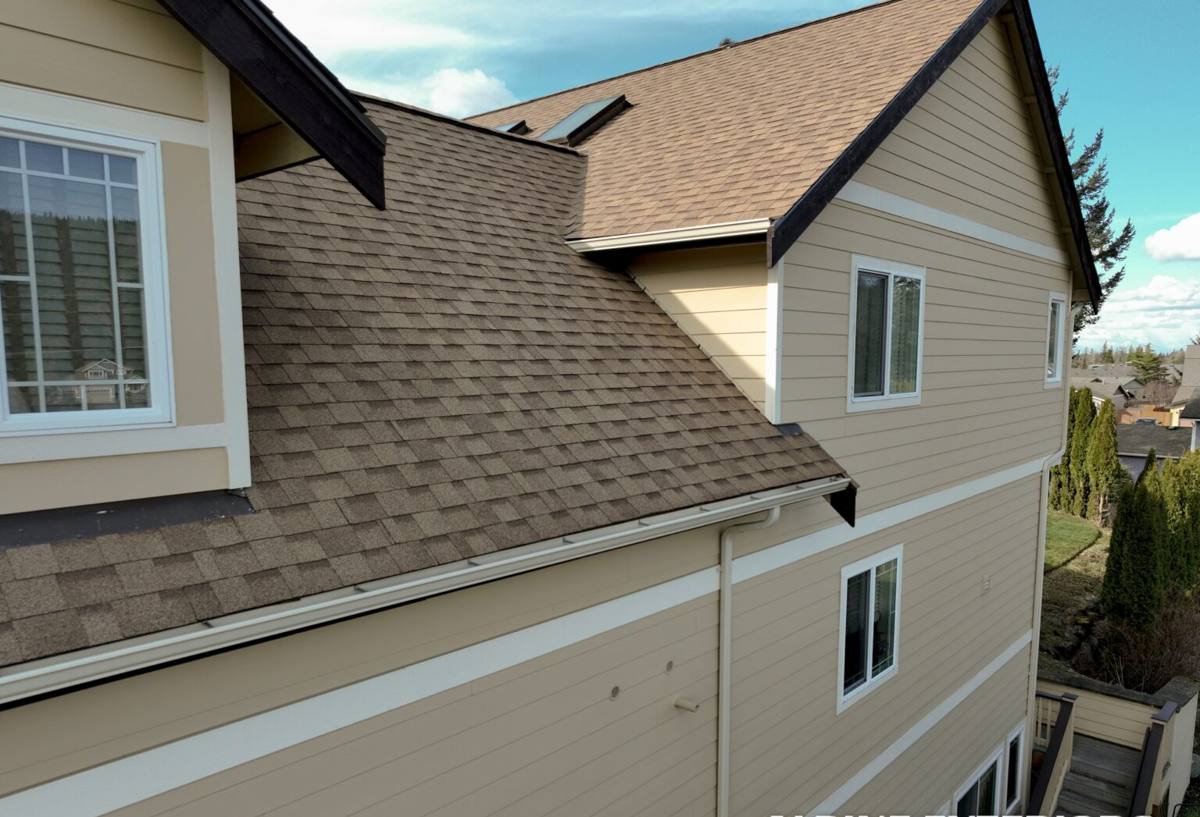
How LP SmartSide Is Actually Built
LP SmartSide is a strand-based engineered wood product — wood strands bonded with resin under heat and pressure, similar in concept to OSB sheathing but manufactured specifically for exterior use. The panels get a zinc borate treatment for decay and insect resistance, then a resin-saturated overlay and a factory primer coat on the outer face.
That construction is what makes it affordable and easy to install. It's also what makes it fundamentally different from fiber cement. LP SmartSide is still a wood product at its core. Wood swells, wicks moisture along cut edges and end grain, and depends on an intact protective coating to stay dry. Fiber cement is cement, sand, and cellulose fiber — it doesn't have a wood substrate that can absorb water and swell if the surface coating fails.
That distinction matters everywhere. It matters more here.
Why Skagit County's Climate Is a Hard Test for Engineered Wood
Salt Air Off Skagit Bay and the Sound
Mount Vernon sits close enough to Skagit Bay and the greater Puget Sound that homes here deal with a steady dose of salt-laden marine air, especially on west- and south-facing elevations. Salt air accelerates the breakdown of coatings and fasteners, and it finds every weak point in a protective finish faster than dry inland air does. A siding product that depends entirely on an intact factory coating to keep its wood core dry is more exposed to that kind of environment than one that doesn't need the coating to survive.
Driving Rain and Long Wet Seasons
Skagit County gets extended stretches of driving, wind-blown rain, particularly from fall through spring. That kind of rain doesn't just fall — it pushes sideways into laps, joints, and any cut edge that wasn't properly field-sealed. Engineered wood siding's biggest failure point is almost always at these seams and cut edges, where the manufacturer's coating never reached the raw substrate in the first place. In a climate with occasional hard rain, a missed seal might go unnoticed for years. In a climate with sustained wet weather, it gets tested constantly.
Moss Season
Anyone who's owned a home in the Skagit Valley knows what "moss season" means — long stretches of damp, shaded, low-sun conditions, especially on north-facing walls and under eaves, where moisture sits on siding surfaces for days at a time. Moss and algae growth on any siding traps additional moisture against the surface. On a coated wood product, that sustained damp contact is exactly the condition that stresses the coating and, eventually, the substrate underneath it.
None of this means LP SmartSide will fail on every home that has it installed. Plenty of installations hold up fine, especially with diligent maintenance. It means the margin for error is thinner here than in a drier region, and the maintenance schedule that keeps that margin safe is more demanding than most homeowners expect when they buy the product.
The Maintenance Math: What Engineered Wood Siding Actually Asks Of You
The trade-off with LP SmartSide isn't really about whether it can perform — it's about what it requires from the homeowner to keep performing, year after year, in a wet marine climate. That's the part that often gets glossed over at the point of sale.
- All cut edges, whether from installation or later repairs, need field-applied sealant or paint before they're exposed to weather — every time a panel is cut, drilled, or notched.
- Caulking at butt joints, trim, and penetrations needs regular inspection and re-application as it ages and shrinks.
- The factory primer is not a finish coat — it requires a full paint job within a limited window after installation, and repainting on a recurring cycle after that.
- Areas with heavy moss or algae growth need periodic cleaning to keep moisture from sitting against the surface for extended periods.
- Any area where the coating is scuffed, chipped, or worn — from a ladder, a hose fitting, storm debris — needs prompt touch-up before the exposed substrate takes on water.
- Gutters, downspouts, and grade slope need to keep splash-back and standing water away from the lowest courses of siding.
None of that is unreasonable to ask of a homeowner in the abstract. But it's a real, recurring commitment — not a one-time install-and-forget decision — and it's a heavier commitment in a climate that gives the coating less of a break between wet cycles.
Warranty Structure Worth Reading Closely
Engineered wood siding warranties are typically conditioned on the homeowner holding up their end of that maintenance schedule. Miss the paint window, skip a re-caulk cycle, or leave a cut edge unsealed, and it's common for coverage on that section to be affected. That's not unusual for the category — it's standard for any coated wood-based product. But it shifts a meaningful share of the long-term performance risk onto the homeowner's follow-through, which is a very different warranty relationship than a product that doesn't depend on an intact surface coating to keep its substrate dry in the first place.
We'd rather sell a homeowner a product where the manufacturer's warranty terms match how people actually live in their houses, rather than one that assumes a maintenance schedule most people don't keep up with for 20 or 30 years straight.
Fire Performance Is Worth a Straight Answer
Because LP SmartSide has a wood-strand core, it is a combustible material, the same as any wood-based siding. Fiber cement is not — it's a cement-based product and doesn't burn. This isn't a knock on LP SmartSide's engineering; treated wood products are used safely in construction all over the country. It's simply a factual difference in material class that some homeowners weigh heavily, particularly given wildfire smoke seasons that have become more common across the Pacific Northwest in recent summers, and it's one we think is worth stating plainly rather than leaving out.
LP SmartSide vs. James Hardie Fiber Cement: A Side-by-Side Look
| Factor | LP SmartSide (engineered wood) | James Hardie (fiber cement) |
|---|---|---|
| Core material | Wood strand, resin-bonded | Cement, sand, cellulose fiber |
| Combustibility | Combustible (wood-based) | Non-combustible |
| Factory finish | Primed only; field paint required | ColorPlus baked-on finish available; no field paint needed for many years |
| Moisture behavior | Depends on intact coating and sealed cut edges to prevent swelling | Doesn't swell or rot; engineered for wet-climate exposure |
| Ongoing maintenance | Regular caulk, touch-up, and repaint cycle | Occasional wash-down; no repaint cycle with factory finish |
| Upfront cost | Generally lower | Generally higher |
| Warranty structure | Often tied to maintenance compliance | Long, transferable limited warranty |
Why We Standardized on James Hardie
We stopped offering LP SmartSide, vinyl, Cemplank, Allura, primed spruce, and raw cedar as options a while back, and settled on James Hardie fiber cement as the only product we install. That wasn't a marketing decision — it came out of watching how different siding materials actually age on homes in this specific climate, seam by seam, season by season.
James Hardie's HZ product lines are engineered specifically for climate zones like ours — the Pacific Northwest's combination of sustained damp weather, driving rain, and salt-influenced marine air. The fiber cement substrate doesn't depend on an unbroken coating to stay structurally sound the way a wood-strand product does, and the ColorPlus factory finish means most homeowners aren't looking at a repaint cycle to keep their warranty intact. It's non-combustible, it holds paint and color extremely well over time, and when it's installed to Hardie's specifications — correct fastening, proper clearances, sealed and flashed penetrations — it's about as low-maintenance as siding gets in a climate that punishes anything less.
We're not saying every engineered wood installation in Skagit County is destined to fail. We're saying that after weighing the material science, the maintenance burden, and what this particular climate does to coated wood products over 15 or 20 years, fiber cement is the material we're willing to put our name behind here.
What This Means If You're Comparing Bids
If a bid you've received includes LP SmartSide or another engineered wood product, that's not automatically a red flag — it may just reflect a lower price point or a contractor's standard offering. What matters is that you go in with clear eyes about the maintenance commitment and warranty conditions attached to it, and weigh that honestly against a fiber cement bid that may cost more upfront but asks less of you for the next two or three decades.
If you'd like to see how the numbers and the long-term picture actually compare for your specific home, we're happy to walk through it. We offer free, no-pressure estimates and can talk through exactly what a James Hardie installation would look like on your house — no obligation either way.