 Mount Vernon
 Siding Failure Rarely Happens Overnight
By the time most Mount Vernon homeowners notice a problem with their siding, the damage has usually been building for years. A soft spot near a window trim, a musty smell in a closet on an exterior wall, paint that won't hold no matter how many times it's redone — these are late-stage symptoms, not the start of the problem. Understanding what actually happens behind the siding helps you catch issues earlier and make smarter decisions about repair versus replacement.
Skagit County's climate is part of the story. Salt air rolling in off Puget Sound and the Skagit River delta, driving rain through the fall and winter, and a moss season that can stretch nine months out of the year all put extra stress on exterior building materials. None of that means siding is doomed to fail here — it means the margin for error in material choice and installation is smaller than it is in a drier climate.
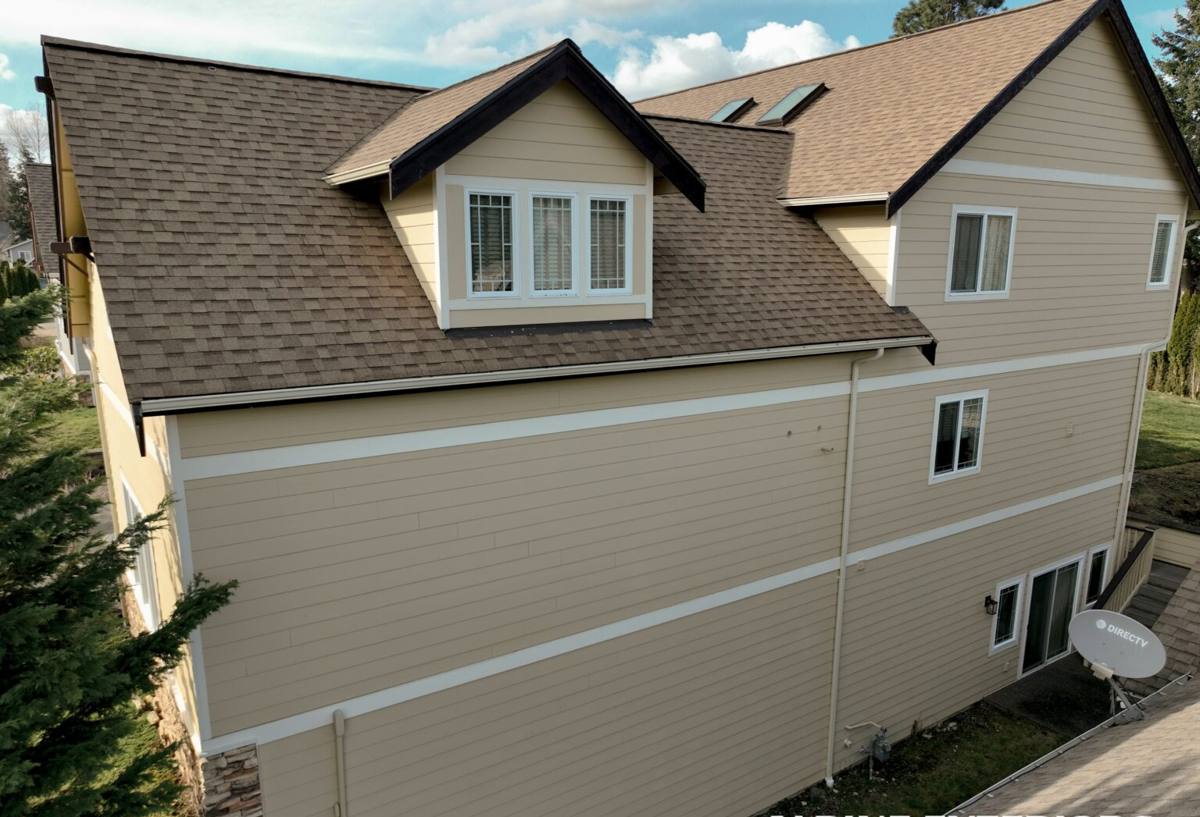
The Basic Mechanism: Water Finds a Way In
Almost every siding failure traces back to the same root cause: water getting behind the siding and staying there. Siding itself is a weather-resistant layer, not a waterproof seal. Every home relies on a system underneath — house wrap, flashing, proper overlaps, and caulking at penetrations — to manage the small amounts of moisture that inevitably get past the surface layer.
Where Water Typically Gets In
- Butt joints and seams where panels meet, especially if caulking has dried out or was never installed correctly
- Around window and door trim where flashing is missing, reversed, or was cut short during a remodel
- Bottom edges of siding that sit too close to grade, decks, or roof lines and wick up standing water
- Nail penetrations that were overdriven, under-driven, or placed in the wrong location on the panel
- Areas where a satellite dish, light fixture, or hose bib was installed after the original siding job, without re-flashing
Once water gets behind the siding, what happens next depends heavily on what material is back there and how well the wall can dry out.
What's Actually Happening Behind the Panel
Trapped Moisture and Slow Rot
Wood-based sheathing (OSB or plywood) behind the siding is not designed to get wet repeatedly. A wall that dries out fully between rain events is generally fine. A wall that stays damp — because of poor ventilation, a failed weather barrier, or a low spot that never drains — starts to break down the wood fibers. This process is slow and largely invisible until the sheathing has lost real structural integrity.
Mold and Air Quality
Trapped moisture in wall cavities is also a mold environment. Because these cavities are sealed off from living space, mold can grow for a long time without being visible, though it sometimes shows up as musty odors or, in advanced cases, staining that bleeds through interior drywall.
Fastener and Framing Corrosion
Persistent moisture accelerates corrosion of nails, house wrap staples, and any metal flashing components. Corroded fasteners lose their grip, which can allow siding panels to work loose — a problem that compounds in a region that also sees regular wind off the Sound.
Freeze-Thaw and Expansion Stress
Skagit County doesn't get extreme cold most winters, but it does get enough freeze-thaw cycling that trapped water in a seam or a swollen piece of wood-based siding can crack further with each cycle. Small gaps become bigger gaps.
Why Certain Materials Struggle More Than Others
Not all siding materials handle moisture exposure the same way, and this is where a lot of the long-term cost difference between products comes from.
| Material | Moisture Behavior | Common Failure Pattern |
|---|---|---|
| Untreated or primed wood (spruce, cedar) | Absorbs water directly into the fiber; swells and contracts with humidity | Cupping, splitting, rot at butt joints and lower courses |
| Engineered wood (OSB-based products) | Vulnerable at cut edges and seams if factory sealant is compromised | Edge swelling, delamination, soft spots |
| Vinyl | Doesn't absorb water itself, but doesn't stop water either — relies entirely on the barrier behind it | Water bypasses the panel invisibly; damage found only when siding is removed |
| Fiber cement (James Hardie) | Cement-based core resists moisture absorption and does not rot | Failures are almost always installation-related, not material-related |
This is a big part of why we standardized on James Hardie fiber cement years ago and stopped installing wood-fiber products, vinyl, and other engineered wood sidings. It's not that those products can't perform for a while in the right conditions — it's that in a marine climate with salt air and sustained wet seasons like ours, the failure modes above show up more often and sooner than most homeowners expect when they're comparing sticker prices.
Signs You Can Actually See From the Outside
Most rot and moisture damage is hidden, but there are visible clues worth checking a few times a year, especially after Skagit County's wetter months.
- Paint that blisters, peels, or won't hold even right after a repaint
- Visible warping, waviness, or panels that look different in sunlight versus shadow
- Soft or spongy areas when pressed firmly (use the back of your hand, not a sharp object)
- Dark streaking or staining running down from seams or trim
- Moss or persistent green growth clinging directly to the siding surface rather than just nearby surfaces
- Gaps opening up at butt joints or around window and door trim
- A musty smell near exterior walls, particularly in closets or behind furniture placed against outside walls
The Role of Moss and Shade in This Climate
Moss doesn't cause siding damage directly the way rot does, but it's a strong warning sign. Moss holds moisture against the surface far longer than the surface would otherwise stay wet, extending the amount of time water has to find its way into a seam or a nail hole. Homes in shaded lots near tree cover — common throughout Mount Vernon and the surrounding Skagit Valley — tend to develop moss faster and should get a closer look at seams and trim where moss tends to accumulate first.
A Note on Salt Air
Proximity to the Sound and the tidal reaches of the Skagit River means airborne salt is a factor for a lot of homes in this area, even a few miles inland. Salt accelerates corrosion of metal fasteners and flashing, which is one more reason fastener quality and correct flashing installation matter as much as the siding material itself.
Repair, or Replace?
Not every sign of moisture trouble means a full re-side. A localized failure — one bad window flashing, one section of rotted trim — can often be repaired without touching the rest of the wall. But there are situations where patch repairs stop making sense:
- Damage shows up in multiple, unrelated areas of the house rather than one isolated spot
- The siding is original and near or past the manufacturer's expected service life
- Sheathing underneath is already soft or delaminating in more than one location
- Repeated repairs to the same area haven't solved the underlying leak path
- You're planning to repaint soon anyway and want to avoid painting over a problem that will resurface
A proper inspection should include pulling a section of siding where there's visible concern, not just looking at the surface. That's the only reliable way to know whether you're dealing with a cosmetic issue or a structural one.
What We Install Instead, and Why
Because we've seen what moisture does over time in Skagit County conditions, we only install James Hardie fiber cement siding. The cement-based composition doesn't absorb water into its structure the way wood-fiber products do, it doesn't rely purely on a barrier behind it the way vinyl does, and it's engineered specifically for climates like the Pacific Northwest through Hardie's HZ product lines. The factory-applied ColorPlus finish also removes one of the more common moisture entry points on other materials: field-painted surfaces that lose their seal at the edges over time.
None of that replaces correct installation. Fiber cement still needs proper flashing, correct fastening, and appropriate clearance from grade and rooflines to perform the way it's designed to. But it removes the material itself as a weak link, which is a meaningful difference over the 30-plus year span most homeowners expect their siding to last.
Get an Honest Look at What's Going On
If you're seeing any of the warning signs above, or you just want a second opinion before committing to a repaint or repair, we're happy to take a look. We offer free, no-pressure estimates for Mount Vernon and the surrounding Skagit County area, and we'll tell you honestly whether you're looking at a simple fix or something more serious.