 Mount Vernon
 Conway Sits Right Where Weather and Water Meet
Conway is a low-lying community tucked into the Skagit River delta, close to Skagit Bay and the farmland that surrounds Fir Island. That location is part of what makes it beautiful, and it's also exactly why homes here take more punishment from the outside than houses just a few miles inland. Between the tidal influence off the bay, the open agricultural exposure, and the shade from mature trees along the river corridor, exterior surfaces in Conway are dealing with a combination of salt-tinged moisture, standing humidity, and near-constant dampness for a good chunk of the year.
We're based in Mount Vernon and have worked exteriors throughout Skagit County long enough to know that "coastal Washington siding" isn't one single climate problem — it's several stacked on top of each other. Conway gets its own particular mix.
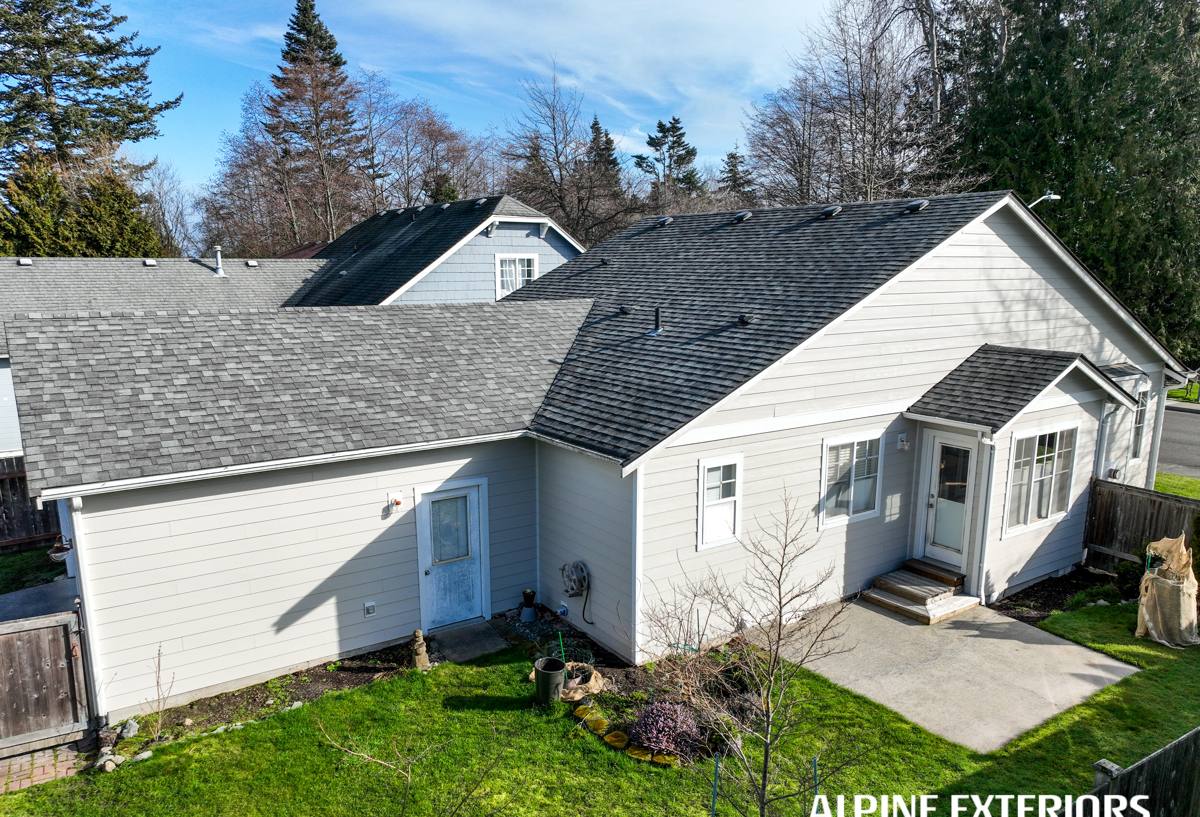
What the Local Climate Does to a Home's Exterior
Salt Air
Proximity to Skagit Bay means airborne salt is a real factor here, even a few miles from open water. Salt-laden air accelerates corrosion on fasteners and metal trim, and it degrades cheaper paint finishes faster than inland exposure would. Siding that isn't factory-finished for coastal conditions tends to chalk, fade, and lose adhesion sooner in a setting like this.
Driving Rain
Pacific storm systems moving through the delta don't just drop rain straight down — wind off the flats pushes it sideways into walls, especially on west- and south-facing elevations with little tree break. That means water intrusion at seams, laps, and penetrations is a bigger risk here than it would be on a sheltered inland lot, and it puts real weight on how well siding is flashed and installed, not just what it's made of.
A Long Moss Season
Shaded, low-drainage lots near the river and the surrounding farmland stay damp longer than sun-exposed properties. That extended dampness is exactly what moss, algae, and mildew need to establish themselves on siding, trim, and roofing. Once organic growth gets a foothold, it holds moisture against the surface underneath it, which is a slow but steady path to rot on wood-based products.
Humidity and Standing Moisture
Being in a river delta means the air holds more moisture on average than it would up on higher, drier ground. Combined with the region's mild temperatures, that's a year-round environment where anything porous or moisture-sensitive on the outside of a house is working harder than it would elsewhere.
Why Siding Material Matters More in a Place Like This
None of this is unique to any one house in Conway — it's a function of geography. But it does mean the margin for error on siding choice and installation quality is smaller here than in a drier, more sheltered part of the county. A product that performs fine in a protected inland subdivision can struggle on an exposed delta lot facing open wind and salt air. That's the lens we use when we talk to homeowners in Conway about their exterior.
Why We Install Only James Hardie Fiber Cement
We don't install vinyl siding, LP SmartSide, primed spruce, cedar, or other fiber cement brands like Cemplank or Allura. That's a deliberate standard, not a limitation of what we're capable of installing. James Hardie is the product we've found holds up best against exactly the conditions Conway deals with, and we'd rather turn down work than put something on a house that we don't believe will perform.
What Makes It Different
- Non-combustible core: fiber cement doesn't feed a fire the way wood-based siding does.
- Climate-engineered HZ product lines: Hardie manufactures versions of its siding specifically formulated for high-humidity, wet-climate regions like the Pacific Northwest.
- ColorPlus factory finish: a baked-on finish applied under controlled conditions, which holds color and resists the chalking and fading that salt air accelerates on field-applied paint.
- Dimensional stability: fiber cement doesn't swell, warp, or cup with repeated wet-dry cycling the way wood and some engineered wood products can.
- Strong transferable warranty: backed by a manufacturer warranty that can carry over to a new owner, which matters when you eventually sell.
We're not saying every other product is unusable everywhere — we're saying that for a delta community with salt air, driving rain, and long stretches of damp shade, we're not willing to install anything less proven than Hardie's climate-specific lines.
How We Install for Conway's Conditions
Material choice only solves half the problem. The rest comes down to how the job is done, and in a wind-and-rain-exposed setting like Conway, the details matter more than usual.
What Correct Installation Includes
- A properly lapped weather-resistive barrier behind the siding, not just a single layer of housewrap tacked up quickly
- Correct flashing at every window, door, and roof-to-wall intersection — the majority of siding failures we see start at a penetration, not the field of the wall
- Fastener spacing and type matched to Hardie's published specifications, since improper fastening is one of the most common ways a fiber cement warranty gets voided
- Proper clearance between the bottom of the siding and grade, decks, or roof lines so water has somewhere to go
- Caulking and sealant only where the manufacturer calls for it — over-caulking traps moisture just as easily as under-caulking lets it in
This is the part of the job that separates a siding install that looks good on installation day from one that's still performing correctly in fifteen years on a wet, wind-exposed delta lot.
Roofing, Windows, and Decks Work Together Out Here
Siding doesn't fail in isolation. A roof that's shedding water improperly, windows that are past their sealing life, or a deck ledger board trapping moisture against the wall all put extra stress on the siding around them. We handle roofing, windows, and decks alongside siding for that reason — in a climate like Conway's, the exterior works as a system, and gaps between trades are where water finds its way in.
Roofing
A roof shedding water cleanly, with intact flashing and clear gutters, keeps runoff away from your siding instead of dumping it down the wall face. Moss on a roof in a shaded Conway lot is also a strong early indicator that siding nearby is dealing with the same damp conditions.
Windows
Old or failing window flashing is one of the most common hidden water paths into a wall assembly. When we replace siding around existing windows, we check that flashing integrates correctly rather than just trimming siding up to the frame.
Decks
Ledger boards and deck-to-house connections are common trouble spots for trapped moisture, especially on shaded lots. We build and flash these so they don't become the weak point in an otherwise solid exterior.
What Affects the Cost of a Siding Project in Conway
| Factor | Why It Matters Locally |
|---|---|
| Home size and elevation exposure | Larger wall areas and unsheltered, wind-exposed sides need more material and more careful flashing detail |
| Existing siding removal and condition of sheathing underneath | Long-term moisture exposure in a damp delta setting sometimes means hidden sheathing repair is needed once old siding comes off |
| Trim, corner, and Hardie board profile selection | Different Hardie lines and accessory trims carry different material costs |
| Number of window, door, and roofline penetrations | Each one requires proper flashing work, which adds labor but is the single biggest factor in long-term water performance |
| Access and site conditions | Rural and river-adjacent lots can have drainage, grading, or access considerations that affect scheduling and setup |
We give straightforward, itemized estimates rather than a single vague number, so you can see what's actually driving the cost.
Why a Local Crew Is Worth It
A contractor working out of Mount Vernon and covering Skagit County day in and day out has seen how Conway's particular mix of salt air, wind-driven rain, and shaded moisture plays out on real houses over years, not just at the moment of installation. That's different from a crew that installs the same product the same way regardless of whether the house is in a dry inland subdivision or an exposed delta lot. We adjust flashing details, fastening, and material selection based on what actually holds up in this specific setting — not a generic national spec sheet.
Signs Your Siding May Already Be Struggling
- Moss or algae building up on siding, not just the roof
- Paint that's chalking, fading, or peeling faster than it should for its age
- Soft spots, bubbling, or visible warping, especially near the bottom courses or around windows
- Rust streaking from fasteners or trim
- Persistent damp smell or discoloration on interior walls that back up to exterior siding
- Gaps opening up at seams, corners, or trim boards
Any one of these on its own isn't necessarily an emergency, but in a climate like Conway's, they tend to compound quickly once moisture finds a way in.
Get a Straightforward, No-Pressure Estimate
If you're noticing wear on your siding, roof, windows, or deck — or you just want an honest read on how your home's exterior is holding up against Conway's climate — we're happy to come take a look. Fill out the form below for a free estimate, no pressure and no obligation.