 Mount Vernon
 Decking Built for the Little Mountain Microclimate
Little Mountain sits close enough to the water and high enough on the terrain that homes here take weather from more than one direction. You get the marine air drifting up from the Skagit flats, wind-driven rain off the higher ground, and long stretches of gray, wet months where nothing on a deck surface gets a real chance to dry out. Add in the tree cover common to the area and you've got the three things that wreck an outdoor deck fastest: moisture, salt exposure, and moss. A deck built for a dry inland lot doesn't hold up the same way up here, and a lot of the deck problems we get called out for in this neighborhood trace back to a build that never accounted for those conditions in the first place.
Composite decking, installed correctly, handles this environment better than wood does over the long run. But "composite" isn't one product with one behavior — board quality, structure underneath, and how the job is detailed at the edges make the difference between a deck that looks good for fifteen years and one that's growing algae in its grooves by year three.
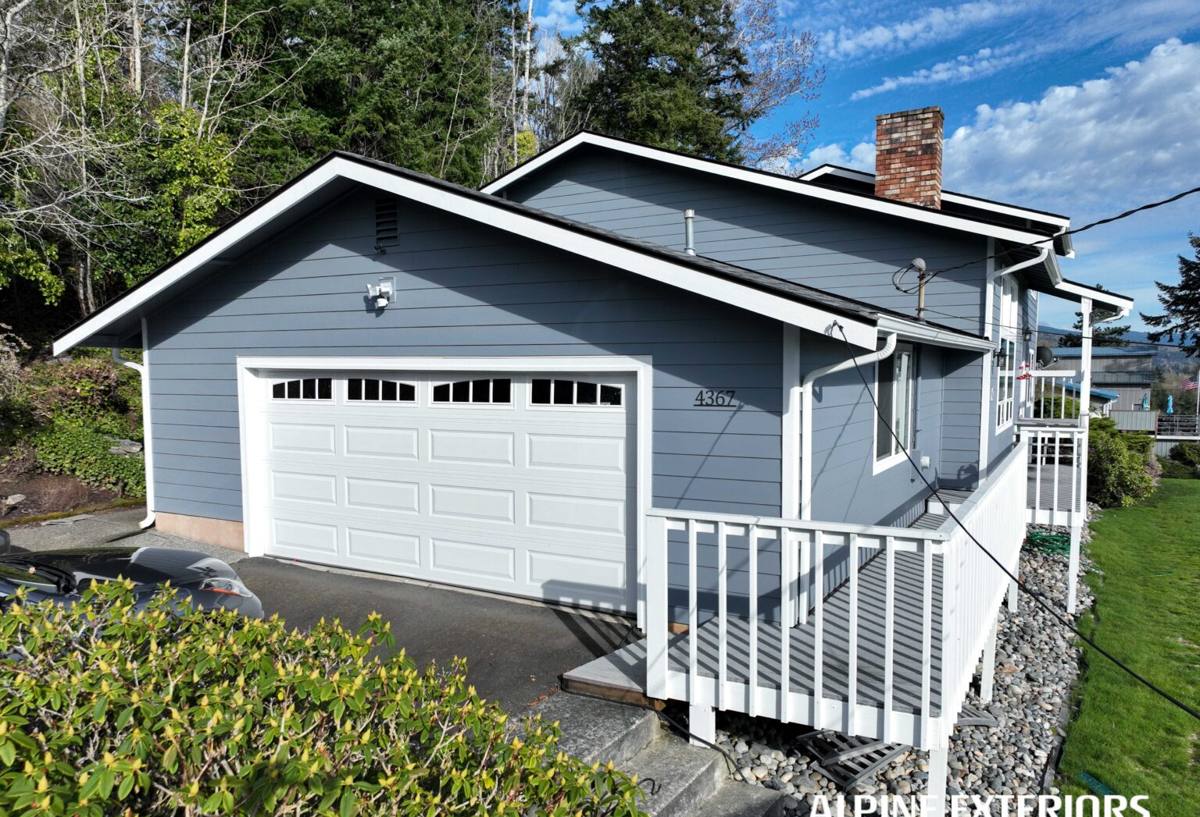
What Little Mountain Homes Actually Need From a Deck
Moisture That Doesn't Get Trapped
The single biggest issue we see on decks in this area isn't the board material — it's what's happening underneath and between the boards. Composite doesn't rot the way wood does, but if water sits against the substructure, pools under the deck, or gets trapped in tight board spacing, you still end up with mold, staining, and premature wear on fasteners and framing. A correct install in a wet climate like Skagit County pays as much attention to drainage and airflow under the deck as it does to what's on top.
Moss and Algae Resistance
Moss doesn't need much — shade, moisture, and time — and Little Mountain's tree cover and long damp season give it plenty of both. Composite boards vary a lot in how they handle this. Cheaper, uncapped composite has a more porous surface that gives moss and algae something to grip. Fully capped boards with a textured, low-porosity finish shed that growth far better and clean up with a simple wash instead of a scrub-and-replace situation.
Salt Air and Corrosion
Being close to Puget Sound air means metal hardware corrodes faster here than it would further inland. Fasteners, brackets, and structural connectors that aren't rated for coastal exposure will rust and weaken years before the decking itself shows any wear — and once fasteners fail, the deck's structural integrity is the problem, not the surface material.
Where Deck Builds Go Wrong in This Climate
- Composite boards installed tight to the house or a wall with no gap for airflow, trapping moisture against siding and framing
- Standard interior-grade or under-rated fasteners used instead of coastal-rated hardware
- Joists and beams that aren't properly flashed or capped, so water wicks into the substructure from above
- Board spacing too tight for the amount of rain this area gets, slowing drainage and drying time
- No ventilation gap between the deck framing and the ground or a low-clearance foundation
- Ledger board attachment that isn't properly flashed against the house, a common source of hidden water intrusion
- Ignoring slope — a deck surface needs a slight pitch away from the house so water actually moves instead of sitting
None of these are exotic mistakes. They're common shortcuts that don't show up as a problem on install day — they show up two or three wet seasons later, which is exactly why so many homeowners don't connect a soft spot or a mossy stretch of decking back to how it was built in the first place.
Composite Board Quality: What the Differences Mean
Not all composite decking performs the same in a climate like this. The table below covers the practical differences that matter for a Skagit County installation, not marketing language.
| Factor | What It Means for Little Mountain Homes |
|---|---|
| Capped vs. uncapped composite | Fully capped boards resist moisture absorption and moss growth far better; uncapped or partially capped boards are more porous and stain and green up faster in a wet, shaded lot |
| Board surface texture | A textured, low-sheen finish sheds algae and resists slickness better than smooth or high-gloss surfaces, which matters on a deck that stays damp for days at a time |
| Color | Darker boards show less staining from organic debris and moss residue than very light colors, though all colors need periodic cleaning here |
| Structural core | Denser cores resist sagging between joists over time and hold fasteners more securely under repeated wet-dry cycling |
| Warranty structure | Reputable composite lines back both material and fade/stain performance for decades; read what's actually covered rather than assuming "lifetime" means everything is included |
We steer homeowners toward fully capped composite for anything installed in shaded, moisture-prone spots like a lot of Little Mountain properties have. It costs more up front than uncapped composite or basic pressure-treated wood, but the maintenance burden and moss cleanup over a 15-20 year span is where the real cost difference shows up.
What a Correct Composite Deck Build Involves
Substructure First
The framing underneath a composite deck does the actual structural work, and it's usually wood or engineered lumber even when the surface is composite. In this climate, that framing needs proper joist tape or flashing to keep water from soaking into the top of each joist, coastal-rated fasteners throughout, and enough clearance underneath for air to move and moisture to evaporate rather than sit.
Drainage and Slope
A deck surface should carry a slight, consistent slope away from the house. Combined with correct board spacing, this keeps water moving off the deck instead of pooling on it or draining back toward the foundation — a detail that matters more here than in drier parts of the state given how much rain this area sees over a typical winter.
Ledger Attachment and Flashing
Where the deck ties into the house is one of the most common failure points in wet climates. Proper flashing at the ledger board keeps water from working its way behind the siding or into the rim joist, which is a slow, hidden kind of damage that's expensive to fix once it's found.
Fastening System
Hidden fastener systems are common with composite decking and generally hold up well, but the fasteners themselves need to be rated for coastal, high-moisture exposure. This is a small line-item that's easy to overlook and expensive to correct after the fact.
Our Process for a Little Mountain Composite Deck
- On-site assessment — we look at sun exposure, tree cover, drainage, and how the deck ties into the house before recommending a board and structure
- Structural plan — framing, joist spacing, and fastener spec matched to the site conditions, not a generic template
- Board selection — walk through capped vs. uncapped options, color, and texture based on how shaded and moisture-prone the specific spot is
- Substructure build — flashing, joist protection, and coastal-rated hardware installed before a single composite board goes down
- Deck installation — proper spacing, slope, and fastening for long-term drainage and stability
- Final walkthrough — we go over basic seasonal maintenance so the deck holds up the way it's supposed to
Maintenance in a Wet, Mossy Climate
Composite decking needs far less upkeep than wood, but "low maintenance" doesn't mean "no maintenance" in Skagit County. A yearly rinse and light scrub in shaded or debris-prone areas keeps moss and organic staining from getting a foothold. Keeping gutters and nearby drainage clear so water isn't dumping onto or near the deck matters more here than in drier regions. Debris — needles, leaves, seed pods — should be swept off regularly rather than left to hold moisture against the board surface, especially under furniture or planters where airflow is already limited.
Why a Local Little Mountain Crew Matters
A crew that already works this specific area knows which lots sit shadier and wetter, which spots catch more wind-driven rain, and which construction details actually hold up through a full Skagit County winter versus which ones only look fine on install day. That's not something you get from a general contractor working from a standard spec sheet — it comes from building and later servicing decks in this exact microclimate. We'd rather spend the extra time upfront on flashing, fastener choice, and drainage than have a homeowner call us back in three years about a deck that's developing soft spots or won't stop growing moss in the shady corner.
If you're planning a new composite deck or replacing an aging one in Little Mountain, we're happy to take a look and walk you through honest options for your specific lot. There's a form below — reach out for a free, no-pressure estimate.