 Mount Vernon
 Why Clear Lake Homes Need Windows Installed the Right Way, Not the Fast Way
Clear Lake sits in one of the wetter, more heavily wooded pockets of Skagit County, and that setting is hard on windows in ways that don't show up on a spec sheet. Tall tree cover around many lake-adjacent lots keeps siding and trim shaded and slow to dry after a storm. Add in the long stretch of fall and winter rain that western Washington is known for, plus the wind-driven rain events that come through the valley, and you've got window openings that stay damp far more often than homes in drier, more open parts of the state. Moisture that sits against a frame for days at a time will eventually find a way in if the installation underneath the trim isn't done correctly.
There's also the broader Puget Sound climate to account for. Marine air moving inland across Skagit County carries a faint salt content that, over years, speeds up corrosion on window hardware, screws, and lesser-grade metal components. It's a slow process, but it's a real one, and it's part of why we don't treat window installation as a one-size-fits-all job. A window and installation method that holds up fine in a dry inland climate can fail early here if it wasn't chosen and installed with this specific environment in mind.
None of this means Clear Lake is a uniquely difficult place to keep windows performing well. It just means the margin for error is smaller. A correctly installed, well-sealed window will handle everything this area throws at it for decades. A poorly installed one — even an expensive one — often starts showing problems within a few short years.
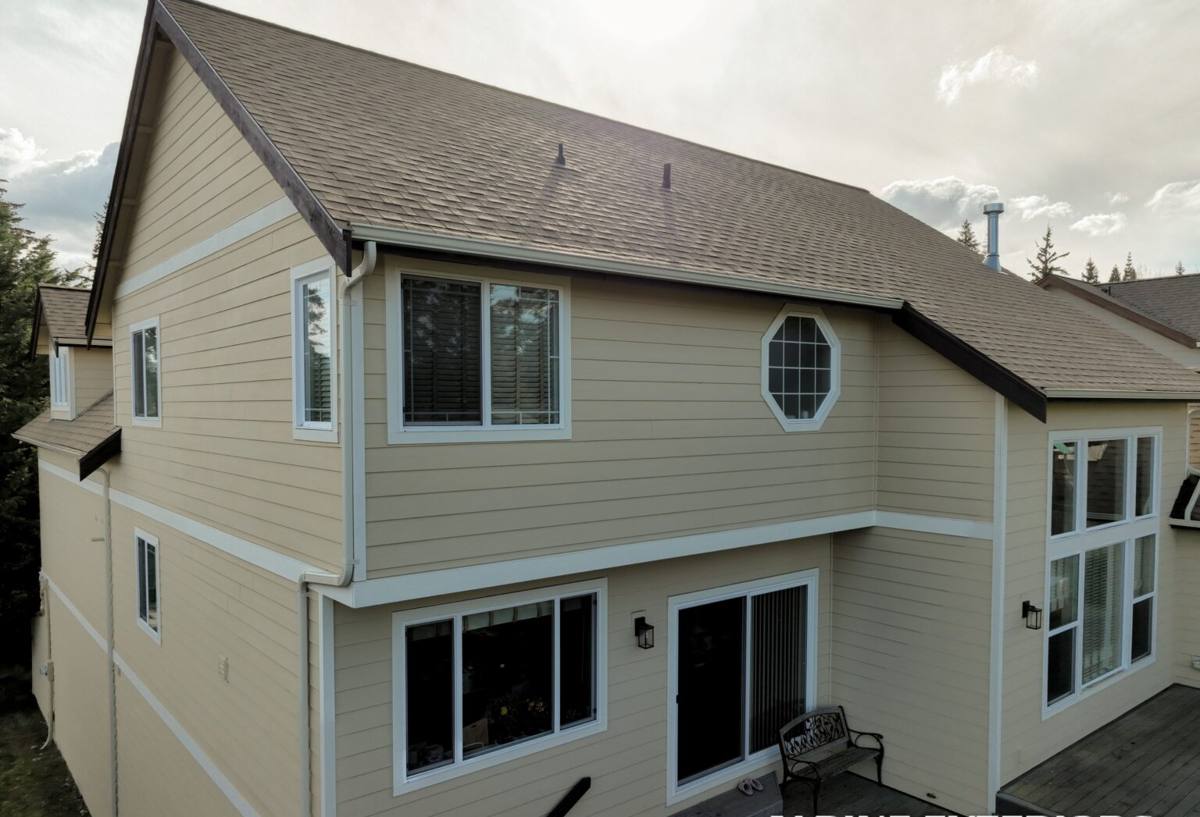
Signs Your Current Windows Are Already Losing the Fight
Homeowners usually notice something is wrong well before they decide to do anything about it. Given the moisture and shade patterns common around Clear Lake, these are the issues we see most often:
- Fogging or a permanent haze between the panes of double-pane glass — a sign the seal has failed and the insulating gas has escaped
- Soft, spongy, or discolored wood at the bottom corners or sill of the window frame
- Noticeable drafts near the frame even when the window is fully latched
- Windows that stick, drag, or won't stay open without a prop
- Cracked, shrunken, or missing exterior caulk around the frame perimeter
- Moss or dark algae staining on the trim or siding directly around the window, suggesting water is lingering there
- A steady rise in heating costs that isn't explained by anything else
Any one of these on its own isn't necessarily an emergency. But if you're seeing two or three together, especially soft wood combined with drafts, there's a good chance moisture has already worked past the surface and into the framing behind it.
What a Correct Window Installation Actually Involves
Setting a new window into an existing opening looks simple from the outside, but the parts nobody sees are what determine whether it lasts. This is where most of the problems we get called out to fix actually started.
Flashing and Weatherproofing Done in the Right Order
Every opening needs a proper water management system built in layers — a sill pan to catch and direct any water that gets past the window, flashing tape integrated with the house wrap so water is shed downward and outward rather than trapped behind the trim, and careful attention to how each layer overlaps the one below it. Skip or shortcut this step and it doesn't matter how good the window itself is; water will eventually find the framing.
Insulating the Gap Without Overdoing It
The space between a new window frame and the rough opening needs to be filled with a low-expansion, window-rated foam or backer rod and sealant — not the high-expansion foam sold for general use, which can bow the frame and cause the sash to bind or the seals to distort. Underfilling leaves cold spots and drafts; overfilling can warp the unit before it's even finished being installed.
Sealing That Matches This Climate
Exterior sealant choice and application matter more here than in drier regions, simply because it gets tested more often. We use sealants rated for sustained moisture exposure and temperature swings, and we tool every joint so water sheds away from the seam instead of sitting on top of it.
Choosing the Right Window for a Clear Lake Property
There's no single "best" window for every home — the right choice depends on your home's exposure, your budget, and how much upkeep you want to take on. Here's an honest look at how the common frame materials compare in a climate like this one:
| Frame Material | Moisture Tolerance | Upkeep Required | Typical Cost Tier |
|---|---|---|---|
| Vinyl | Good — won't rot, handles damp shade well | Low; occasional cleaning only | Entry to mid-range |
| Fiberglass | Excellent — very stable in wet, temperature-swinging conditions | Low | Mid to upper-range |
| Wood, factory-clad exterior | Good if the cladding and seals stay intact; interior wood still needs a dry environment | Moderate; watch cladding seams over time | Upper-range |
| Bare wood | Weakest for this climate without diligent, ongoing maintenance | High — regular repainting and sealing | Varies widely |
For most Clear Lake homes, especially properties with heavy tree cover that keeps things shaded and damp, we steer people toward vinyl or fiberglass for the exterior-facing performance, and reserve wood-look interiors for homeowners who specifically want that appearance and are prepared for the upkeep. We're not going to tell you a bare wood frame is a bad product — it's a matter of how much maintenance you're willing to commit to keep it performing in a wet, shaded setting like this one.
How Our Installation Process Works
- On-site assessment. We look at each opening individually — sun exposure, tree cover, existing damage, and how water has historically moved around that part of the house.
- Careful removal. The old window comes out with the surrounding sheathing and framing inspected before anything new goes in. This is often the first real look anyone's had at what's been happening behind the trim.
- Repair before replace. Any soft or water-damaged framing gets addressed at this stage — installing a new window into damaged framing just locks the problem in for another decade.
- Sill pan and flashing. Water management goes in first, integrated with the existing weather barrier, not just caulked over the top of it.
- Setting the window. Leveled, plumbed, and squared, then fastened per the manufacturer's requirements — not just "close enough."
- Insulation and sealing. Low-expansion foam or backer rod around the frame, followed by exterior sealant tooled for proper water shedding.
- Trim and finish work. Interior and exterior trim reinstalled or replaced to match, with attention paid to keeping the moss and algae staining common in shaded areas from taking hold again quickly.
- Cleanup and walkthrough. Old materials hauled away, and we walk each window with you before we consider the job finished.
What Affects the Cost of Your Window Project
Every home is different, and we'd rather give you a real number after seeing your windows than a made-up one here. In general, these are the factors that move the price:
| Cost Factor | Why It Matters |
|---|---|
| Number of windows | Per-unit cost typically drops as the total project scope grows |
| Retrofit vs. full-frame replacement | Full-frame work involves more removal, repair, and finish work but is often necessary where framing has water damage |
| Frame material and glass package | Vinyl, fiberglass, and clad-wood carry different material costs; upgraded glass coatings add cost but improve comfort and efficiency |
| Existing damage found during removal | Rot repair discovered once the old window is out is common in older, shaded homes and is priced once it's actually visible |
| Access and site conditions | Tree-covered lots, second-story openings, or tight access can add labor time |
As a very rough starting point, straightforward vinyl replacement windows installed in an existing opening tend to run in the low-to-mid four figures per window range in this region, with full-frame work, larger openings, upgraded glass, or repair work pushing that higher. The only way to get a number you can actually plan around is a walkthrough of your specific home.
Why It Matters to Hire a Crew That Already Works Around Clear Lake
A lot of window problems we're called out to fix weren't caused by a bad window — they were caused by an installer who didn't account for the local conditions. Crews that mostly work drier, more open parts of the state can do a technically fine installation that still isn't set up to handle the shade, humidity, and rain patterns typical of a lake-adjacent Skagit County property.
Working this area regularly also means we're familiar with the permitting expectations and inspection process for Mount Vernon and unincorporated Skagit County jurisdictions, so there are no surprises mid-project. And practically speaking, we can respond quickly if a storm causes damage or a seal fails, rather than you waiting on a crew that has to travel a long distance to get to you.
Keeping Your New Windows Performing for the Long Haul
A correct installation gets you most of the way there, but a little seasonal attention goes a long way in this climate:
- Rinse pollen, dust, and organic debris off tracks and sills a couple of times a year so they don't hold moisture against the frame
- Check exterior caulk lines each fall before the heavy rains set in, and have any cracked sections resealed promptly
- Trim back branches or vegetation that keeps a window in constant shade — reducing standing moisture reduces moss and algae growth on nearby trim
- Operate every window a few times a year, even ones you rarely open, so hardware and weatherstripping don't seize or compress permanently
- Watch for condensation between panes — it means a seal has failed and the insulating value of that window is gone, even if it still looks fine
If you're weighing whether your current windows need attention or full replacement, we're happy to take a straightforward look and tell you honestly what we see — no pressure, no inflated recommendations. Reach out for a free estimate using the form below, and we'll walk your home's windows with you in person.