 Mount Vernon
 Windows Built for Life Near Clear Lake
Clear Lake sits in that stretch of Skagit County where tree cover, standing water, and marine-influenced air all work on a house at the same time. It's a beautiful place to live, but it's not a gentle place for windows. Homes tucked among the trees around the lake deal with more shade, more standing moisture, and a slower drying cycle after every rain than homes out in the open valley. Add in the driving rain that blows through this part of Washington most of the year and the salt-tinged marine air that reaches inland from the Puget Sound side of the county, and you've got a climate that finds every weak point in a window system eventually.
We work on homes throughout the Mount Vernon area, and Clear Lake properties tend to show a specific pattern of wear: fogged double panes from failed seals, aluminum frames that have pitted and gone chalky, wood sills that have gone soft where water sits after storms, and a persistent moss and algae film on north-facing glass and trim that shade from the tree canopy never lets fully dry out. None of that is a reflection on the homeowner — it's just what this microclimate does to older window systems over twenty or thirty years.
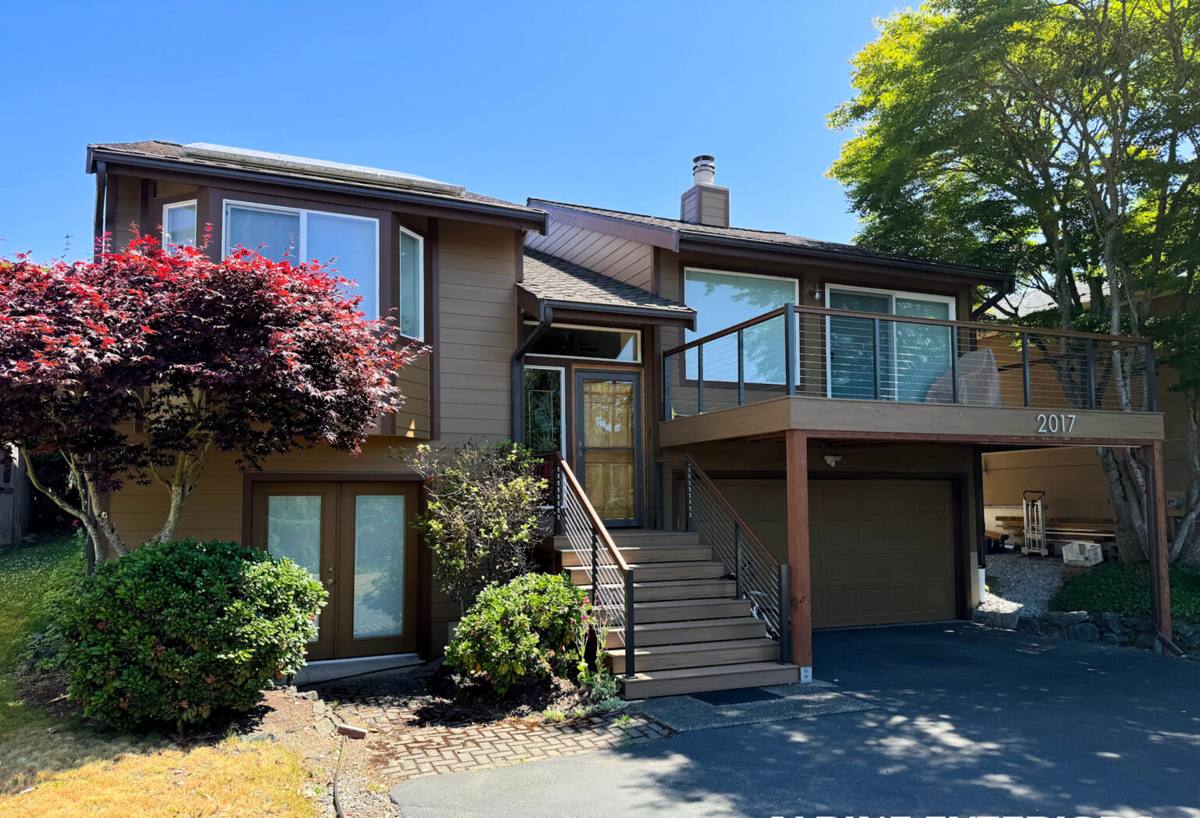
Signs a Clear Lake Home Is Ready for Replacement
Not every drafty window needs full replacement, but there's a point where repair stops making sense. Here's what we look for during an assessment:
- Fogging or a hazy film between the panes — the seal has failed and the insulating gas or air gap is gone for good
- Visible moss, algae, or black streaking on the frame or sill that keeps returning within weeks of cleaning
- Soft, spongy, or discolored wood at the sill or lower corners of the frame
- Windows that won't stay open on their own, or that have become difficult to lock
- Noticeable draft or cold air movement around the frame even when the window is fully latched
- Aluminum frames with a chalky white residue or pitting from years of moisture exposure
- Condensation forming on the inside of the glass regularly during cooler months
If a window is showing two or more of these, replacement is usually the more economical path over the next five to ten years than continuing to patch and re-caulk a system that's already failing from the inside.
What a Correct Installation Actually Involves
It's Not Just Swapping Glass
The window unit itself is only part of the job. In a climate that drives rain sideways for months at a time, the flashing and sealing details around the opening matter as much as the window brand. A replacement done without proper flashing integration can look fine for a year or two and then start leaking into the wall cavity — which is a much more expensive problem than the window it replaced.
A correct job includes removing the old unit down to the rough opening, inspecting the sheathing and framing underneath for hidden rot (common on lake-adjacent homes where moisture has been working its way in slowly), correcting any damage found, and rebuilding the water management layer — flashing tape, sill pans, and house wrap integration — before the new window ever goes in. Skipping this step to save time is the single biggest cause of window-related water damage we see in older Skagit County homes.
Sealing and Insulating Correctly
Once the window is set and shimmed level and plumb, the gap between the frame and the rough opening needs to be insulated without over-packing it, which can bow the frame and cause operating problems. Exterior sealant goes only where it should — leaving a designed weep path so any incidental moisture that does get behind the trim has somewhere to drain out rather than pooling.
Frame Materials: What Holds Up Around Clear Lake
We install several frame materials and each has real trade-offs for a moist, shaded, lake-proximity property. Here's how they compare for this specific setting:
| Frame Material | Moisture Behavior | Maintenance | Best Fit |
|---|---|---|---|
| Vinyl | Won't rot, corrode, or absorb moisture | Occasional rinse to clear moss/algae film | Most Clear Lake homes; strong value for the climate |
| Fiberglass | Excellent moisture and temperature stability, very low expansion/contraction | Low; holds paint and finish well over time | Homes wanting a painted or higher-end look with long-term stability |
| Wood (clad exterior) | Interior wood warmth with a protective exterior shell against rain exposure | Moderate; exterior clad protects the wood, interior still needs normal care | Homes prioritizing an interior wood look, with the exterior protected from the weather |
| Bare aluminum | Poor in this climate — conducts cold, prone to condensation and pitting over time | High; recurring corrosion and condensation issues | Not something we recommend for new installs in this area given the moisture exposure |
We steer most Clear Lake customers toward vinyl or fiberglass, not because aluminum is a bad product everywhere, but because in a shaded, humid, lake-adjacent setting the condensation and corrosion issues tend to show up faster than they would in a drier part of the state. It's a maintenance and longevity call, not a knock on the material in general.
Single-Hung, Double-Hung, Sliders, and Casements — What Fits Where
The right window style depends on the wall it's going into as much as personal preference. A few things worth thinking through:
- Casement windows seal tighter against wind-driven rain because the sash presses into the frame rather than sliding — a real advantage on walls that catch the prevailing weather
- Double-hung windows are easier to clean from inside, which matters on upper floors or windows overlooking the lake where exterior access is awkward
- Sliders are a simple, cost-effective option for lower-exposure walls, like covered porches or interior-facing sides of the house
- Windows facing the prevailing weather or open water views generally benefit from higher-performance glass packages, since they take the brunt of both sun and rain exposure
Glass Packages and Energy Performance
Modern replacement windows are sold with different glass packages, and the right one depends on which side of the house you're replacing. Low-E coatings reduce heat loss in winter and heat gain in summer, and argon or krypton gas fills between panes improve insulation value over a standard air gap. For homes near the lake with significant tree shade, solar heat gain is usually less of a concern than heat retention during the county's long, damp, overcast stretches — so we typically recommend glass packages tuned more for insulation than for solar control, unless a specific elevation gets strong afternoon sun.
Beyond comfort, a properly sealed, well-insulated window also cuts down on interior condensation, which matters directly for indoor air quality and for protecting sills, trim, and drywall from the kind of slow moisture damage that's common in humid, shaded settings.
Our Process, Start to Finish
- On-site assessment — we look at each window individually, not just the house as a whole, since exposure varies wall to wall
- Honest recommendation — which windows need full replacement now, which can wait, and why
- Material and glass selection — matched to each wall's actual sun and rain exposure
- Written estimate — a clear scope with no vague allowances
- Removal and opening inspection — checking the rough opening and sheathing for hidden moisture damage before anything new goes in
- Flashing and water management rebuild — the step that actually determines whether the install lasts
- Installation, insulation, and sealing — set, shimmed, insulated, and sealed with a proper drainage path
- Final walkthrough — operation check on every window, cleanup, and a look at the finished exterior trim work
What Drives the Cost
Every Clear Lake home is a little different, so we don't quote sight-unseen, but these are the main factors that move the price on a given project:
| Cost Factor | Why It Matters |
|---|---|
| Number and size of windows | Sets the baseline material and labor cost |
| Frame material chosen | Vinyl, fiberglass, and clad-wood carry different unit costs |
| Hidden damage found at the opening | Rot or water intrusion behind the old frame adds repair scope before the new window can go in |
| Window style and glass package | Casements, larger glass units, and upgraded Low-E/gas-fill packages cost more than basic sliders or standard glass |
| Access and site conditions | Second-story, tight clearances, or difficult exterior access affect labor time |
As a general rule, homeowners should expect a wide range from a basic single-window swap to a full-house, upgraded-glass replacement — which is exactly why we walk the property first and give a specific number rather than a generic estimate.
Living With New Windows in a Moss-Season Climate
Even the best window benefits from a little seasonal attention in this environment. A quick rinse of frames and tracks a couple of times a year keeps moss and algae from establishing on shaded elevations, and clearing debris out of weep holes after fall leaf-drop keeps the drainage path doing its job. Vinyl and fiberglass frames make this easy — there's no repainting or sealing required, just an occasional wash. We also recommend a quick visual check of exterior caulking each fall before the heavy rains set in, since caulk is a wear item regardless of how well the window itself is built.
Why Local Experience With Clear Lake Homes Matters
A window that performs well in a dry, open subdivision doesn't automatically perform the same way on a shaded lot near Clear Lake with different sun exposure, tree cover, and moisture load. Crews who work this specific area regularly know which elevations take the worst of the weather, which older homes tend to have hidden sill damage before the siding even comes off, and which materials actually hold up rather than just looking good on a spec sheet. That local pattern recognition is what keeps a replacement project from becoming a callback a year later.
If your windows near Clear Lake are fogging, drafting, or showing that stubborn moss film that won't go away, we're happy to come take a look. There's no pressure and no cost for a straightforward, honest estimate — just a clear picture of what your windows need and what it'll take to fix it right.