 Mount Vernon
 Big Lake Sits in a Tougher Microclimate Than Most People Realize
Big Lake, just southeast of Mount Vernon in Skagit County, looks like classic Pacific Northwest lake living — mature trees, shaded lots, water views. That same setting is hard on exterior siding. Homes here deal with more shade than open Skagit Valley properties, more standing moisture on north- and east-facing walls, and the same salt-tinged air that moves inland off Puget Sound and the Samish Bay area during wind events. Add Skagit County's long stretch of driving rain from fall through spring, and you get a combination that punishes any siding material with a weak moisture story.
We don't treat Big Lake like a generic Mount Vernon address. Homes tucked under tree canopy near the lake dry out slower after a storm than a house on an open lot a few miles away. That difference matters when you're choosing a siding product and deciding how it should be installed.
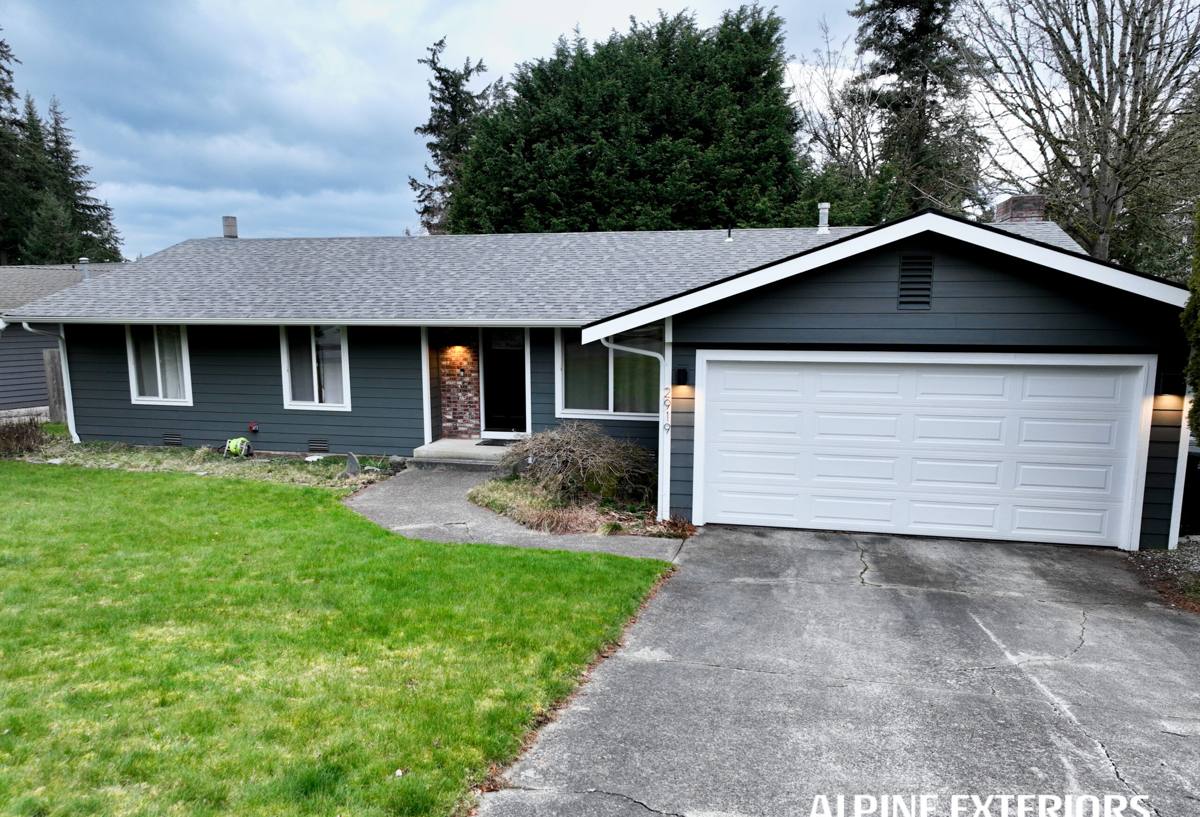
What the Local Conditions Actually Do to Siding
Shade and slow-drying walls
Tree cover around Big Lake is part of what makes it a desirable place to live, but it also means less direct sun on large sections of most homes. Wet siding that doesn't get afternoon sun stays wet longer, and prolonged moisture contact is what drives rot, delamination, and paint failure in lesser materials.
Moss and algae season
Skagit County's moss season isn't a two-month event — on shaded, moisture-holding surfaces it can run most of the year. Moss and algae growth on siding isn't just cosmetic. Organic growth holds water against the surface and, on products that aren't built to resist it, accelerates whatever damage is already happening underneath.
Salt air and wind-driven rain
Big Lake isn't waterfront on the Sound, but Skagit County's proximity to the Salish Sea means salt-tinged marine air reaches inland, especially during winter storms. Combined with driving rain that gets forced sideways into walls, siding needs a real weather barrier behind it and a surface finish that doesn't degrade from repeated wet-dry, salt-tinged cycles.
Why We Standardized on James Hardie Fiber Cement
We install James Hardie fiber cement exclusively — not vinyl, not LP SmartSide, not primed wood products. That's not a marketing position, it's an installation standard we settled on after years of seeing which products actually hold up in exactly the kind of shaded, damp, moss-prone conditions common around Big Lake.
Fiber cement is non-combustible, dimensionally stable, and doesn't feed organic growth the way wood-based or wood-composite products can. James Hardie's ColorPlus factory finish is baked on under controlled conditions, which gives it more consistent, longer-lasting color performance than field-applied paint — a real advantage on a home that spends half the year damp under tree cover.
Where Hardie's HZ5 engineering matters here
James Hardie engineers its HardieZone products by climate. HZ5, the line built for the Pacific Northwest's wet, moderate-temperature exposure, is formulated and tested for exactly this kind of weather pattern — not the freeze-thaw cycles of the Midwest or the heat of the Southwest. That regional engineering is part of why we don't substitute a generic siding product and call it good for Skagit County.
What a Correct Fiber Cement Installation Involves
Fiber cement performs well for decades when it's installed correctly, and performs poorly fast when it isn't. The material itself rarely fails — installation shortcuts are what cause problems, especially in a wet climate like this one.
- Weather-resistant barrier installed and lapped correctly behind the siding, not just stapled up as an afterthought
- Proper flashing at every window, door, and roofline penetration so water is directed out, not trapped behind the cladding
- Correct minimum clearance from grade, decks, and roof lines to keep splash-back and standing moisture off the bottom courses
- Fastener placement and spacing that follows Hardie's published installation specs — not shortcuts that void the warranty
- Proper joint treatment and caulking at butt joints and trim, since these are the most common points where amateur installs fail first
- Rainscreen or drainage gap detailing in the shadiest, slowest-drying wall sections, where standing moisture is the biggest long-term risk
Skip any one of these and you can end up with a product rated for 30-plus years failing in five, regardless of how good the siding itself is.
HardiePlank vs. HardiePanel: Choosing the Right Profile for a Lake Property
| Product | Look | Best Fit |
|---|---|---|
| HardiePlank Lap Siding | Traditional horizontal lap, multiple textures | Most Big Lake homes — classic look, proven water-shedding lap design |
| HardiePanel Vertical Siding | Clean vertical panels, often paired with lap or trim accents | Cabin-style or modern lake homes wanting a board-and-batten look |
| HardieShingle | Staggered or straight-edge shingle profile | Homes wanting a cottage or craftsman accent on gables or dormers |
Most of the Big Lake homes we work on land on HardiePlank for the main field of the house, sometimes paired with HardieShingle or HardiePanel accents on gables and entry features. We'll walk through what fits your home's style and exposure during the estimate rather than pushing one look.
Our Process, Start to Finish
1. On-site assessment
We look at your home's actual exposure — how much shade it gets, where moisture already shows on the current siding, and which walls take the worst of the wind-driven rain. That assessment drives the product and detailing recommendations, not a one-size-fits-all package.
2. Tear-off and inspection
Once the old siding comes off, we inspect the sheathing underneath. In a lake-adjacent, tree-shaded setting, this step matters more than it does on drier lots — hidden rot or trapped moisture behind failed siding is common, and it needs to be addressed before anything new goes up.
3. Weather barrier and flashing
This is the layer that actually keeps water out of your walls. We install it to spec, with attention to every window, door, and penetration.
4. Hardie installation
Panels or planks go up following James Hardie's fastening, clearance, and joint specifications, with rainscreen detailing added where shade and slow drying make it worthwhile.
5. Final walkthrough
We go over the finished job with you, including care basics for the first year and what to watch for given your specific lot's shade and moisture pattern.
Cost Factors for Big Lake Siding Projects
| Factor | Why It Affects Cost |
|---|---|
| Tear-off and sheathing repair | Homes with existing moisture damage need repair before new siding goes on |
| Home size and wall complexity | Gables, dormers, and multiple stories add labor and material |
| Siding profile mix | Combining lap, panel, and shingle accents costs more than a single profile |
| Access and site conditions | Tree-covered, sloped, or tight lake-lot access can add setup and staging time |
| Trim and finish detail | Custom trim work around windows and rooflines adds labor |
We give honest ranges once we've actually seen the home — anyone quoting a firm number sight unseen is guessing, and on a shaded lake lot that guess is more likely to be wrong.
Why It Matters That We Already Work This Area
Big Lake isn't a huge market, but it has its own quirks — narrower access on some lots, mature landscaping that needs protecting during tear-off, and homes where the shade pattern changes what detailing makes sense wall by wall. A crew that already works Mount Vernon and the surrounding Skagit County lake communities isn't learning those quirks on your house. We've seen how these homes age, what fails first, and what holds up.
That familiarity also means we're not surprised by what's under the old siding when we open a wall up. Moisture-damaged sheathing on the shaded side of a lake home is a known quantity to us, not a change-order shock.
Living With Fiber Cement Around Big Lake
Fiber cement doesn't need the maintenance routine that wood or wood-composite siding does — no periodic re-caulking of the whole field, no repainting cycle every few years. But no siding is maintenance-free in a shaded, moisture-prone setting. A rinse-down of moss-prone, north-facing walls once or twice a year and a quick visual check of caulking at trim and joints will keep a correctly installed Hardie job performing the way it's supposed to for decades.
If you're seeing moss buildup, soft spots, or paint failure on your current siding, or you're planning ahead for a home near the lake, we're happy to take a look and give you a straight answer about what your home actually needs. Reach out for a free, no-pressure estimate — we'll walk the property with you and explain exactly what we see.