 Mount Vernon
 Building a Deck That Actually Holds Up in Edison
Edison sits close to tidal water and open farmland on the Skagit County side of the Samish flats, which means anything built outdoors here deals with a specific mix of conditions: salt-tinged marine air, long stretches of driving rain in fall and winter, and a moss and algae season that can run most of the year. A deck built to a generic spec sheet from a big-box store often looks fine the first summer and then starts showing problems by year three — soft spots at the ledger, rusted fastener heads bleeding into the boards, or a slick green film that never fully dries out. A deck built for this specific stretch of Skagit County looks the same the first summer and the fifth.
This page covers what we actually do differently when we build a custom deck for a home in Edison — the materials, the hardware, the framing details, and the parts of the process that matter more here than they would somewhere drier and further from salt water.
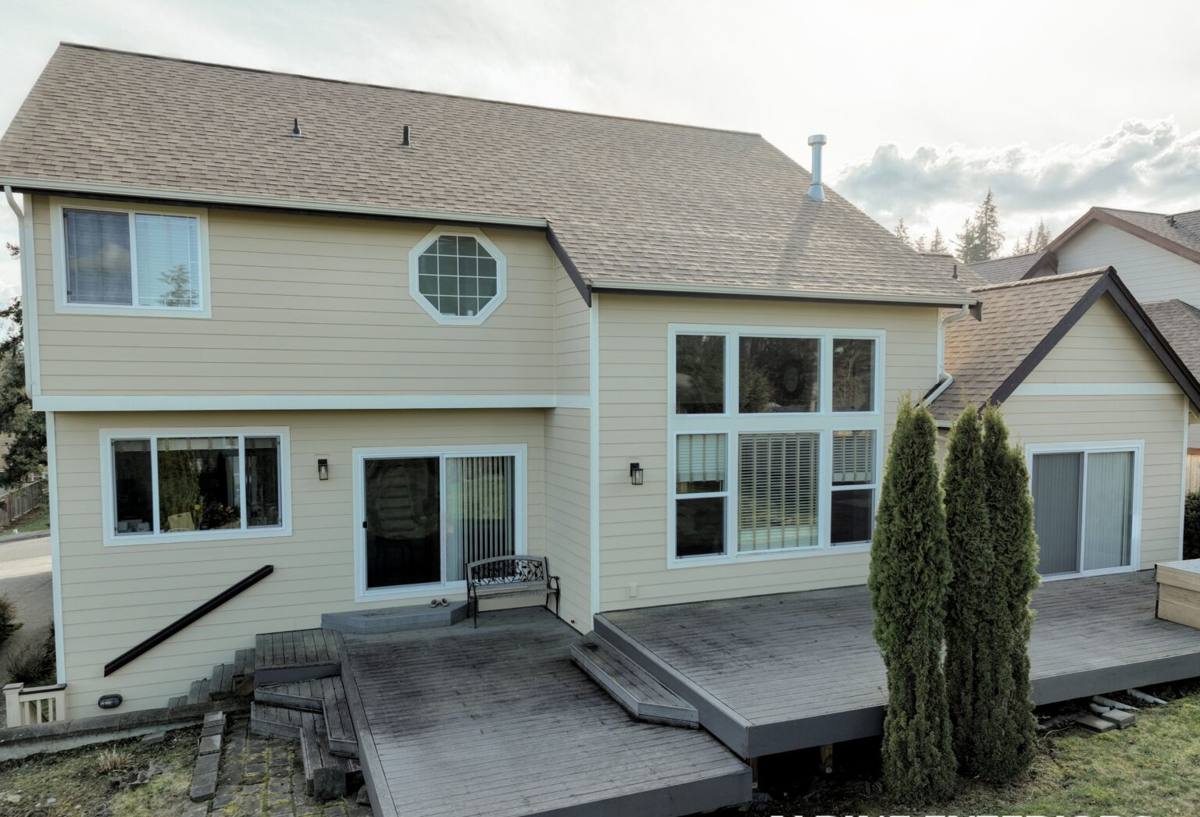
What Edison's Climate Does to a Deck Over Time
Salt Air and Metal Fasteners
Proximity to tidal water means the air carries more salt than it would inland, and salt accelerates corrosion in any exposed metal — screw heads, joist hangers, bolts, post bases. Standard electro-galvanized fasteners are rated for interior or dry-climate use; near the water they can start rusting within a couple of seasons, and once a fastener rusts it weakens and can streak or stain the decking around it. This is one of the most common corner-cutting mistakes we see in older decks in this area, and it's an easy one to avoid at the framing stage if the right hardware is specified from the start.
Moss, Algae, and Standing Water
Skagit County's wet season means a deck surface can stay damp for days at a time, especially in shaded corners or under overhangs. Moss and algae need moisture and a surface to grip, and any decking with a rough or porous surface, poor drainage, or tight board spacing gives them exactly that. Beyond the slip hazard, trapped moisture is what drives rot in wood decking and mold staining in composite decking that wasn't installed with enough gap for airflow and drying.
Wet, Low-Lying Soil
Much of the ground around Edison is low-lying farmland and tidal-influenced soil with a high water table for a good part of the year. That matters for anything below the deck surface — footings that aren't sized and set correctly for local soil conditions can shift over a wet winter, which shows up later as a deck that's slightly out of level or a railing post that's gone loose.
Choosing the Right Decking Material for This Climate
There's no single "best" decking material — the right choice depends on budget, how much upkeep you want to do, and how close the deck sits to salt air or shade. Here's how the common options actually compare for a home in this area:
| Material | Moisture & Moss Resistance | Maintenance | Typical Lifespan Here | Relative Cost |
|---|---|---|---|---|
| Pressure-treated wood | Good if sealed regularly; absorbs moisture if not | Annual cleaning, resealing every 1-2 years | 15-20 years with upkeep | Lowest |
| Cedar | Naturally rot-resistant, but surface grays and can hold moss without care | Cleaning plus periodic oil/stain | 15-20 years with upkeep | Moderate |
| Capped composite | Very good; shell resists moisture absorption and algae staining | Occasional washing, no sealing or staining | 25-30+ years | Higher |
| PVC decking | Excellent; doesn't absorb moisture at all | Occasional washing | 25-30+ years | Highest |
We don't install every product on the market, and that's a deliberate choice rather than a brand preference. Some budget composite lines use a lower-grade cap or none at all, which can allow moisture into the core over time in a climate this wet — once that happens, the warranty rarely covers the cosmetic damage that follows. We'll walk you through the specific composite and PVC lines we do stand behind, and their real trade-offs, during your estimate.
Framing and Fasteners: The Parts You Don't See
The decking surface gets all the attention, but the framing underneath is what determines whether a deck is still solid in ten years. For decks we build in the Edison area, that means:
- Stainless steel or heavy hot-dip galvanized fasteners and structural hardware, not standard electro-galvanized, given the salt air exposure
- Properly flashed ledger board where the deck attaches to the house, so water is directed away from the rim joist rather than trapped behind it
- Footings sized and set to the depth and bearing conditions the soil actually calls for, not a one-size-fits-all minimum
- Joist tape or a moisture barrier on top of framing lumber to slow water intrusion at the fastener points
- Board spacing and airflow underneath sized to let the structure dry out between rain events, not just look good on install day
None of this is visible once the deck is finished, which is exactly why it's worth asking a contractor directly what hardware and flashing details they use before signing anything.
Permits and Local Requirements
Edison is unincorporated, so deck permitting for most properties here runs through Skagit County rather than a city building department. Whether a permit is required generally depends on the deck's height above grade, its size, and whether it's attached to the house. Guardrail height, stair geometry, and footing depth are all governed by the same building code whether or not a permit is pulled, so "no permit needed" doesn't mean "no code requirement." We handle the permit application and inspection scheduling as part of the project so you're not the one chasing down county paperwork, and we build to code whether or not a given project happens to require a permit.
Our Process for a Custom Deck Build
- On-site visit: we look at grade, drainage, sun and shade exposure, and how the deck will tie into the house before recommending a design.
- Design and material selection: we walk through decking, railing, and fastener options with the cost and maintenance trade-offs specific to this site.
- Permitting: if the project requires a Skagit County permit, we prepare and submit it and schedule the required inspections.
- Footings and framing: footings are set to proper depth for the soil, and framing goes in with corrosion-resistant hardware and ledger flashing.
- Decking and railing installation: boards and railing are installed with spacing and fastening appropriate to the material and this climate.
- Final walkthrough: we go over the finished deck with you, including basic care specific to the material you chose.
Maintenance That Actually Matters Here
A deck built correctly for this climate still needs some seasonal attention — the difference is how much. Wood decking needs more of it; composite and PVC need less but not none. A simple annual routine keeps most problems from starting:
- Sweep debris off the surface regularly, especially in fall when leaves and needles trap moisture against the boards
- Wash the deck surface at least once a year with a deck-safe cleaner to remove early moss and algae growth before it takes hold
- Check and clear gaps between boards so water and debris don't dam up and sit against the framing
- Inspect fastener heads and hardware yearly for early rust or staining, particularly on wood decks
- Reseal or re-stain wood decking on the schedule the product calls for — skipping a cycle in this climate shows up fast
- Trim back vegetation that shades the deck and keeps it from drying out between rains
Why Hire a Crew That Already Works in Edison
A deck contractor who mostly builds in drier parts of the state may not default to stainless fasteners, may not think twice about ledger flashing detail, and may not know how the local soil behaves under a footing through a wet winter. None of that is a knock on their skill — it's just not what they run into every day. We work on homes throughout the Mount Vernon and Skagit County area, including Edison, and we spec materials and hardware for the conditions this specific area actually produces: salt air, sustained rain, and a moss season that doesn't take much of a break. That's the difference between a deck that needs real repair work in five years and one that just needs a wash.
If you're planning a custom deck in Edison, we're happy to walk the site, talk through material options honestly — including the trade-offs, not just the upsides — and give you a clear, no-pressure estimate. Use the form below to get started.