 Mount Vernon
 Why Kulshan Ridge Roofs Wear Differently Than Roofs Elsewhere in Skagit County
A roof on Kulshan Ridge doesn't age the same way as a roof tucked into a sheltered lot down in the valley. Higher, more exposed ground catches more wind, more direct rain, and more of the salt-tinged air that drifts in off Skagit Bay and the Sound. None of that is dramatic on its own, but stacked together over years, it changes what "normal wear" looks like on this side of Mount Vernon — and it changes what a repair actually needs to accomplish to hold up.
Salt Air and Slow Corrosion
Salt in the air speeds up corrosion on anything metal on your roof — nail heads, flashing, gutter hangers, vent boots with metal collars. A fastener that would hold for decades inland can start weeping rust streaks or losing its grip years earlier out here. Small point, but it's exactly the kind of detail that turns a five-minute fix into a full flashing replacement if it's ignored.
Wind-Driven Rain, Not Just "Rain"
Western Washington rain rarely just falls straight down. On exposed, elevated lots it comes in sideways, which means water gets pushed up under shingle laps, around chimney step-flashing, and into valleys that would shed a gentler rain without issue. A repair that only addresses the spot where water is dripping through the ceiling, without addressing how it got in from the side, tends to fail again the next windy storm.
A Moss Season That Never Fully Ends
Between the tree cover common on ridge lots and the long stretch of overcast, damp months from fall through spring, moss and lichen get a real foothold on north-facing and shaded slopes. Moss isn't just cosmetic — it holds moisture against the roofing material, lifts shingle edges as it grows, and works its way into fastener holes and laps, turning a minor granule loss issue into an active leak path over a season or two.
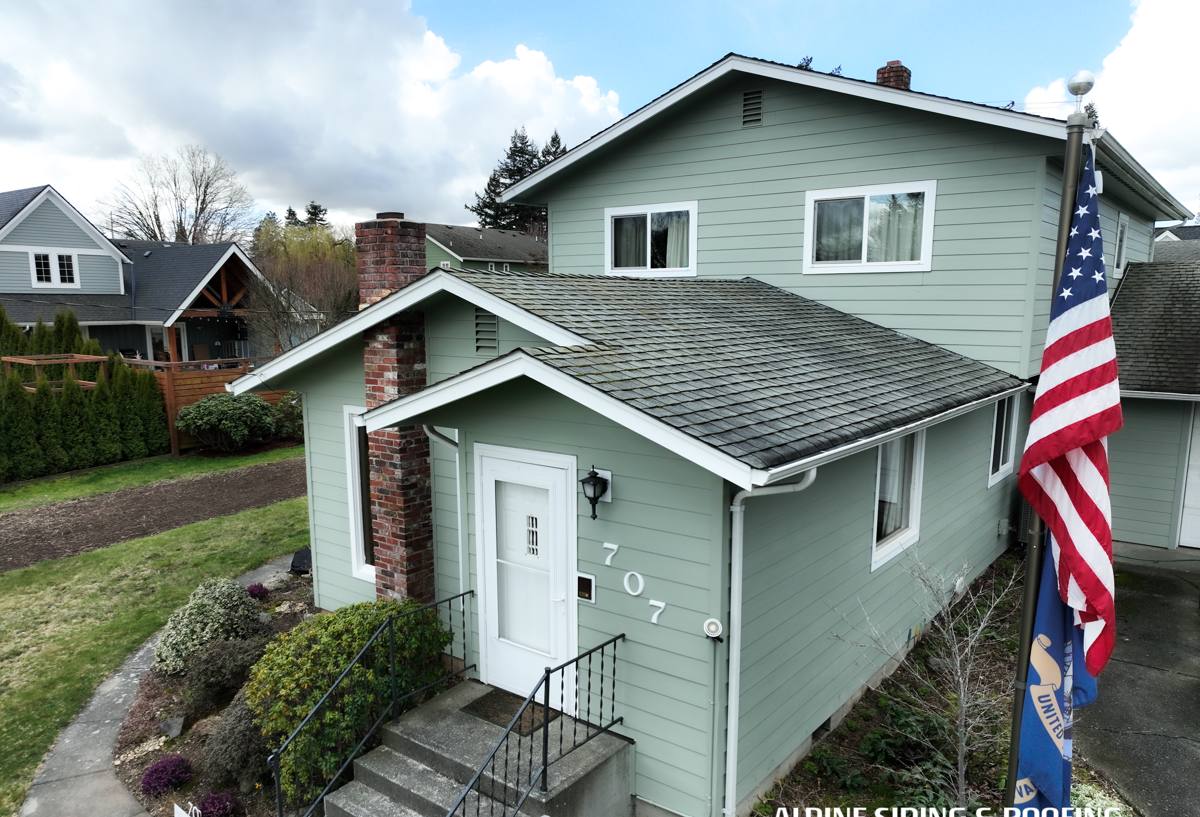
The Repair Calls We See Most Often on This Ridge
Every neighborhood has its own pattern of roof trouble, shaped by its exposure, tree cover, and the age of housing stock. On Kulshan Ridge, the calls tend to cluster around a handful of causes:
- Shingles lifted or cracked along moss-covered valleys and north slopes
- Leaks at chimney and skylight flashing where sealant has been used as a substitute for proper metal work
- Wind-lifted or torn shingle tabs along exposed ridgelines and eaves
- Gutter backup from moss and needle debris causing water to back up under the drip edge
- Rusted or failing nail heads and pipe boot collars from long-term salt air exposure
- Soft or discolored roof decking discovered only once a shingle repair is opened up
None of these are unusual roofing problems in the abstract. What's specific to this area is how often several of them show up together on the same roof, because the same climate conditions that cause one tend to cause the others.
What a Correct Roof Repair Actually Involves
Find the Real Source First
Water rarely enters where it shows up. A stain on a bedroom ceiling might trace back to a flashing gap three feet up-slope, with the water running along the underlayment or decking before finding a way through. A repair that isn't preceded by a real inspection — walking the roof, checking the attic side, tracing the path — is a guess dressed up as a fix.
Flashing and Underlayment, Not Just Sealant
Caulk and roofing cement have their place, but they are not a substitute for step flashing, counter-flashing, or properly lapped underlayment. In a climate with driving rain, sealant-only repairs are the ones that come back. A correct repair rebuilds the water-shedding path — shingle over flashing over underlayment, each layer lapped the right direction — so gravity and design keep water out, not just a bead of caulk holding it back.
Matching Materials the Right Way
Shingles fade with UV and weather exposure, so a brand-new shingle dropped into a ten-year-old roof section will stand out. We're upfront about that trade-off: sometimes a slightly visible patch is the honest, cost-effective answer for a small repair, and sometimes — especially on a highly visible slope — pulling a slightly wider section for a more even blend is worth the extra material and labor. We'll walk you through which makes sense for your specific repair rather than defaulting to whichever is easier for us.
Checking Attic Ventilation While We're Up There
Poor attic ventilation traps moisture underneath the roof deck, which accelerates rot and can make moss and mildew worse from the inside out even after the outside is fixed. Since we're already on the roof and often in the attic to trace a leak, we check intake and exhaust venting as part of the visit — it's a five-minute check that can save a much bigger repair down the line.
Our Process, Start to Finish
- Initial contact: You describe what you're seeing — a stain, a missing shingle, a musty attic smell — and we schedule a time to look at the roof directly.
- On-roof inspection: We walk the roof and check the attic where accessible, tracing the actual water path rather than just patching the visible symptom.
- Written estimate: You get a clear explanation of what's wrong, what we recommend, and a price before any work starts — no surprise add-ons mid-repair.
- The repair itself: Flashing, underlayment, decking, and shingles are addressed in the right order, with materials chosen for this area's exposure.
- Cleanup: Old material, nails, and debris are cleared from the roof, gutters, and ground before we leave.
- Follow-up: We explain what we did, what to watch for, and what workmanship coverage applies to the repair.
Repair vs. Partial Re-Roof vs. Full Replacement
Not every roof problem calls for the same scope of work. Here's roughly how we think through it, and what tends to drive the decision one way or the other.
| Option | Typical Situation | What Drives the Cost | Rough Lifespan Added |
|---|---|---|---|
| Spot repair | One or two failure points — a flashing leak, a handful of damaged shingles, a bad pipe boot | Access difficulty, whether decking underneath is sound, material matching | Several years, if the roof's overall condition is otherwise good |
| Partial re-roof (one slope or section) | Concentrated moss/rot damage on one exposed or shaded slope while the rest of the roof is healthy | Square footage of the section, decking replacement needs, flashing detail at the tie-in to old roofing | Matches new roofing lifespan on that section, typically 15-25+ years depending on material |
| Full replacement | Roof is at or past its expected service life, or damage is spread across multiple slopes | Total square footage, roof complexity, tear-off layers, decking condition, material choice | Full manufacturer-rated lifespan of the new roofing system |
Broad honesty here: a well-executed spot repair is often the right call and the responsible spend when a roof is otherwise in decent shape. We're not going to push a full replacement on a roof that just needs its flashing redone — but we'll also tell you plainly when a "repair" would just be a temporary patch on a roof that's genuinely at the end of its life.
Keeping the Repair Working: Moss and Debris Maintenance
A good repair can be undercut by moss and debris building right back up around it. A little homeowner maintenance between professional visits goes a long way in this climate:
- Keep gutters and downspouts clear of needles and moss debris, especially before the fall rains start
- Trim back overhanging branches where practical to reduce shade and debris load on the roof
- Have visible moss growth removed with proper technique rather than pressure-washed, which can strip granules and shorten shingle life
- Watch for granules collecting in gutters or at downspout outlets — a sign a shingle surface is wearing down
- Check attic insulation and venting periodically for signs of moisture or musty odor
- Schedule a roof check after any major windstorm, even if nothing looks obviously wrong from the ground
The Standards We Hold to on Every Repair
In an area with this much moisture and salt exposure, the small decisions matter more than they would somewhere drier and more sheltered. We use corrosion-resistant fasteners and flashing metals suited to coastal-influenced air rather than whatever is cheapest, because dissimilar or lower-grade metals can corrode and fail years before the shingles around them would. We rebuild flashing details rather than relying on sealant as a long-term fix, because sealant degrades with UV and temperature swings faster than a properly formed and lapped metal flashing does.
On the subject of moss control, some manufacturers offer shingles with zinc or copper granules designed to inhibit moss growth over time. These can be a reasonable long-term addition on a full slope or full roof replacement, but we're straightforward that they work gradually as rain washes metal ions across the surface — they're not an instant fix, and they don't remove the need for periodic physical moss removal on heavily shaded roofs. We'll explain that trade-off rather than oversell it as a cure-all.
We're also clear about warranty structure: manufacturer material warranties cover the shingles or components themselves, while our workmanship coverage is separate and covers our installation. Understanding which is which matters if you ever need to make a claim, and we'd rather explain it upfront than have it be a surprise later.
Why It Matters That We Already Work This Neighborhood
A crew that's already worked roofs on Kulshan Ridge knows the exposure patterns of this ground before they climb the ladder — which slopes take the worst of the wind-driven rain, which lots hold onto moss the longest because of tree cover, and roughly what condition to expect from roofs of a given age in this area. That familiarity shows up in faster, more accurate diagnosis and fewer surprises once the repair is underway. It also means a shorter drive for us, which matters when a storm has just come through Skagit County and you don't want to wait days for someone to come look at an active leak.
If you're dealing with a leak, missing shingles, or just want an honest look at a roof that's been growing more moss every winter, we're glad to come take a look. The estimate is free, there's no pressure attached to it, and you'll get a straight answer about what your roof actually needs — use the form below to get started.