 Mount Vernon
 Why East Mount Vernon Roofs Wear Out Faster Than the Warranty Says
Manufacturers write shingle warranties based on lab testing, not on a Skagit Valley winter. East Mount Vernon homes deal with a specific combination of stressors that shortens real-world roof life: near-constant fall-through-spring rainfall, marine air pushing in off Skagit Bay and Puget Sound, and heavy tree canopy in many of the older, established neighborhoods east of the river. None of these alone is unusual for Western Washington. Together, on the same roof, year after year, they add up faster than most homeowners expect.
Rain and Moss Are a Package Deal
Skagit County gets a long stretch of low-intensity, all-day rain rather than short heavy downpours. That kind of weather keeps roof surfaces damp for extended periods, which is exactly what moss and algae need to establish. Shaded roof planes, north-facing slopes, and areas under overhanging trees hold onto moisture the longest. Once moss gets a foothold in the shingle mat, it lifts tabs, holds water against the roof deck, and accelerates granule loss — which is the roofing equivalent of losing sunscreen.
Salt Air Doesn't Skip Inland Towns
Mount Vernon sits far enough inland that people assume salt exposure isn't a factor, but the town is close enough to Skagit Bay and the broader Puget Sound basin that marine air reaches it regularly, especially on west-facing exposures and higher elevations. Salt-laden moisture speeds up corrosion on exposed metal fasteners, flashing, and vent stacks. It's rarely the reason a whole roof fails, but it's a real contributor to rust streaking, fastener backout, and premature wear on lower-grade metal components — which is why material choice and fastener quality matter more here than in a dry inland climate.
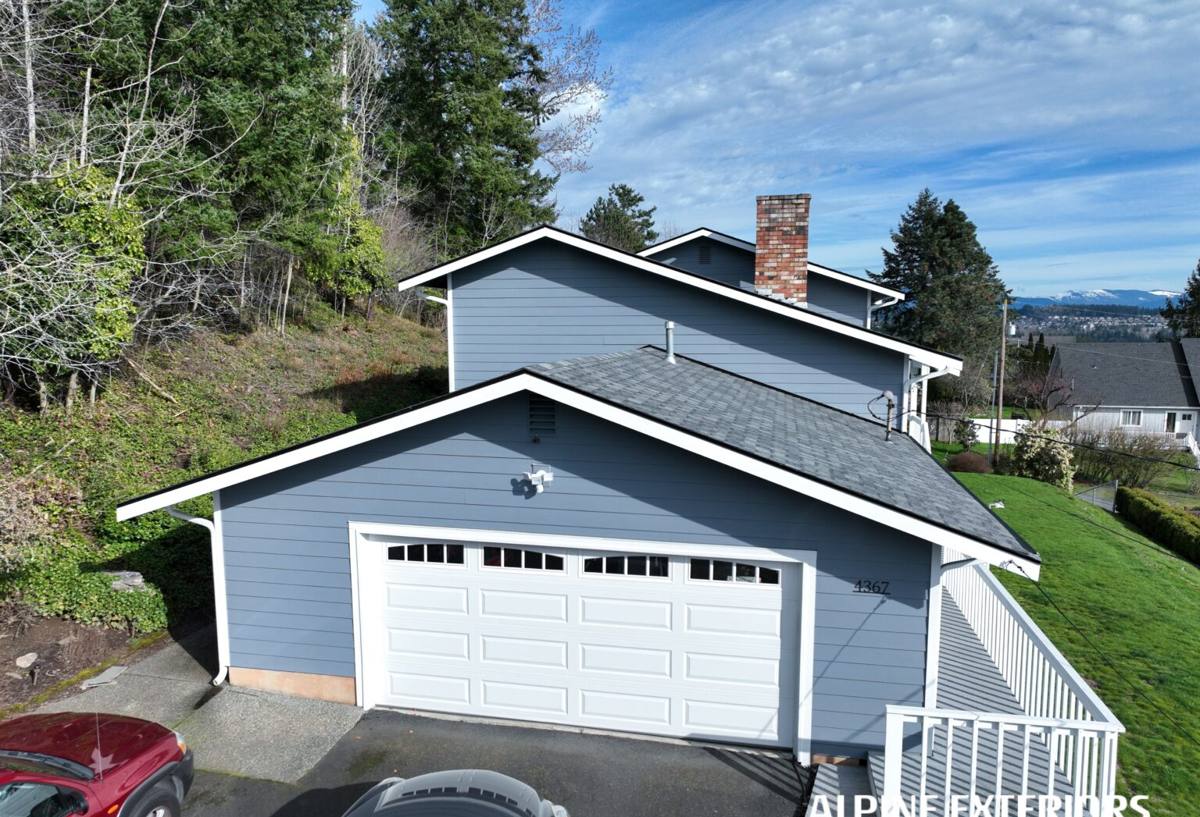
Signs an East Mount Vernon Home Is Ready for a New Roof (Not Just a Repair)
Not every roof problem means a full replacement. But when several of these show up together, patching becomes a short-term fix on a roof that's already past its useful life.
- Shingles are cupping, curling at the edges, or missing granules in patches rather than isolated spots
- Moss or algae keeps returning within a year or two of cleaning, even on treated areas
- Daylight is visible through the attic roof deck, or you can feel damp, spongy spots when walking the roof
- Flashing around chimneys, skylights, or wall intersections is rusted, lifted, or has been re-caulked repeatedly instead of properly repaired
- Interior ceiling stains or musty attic odor appear after heavy rain, especially near valleys or penetrations
- The roof is original to a home built more than 20-25 years ago and has never been fully replaced
- Multiple past repairs are scattered across different sections rather than one clear problem area
What Correct New Roof Installation Actually Involves
A new roof is only as good as what's underneath the shingles. In this climate, the parts you don't see matter more than the parts you do.
Tear-Off and Deck Inspection
We remove the old roofing down to the deck rather than layering over it. That's the only way to actually see the plywood or plank sheathing underneath. Years of moss and slow-draining moisture can quietly rot sections of deck, particularly near eaves and valleys, and that damage has to be found and replaced before new material goes down — not discovered later as a leak.
Underlayment and Ice-and-Water Protection
Given how much rain this area sees, underlayment isn't a formality. We use synthetic underlayment across the full roof and self-adhered ice-and-water membrane at the eaves, valleys, and around penetrations — the spots where wind-driven rain and ice dams (on the rare cold snap) are most likely to force water backward under the shingles.
Ventilation
A roof that can't breathe traps moisture in the attic, which condenses, drips back down, and rots the deck from underneath — often mistaken for a leak from above. Balanced intake at the eaves and exhaust at the ridge keeps air moving, which also helps control the humid attic conditions that feed moss growth on the roof surface itself.
Flashing and Transitions
Chimneys, skylights, dormers, and wall-to-roof transitions fail more often at the flashing than at the field shingles. Correct step flashing, counter-flashing, and properly lapped valley metal — not just sealant — is what actually keeps water out at these points over the long run.
Choosing a Roofing Material for Skagit County's Climate
There's no single "best" roofing material — there's a right fit for your home's exposure, budget, and how much upkeep you want to take on. Here's how the common options actually perform in this specific climate.
| Material | Typical Lifespan | Moss/Moisture Behavior | Maintenance | Relative Cost |
|---|---|---|---|---|
| Architectural asphalt shingle | 25-30 years | Moderate moss risk on shaded slopes; treatable | Occasional moss/algae treatment, gutter care | $ |
| Standing seam metal | 40-50+ years | Sheds moisture fast; poor surface for moss to root | Low; check fastener/sealant points over time | $$$ |
| Synthetic/composite shingle | 30-50 years | Doesn't absorb moisture like organic materials | Low to moderate | $$$ |
| Cedar shake | 20-30 years with upkeep | Absorbs moisture; needs active moss/rot management | High; regular treatment and inspection | $$-$$$ |
Our standard recommendation for most East Mount Vernon homes is a quality architectural asphalt shingle or a synthetic composite, both paired with proper ventilation and flashing detail. Cedar can still look great here, but we're upfront that it demands a real maintenance commitment in a climate this wet — the moisture behavior of the wood itself is the trade-off, not a knock on the product. Metal is worth considering for homeowners planning to stay long-term and wanting to largely take moss and re-roofing off their to-do list.
Our New Roof Installation Process, Start to Finish
- On-site inspection and estimate — we walk the roof (not just look from the ground), check the attic for ventilation and moisture issues, and give you a written scope and price
- Material selection — we go over the options above against your budget, roof exposure, and how the home is shaded, without steering you toward whatever's easiest for us to install
- Permitting — full roof replacements typically require a permit through the City of Mount Vernon or Skagit County depending on your exact location; we handle that paperwork
- Tear-off and deck repair — old roofing removed, deck inspected, any rotted sheathing replaced before anything new goes down
- Underlayment, flashing, and ventilation installed — the parts that determine whether the roof actually performs, not just looks new
- Roofing material installation — installed to manufacturer spec so your warranty is valid, with attention to nailing pattern and exposure (both of which matter more in high-wind, high-rain conditions)
- Site cleanup and magnetic nail sweep — yard, driveway, and gutters cleared of debris and stray fasteners
- Final walkthrough — we go over the finished roof with you before calling the job done
Why It Matters to Hire a Crew That Already Works East Mount Vernon
Roofing crews that jump between climates apply the same specs everywhere. A crew that regularly works this specific area already knows things that matter to the outcome: which older homes east of the river were built with roof decking that needs closer inspection during tear-off, how much shade and tree debris a given block typically deals with, and how local permitting and inspection actually works rather than learning it on your job. That familiarity shows up in fewer surprises mid-project and a roof detailed for the conditions it will actually face, not a generic install.
It also matters for scheduling. Roofing in Skagit County means working around real rain windows, not an idealized forecast. A crew based in the area plans tear-off and dry-in around actual local weather patterns instead of hoping a storm system holds off.
Cost Factors for a New Roof in This Area
Exact pricing depends on your specific roof, but these are the factors that move the number most:
- Roof size and number of planes — more valleys, dormers, and hips mean more labor and flashing detail
- Pitch and access — steep roofs or homes with limited equipment access take longer and require more safety setup
- Number of existing layers — tearing off two layers of old roofing costs more than one
- Deck condition — hidden rot from long-term moisture or moss adds material and labor once discovered
- Material choice — asphalt, synthetic, and metal carry meaningfully different price points, as shown above
- Ventilation and flashing upgrades — bringing an older roof's ventilation up to current standards is worth the added cost given how much rain this climate delivers
Broadly, a full asphalt shingle replacement on an average single-family home runs into the low-to-mid five figures, with metal and cedar running higher. We give a firm number after seeing the actual roof, not a phone estimate.
Protecting Your New Roof After Installation
A correctly installed roof still needs basic upkeep in this climate to hit its full lifespan. Keep gutters clear so water isn't backing up under the eave line, especially during the fall leaf-drop and the long winter rain stretch. Have moss growth treated early rather than letting it establish — it's far easier to manage moss on a clean roof than to remove an established colony without damaging shingles. A quick visual check after major windstorms, and a professional look every few years, catches small flashing or fastener issues before they become interior damage.
If your East Mount Vernon roof is showing its age or you're planning ahead rather than waiting for a leak, we're glad to take a look. The estimate is free, there's no pressure, and you'll get a straight answer about what your roof actually needs — just fill out the form below to get started.