 Mount Vernon
 Why Little Mountain Homes Need a Different Approach to Metal Roofing
Homes on and around Little Mountain sit a little higher and a little more exposed than most of Mount Vernon. That elevation and the surrounding fir and cedar canopy create a specific set of problems for a roof: more wind at the ridge line, more shade and moisture pooling in the valleys, and a steady drop of needles and debris that a roof down in a flatter, more open part of town simply doesn't deal with. Metal roofing can handle all of that better than most materials, but only if it's specified and installed with those conditions in mind. A metal roof installed the same way you'd do it on a sheltered lot a mile away will show its weak points here faster.
This page covers what a metal roof actually needs to hold up on Little Mountain, what a correct installation involves, and how we approach the job differently because we already know this hillside.
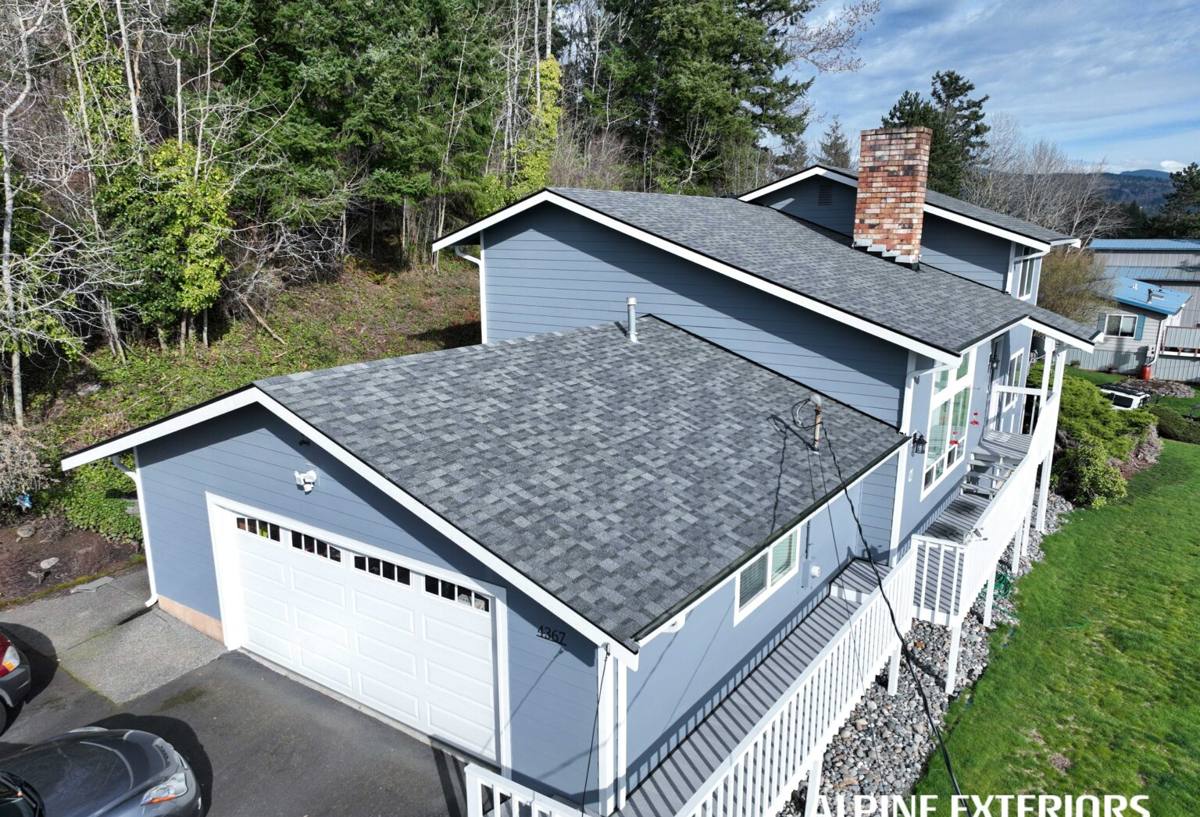
What Skagit County's Climate Does to a Roof Over Time
Mount Vernon sits inland from Puget Sound and Skagit Bay, but the marine air still reaches this far up the valley. Combine that with the region's driving winter rain and a moss season that runs most of the year in shaded spots, and you get a slow, cumulative wear pattern that's different from what roofers deal with in drier climates.
Salt Air and Fastener Corrosion
Airborne salt doesn't have to be right off the water to matter — it travels, and over years it accelerates corrosion at any point where metal is exposed or fasteners are undersized for the environment. On a metal roof, the fasteners and cut edges are the vulnerable points, not the painted panel field. This is why fastener grade and edge treatment matter more here than the brochure specs on a panel.
Wind-Driven Rain and Flashing
Skagit County storms rarely come straight down. Wind pushes rain sideways and up under laps, at valleys, and around anything that penetrates the roof — vents, chimneys, skylights. Little Mountain's higher, more open positions catch more of that wind than a roof tucked into a low, tree-sheltered lot. A metal roof sheds water fast when it's flat-out raining, but a poorly lapped seam or a flashing detail that assumes calm weather will leak here even though it might hold up fine somewhere more sheltered.
Moss, Needles, and Debris from the Tree Canopy
Metal roofing resists moss growth far better than composition shingle or wood, since there's no organic mat for spores to root into. But it isn't immune, especially in valleys and behind chimneys where needles, cones, and organic debris collect and hold moisture against the panel. On heavily treed Little Mountain lots, that debris buildup — not the panel itself — is usually what starts a moss or algae problem, and it can trap moisture against fasteners and seams over time.
Choosing the Right Metal Roofing System for This Neighborhood
Not all metal roofing is built the same way, and the difference matters more on an exposed, tree-shaded hillside lot than it does on a simple, sheltered roof.
Standing Seam vs. Exposed-Fastener Panels
The biggest decision is whether fasteners are hidden under a mechanically seamed rib (standing seam) or exposed through the panel face (exposed-fastener, sometimes called corrugated or R-panel). Both are legitimate roofing systems, but they behave differently under the conditions Little Mountain sees.
| Factor | Standing Seam | Exposed-Fastener |
|---|---|---|
| Fastener exposure | Concealed under seams — no exposed penetrations to seal | Fasteners go through the panel face with a rubber washer |
| Long-term maintenance | Very low; nothing on the surface to fail | Washers harden and need replacement over the roof's life |
| Wind-driven rain performance | Higher — seams lock mechanically, less reliance on sealant | Adequate on moderate pitches, more sensitive to installation care |
| Upfront cost | Higher material and labor cost | More budget-friendly |
| Best fit | Exposed elevations, steeper or low-slope sections, long-term owners | Sheltered outbuildings, budget-driven projects on simple roof shapes |
Given Little Mountain's wind exposure and the fact that a roof up here is harder to get back onto for maintenance than one on a flat, easy-access lot, we lean toward standing seam for primary living-space roofs and reserve exposed-fastener panels for simpler structures like shops, garages, or additions where the trade-offs make more sense.
The Details That Actually Matter in a Correct Installation
A metal roof is only as good as what's underneath it and around it. Most of the leaks and premature wear we get called out to fix trace back to a handful of details that got rushed or skipped, not to the panel material itself.
- Underlayment: A synthetic, high-temp underlayment across the whole deck, not just felt paper, gives you a real secondary barrier if wind ever drives water past a seam.
- Ice-and-water shield at vulnerable points: Self-adhered membrane at eaves, valleys, and around every penetration — the places wind-driven rain actually gets tested.
- Ventilation: Metal panels don't breathe like shingles, so the attic and roof assembly need proper intake and exhaust ventilation to avoid trapping condensation underneath the metal, especially through our damp winters.
- Fastener spec: Stainless steel or a coated fastener rated for coastal-adjacent conditions, matched to the panel manufacturer's spacing requirements, not just "whatever's on the truck."
- Flashing at every transition: Chimneys, skylights, sidewalls, and dormers each need custom-formed flashing, not generic trim bent to fit after the fact.
- Panel finish: A quality PVDF (Kynar-type) coating holds its color and resists chalking far longer than a basic polyester finish, which matters under UV exposure on an open hillside roof.
Our Process on a Little Mountain Metal Roof
- On-site inspection: We walk the roof and the attic, note the tree cover, wind exposure, and existing moisture or ventilation issues specific to that lot.
- Tear-off or overlay decision: Most re-roofs here call for a full tear-off so we can inspect and repair the deck — a metal roof installed over a compromised deck just hides the problem.
- Deck repair and underlayment: Any soft or damaged sheathing gets replaced before underlayment goes down, with ice-and-water shield at all the high-risk zones.
- Panel layout and install: Panels are run and fastened to the manufacturer's spec, accounting for the roof's actual wind exposure rather than a generic minimum.
- Custom flashing and trim: Formed on-site for chimneys, skylights, and wall transitions rather than relying on stock pieces.
- Final walk-through: We review the completed roof with you, including what maintenance to expect given the tree cover on your specific lot.
Cost Factors to Expect
Every metal roof quote should reflect the specifics of your lot, not a flat per-square-foot number. On Little Mountain, the factors that move the price most are:
| Factor | Why It Matters Here |
|---|---|
| Roof pitch and complexity | Steeper, cut-up rooflines with multiple valleys need more custom flashing and labor |
| Panel system | Standing seam costs more upfront than exposed-fastener but needs less long-term upkeep |
| Tear-off vs. overlay | Deck condition on older homes often requires full tear-off, adding cost but avoiding hidden problems |
| Access and staging | Tree cover and hillside driveways can limit equipment access and add labor time |
| Ventilation upgrades | Older attics often need added intake or exhaust venting to work properly under metal |
Rather than quote a range that doesn't mean much without seeing the roof, we'll walk your specific home and give you real numbers tied to what your roof actually needs.
Maintenance in a Long Moss Season
A correctly installed metal roof needs far less attention than shingles, but "less" isn't "none," especially under a tree canopy. A short annual routine keeps small issues from becoming roof issues:
- Clear needles and debris out of valleys and off any low-slope sections before fall rains set in
- Keep gutters and downspouts free-flowing so water isn't backing up under the eave edge
- Trim back branches that overhang the roof to reduce debris drop and give panels sun exposure
- Check sealant at penetrations (vents, skylights) every couple of years — sealant ages faster than the metal around it
- Watch for green streaking near shaded valleys, which signals debris buildup rather than a failure of the panel itself
Why Local Experience on Little Mountain Matters
A crew that already works this hillside knows things a roofer coming from outside Skagit County has to learn the hard way: which lots catch the worst of the wind, where tree debris collects fastest, what the City of Mount Vernon's permitting process actually requires, and how to stage material and equipment safely on a steep driveway or a lot with limited access. None of that shows up in a generic metal roofing estimate, but all of it affects how long your roof performs and how smoothly the project goes. We're not guessing at how Skagit County weather treats a roof up here — we've seen it season after season.
If you're weighing a metal roof for a home on or near Little Mountain, we're happy to come take a look, walk you through what your specific roof needs, and give you a straightforward, no-pressure estimate using the form below.