 Mount Vernon
 Little Mountain Roofs Take a Different Kind of Beating
Little Mountain sits above the rest of Mount Vernon, and that elevation changes how a roof ages. Homes up here catch more wind-driven rain off the valley, sit under heavier tree canopy in places, and stay shaded and damp longer after a storm than roofs down in the flats. Add in the salt-laden air that rolls in off Skagit Bay and Puget Sound, and you've got three separate forces working against a roof at the same time: moisture that won't dry out, organic growth that thrives in the shade, and metal components that corrode faster than they would twenty miles inland.
None of that is a reason to panic about your roof. It's a reason to make sure the materials, the flashing details, and the ventilation are all specified correctly for this exact spot — not just "whatever's standard" for a roofing crew that mostly works flatter, drier neighborhoods.
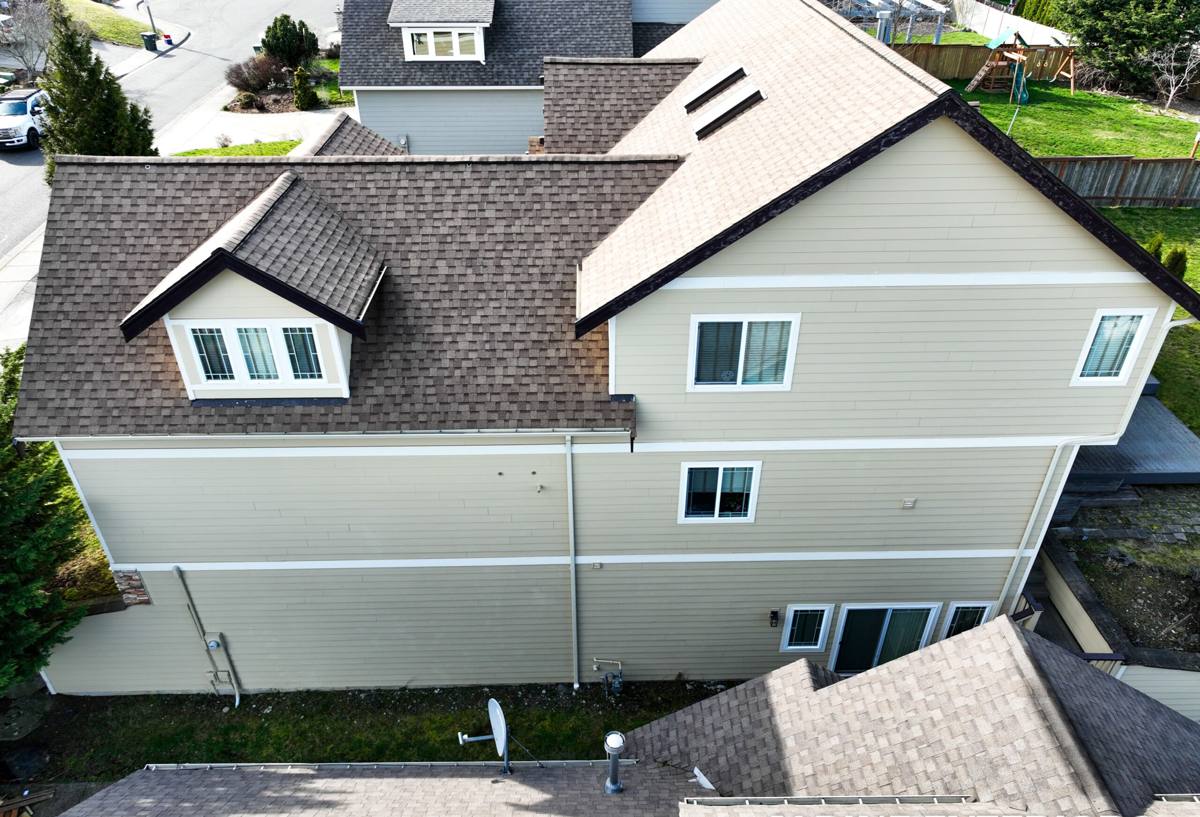
Signs a Little Mountain Roof Is Due for Replacement, Not Another Repair
Skagit County's wet season is long, and it's easy to keep patching a roof for a few more years past the point where that's the smart move. Here's what tells us a full new roof installation makes more sense than another repair:
- Granule loss heavy enough that you can see bare, shiny patches on multiple slopes, not just one worn spot
- Moss that keeps coming back within a season or two of cleaning, especially on north-facing and shaded slopes
- Shingles that are curling, cupping, or cracking across the field of the roof rather than in one isolated area
- Soft or spongy decking felt underfoot during an inspection, which usually means water has already gotten past the shingles
- Daylight visible through the attic sheathing, or consistent staining on attic rafters after heavy rain
- A roof pushing past 20-25 years old for asphalt composition, especially one that's never had proper ventilation upgrades
If your roof shows one or two of these, a repair can often buy real time. If it shows several at once, spending money on patches usually just delays the same decision while the decking underneath keeps taking on damage.
What a Correct New Roof Installation Actually Involves
A new roof is more than stripping old shingles and nailing down new ones. In a climate like ours, the layers underneath the shingles matter as much as the shingles themselves.
Tear-Off and Deck Inspection
We remove the existing roofing down to the deck rather than layering over it. That's the only way to actually see the plywood or plank sheathing underneath, catch soft or delaminated spots from years of trapped moisture, and replace them before they're covered up again. Skipping this step is how a new roof ends up failing early — from the deck up, not the shingles down.
Underlayment and Moisture Barrier
Given how much wind-driven rain Little Mountain sees, the underlayment isn't a place to cut corners. We use ice-and-water shield membrane at eaves, valleys, and around every penetration, then a synthetic underlayment across the rest of the field. Synthetic underlayment holds up better than old-style felt paper against the freeze-thaw cycles and prolonged dampness that are normal here.
Flashing at Every Transition
Chimneys, skylights, dormers, and roof-to-wall transitions are where most leaks actually start — not in the open field of shingles. Correct flashing means new metal at every one of these points, properly stepped and counter-flashed, not old flashing reused under new shingles to save time.
Ventilation
A roof that can't breathe traps moisture in the attic, which speeds up moss growth on the underside of the deck and shortens the life of the shingles from below. We check intake at the soffits and exhaust at the ridge and make sure they're balanced, not just present.
Choosing Materials That Actually Handle This Climate
There's no single "best" roofing material — there's the material that matches your roof's exposure, your budget, and how much upkeep you're willing to do. Here's how the common options stack up for a Little Mountain home specifically:
| Material | Moss & Moisture Resistance | Wind Performance | Typical Lifespan | Maintenance |
|---|---|---|---|---|
| Architectural asphalt shingle | Good with algae-resistant granules; still needs periodic moss removal on shaded slopes | Solid with proper nailing and rated shingles | 25-30 years | Low to moderate |
| Standing seam metal | Excellent — sheds moisture, nothing for moss to root into | Very strong | 40-50+ years | Low, but coastal-grade fasteners recommended near the bay |
| Synthetic/composite shake | Good, holds up better than real cedar in constant damp | Strong | 30-40 years | Low |
| Cedar shake | Poor in this climate without aggressive upkeep — moisture and moss are its main enemies | Moderate | 20-25 years realistically here | High |
We don't push cedar shake on Little Mountain homes as a rule. It can look great, but constant shade and dampness are exactly the conditions that shorten its life and drive up maintenance costs — that's a fair trade-off to walk through with you, not a reason to avoid the look entirely if you go in with clear eyes about the upkeep.
Rough Cost Factors
Every roof is priced on its own specifics, but the main things that move the number are consistent: roof pitch and complexity (valleys, dormers, multiple planes cost more labor than a simple gable), how many layers of old roofing have to come off, how much decking needs replacing once we're into it, and the material tier you choose. A straightforward asphalt shingle replacement on a modest Little Mountain home typically runs several thousand dollars less than a comparable metal roof, but the metal roof buys decades more service life and less moss maintenance along the way.
Our Installation Process
- On-site inspection and estimate — we walk the roof, check the attic, and give you a written scope and price before any work starts
- Material selection — we go over the trade-offs above based on your budget, the roof's exposure, and how it looks with the rest of the house
- Scheduling around the weather — we work with Skagit County's wet stretches, not against them, and won't leave a deck exposed overnight if rain is coming
- Tear-off and deck repair — full removal, inspection, and replacement of any compromised sheathing
- Underlayment, flashing, and ventilation install — the layers that determine whether the roof actually performs for its full rated life
- Shingle or panel installation — installed to manufacturer spec so your warranty stays intact
- Cleanup and final walkthrough — magnet sweep for nails, haul-away of old materials, and a walkthrough so you know what was done and why
Why a Crew That Already Works Little Mountain Matters
A roofing crew that mostly works flatter, sunnier parts of Mount Vernon can still do fine work, but there's real value in a crew that already knows Little Mountain's specific conditions: which slopes hold moss longest, how the tree cover affects drying time after a storm, and what ventilation setups actually work once the shade sets back in every fall. That familiarity means fewer surprises once tear-off starts and a roof that's specified right the first time instead of adjusted on the fly.
There's also the practical side — permitting and inspection through the City of Mount Vernon and Skagit County, knowing realistic weather windows for scheduling, and being close enough to come back quickly if you ever have a question after the install. That's a meaningfully different experience than working with a crew that has to relearn the area on your roof.
Maintaining a New Roof Once It's In
A correctly installed roof still needs basic upkeep in this climate, especially on a shaded lot:
- Keep gutters clear so driving rain has somewhere to go — clogged gutters back water up under the eaves
- Trim back overhanging branches where possible to cut down shade and speed up drying after storms
- Have moss treated before it takes hold, not after it's visibly thick — early treatment is cheap, scraping established moss can damage shingles
- Schedule a quick inspection after any major windstorm to check for lifted or displaced shingles
- Watch for granules collecting in gutters over time as an early sign of wear, even on a newer roof
None of this is heavy work, but it's the difference between a roof that reaches its full rated lifespan and one that starts showing problems ten years early because moisture and moss got a head start.
Get a Straight Answer on Your Little Mountain Roof
If you're not sure whether your roof needs a repair or a full replacement, that's exactly what an inspection is for. We'll give you an honest read on the roof's condition, walk through material options that make sense for your home's exposure, and put together a clear, no-pressure estimate — no obligation to move forward. Use the form below to get started.