 Mount Vernon
 Asphalt Shingle Roofing Built for Little Mountain's Conditions
Homes around Little Mountain sit in a spot where a few different climate stresses stack on top of each other. You've got the salt-laden air that moves in off Puget Sound and the Skagit River delta, frequent wind-driven rain rolling through the county, and heavy tree cover on and around the mountain itself that keeps roofs shaded and slow to dry. None of these alone would wreck a roof fast. Together, over years, they're exactly why some asphalt shingle roofs in this neighborhood age well past twenty years while others show moss, granule loss, and leaks well ahead of schedule. The difference almost always comes down to how the roof was installed and how it's been maintained, not just the shingle brand on the wrapper.
This page is about asphalt shingle roofing specifically for the Little Mountain area of Mount Vernon — what the local conditions demand, what a correctly built roof actually involves, and how we approach the work here.
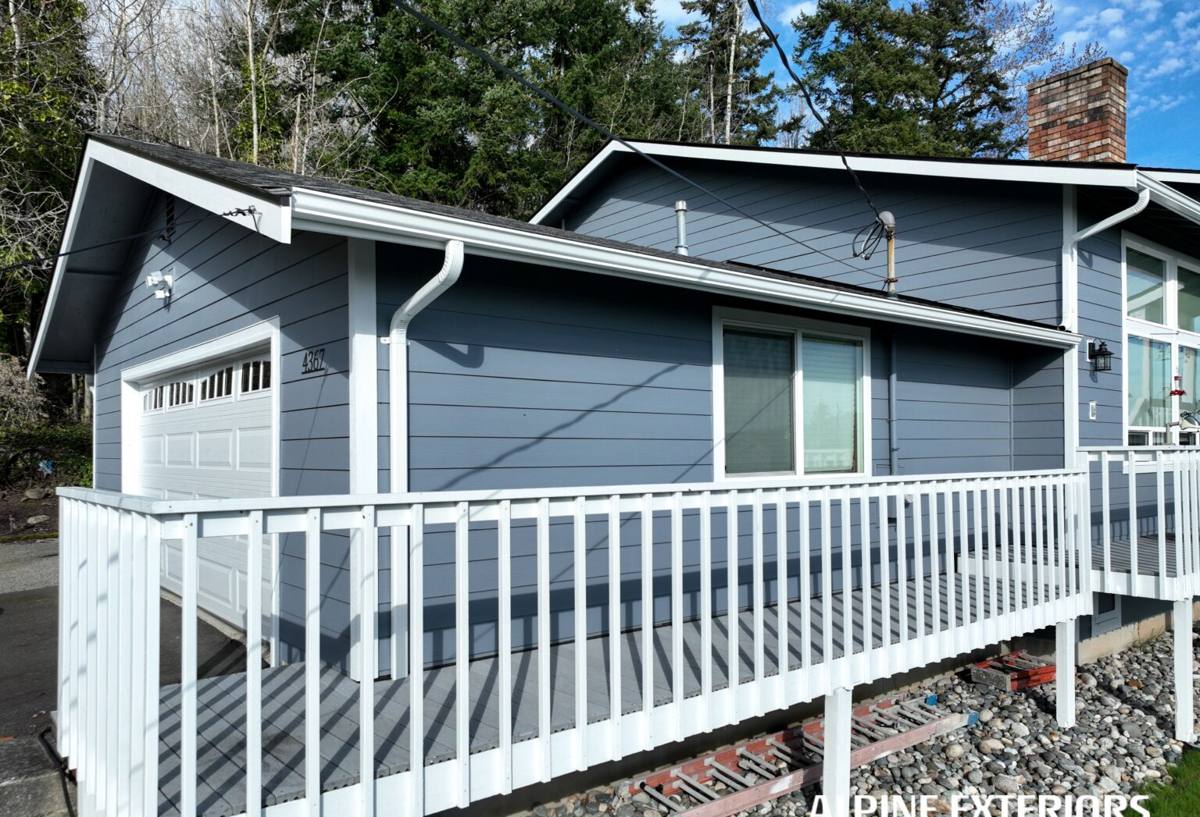
Why This Local Climate Is Hard on Asphalt Shingle Roofs
Salt Air and Metal Fatigue
Mount Vernon isn't oceanfront, but it's close enough to tidal water and the Sound that salt-carrying air reaches inland neighborhoods, including the higher, more exposed sections around Little Mountain. Salt air doesn't damage the asphalt shingles themselves much, but it accelerates corrosion on the metal components of a roof system — flashing, drip edge, nail heads, vent housings, and gutter hardware. A roof that looks fine from the ground can have flashing that's rusting through at the seams, which is where leaks actually start.
Driving Rain and Wind
Skagit County gets a lot of rain that doesn't just fall straight down — it comes in sideways during winter storms. Wind-driven rain finds every weakness in a roof's water-shedding details: shingle laps that are too short, nails that missed the shingle's nailing strip, valleys without proper metal or membrane underneath, and flashing around chimneys, skylights, and dormers that wasn't sealed and lapped correctly. A roof can pass a dry-day inspection and still leak during a real storm if these details were rushed.
Shade, Moisture, and Moss
The tree cover around Little Mountain is one of the neighborhood's best features and one of its toughest roofing challenges. Shaded roof sections dry out slower after rain, and slow-drying asphalt shingles are exactly what moss and algae need to take hold. Once moss establishes itself, it holds moisture against the shingle surface, works its way under shingle edges as it grows, and can lift tabs enough for wind and water to get underneath. A roof that never sees direct sun for half the day needs a different maintenance rhythm than one out in the open.
What a Correctly Installed Roof Needs in This Neighborhood
A shingle roof is a system, not just a layer of shingles nailed to plywood. In a climate like this, every layer underneath the shingles matters as much as the shingles themselves.
- Ice-and-water shield at eaves, valleys, and penetrations — a self-adhering membrane that seals around nail holes and protects the areas most likely to see standing or backed-up water.
- Synthetic underlayment across the full deck — a secondary water barrier that holds up better than old-style felt paper when a roof stays damp for extended stretches.
- Properly lapped, corrosion-resistant flashing — around chimneys, skylights, dormers, and roof-to-wall transitions, installed so water is always directed over the layer below it, never into a seam.
- Balanced attic ventilation — intake at the eaves and exhaust at the ridge, sized to the attic, so moisture from inside the house doesn't condense against the roof deck from below.
- Correct nailing — the right nail count, placement in the shingle's reinforced nailing strip, and pattern for the local wind exposure, not just "enough to hold it down."
Skip any one of these and the roof may still look right for a few years. The problems that show up later — soft spots in the deck, staining on interior ceilings, moss taking hold faster than it should — usually trace back to one of these details being shortcut during installation.
Choosing the Right Shingle for a Shaded, Salt-Air Property
Not every asphalt shingle product is a good fit for a heavily shaded, coastal-influenced roof. The table below lays out how the common tiers compare for a Little Mountain property specifically.
| Shingle Type | Typical Lifespan Here | Best Fit For | Trade-Offs |
|---|---|---|---|
| 3-Tab (economy) | 15–20 years | Budget-driven projects, rental properties | Thinner profile, less wind resistance, shows moss and wear sooner in shaded areas |
| Architectural / Dimensional | 25–30+ years | Most homes in this neighborhood | Heavier, better wind rating, holds granules longer under sun and rain cycling |
| Algae-Resistant (AR) versions | Same as base product, slower staining | Any roof with significant tree cover or north-facing slopes | Slightly higher cost; reduces but doesn't eliminate moss risk without maintenance |
| Impact-Rated (Class 4) | 25–30+ years | Homes wanting hail/debris resistance and possible insurance discounts | Higher upfront cost; benefit is more about impact resistance than moss or moisture |
For most homes in the shaded, salt-influenced parts of Little Mountain, we lean toward architectural shingles with algae-resistant granules built in. It's not a dramatic upcharge, and it directly addresses the specific failure mode — moss and algae staining — that this location produces faster than most.
Our Process for a Little Mountain Roof Project
1. On-Roof Inspection, Not Just a Drive-By Estimate
We get on the roof and in the attic before quoting anything. That means checking the deck for soft spots, checking existing ventilation, looking at flashing condition around every penetration, and noting how much moss or organic buildup is already present. A number based on square footage alone, without seeing the actual roof, isn't a real estimate.
2. Tear-Off and Deck Assessment
We remove the existing roofing down to the deck rather than layering over old shingles. That's the only way to actually see the plywood or plank sheathing underneath, replace any sections that have soft-rotted from long-term moisture, and confirm the deck is solid enough to hold fasteners properly.
3. Underlayment, Flashing, and Ventilation First
Before a single shingle goes down, the ice-and-water membrane, underlayment, new flashing, and any ventilation upgrades get installed. This is the stage that determines whether the roof actually performs during a wind-driven winter storm, and it's also the stage that's easiest to shortcut if a crew is moving too fast.
4. Shingle Installation
Shingles go down to the manufacturer's nailing and exposure specifications — not "close enough." Correct exposure and fastening are what keep a roof rated for its full wind speed and warranty coverage.
5. Cleanup and Final Walkthrough
We magnet-sweep for stray nails, clear debris from gutters and the yard, and walk the finished roof with you so you know what was done and what to watch for going forward.
Repair or Replace? Reading the Signs
Not every issue means a full re-roof. Here's a general guide for what different symptoms usually indicate on a shingle roof in this area.
| What You're Seeing | Usually Means |
|---|---|
| A few missing or lifted shingles after a windstorm | Localized repair, especially on an otherwise sound roof |
| Moss on north-facing slopes, shingles still flat and intact | Cleaning and treatment, not replacement |
| Granules collecting heavily in gutters, shingles look bare or blotchy | Roof is aging out; replacement should be planned in the near term |
| Staining on interior ceilings or attic sheathing | Active leak — needs inspection now, regardless of the roof's age |
| Soft or spongy spots underfoot on the roof | Deck damage; likely replacement, since the structure itself is compromised |
Maintenance That Actually Extends a Shaded Roof's Life
Given the tree cover around Little Mountain, a shingle roof here benefits from a maintenance routine that a roof out in the open wouldn't need as urgently.
- Have gutters and downspouts cleared at least twice a year — clogged gutters back water up under the shingle edge, which is one of the most common causes of edge rot.
- Keep overhanging branches trimmed back from the roofline to reduce shade, debris, and physical abrasion during wind.
- Have moss treated (not pressure-washed — that strips granules) as soon as it appears rather than waiting until it's established.
- Check attic ventilation isn't blocked by insulation, especially if the home has had insulation added or upgraded over the years.
- Schedule a roof check after any major windstorm, not just on a fixed annual schedule.
- Watch for granules accumulating in gutters as an early sign the shingle surface is wearing down.
What Affects the Cost of a Shingle Roof Here
We don't publish flat pricing because roof cost depends on real, project-specific factors — but here's what actually moves the number, so an estimate makes sense when you get one.
| Factor | Why It Matters |
|---|---|
| Roof size and number of planes | More cuts, valleys, and hips mean more labor and material waste |
| Deck condition | Rotted sheathing found during tear-off adds material and labor to replace |
| Existing layers | Removing multiple old roofing layers costs more than a single-layer tear-off |
| Shingle tier chosen | Architectural and algae-resistant products cost more than 3-tab but last longer here |
| Ventilation upgrades | Adding proper intake/exhaust venting where none exists is an added but worthwhile cost |
| Access and pitch | Steep roofs or difficult access (common on sloped, wooded lots) affect labor time and safety setup |
Why Local Experience Around Little Mountain Matters
A crew that only sees this neighborhood occasionally doesn't always catch how much faster moss establishes on a north-facing slope under fir cover, or how much attention flashing needs given the salt-air exposure this close to the water. Working in Mount Vernon and the surrounding Skagit County area regularly means we're not guessing at how a roof here should be built — we're applying what we've seen hold up and what we've seen fail, on homes with the same tree cover, the same weather patterns, and the same soil and drainage conditions. That local pattern recognition is worth more than any single product spec sheet.
Get a Straightforward Estimate
If you're dealing with moss buildup, a roof that's aging out, storm damage, or you're just planning ahead for a home near Little Mountain, we're glad to take a look and give you an honest read on where your roof actually stands. Use the form below to request a free, no-pressure estimate — we'll walk the roof, tell you what we see, and lay out real options rather than a one-size answer.