 Mount Vernon
 Why La Conner Roofs Wear Differently Than Roofs Inland
La Conner sits right where the Skagit River meets Puget Sound, and that location is exactly why roofs here age faster than roofs twenty minutes inland in Mount Vernon. A roof in La Conner deals with three things at once, almost year-round: salt-laden air drifting off the water, wind-driven rain that doesn't fall straight down, and long stretches of damp, shaded weather that give moss all the time it needs to take hold. None of these three problems is dramatic on its own. Together, over years, they shorten the useful life of a roofing system and change what "correct installation" actually means for a home in this specific spot.
This page is about one job, done right, for one area: replacing a roof on a La Conner home in a way that accounts for the climate it actually has to survive, not a generic climate.
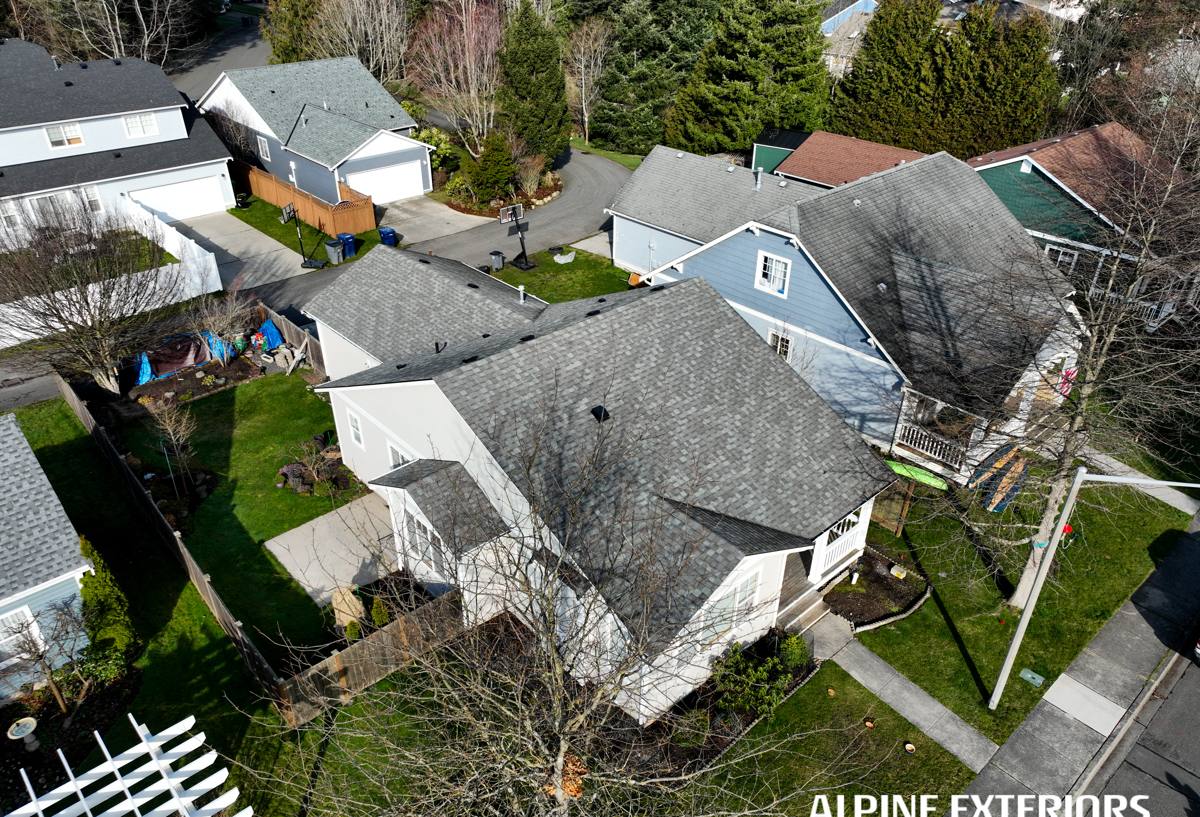
What Salt Air, Driving Rain, and Moss Actually Do to a Roof
Salt Air and Metal Fatigue
Airborne salt is corrosive to exposed metal. On a roof, that means flashing, fasteners, vents, and any exposed metal trim take more abuse near the water than they would further inland. Galvanized fasteners that would hold up fine in a dry inland climate can start rusting years earlier here. Once a fastener corrodes, it loses grip and the shingle or panel around it becomes a weak point — often the first place a roof starts leaking, well before the roofing material itself is actually worn out.
Wind-Driven Rain and Underlayment
Rain that falls straight down is relatively easy for a roof to shed. Rain that's being pushed sideways by wind off the water is a different problem — it can work its way under shingle tabs, around poorly sealed flashing, and into laps in the underlayment that would never see moisture in calmer weather. A roof built for this kind of exposure needs more attention to seams, laps, and flashing detail than a standard installation, because the water isn't always traveling downhill the way the roofing material assumes it will.
Moss, Shade, and a Long Growing Season
Skagit County's damp shoulder seasons and shaded, tree-lined lots give moss and algae a long window to establish themselves — often eight or nine months out of the year. Moss doesn't just look bad. It holds moisture directly against the roofing surface, works its root structure under shingle edges, and can lift tabs enough to let wind-driven rain in underneath. A roof that isn't detailed and maintained with moss in mind will show granule loss and soft spots years ahead of schedule, even if the shingles are a good product installed on a clear, sunny day.
Signs a La Conner Roof Needs Replacement, Not Another Repair
Not every roof problem calls for a full replacement — sometimes a targeted repair is the honest answer. But there's a point where patching becomes throwing money at a roof that's already past its useful life. Signs it's time to talk about replacement instead of another repair:
- Granule loss heavy enough that you can see bare, shiny patches on the shingles from the ground
- Shingles that are curling, cupping, or cracking across multiple areas of the roof, not just one spot
- Moss growth that keeps coming back within a season or two of being cleaned
- Rusted or failing flashing around chimneys, skylights, or vent penetrations
- Soft or spongy decking felt underfoot in the attic, or daylight visible through the roof boards
- Interior water stains that show up after wind-driven rain specifically, not every rain
- A roof that's already had two or more significant repairs in the last few years
- A roof approaching or past the manufacturer's expected service life for its material and exposure
If a few of these apply, a replacement usually ends up costing less over time than continuing to chase leaks one at a time.
What a Correct Roof Replacement Involves in This Climate
Full Tear-Off and Deck Inspection
We don't install a new roof over an old one. A full tear-off lets us see the actual condition of the decking underneath, which matters more here than in a drier climate — years of moss holding moisture against the deck can cause rot that isn't visible from above. Any soft or damaged decking gets replaced before anything new goes down. Skipping this step is how homeowners end up with a roof that looks new but is still failing from underneath within a few years.
Underlayment Built for Wind-Driven Rain
Given how often rain here arrives at an angle instead of straight down, we pay particular attention to underlayment coverage, lap direction, and fastening pattern, along with self-adhered membrane in the vulnerable spots — eaves, valleys, and around every penetration. This is the layer that catches whatever gets past the shingles, and it's not a place to cut corners on a coastal roof.
Flashing and Fastener Choices
Where budget allows, we favor corrosion-resistant flashing and fastener materials in exposed, salt-air-prone areas rather than the minimum-spec option. It costs a bit more up front and pays for itself by not being the first thing to fail.
Ventilation
A roof that can't breathe traps moisture in the attic, which speeds up decking rot and can encourage mold — a real concern in a climate that's damp for most of the year. Correct intake and exhaust ventilation, balanced to the size of the attic, is part of a proper replacement, not an optional add-on.
Choosing a Roofing Material for a Marine Climate
There's no single "best" roofing material for every home — it depends on the roof's exposure, the home's style, and the homeowner's budget and maintenance appetite. Here's how the common options stack up specifically against salt air, driving rain, and moss:
| Material | Moss Resistance | Salt Air Durability | Typical Lifespan Here | Relative Cost |
|---|---|---|---|---|
| Architectural asphalt shingle | Moderate — benefits from algae-resistant granules | Good, if flashing/fasteners are corrosion-resistant | 20–30 years with upkeep | $$ |
| Standing seam metal | High — sheds moss and debris well due to slope and surface | Depends on coating; marine-grade finishes hold up best | 40+ years | $$$$ |
| Synthetic/composite shingle | Good — resists moisture absorption better than organic materials | Good | 30–40 years | $$$ |
| Cedar shake | Low without diligent maintenance — organic material invites moss | Fair, but needs regular treatment | 15–25 years with heavy upkeep | $$$ |
For most La Conner homes, a quality architectural shingle with algae-resistant granules and properly detailed flashing hits the right balance of cost, appearance, and durability. Homes with heavy shade, low roof slopes, or a strong preference for minimal maintenance tend to do better with metal or a synthetic product, even at a higher upfront cost.
Our Roof Replacement Process
- On-site inspection. We walk the roof and attic, check decking condition, flashing, ventilation, and moss patterns, and take photos of anything that affects the scope.
- Written estimate. A clear breakdown of material, labor, and any deck repair contingencies — no vague allowances, no pressure to decide on the spot.
- Material selection. We walk through the trade-offs above based on your roof's exposure and your budget, not a one-size-fits-all recommendation.
- Scheduling around the weather. Roofing in this area means watching the forecast closely and staging the tear-off so the deck isn't left exposed to rain overnight.
- Tear-off and deck repair. Old roofing removed, decking inspected and repaired as needed before anything new is installed.
- Underlayment, flashing, and ventilation installation. The layers that do the real work of keeping wind-driven rain and moisture out.
- Roofing material installation, following manufacturer specifications for the exposure category of your home.
- Cleanup and final walkthrough, including a magnetic sweep for stray fasteners and a review of warranty paperwork.
Keeping a New Roof Ahead of Moss and Salt Air
A correct installation buys time, but it doesn't eliminate the climate. A few habits keep a new roof performing closer to its full expected lifespan in this area:
- Have moss and debris cleared before it visibly spreads, not after — early removal is far gentler on the roofing surface
- Keep gutters and valleys clear so wind-driven rain has a clear path off the roof instead of pooling
- Trim back overhanging branches where practical to reduce shade and organic debris buildup
- Have flashing and fasteners checked every few years, especially in homes closer to the water
- Address small leaks immediately — in this climate, small deck damage doesn't stay small for long
Why Hiring a Crew That Already Works in La Conner Matters
Roofing crews that mostly work drier, inland climates sometimes under-detail the parts of a roof that matter most here — flashing laps, underlayment coverage at eaves and valleys, fastener choice, ventilation balance. It's not that the work is careless; it's that those details matter less where they usually work, so they don't always get the extra attention they need on a home exposed to salt air and driving rain off the Sound. A crew that regularly works La Conner and the surrounding Skagit County waterfront has already seen which details actually cause callbacks in this specific climate, and builds around them from the start rather than learning it on your roof.
We're based in Mount Vernon and work throughout Skagit County, La Conner included, which means we're not guessing at what this climate does to a roof over time — we're accounting for it in the estimate, the material recommendation, and the installation details from day one.
If your La Conner roof is showing its age or you're just trying to plan ahead, we're happy to take a look and give you a straight, no-pressure estimate. There's a form below to get started.