 Mount Vernon
 Metal Roofing in Kulshan Ridge: Built for the Weather That Actually Shows Up
Kulshan Ridge homes take a steady beating from three things every year: wind-driven rain off the Skagit Valley, a moss season that runs longer than most homeowners realize, and enough salt-laden air moving through the region to accelerate corrosion on anything not built for it. A metal roof handles all three better than almost any other roofing material available today — but only if it's specified and installed correctly for this climate. A metal roof installed the way it would be in a dry inland market is a metal roof that will disappoint you here.
This page covers what a metal roof needs to do in Kulshan Ridge specifically, what a correct installation actually involves, and why we think local installation experience matters as much as the panel you choose.
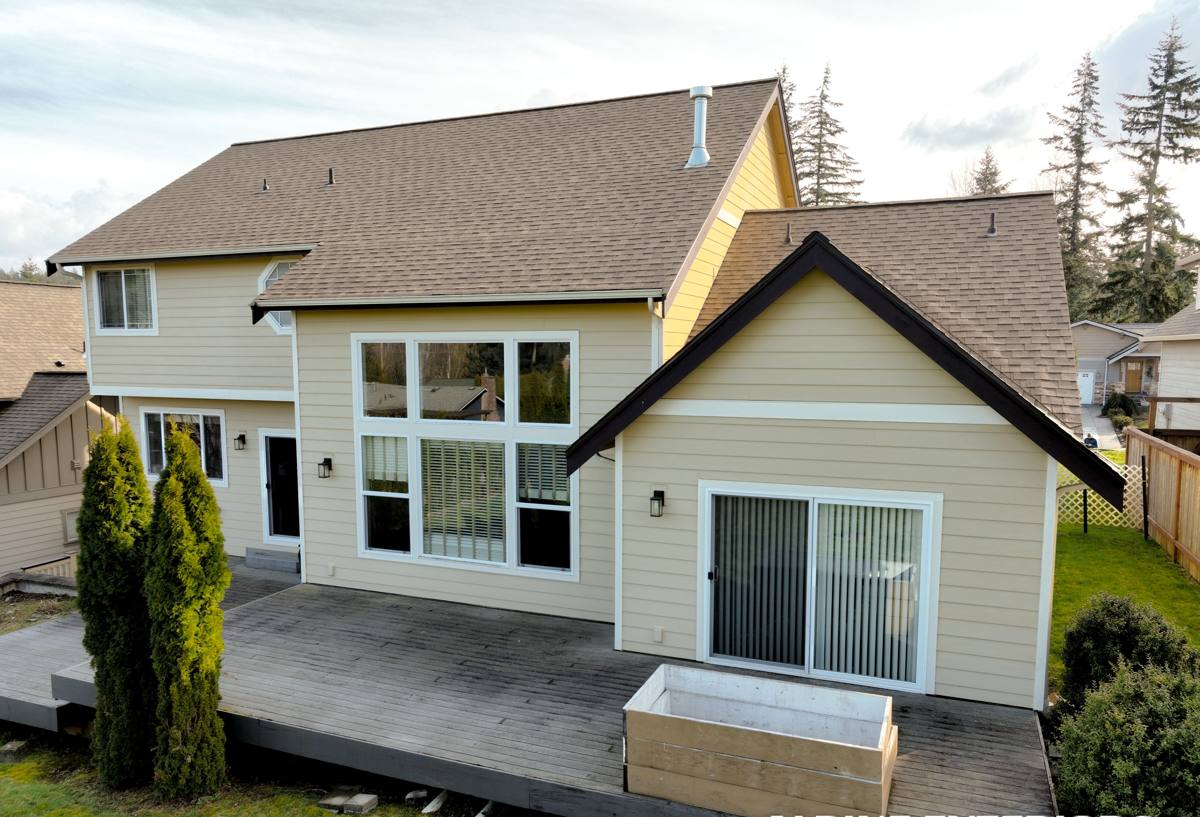
What Mount Vernon's Climate Demands From a Metal Roof
Driving Rain and Wind-Loaded Water
Skagit County doesn't just get rain — it gets rain pushed sideways by wind coming off open valley terrain. That matters for roofing because water doesn't always run straight down the slope the way it does in a calm, dry climate. It gets forced up under laps, into fastener penetrations, and along ridge and valley lines. A metal roof designed for this area needs generous overlaps, properly lapped and sealed flashing at every penetration, and underlayment that can handle prolonged wet exposure without breaking down — not just a roof that looks watertight on a dry, still day.
A Long, Real Moss Season
Moss isn't a cosmetic issue here — it's a maintenance and drainage issue that runs for a good chunk of the year. On organic roofing materials, moss roots into the surface and holds moisture against it. Metal doesn't give moss anything to root into, which is one of the biggest practical advantages it has in this climate. But metal roofs still collect moss and debris in valleys, at wall-to-roof transitions, and anywhere water slows down — and if that debris is allowed to sit, it can hold moisture against seams and fasteners longer than the panel finish was designed to tolerate.
Salt Air and Slow Corrosion
Homes in and around Mount Vernon sit close enough to Puget Sound and the tidal reaches of the Skagit River that airborne salt is a real factor in material selection, even if it's not as aggressive as a true oceanfront site. Salt air accelerates corrosion at cut edges, fasteners, and any spot where a protective coating has been scratched or is simply too thin to begin with. This is where a lot of roofing shortcuts show up years later — not on day one, but slowly, at the edges and fasteners nobody thinks about during installation.
Choosing the Right Metal Roofing System
Not all metal roofing is the same product wearing different clothes. The panel style, metal type, and finish all affect how the roof performs in a wet, salt-influenced climate like this one.
| System | How It's Fastened | Best For | Trade-Offs |
|---|---|---|---|
| Standing Seam | Concealed clips; no exposed fasteners on the field | Long-term weathertightness, homes prioritizing longevity | Higher upfront cost; needs skilled installation of seams and clips |
| Exposed Fastener (Ag-panel style) | Screws driven through the panel face | Budget-conscious projects, outbuildings, shops | Every fastener is a future maintenance point; gaskets wear over decades |
| Metal Shingles/Shakes | Interlocking panels, concealed fasteners | Homes wanting a traditional shingle or shake look with metal durability | More seams and details than standing seam; installation quality matters more |
For most Kulshan Ridge homes, we lean toward standing seam or a quality interlocking shingle system specifically because they minimize the number of exposed fasteners exposed to years of driving rain and salt air. Exposed-fastener panels aren't wrong for every application, but on a primary residence in this climate, we walk homeowners through what that fastener maintenance actually looks like over a 20-30 year window before they decide.
Metal Type and Coating: The Part Nobody Sees Until It Fails
The steel or aluminum underneath the paint matters as much as the panel profile on top of it.
- Galvalume steel: A common, cost-effective substrate with a zinc-aluminum coating for corrosion resistance. Performs well here when cut edges are properly treated and fasteners are matched to the panel's coating type.
- Aluminum: Naturally corrosion-resistant even without a perfect coating, which makes it a strong option for homes closer to salt-influenced air. Costs more than steel.
- Paint/finish system (PVDF vs. SMP): A premium PVDF (Kynar-type) finish holds color and chalk-resistance far longer than a basic SMP coating, particularly under UV and moisture cycling. This is a real difference, not marketing — ask what finish is quoted, not just what color.
- Fastener compatibility: Fasteners need to be matched to the panel metal to avoid galvanic corrosion — mixing incompatible metals at the fastener is one of the most common causes of premature rust streaking we see on older installs in this area.
What a Correct Installation Actually Involves
A metal roof is only as good as the details underneath and around it. This is where the difference between a correct install and a rushed one shows up — usually years after the crew has left.
Deck Inspection and Repair
Before any panel goes down, the existing deck gets inspected for soft spots, rot, or moisture damage — particularly around older roofs where trapped moisture from moss or past leaks may have gone unnoticed. Panels installed over a compromised deck will telegraph that damage and fail early, regardless of panel quality.
Underlayment Built for Wet Exposure
We use high-temperature synthetic underlayment rated for the extended exposure a wet Pacific Northwest install schedule can involve, with self-adhered ice-and-water membrane at eaves, valleys, and any low-slope transitions — the spots where driving rain is most likely to find a way in.
Flashing at Every Penetration
Chimneys, vents, skylights, and wall transitions are where the vast majority of roof leaks originate, on any material. Flashing gets custom-formed and properly lapped with the panel system, not just caulked and hoped for.
Ventilation
Metal roofs need proper intake and exhaust ventilation to manage condensation from underneath, especially in a humid coastal climate. Poor ventilation can cause moisture problems that have nothing to do with the roof's exterior performance at all.
Fastening and Panel Layout
Panels are laid out to minimize seams in high-water-flow areas, with clip spacing and fastening patterns that account for thermal expansion — metal roofing moves more with temperature swings than composition shingles, and panels that aren't allowed to move correctly can oil-can or work fasteners loose over time.
Our Process, Start to Finish
- On-site assessment: We look at your existing roof, deck condition, ventilation, and any problem areas — valleys, moss buildup, past leak history — before recommending a system.
- Written estimate: Clear scope, materials, and pricing, no vague allowances.
- Tear-off and deck prep: Old roofing removed, deck inspected and repaired as needed.
- Underlayment and flashing installation: Ice-and-water membrane at vulnerable areas, synthetic underlayment across the field, custom flashing formed for your specific roof details.
- Panel installation: Panels and seams installed to manufacturer spec with correct clip spacing and fastener compatibility.
- Ridge, valley, and trim work: The finishing details that determine how the roof actually sheds water and debris long-term.
- Final walkthrough and cleanup: Site cleaned, magnetic sweep for stray fasteners, and a walkthrough so you know what maintenance, if any, the roof will need.
Maintenance: What a Metal Roof in This Climate Actually Needs
One of the appeals of metal roofing is how little maintenance it needs compared to composition shingles — but "little" isn't "none," especially with a moss season this long.
| Task | Why It Matters Here | Rough Frequency |
|---|---|---|
| Clear debris from valleys and gutters | Trapped organic debris holds moisture against seams and finish longer than the coating is designed for | 1-2x per year, more under fir/cedar cover |
| Check fastener heads (exposed-fastener systems) | Gasket washers degrade with UV and moisture cycling over time | Every few years |
| Inspect flashing and sealant at penetrations | Sealant is a wear item even when the panel isn't | Annually, or after major storms |
| Watch for moss in shaded valleys | Metal resists rooting, but debris + shade can still hold moisture | Seasonal check, especially after fall leaf drop |
Why the Crew Matters as Much as the Panel
Metal roofing is unforgiving of installation mistakes in a way that composition shingle isn't — a slightly wrong clip spacing, an incompatible fastener, or a rushed flashing detail doesn't necessarily show up as a leak in year one. It shows up as a corrosion streak, an oil-canned panel, or a slow leak three, five, or ten years down the road, well after the installing crew has moved on to other markets.
A crew that regularly works Kulshan Ridge and the surrounding Mount Vernon area already knows how local wind patterns load rain against specific roof orientations, how much moss buildup to expect in shaded valleys by year two, and which fastener and coating combinations actually hold up against this specific mix of coastal humidity and salt-influenced air — not a generic climate zone on a spec sheet. That local pattern recognition is hard to replace with a warranty document alone.
A Few Honest Trade-Offs to Know Going In
- Upfront cost is higher than composition shingles — metal roofing is a longevity investment, not a like-for-like swap on price.
- Standing seam costs more than exposed-fastener panels — but for a primary residence in a wet, salt-influenced climate, we think the reduced long-term fastener maintenance is usually worth the difference.
- Noise during rain is a common concern — with proper solid-deck installation and underlayment, it's far less noticeable than people expect, but it's worth discussing if you're sound-sensitive.
- Not every finish is created equal — a cheaper coating will cost you in color fade and chalking well before the metal itself is at risk.
A Quick Homeowner Checklist Before You Decide
- Ask what specific metal and coating (not just color) is being quoted.
- Confirm whether the system is standing seam, exposed fastener, or interlocking shingle, and why that's being recommended for your roof.
- Ask how eaves, valleys, and penetrations will be flashed — not just "we'll seal it."
- Confirm ventilation is being addressed, not just the panel installation itself.
- Ask whether the warranty covers the finish, the weathertightness, or both, and for how long each applies.
- Get the scope in writing before any tear-off begins.
If you're weighing metal roofing for a home in Kulshan Ridge, we're glad to come take a look, walk the roof, and give you a straight answer on what your specific roof needs — no pressure, no upsell script. Reach out below for a free estimate.