 Mount Vernon
 Why Kulshan Ridge Roofs Wear Differently
Kulshan Ridge sits inside a stretch of Skagit County that gets hit with a specific combination of weather most manufacturers' installation guides don't fully account for. There's the salt-laden air moving in off the Sound and the surrounding tidal flats, the driving, wind-pushed rain that comes sideways off the water more often than it falls straight down, and a moss and algae season that, realistically, runs most of the year in the shaded parts of a roof. None of these factors alone would be a big deal. Together, over years, they're why we see roofs in this area fail early in exactly the same spots: valleys, north-facing slopes, and anywhere flashing was installed to a minimum-code standard instead of a Pacific Northwest standard.
An asphalt shingle roof done right for this neighborhood isn't a different product than what you'd install somewhere dry. It's the same shingle, installed with more attention to the details that matter here — underlayment coverage, fastener pattern, flashing, and airflow. That's the difference between a roof that looks fine for five years and one that actually performs for its full warranty life.
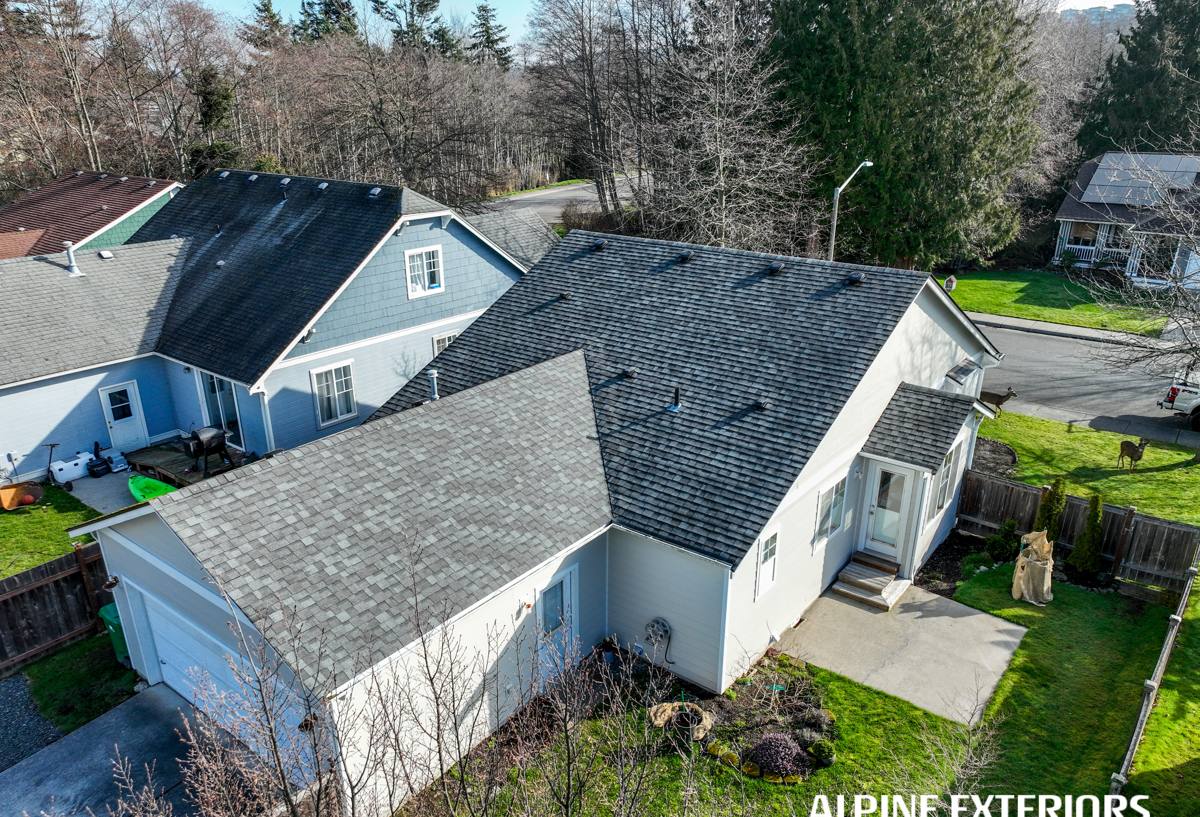
What a Correct Asphalt Shingle Roof Needs in This Climate
Underlayment and Water Protection
In a climate where rain is frequent and often wind-driven, the underlayment matters as much as the shingles themselves. We use synthetic underlayment across the full roof deck rather than the older felt products, because it holds up better to the freeze-thaw and wet-dry cycling that's normal here. In vulnerable areas — valleys, eaves, around chimneys and skylights — we add self-adhered ice-and-water membrane. It's not just an ice-dam product; in this part of Washington it's your backup layer against wind-driven rain that gets up under the shingle tabs.
Ventilation
A shingle roof with poor attic ventilation traps moisture underneath it, and trapped moisture is what rots decking and shortens shingle life from the inside out — often before any problem shows up on the surface. We check intake (soffit vents) and exhaust (ridge or box vents) as a balanced system, not just tack on a vent because there's room for one. This is one of the most common gaps we find on older Kulshan Ridge homes: plenty of exhaust venting, but soffits that were painted over or insulated shut decades ago, so the system never actually draws air through.
Flashing Details
Flashing failures cause more leaks than shingle failures do. Step flashing at walls, counterflashing at chimneys, and proper valley metal or woven-valley technique all have to be done to hold up against sustained, sideways rain — not just a light shower. We don't caulk over a flashing problem and call it fixed; caulk is a short-term patch, not a repair.
Moss, Algae, and the Long Wet Season
Shaded, north-facing roof sections in Kulshan Ridge — especially under mature trees — stay damp for extended stretches, which is exactly what moss and algae need to establish. Left alone, moss doesn't just look bad; its root structure lifts shingle edges and holds water against the roof deck, which accelerates rot underneath. Algae staining (the dark streaks you'll see on older roofs) is cosmetic on its own but is a sign the shingle surface is holding moisture longer than it should.
We install algae-resistant (AR) shingles as the standard on homes in this area, not as an upsell. These use copper-infused granules that discourage algae growth over time. They won't stop moss on their own — moss is a physical growth issue tied to shade and debris, not algae — so we also talk through gutter maintenance, keeping branches trimmed back off the roofline, and safe moss treatment for existing roofs where a full replacement isn't yet needed.
Choosing the Right Shingle for Skagit County Weather
Not every asphalt shingle product is a good fit for a wet, wind-exposed coastal climate. Here's how the common options compare for a home in this area:
| Shingle Type | Wind Performance | Moss/Algae Resistance | Typical Lifespan Here |
|---|---|---|---|
| 3-tab (standard) | Lower wind rating, more prone to lifting in gusts | Only if AR-rated version specified | 15–20 years |
| Architectural / dimensional | Higher wind rating, heavier laminate construction | AR-rated standard on most product lines | 25–30 years |
| Impact-resistant (Class 4) | Same or better wind rating than architectural | AR-rated standard on most product lines | 25–30+ years, better resistance to debris damage |
For most Kulshan Ridge homes, we recommend architectural shingles with a wind rating suited to exposed or elevated lots. Class 4 impact-resistant shingles are worth the upgrade on homes with more tree cover or open exposure to storm winds, and some insurers offer a premium discount for them — worth asking your provider about directly.
Our Asphalt Shingle Roofing Process
- Inspection and estimate. We walk the roof (not just look from the ground), check the attic for ventilation and moisture signs, and give you a written scope — not a vague number.
- Tear-off. Full removal down to the deck. We don't install a new layer over old shingles; it traps moisture and voids most manufacturer warranties.
- Deck repair. Any soft, rotted, or delaminated decking gets replaced before anything else goes down. This is called out separately in your estimate, not buried as a surprise change order.
- Underlayment and flashing. Synthetic underlayment, ice-and-water membrane in vulnerable areas, new step and counterflashing as needed.
- Shingle installation. Installed to manufacturer specifications for nail placement and pattern — this is what actually protects your wind warranty, not just the product itself.
- Ventilation check. Intake and exhaust venting confirmed as a balanced system before we close out the job.
- Cleanup and magnetic sweep. Full site cleanup, including a magnetic nail sweep of the yard and driveway.
Signs Your Kulshan Ridge Roof Needs Attention
Because roof damage in this climate often starts underneath the surface, it's worth checking for these signs before a leak actually shows up inside the house:
- Granules collecting in gutters or at downspout outlets
- Shingle edges that look curled, cupped, or lifted
- Visible moss growth, especially on north-facing or shaded slopes
- Dark streaking across the shingle surface (algae staining)
- Soft or spongy spots when walking the roof (a professional check, not a DIY one)
- Daylight visible through the roof deck from inside the attic
- Higher-than-normal heating or cooling bills, which can point to failed ventilation
- Rust or gaps at flashing around chimneys, skylights, or vent pipes
Cost Factors for Asphalt Shingle Roofing
Every roof is different, but the line items that actually move the price on a Kulshan Ridge job tend to be the same ones:
| Factor | Why It Matters Here |
|---|---|
| Roof pitch and access | Steeper slopes and limited access (trees, tight lot lines) add labor and safety equipment time |
| Deck condition | Rot from long-term moisture exposure means plywood or plank replacement, priced separately |
| Shingle tier | 3-tab vs. architectural vs. Class 4 impact-resistant changes both material cost and expected lifespan |
| Number of valleys and penetrations | More chimneys, skylights, and valleys mean more flashing labor — this is where leaks start if rushed |
| Ventilation upgrades | Adding or correcting soffit and ridge venting is a small cost that protects the whole roof system |
| Layers of old roofing | Tear-off of multiple old layers takes longer and generates more disposal cost than a single layer |
We'd rather walk you through these factors on your actual roof than quote a number over the phone that won't hold up once we're up there.
Why Local Experience in Kulshan Ridge Matters
A roofing crew that regularly works this neighborhood already knows which slopes catch the worst wind exposure, which lots hold shade and moss longer into summer, and what a typical deck and framing setup looks like on homes built in this part of Skagit County. That's not a marketing point — it changes real decisions on the job, like where we add extra ice-and-water membrane, how we detail a valley, or whether a ventilation upgrade should be part of the scope from the start rather than an afterthought.
It also means straightforward logistics: local permitting familiarity with Mount Vernon and Skagit County requirements, faster response if weather interrupts a job mid-project, and a crew that isn't learning the area's quirks on your roof for the first time.
Keeping Your Roof Performing After Installation
A correctly installed asphalt shingle roof in this climate still benefits from basic upkeep: keeping gutters clear so water doesn't back up under the eaves, trimming back branches that shade the roof and feed moss growth, and a simple visual check after major windstorms. None of this is complicated, but skipping it is how a well-installed roof loses years off its expected life.
If your Kulshan Ridge roof is showing wear, due for replacement, or you just want a straight answer on its condition, we're glad to take a look. The estimate is free, there's no pressure attached to it, and you'll get a written scope you can actually use to compare options — just fill out the form below.