 Mount Vernon
 Clear Lake's Siding Problem Isn't Like a Downtown Mount Vernon Lot
Clear Lake sits away from the open flats of the Skagit Valley, tucked among trees and closer to standing water than most of the homes we work on around Mount Vernon. That changes what siding has to survive out here. A house on a cleared, sun-exposed lot dries out after a storm in a day or two. A house on a shaded, tree-lined lot near the lake can stay damp for a week. Add in the driving rain that blows through Skagit County off the Sound and the long stretches of gray, low-sun months, and you have a set of conditions that punishes the wrong siding choice fast — and forgives almost nothing installed carelessly.
This page is specifically about fiber cement siding on Clear Lake homes: what the local climate demands of it, what a correct installation looks like, and how our process is built around the realities of this particular part of Skagit County rather than a generic install checklist.
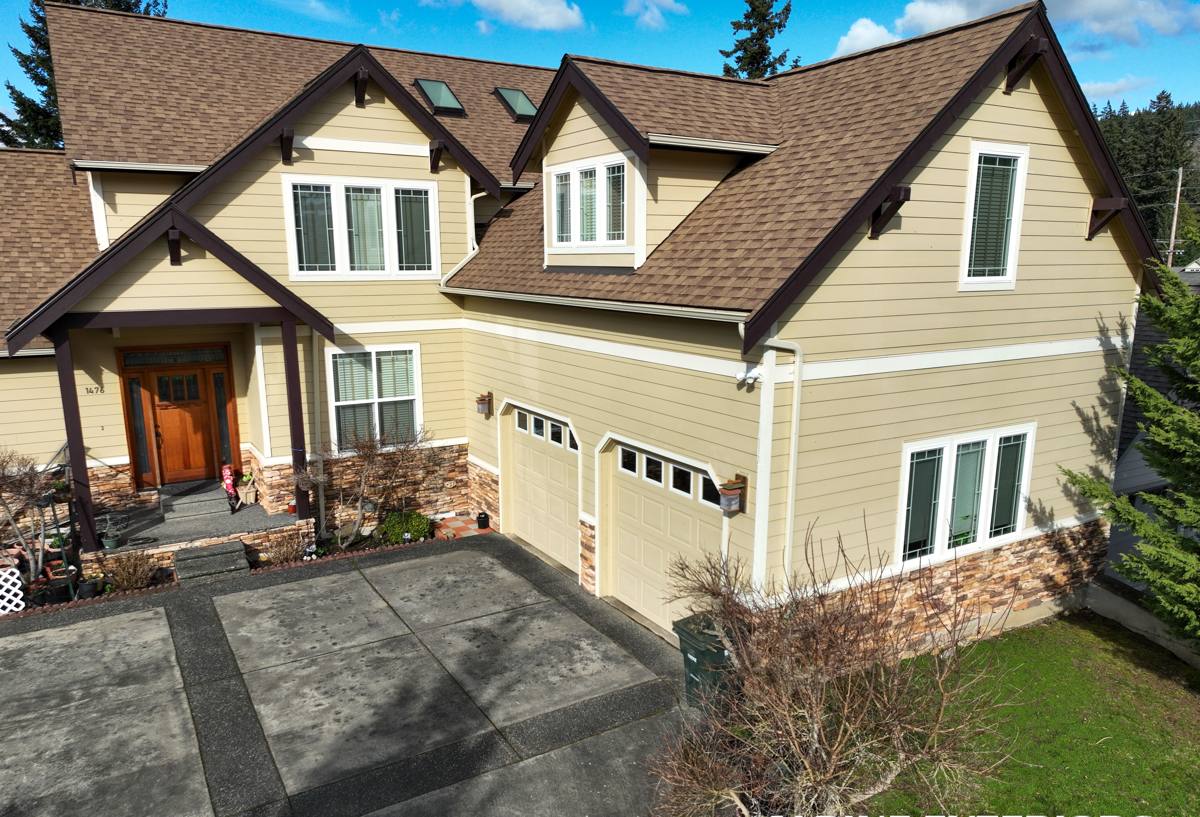
What Clear Lake's Microclimate Actually Does to Exterior Walls
Shade and moisture that never fully leaves
Tree cover around Clear Lake is a mixed blessing. It's part of why people live out here, but it also means less direct sun hitting north- and east-facing walls, longer drying times after rain, and higher ambient humidity right up against the siding. That combination is exactly what moss, algae, and mildew need to establish themselves, and once moss gets a foothold on a wall, it holds moisture against the surface long after the rest of the house has dried.
Driving rain, not just rainfall totals
Skagit County doesn't just get a lot of rain — a good share of it comes in sideways during winter storms. Wind-driven rain finds every gap in flashing, every under-caulked joint, and every panel that wasn't lapped correctly. On a sheltered in-town lot that might not matter much. On an exposed or lake-adjacent Clear Lake property, it's the difference between a wall assembly that sheds water and one that slowly wicks it into the sheathing.
Salt air in the mix
Even away from the immediate waterfront, this part of Washington gets marine air drifting in off Puget Sound, and that air carries salt. Salt-laden moisture accelerates corrosion on fasteners, trim flashing, and any metal component that isn't rated for it, and it degrades cheap or unstabilized coatings faster than plain rainwater would.
None of this is unique to any one house on Clear Lake — it's the baseline condition for the whole area. Siding decisions here should start from that baseline, not from what worked on a dry-side house three counties away.
Why We Only Install James Hardie Fiber Cement Out Here
We install James Hardie fiber cement siding exclusively — we don't offer vinyl, LP SmartSide, cedar, primed spruce, or other fiber cement brands, and Clear Lake's conditions are a big part of why we've drawn that line.
- Non-combustible core: fiber cement doesn't feed a fire the way wood-based products can, which matters on tree-shaded, forested lots.
- Doesn't wick and swell like wood-based siding: engineered wood products can absorb moisture at cut edges and swell or delaminate over time in a climate this damp; fiber cement's cement-and-cellulose composition doesn't behave that way.
- Resists moss and mildew growth better than bare wood: it won't stop moss from landing on the surface, but the substrate itself doesn't feed organic growth the way untreated wood siding can.
- Factory-applied ColorPlus finish: baked-on, UV-stabilized coating holds up to years of gray, wet weather without the fading and chalking that field-applied paint shows first.
- Dimensionally stable: it doesn't expand and contract with humidity swings the way vinyl and wood do, so caulked joints and butt seams stay tighter for longer.
Vinyl siding has its place in some markets, but in a climate that alternates between heavy rain and periods of heat behind dark colors, it can warp, and its seams rely entirely on lap fit rather than a sealed, factory-finished surface. We'd rather stand behind one product system we trust in this climate than offer several and let a homeowner guess.
Picking the Right Hardie Product for a Clear Lake Lot
James Hardie engineers its siding by climate zone (HZ5 for the Pacific Northwest's wet, moderate-temperature conditions), and within that, the product line matters almost as much as the climate rating.
| Product | Where it fits on a Clear Lake home | What it's good for |
|---|---|---|
| HardiePlank lap siding | Most walls, especially shaded or wooded sides | Traditional look, widest color/texture range, the workhorse of most jobs |
| HardiePanel vertical siding | Gable ends, accent walls, modern designs | Clean vertical lines, pairs well with board-and-batten detailing |
| HardieTrim boards | Corners, window and door surrounds, fascia | Matches the siding's moisture resistance so trim doesn't fail first |
| HardieSoffit panels | Under eaves, especially on shaded/tree-cover lots | Vented options help air out damp eave spaces where moss and mildew start |
For a lot with heavy tree cover and limited direct sun, we lean toward specifying HardieTrim consistently at every transition rather than mixing in a cheaper trim board — that's usually where we see failures first on older homes in this area, not on the field siding itself.
What a Correct Installation Actually Involves
Fiber cement is only as good as the install behind it. On a Clear Lake property, a few details matter more than usual because of the shade and moisture load:
Water management before a single board goes up
Correct weather-resistive barrier installation, properly lapped and taped seams, and flashing at every window, door, and penetration — installed so water is directed out and down, not just "covered." On a shaded, slow-drying lot, any shortcut here shows up as trapped moisture months later, not a visible leak right away.
Clearances that respect the microclimate
Hardie's install specs call for minimum clearances from roofing, decks, and grade — typically several inches to keep the bottom edge of the siding away from splash-back and standing moisture. On lake-adjacent or low-lying Clear Lake lots where ground moisture lingers longer, we don't treat those clearances as a suggestion.
Fasteners and hardware rated for marine-influenced air
Given the salt content in the air this close to Puget Sound's influence, we use fasteners and flashing components rated to resist that corrosion, not just standard hardware that happens to be cheaper.
Caulking and joint treatment done to spec
Butt joints, trim transitions, and penetrations get sealed with products and methods that match Hardie's warranty requirements — not just "enough caulk to look finished."
Correct fastening pattern and blind-nailing where called for
Over- or under-driven fasteners are one of the most common fiber cement installation errors, and they're also one of the least visible until siding starts to crack or work loose years later.
Our Process for a Clear Lake Project
- On-site walkthrough: we look at sun exposure, tree cover, drainage, and existing moisture or moss damage on your specific lot before quoting anything.
- Tear-off and substrate check: once old siding comes off, we inspect sheathing for rot or soft spots — common on shaded walls that have been damp for years — and address what we find before covering it back up.
- Water barrier and flashing installation: done to current best practice, not just "what was there before."
- Hardie installation to manufacturer spec: correct clearances, fastening, and joint treatment as described above.
- Trim, soffit, and detail work: the transitions where most long-term failures start.
- Final walkthrough and cleanup: including job-site debris, since a wooded Clear Lake lot makes stray nails and cut-offs easy to lose in undergrowth if you're not careful about it.
What Drives Cost on a Clear Lake Job
| Factor | Why it matters here |
|---|---|
| Tear-off condition | Homes with existing moss/moisture damage often need sheathing repair, which adds labor before new siding starts |
| Access and lot layout | Wooded or sloped Clear Lake lots can limit staging and equipment access compared to a flat in-town lot |
| Trim and detail complexity | Multiple gables, dormers, or accent walls mean more cut-and-fit labor |
| Product line and finish | ColorPlus factory finishes and premium textures cost more than base lap siding but reduce future repainting |
| Soffit and eave work | Shaded homes often benefit from adding ventilation while the walls are open, which is additional scope beyond the field siding |
We give a firm number after the walkthrough, not a phone estimate — on a lot like this, what's happening behind the old siding changes the number more than anything else.
Living With Fiber Cement Siding in a Moss-Prone, Shaded Setting
Correctly installed Hardie siding needs far less attention than wood, but "far less" isn't "none" on a lot like this. A short annual routine keeps it looking right and protects the warranty:
- Rinse down north- and east-facing walls and any area under heavy tree cover once or twice a year to keep moss and algae from establishing
- Keep gutters clear so overflow doesn't run down the face of the siding repeatedly in one spot
- Trim back branches and brush that hold the siding in constant shade or keep it wet after rain
- Check caulked joints and trim transitions every year or two for cracking or separation
- Repaint only if you've had unfinished trim installed or if a factory-finished panel is ever damaged — ColorPlus finishes aren't meant to need routine repainting
Why It Matters That We Already Work Clear Lake
A crew that mostly works dry, open lots will spec a job the same way regardless of where it sits. A crew that's already done siding on shaded, tree-covered, lake-adjacent properties around Mount Vernon knows to check sheathing more carefully on the north wall, knows which trim details tend to fail first in this kind of microclimate, and knows not to cut corners on clearances just because a lot looks tidy from the street. That local pattern-recognition is worth more than a lower bid from a crew that's never priced a job with these specific conditions in mind.
We're also familiar with Skagit County's permitting and inspection expectations for exterior work, so a Clear Lake project moves through that process without surprises.
If you're planning a siding replacement on Clear Lake, we're happy to walk your property, look at what your specific lot is dealing with, and put together a straightforward, no-pressure estimate — use the form below to get started.