 Mount Vernon
 Edison's Climate Asks More of Your Siding Than Most Places
Edison sits close to the water on the edge of the Skagit Valley, in the kind of low-lying, exposed setting where weather doesn't get filtered much before it reaches a house. The bay air carries salt, the open farmland offers little wind break, and the tree cover along the waterways keeps everything shaded and damp for a good chunk of the year. Put those three things together and you get a siding environment that's genuinely harder on a home's exterior than most inland Skagit County neighborhoods a few miles east.
That's not a reason to panic about siding — it's a reason to be specific about what you install and how it's installed. A product and a crew that work fine in a dry, sheltered lot can fall short here. This page is about one thing: what it actually takes to do James Hardie fiber cement siding right on an Edison home, given what this particular stretch of Skagit County throws at a house.
Salt Air and Slow Corrosion
Homes near the bay deal with airborne salt settling on every exterior surface, not just the siding itself. Salt speeds up corrosion on fasteners, flashing, and hardware, and it accelerates the breakdown of finishes that aren't built to shed it. Over years, a siding product with a weak factory finish will chalk, fade, or let moisture in at the seams faster near the water than it would ten miles inland.
Driving Rain Off the Water
Storms moving in off the Salish Sea tend to arrive with wind behind them, which means rain doesn't just fall on Edison homes — it gets driven sideways into wall assemblies, especially on west- and south-facing elevations. Siding that isn't installed with the right gaps, flashing, and drainage plane will eventually let that wind-driven water find a way behind the cladding, where it does the real damage.
A Long, Genuine Moss Season
Between the marine humidity and the shade from mature trees along the sloughs and farmland edges, siding here can stay damp for extended stretches through fall, winter, and into spring. That's exactly the environment moss and algae need to take hold. Once organic growth gets a foothold on siding, it holds moisture against the surface and can accelerate wear underneath — which matters a lot more for materials that absorb water than for ones that don't.
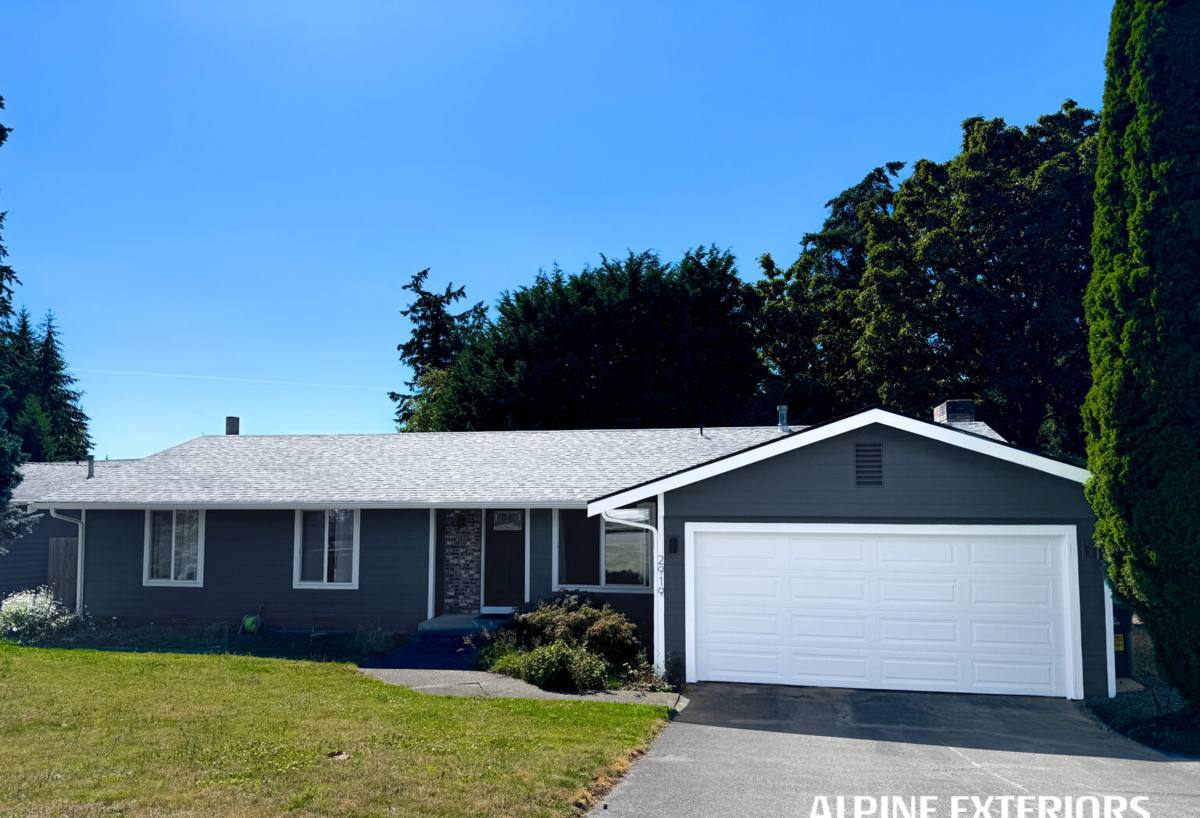
What Correct Hardie Installation Has to Get Right in This Environment
James Hardie siding is engineered to hold up in exactly these conditions, but the material only performs as designed if it goes on correctly. In an area like Edison, a few details matter more than usual.
Flashing and Drainage, Not Just Caulk
Every window, door, and trim transition needs proper flashing that sheds water outward before it ever reaches the housewrap or sheathing. Caulk is a backup, not the plan. On homes exposed to driving rain off the water, a crew that relies on sealant instead of correct flashing sequencing is setting up a slow leak that won't show up for a year or two.
A Real Rain Screen Gap Where It's Needed
A ventilated gap behind the siding lets any moisture that does get past the outer layer drain and dry out instead of sitting against the wall assembly. In a shaded, humid setting like Edison, that drying capacity is what keeps a moisture problem from turning into a rot problem.
HZ10 Product Engineering
James Hardie makes climate-specific formulations, and the HZ10 line is engineered for the wetter, milder regions of the Pacific Northwest — including moisture resistance suited to marine air and sustained damp conditions rather than the freeze-thaw cycles other HZ formulations are built for. Installing the version of the product that's actually engineered for this climate isn't an upsell; it's the baseline for the material to perform the way it's supposed to.
Fastening and Panel Spacing to Spec
Hardie's installation manual specifies fastener type, placement, and the gaps required between panels, at corners, and at trim. Those gaps aren't cosmetic — they give the material room to move with temperature and moisture changes without buckling or cracking the finish. Skipping or guessing at this is one of the most common ways a correct product ends up with an incorrect result.
Choosing the Right Hardie Product for an Edison Home
Not every Hardie profile fits every house. The right call depends on the home's style, its exposure, and how much of the moss-and-moisture problem you're trying to design around.
| Product | Best fit | Why it works here |
|---|---|---|
| HardiePlank lap siding | Most single-family homes, farmhouse and traditional styles common in the area | Widest range of ColorPlus finishes; straightforward water-shedding lap profile |
| HardieShingle | Homes with a cottage or craftsman look, accent gables | Classic shingle appearance without the moisture absorption of real wood shakes |
| HardiePanel | Modern builds, outbuildings, accent walls | Clean vertical lines; pairs well with board-and-batten trim |
| HardieTrim | Fascia, corners, window and door surrounds on every job | Matches the siding's durability so trim doesn't become the weak point |
Most Edison homes end up on HardiePlank for the field of the house, with HardieShingle or panel accents where the design calls for it. What matters more than the profile is making sure the whole system — siding, trim, and flashing — is Hardie throughout, so you're not left with one weak link where two different materials meet.
Why We Only Install James Hardie
We don't install vinyl, LP SmartSide, primed spruce, cedar, or other fiber cement brands, and in a climate like Edison's that's not a marketing position — it's a practical one. Vinyl can warp and its seams give water an easy path in driving rain. Wood and wood-based products absorb moisture, and in a long moss season that means more upkeep to keep growth and rot at bay. Other fiber cement products exist, but we've standardized on James Hardie specifically for the factory-applied ColorPlus finish, the climate-specific HZ line engineering, and a warranty structure that holds up when the installation is done to spec. That standardization lets our crew get genuinely good at one system instead of average at five.
Our Process on an Edison Job
- Site visit and moisture check. We look at sun exposure, tree cover, wind direction relative to the house, and the condition of the existing siding and sheathing underneath it.
- Tear-off and sheathing inspection. Old siding comes off and we check for hidden water damage before anything new goes up — this is the step that gets skipped by crews trying to move fast.
- Weather barrier and flashing. Housewrap, flashing at every penetration, and a drainage gap where the wall assembly calls for it.
- Hardie installation to manufacturer spec. Correct fastener spacing, panel gaps, and trim details, using HZ10 product for this climate zone.
- Final inspection and warranty registration. We walk the job before we call it done and make sure the manufacturer warranty is properly registered in your name.
Why a Crew That Already Works Edison Matters
A contractor who's worked this stretch of Skagit County knows which elevations take the worst of the wind-driven rain, how much shade a given lot actually gets through the winter, and what condition older sheathing tends to be in on homes of a certain age around here. That's not something you can fully substitute with general experience from a drier, more sheltered part of the county. It also means faster response if you ever need a warranty item looked at or a trim detail revisited — we're not driving in from across the region for a ten-minute check.
Living With Hardie Siding in a Marine, Mossy Climate
Correctly installed Hardie siding is low-maintenance, not zero-maintenance. A little seasonal attention keeps it looking right for decades.
- Rinse siding with a garden hose once or twice a year to clear salt residue and organic buildup before it takes hold
- Keep tree branches and shrubs trimmed back from the siding to cut down on shade and trapped moisture
- Clean gutters and downspouts so overflow doesn't run down the wall face
- Check caulking at trim and penetrations annually and touch up anywhere it's cracked or pulled away
- Avoid high-pressure washing directly at panel seams — it can force water behind the siding
- Address any moss or algae early with a gentle wash rather than letting it establish
What Drives the Cost of a Siding Job Here
Every home is different, but the same handful of factors move the price up or down on most Edison jobs.
| Factor | Why it matters |
|---|---|
| Existing siding removal | Tear-off, disposal, and any hidden repair needs add labor before install even starts |
| Sheathing or framing repair | Long-term moisture exposure sometimes means rot repair is needed before new siding goes on |
| Home size and wall complexity | More corners, gables, and dormers mean more cutting, flashing, and trim detail |
| Product mix | HardieShingle accents and custom trim cost more per square foot than straight lap siding |
| Accessibility | Site conditions, setbacks, and equipment access affect labor time |
We won't quote a number without seeing the house, but we're happy to walk you through realistic ranges once we've looked at your specific situation.
If you're planning a siding project in Edison or anywhere else around Mount Vernon, we'd rather come look at your home and talk through what it actually needs than guess over the phone. Reach out for a free, no-pressure estimate — there's a form right below to get started.