 Mount Vernon
 Storm Damage Roof Repair Built for East Mount Vernon Homes
East Mount Vernon sits in a part of Skagit County that takes real weather every year — not the dramatic hail-and-tornado kind, but the slow, grinding kind that does more damage over time: wind gusts off the valley, weeks of driving rain, and a moss season that can run from October clear through April. A roof out here doesn't usually fail all at once. It fails one lifted shingle, one clogged valley, one soft patch of decking at a time, until a storm finally finds the weak spot and pushes water where it doesn't belong.
We repair storm-damaged roofs for homes throughout East Mount Vernon on a regular basis, which means we're usually not guessing at what caused the damage or how the house is built — we've already seen the roofing patterns common to this part of town, from older re-roofs done with mismatched materials to newer builds with tight roof-to-siding transitions that need careful flashing work. This page covers what storm damage actually looks like here, what a correct repair involves, and how we handle the work from first call to final inspection.
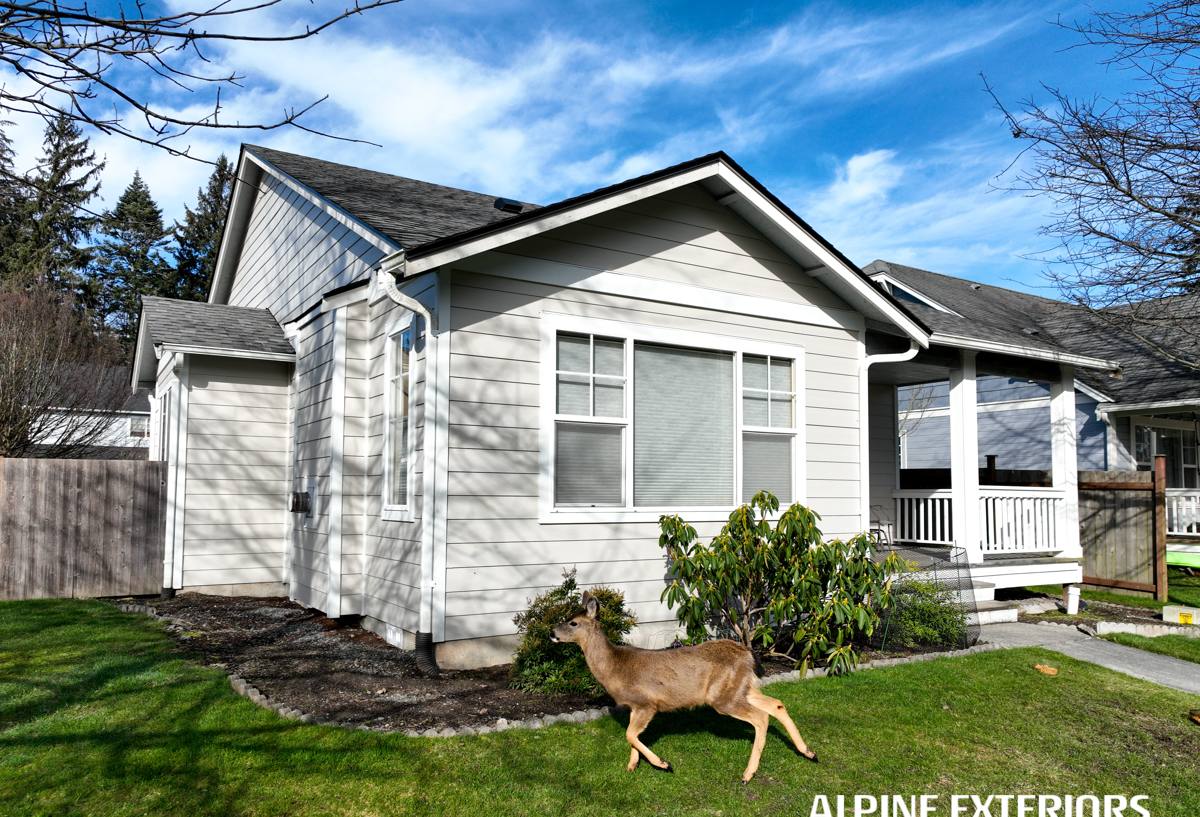
Why Skagit County Storms Are Hard on Roofs
Wind and Driving Rain
Storms moving through the Skagit Valley tend to bring sustained wind rather than a single sharp gust, and that matters for roofing. Sustained wind works shingle tabs and ridge caps loose gradually, lifting the same edge over and over until the sealant strip finally lets go. Once a tab is loose, wind-driven rain doesn't need a big opening to get underneath it — a gap the width of a pencil is enough for water to travel sideways under shingles and reach the underlayment or decking below.
The Long Moss Season
Mount Vernon's shaded lots, mild temperatures, and near-constant fall-through-spring moisture add up to a moss season that's longer than most of the state sees. Moss doesn't just look bad — it holds water against the shingle surface, works its way under tab edges, and lifts shingles just enough that the next windstorm has something to grab onto. A roof with heavy moss going into storm season is a roof that's already halfway to a leak.
Salt Air and Slow Material Fatigue
Homes closer to Puget Sound air currents deal with a steady low level of salt exposure that accelerates the breakdown of metal flashing, fasteners, and gutter hardware over the years. It's rarely the cause of a single storm event, but it's often why a 15-to-20-year-old roof has less give left in it when a storm does hit — flashing that would have flexed and held now cracks or pulls away instead.
Signs Your Roof Has Storm Damage
Some storm damage is obvious from the ground. Most of it isn't. After any significant wind or rain event, it's worth checking for the following before the next storm makes a small problem bigger:
- Shingles that look curled, cupped, or lifted at the edges, especially along ridges and roof edges facing the prevailing wind
- Granules collecting in gutters or at downspout outlets — a sign the shingle surface is wearing thin
- Visible gaps or daylight around chimney flashing, vent boots, or skylight curbs
- Water stains on interior ceilings or upper walls, even faint ones that come and go with weather
- Sagging or soft-feeling spots when walking the attic, which point to wet or rotting decking
- Debris, branches, or heavy moss buildup concentrated in roof valleys
- Gutters pulling away from the fascia or overflowing during moderate rain, which pushes water back under the roof edge
What a Correct Storm Damage Repair Involves
Inspection Before Repair
We don't quote storm repair work from the driveway. A proper assessment means getting on the roof (weather permitting) or using a ladder inspection at eave and valley level, checking the attic from underneath for moisture staining or daylight, and tracing any interior leak back to its actual source — which is often several feet from where the water is showing up inside. Water travels along rafters and sheathing before it drips, so the stain on your ceiling is rarely directly under the failure point.
Common Repair Scope
Not every storm-damaged roof needs the same fix. The table below covers the repair categories we see most often in East Mount Vernon and what typically drives the cost.
| Repair Type | What It Addresses | What Affects Cost |
|---|---|---|
| Spot shingle replacement | Isolated wind-lifted or torn shingles | Number of shingles, roof pitch, matching existing material |
| Flashing repair | Leaks at chimneys, walls, skylights, valleys | Flashing type, accessibility, extent of surrounding decking damage |
| Decking repair | Soft or rotted sheathing found under damaged shingles | Size of affected area, whether insulation or drywall is also affected |
| Gutter and edge repair | Pulled fascia boards, damaged drip edge, overflowing gutters | Linear footage, whether fascia or soffit needs rebuilding |
| Full section re-roof | Widespread damage concentrated on one slope or elevation | Square footage, material match, tear-off and disposal |
Our Process for East Mount Vernon Storm Repairs
- On-site assessment. We inspect the roof, attic, and any interior signs of water intrusion, and explain what we find in plain terms.
- Written scope and estimate. You get a clear description of the repair, materials, and a straightforward price range before any work starts.
- Temporary protection if needed. If there's an active leak or exposed decking, we can tarp or seal the area to stop further water intrusion while repairs are scheduled.
- Repair work. We match materials as closely as possible to your existing roof, replace any wet or damaged decking rather than covering over it, and pay close attention to flashing details where the roof meets walls, chimneys, or siding.
- Cleanup and final check. Job site is cleared of debris and fasteners, and we walk the repair with you before calling it done.
Repair vs. Replacement — Knowing Which You Actually Need
Homeowners often assume storm damage means a full roof replacement. Sometimes it does, but more often a targeted repair is the honest answer — and we'll tell you that even when a replacement would be the bigger job for us. Here's how we think about it:
| Situation | Usually Points To |
|---|---|
| Damage limited to one slope or a handful of shingles, roof otherwise sound | Repair |
| Roof is under 12-15 years old with good granule coverage elsewhere | Repair |
| Widespread curling, brittle shingles, or damage on multiple slopes | Replacement |
| Repeated leaks in different spots over the past couple of years | Replacement |
| Decking rot found in more than one isolated area | Replacement (repair often just delays the same failure) |
Storm Damage and Homeowner's Insurance
Many storm-related roof repairs are covered under homeowner's insurance, particularly wind damage claims. We're not an insurance company and can't make coverage decisions, but we can document the damage with photos and a written scope that you can submit with a claim, and we're glad to walk an adjuster through what we found if that's useful. What we won't do is inflate a scope of work to match a settlement number — the repair we recommend is the one your roof actually needs, and we'll explain the reasoning either way.
Why a Crew That Already Works East Mount Vernon Matters
Storm damage repair goes faster and holds up better when the crew doing it already understands the neighborhood's building patterns — roof pitches, common material ages, and how local homes handle wind exposure depending on tree cover and lot orientation. As an exteriors contractor working siding and roofing together, we also catch the failures that live right at the boundary between the two: fascia rot from a failed gutter, siding damage from a torn-off drip edge, or flashing that's failing where a roofline meets a wall. Treating the roof repair in isolation from the rest of the exterior is how those secondary problems get missed until they're expensive.
Protecting Your Roof Between Storms
A repair fixes what's broken. A little seasonal maintenance keeps the next storm from finding a new weak spot. Before Skagit County's wet season sets in each fall, it's worth doing the following:
- Clear gutters and downspouts so rain has somewhere to go besides under the roof edge
- Trim back branches that overhang the roof, which cuts down on both debris and shade that feeds moss
- Have moss treated or removed before it works its way under shingle tabs
- Check attic insulation and ventilation, since poor airflow speeds up moisture problems from the inside
- Walk the roofline from the ground after any major windstorm and note anything that looks different
If you're dealing with a leak, missing shingles, or storm damage anywhere in East Mount Vernon, we're happy to take a look and give you an honest read on what's going on — no pressure, no inflated scope. Use the form below to request a free estimate.