 Mount Vernon
 Why Downtown Mount Vernon Is a Different Window Job
Downtown Mount Vernon sits low in the Skagit River valley, close enough to Padilla Bay and the greater Puget Sound to pick up salt-laden air on top of everything else Western Washington throws at a house. That combination is harder on window assemblies than people expect. Salt air accelerates corrosion on hardware, fasteners, and unprotected metal components. Driving rain off the valley pushes water sideways into any gap in the flashing or sealant, not just straight down where a lot of older installations were designed to shed it. And the long moss season here — stretching well beyond just winter — keeps wood trim, sills, and cladding damp for extended stretches, which is exactly the environment that lets rot get started around a window opening before anyone notices.
None of that means windows in this part of Mount Vernon are doomed. It means the installation has to account for moisture management first and looks second. A window that seals well but was flashed wrong will fail from the inside out, often years before the glass or hardware itself gives out.
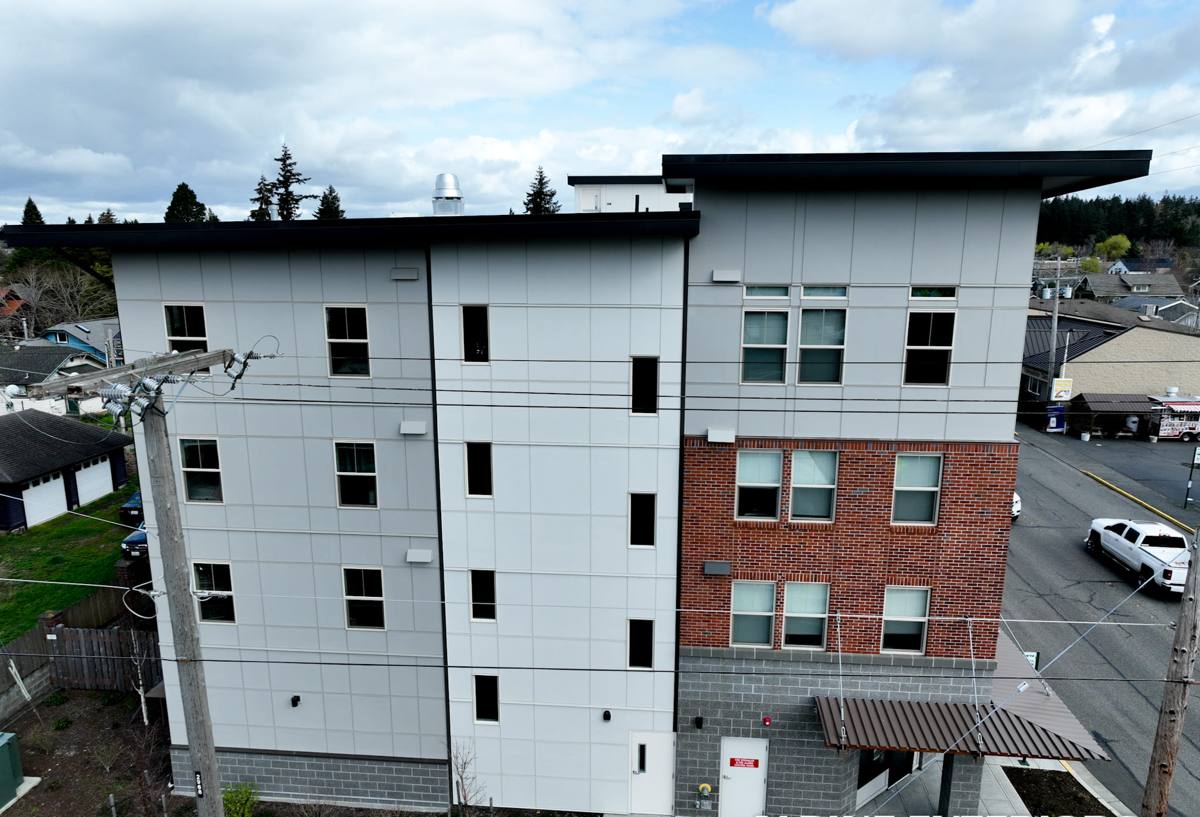
What We Typically Find in Downtown Homes
The housing stock close to Mount Vernon's core tends to be older than what you'll find in newer subdivisions on the edges of town — a mix of early-to-mid-century single-family homes, some converted multi-unit buildings, and additions or remodels layered on over the decades. That mix matters for a window job:
Original Single-Pane Wood Windows
Many of these homes still have some original wood-sash windows, or aluminum replacements installed decades ago. Original wood sashes are often solid on the frame side but have failed glazing putty, swollen sash cords, or paint sealing the window shut. Aluminum-frame replacements from the 1970s-90s are usually the worst performers we see for energy loss and condensation, since they have little to no thermal break.
Narrow Lots and Tight Access
Older, closer-together lots near downtown mean less room to stage materials, and in some cases alley or on-street-only access. We plan logistics — parking, staging, debris removal — before the crew shows up, not after.
Layered Renovations
A lot of these houses have had at least one remodel already. That means we sometimes find non-standard rough openings, mismatched flashing from different eras, or trim that was never fully sealed the last time someone touched the exterior. We check for this before we quote, not after we've already ordered windows.
Signs a Window Needs Replacing, Not Just Repairing
Not every problem window needs full replacement. But in this climate, a few signs reliably mean repair is just delaying a bigger repair bill later:
- Wood sill or bottom sash feels soft, spongy, or crumbles when pressed
- Visible fogging or moisture between panes on a double-pane unit — the seal has failed and can't be restored
- Paint or caulk failing repeatedly in the same spot every year despite touch-ups
- Drafts you can feel with your hand near the frame, even with the window latched shut
- Difficulty opening, closing, or locking that isn't fixed by simple hardware adjustment
- Visible daylight or gaps around the frame from outside
- Persistent moss or algae growth on the sill or trim that keeps coming back after cleaning
If you're only seeing one of these on one window, a repair or targeted resealing may be all you need. If you're seeing several across multiple windows, that's usually a sign the original installation or materials are past their service life for this climate.
What a Correct Window Replacement Actually Involves
The window unit itself is maybe a third of what determines how well a replacement performs here. The rest is what happens at the opening.
Full Removal and Inspection
We pull the old window and check the rough opening for rot, water staining, or damaged sheathing before anything new goes in. Setting a new window into a compromised opening just hides the problem behind new trim — it doesn't fix it.
Flashing and Moisture Barrier
This is the step that matters most for driving rain and salt air. Proper flashing directs water that gets past the exterior cladding back out and down, away from the framing, using a shingle-style layering (housewrap, flashing tape, sill pan, and the window's nailing fin) so nothing traps water against wood. This is also the step most likely to have been done wrong or skipped in older remodels.
Correct Sizing and Shimming
A window that's shimmed unevenly will bind, won't seal consistently, and puts stress on the frame that shortens hardware life. We set every unit plumb, level, and square before fastening.
Sealing and Insulation
Low-expansion foam or backer rod and sealant around the perimeter — never packed solid with standard expanding foam, which can bow the frame. Exterior caulking is a compatible, paintable sealant rated for this climate, not a generic hardware-store tube.
Interior and Exterior Trim
Trim gets reinstalled or replaced to match the home where reasonable, with attention to keeping any wood trim components properly primed and sealed on all sides — end grain included — since that's where moisture gets in fastest.
Choosing the Right Window for This Climate
There's no single "best" window material — it's a set of trade-offs, and the right call depends on the home, the budget, and how much upkeep you want to take on.
| Frame Material | Moisture Behavior | Upkeep | Typical Fit |
|---|---|---|---|
| Vinyl | Won't rot; performs well against driving rain when installed correctly | Low — no painting, occasional cleaning | Most straightforward replacements, budget-conscious projects |
| Fiberglass | Very stable in temperature swings and moisture; minimal expansion/contraction | Low to moderate | Homes wanting a longer-term, lower-movement frame |
| Wood-clad (wood interior, clad exterior) | Good if the exterior cladding stays intact; interior wood still needs some care | Moderate — exterior low-maintenance, interior wood periodically checked | Homes prioritizing an interior wood look |
| Aluminum | Prone to condensation without a thermal break; corrodes faster in salt-influenced air | Moderate to high | We generally steer homeowners away from it for this area |
For most Downtown Mount Vernon homes, we lean toward vinyl or fiberglass frames specifically because they don't give salt air or standing moisture anything to work on the way bare or poorly clad wood and aluminum can. That's a maintenance and moisture-performance call, not a knock on wood-frame windows generally — a well-maintained wood-clad window can absolutely hold up here, it just asks more of the homeowner over time.
Glass Packages
Double-pane with a low-E coating and argon fill is the standard baseline we recommend for this climate — it manages heat loss and condensation risk well without a large cost jump. Triple-pane adds incremental insulation value but at a real cost and weight increase; we'll walk through whether that trade-off makes sense for your specific windows rather than defaulting to it everywhere.
What Drives the Cost
| Factor | Why It Matters |
|---|---|
| Number and size of windows | Larger openings and full-house jobs have better per-unit economics than one-off replacements |
| Frame material and glass package | Vinyl is generally the most budget-friendly; fiberglass and wood-clad cost more |
| Condition of the existing opening | Rot repair, resized openings, or rebuilding a rough opening adds labor beyond a standard swap |
| Access and site logistics | Narrow lots, alley-only access, or upper-story windows can add setup time |
| Trim and interior finish work | Matching existing trim or repainting after install is a separate line item from the window itself |
| Disposal | Hauling and disposing of old windows, especially older units that may need special handling, is part of a proper quote |
We give a written, itemized estimate so you can see exactly what you're paying for window versus labor versus any opening repair — not a single lump number that hides which part costs what.
Our Process for a Downtown Mount Vernon Project
- On-site assessment — we look at each window opening, not just the window, and check for moisture damage before quoting
- Written estimate — itemized, with material options explained in plain terms
- Scheduling around access — we plan parking, staging, and debris removal for the lot ahead of time, especially on tighter downtown properties
- Removal and opening inspection — old units come out, and we address any rot or damage found before installing new windows
- Installation — proper flashing, shimming, insulation, and sealing on every unit, not just the visible trim work
- Final walkthrough — we operate every window with you and confirm it locks, seals, and seats correctly before we call the job done
Why It Matters That We Already Work This Neighborhood
A crew that already works in and around Downtown Mount Vernon has seen the pattern of problems specific to this area's housing stock and climate — where flashing tends to get missed on older remodels, which frame materials actually hold up against salt air and moss over years rather than months, and how to plan around the tighter lots and access constraints that come with older, closer-set properties. That's different knowledge than a crew that mostly works new-construction subdivisions elsewhere in Skagit County. It also means we're a known, findable business if you ever have a warranty question or want a window checked years down the line — not a name from an out-of-area crew that did one job and moved on.
If you're weighing repair versus replacement, or just want an honest look at what your current windows are costing you in comfort and upkeep, we're happy to come take a look. Estimates are free, and there's no pressure to move forward — fill out the form below and we'll set up a time to assess your windows in person.