 Mount Vernon
 Windows Built for Downtown Mount Vernon's Weather
Downtown Mount Vernon sits in a stretch of Skagit County where the weather doesn't do things halfway. Rain comes in sideways off the water more often than straight down, humidity lingers for months at a stretch, and moss finds a foothold anywhere moisture sits still long enough. Windows here take a different kind of beating than windows in a drier climate, and that changes what "correct installation" actually means. A window that's simply screwed into the rough opening and caulked around the edges might look fine for a year or two. Then the first hard driving rain of a wet Skagit winter finds the gap nobody sealed properly, and water starts working its way into the wall.
This page is about one job, done right, in one part of town: window installation for the homes in and around Downtown Mount Vernon. Not a general overview of siding or roofing — just windows, and what it actually takes to get them installed so they hold up here.
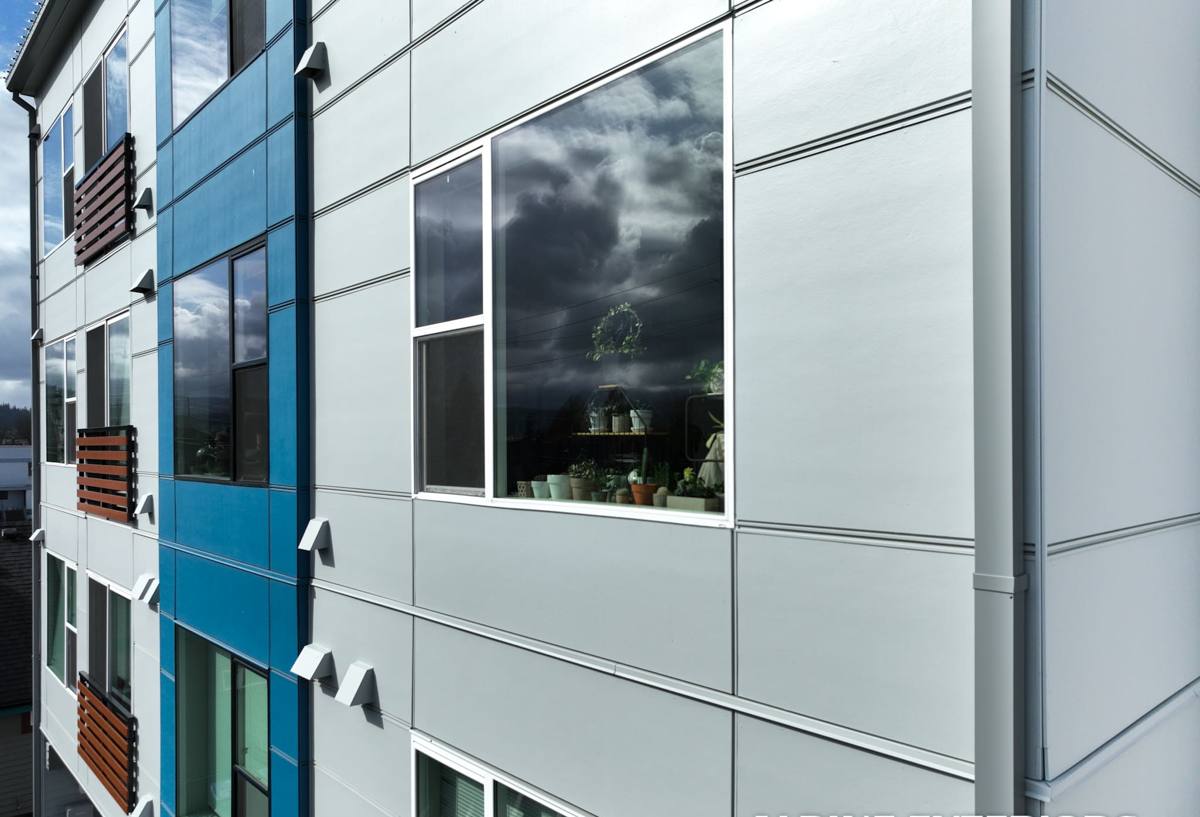
What the Local Climate Actually Does to a Window Installation
Moisture Is the Real Enemy, Not the Window Itself
Most window failures we see aren't caused by a bad window. They're caused by water getting behind a window that was installed without proper flashing or sealant detailing. Salt-tinged air moving in off the Sound and driving rain both push moisture toward every seam and joint in a wall assembly. If that moisture has a path in and no path out, it doesn't dry — it sits, and it starts breaking down wood framing, sill plates, and interior trim from the inside where nobody sees it until the damage is already done.
A Long Moss Season Changes Maintenance, Too
Skagit County's mild, wet stretch of the year runs long, and that means moss and algae get a real head start on anything that stays damp — window sills, the tops of trim boards, and gaps where debris can collect. A well-installed window sheds water cleanly instead of trapping it, which matters as much for keeping moss from taking hold as it does for keeping the wall dry.
What a Correct Window Installation Actually Involves
A proper install is a sequence, and skipping a step doesn't usually show up as a problem right away — it shows up two or three winters later. Here's what we do on every window we install:
- Remove the old window and inspect the rough opening and sill for rot or soft framing before anything new goes in
- Repair or rebuild any damaged framing so the new window has a sound base
- Install a sloped sill pan so water that reaches the sill drains outward instead of pooling
- Apply self-adhered flashing tape in the correct shingle-style sequence — sill, sides, then head — so water always sheds downward and outward
- Set the window level, plumb, and square, shimmed correctly so it isn't stressed or bowed
- Insulate the gap between the window frame and rough opening with a compatible low-expansion foam or backer rod, not just caulk alone
- Seal the exterior with a quality sealant rated for this climate, and finish interior trim so the whole assembly is weathertight, not just the visible caulk line
Every one of those steps matters. The flashing sequence in particular is where we see the most corners cut on older installs — it's invisible once the trim goes back on, which is exactly why it's tempting to skip.
Signs a Downtown Mount Vernon Home Needs New Windows
Downtown Mount Vernon has a mix of older housing stock alongside newer construction, and older homes in particular tend to show window problems in a few consistent ways:
- Visible fogging or moisture between panes on double-glazed windows — a sign the seal has failed
- Wood trim or sills that feel soft, spongy, or show paint bubbling
- Drafts you can feel near the frame even with the window fully closed
- Windows that are difficult to open, close, or lock, often from wood swelling or frame warping
- Visible gaps between the window frame and siding or trim
- Single-pane glass in a home that hasn't been updated in decades — a straightforward efficiency upgrade
Any one of these on its own isn't necessarily an emergency, but they're worth having a professional look at before the next wet season, not after.
Choosing a Window Material for This Climate
Not every window product performs the same way in a wet, moderate-temperature climate like Skagit County's. We're honest with homeowners about the trade-offs rather than pushing whatever's easiest to install.
| Material | Moisture Performance | Maintenance | Typical Trade-Off |
|---|---|---|---|
| Vinyl | Good — won't rot, low water absorption | Low | Fewer color/finish options than wood or fiberglass |
| Fiberglass | Excellent — very stable in wet, swinging temperatures | Low | Higher upfront cost |
| Wood (clad exterior) | Good if the exterior cladding is intact and maintained | Higher — exposed wood needs regular attention | Best appearance for historic-style homes, more upkeep |
| Aluminum | Poor — prone to condensation and thermal transfer | Moderate | We generally steer homeowners away from it for this climate |
For most Downtown Mount Vernon homes, vinyl or fiberglass hits the right balance of performance and cost. For homes where the exterior character matters — an older downtown home with a specific look to preserve — a wood-clad window can still make sense as long as the homeowner understands the added maintenance.
Our Window Installation Process
- On-site assessment — we look at the existing windows, framing condition, and how water currently moves around each opening.
- Honest recommendation — we tell you which windows need replacing now, which can wait, and which material fits your home and budget.
- Measurement and ordering — precise measurements so each window fits its opening without excessive shimming or gaps.
- Removal and framing repair — old windows come out, and any rot or damage found underneath gets fixed before the new window goes in.
- Flashing and installation — sill pan, flashing sequence, leveling, and insulation, done in the order that actually keeps water out.
- Sealing and trim finish — exterior sealant and interior/exterior trim work completed to match the rest of the home.
- Final walkthrough — we check operation, seal quality, and cleanup before calling the job done.
Cost Factors to Understand Before You Budget
Every home is different, so we don't quote a number until we've seen the job, but a few factors consistently move the price:
| Factor | Why It Matters |
|---|---|
| Number of windows | Per-window cost typically drops with larger jobs due to shared labor setup |
| Framing condition | Rotted sills or studs behind old windows require repair before installation can proceed |
| Window material | Vinyl, fiberglass, and wood-clad options carry different material costs |
| Window size and type | Larger openings, bays, or custom shapes cost more than standard double-hung sizes |
| Trim and siding tie-in | Matching existing exterior trim or siding adds finish work |
Broadly, homeowners should expect a wide range depending on these factors — a single standard window replacement is a very different project from a whole-home upgrade with framing repairs. We'll give you real numbers once we've walked the job.
Why Hiring a Crew That Already Works Downtown Mount Vernon Matters
A contractor who works this specific area regularly already understands the housing stock, the common trouble spots on older homes, and how the local climate actually behaves through the year — not just in general terms, but in the way it shows up on job sites here. That matters for window installation more than most exterior work, because so much of what determines whether a window lasts is invisible once the job is finished. You're trusting the flashing detail, the sill pan slope, and the sealant choice to someone who won't be back to show you their work — you're trusting that it was done right the first time.
We also stand behind the installation itself, separate from the manufacturer's product warranty. If something about our workmanship isn't right, that's on us to fix.
Keeping New Windows Performing Long-Term
A correctly installed window still benefits from basic upkeep in a climate like this one:
- Clear debris and moss buildup from sills and tracks a couple of times a year
- Check exterior caulk lines annually for cracking or separation
- Keep gutters and downspouts clear so water isn't sheeting down over window heads
- Operate locks and hardware periodically so they don't seize up between seasons
- Watch for any soft trim or paint bubbling near window frames as an early warning sign
If you're weighing whether your Downtown Mount Vernon home needs new windows, or you just want a second, honest opinion on what you're seeing, we're happy to take a look. Reach out for a free, no-pressure estimate using the form below.