 Mount Vernon
 Why Deck Replacement Looks Different in Blanchard
Blanchard sits in that stretch of Skagit County where the tree cover is thick, the ground stays damp for months at a time, and the air carries a faint edge of salt off the nearby saltwater. It's a beautiful place to have a deck. It's also a tough place to keep one. A deck design that works fine in a dry inland climate can start failing here within a handful of years if it wasn't built — or rebuilt — with this specific environment in mind.
When we replace a deck in Blanchard, we're not just swapping old boards for new ones. We're looking at how the structure handles year-round moisture, how it holds up against salt-laden air moving in off the water, and how much shade and moss pressure the site gets from surrounding trees. Those three factors drive almost every decision on the job, from the hardware we choose to the layout of the decking itself.
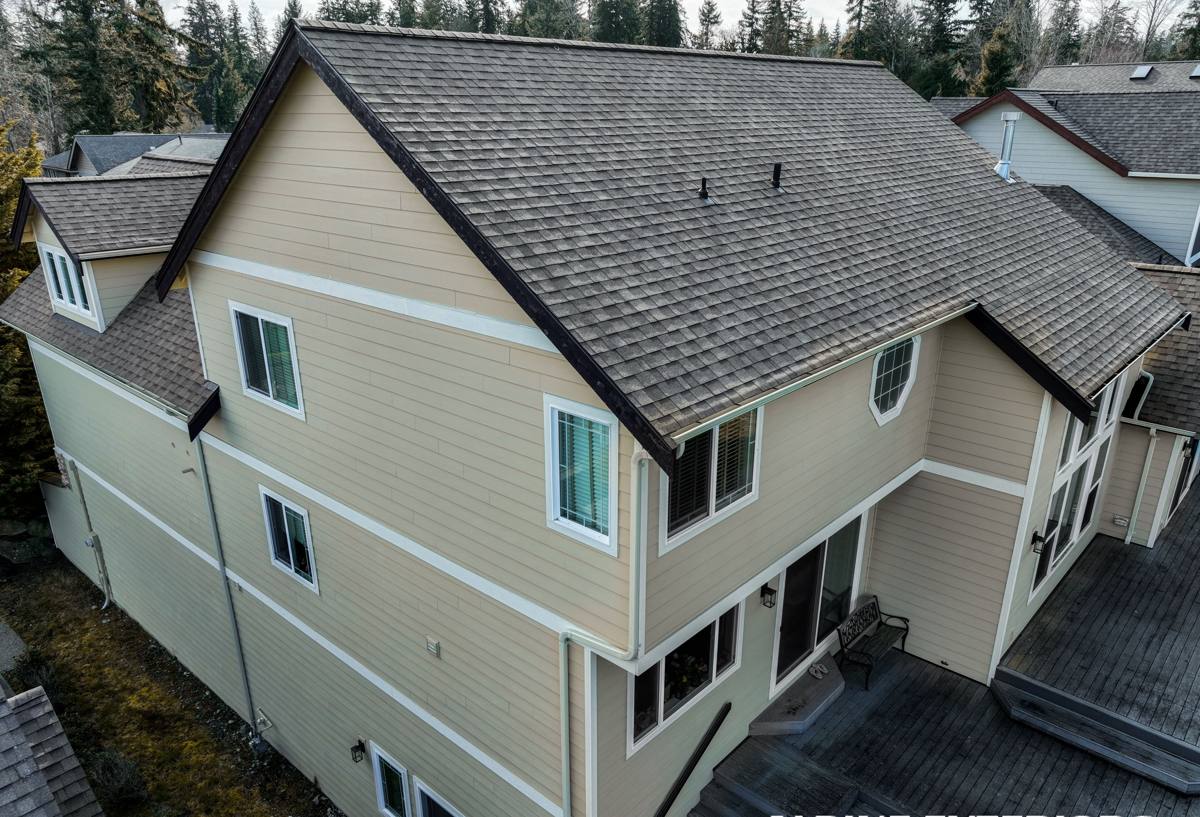
What Salt Air, Driving Rain, and Moss Actually Do to a Deck
Salt Air and Corrosion
Properties near Samish Bay and the broader Puget Sound corridor get a steady, low-level dose of salt-laden moisture in the air. It's not the same as a beachfront property getting direct spray, but over years it accelerates corrosion on standard fasteners, joist hangers, and structural screws. The failure isn't dramatic — it's slow rust that weakens a connection point you can't see because it's under the decking or behind a ledger board.
Driving Rain and Hidden Rot
Skagit County gets long stretches of steady, wind-driven rain rather than short downpours. That matters for deck construction because driving rain gets pushed sideways and upward into gaps that a straight-down rain would never reach — behind ledger boards, under railing posts, and into end grain on cut lumber. Most deck rot we find during a tear-off didn't come from water sitting on top of the decking. It came from water getting behind or underneath the structure and having nowhere to dry out.
Moss, Shade, and Trapped Moisture
Wooded lots and long gray winters mean a long moss season here — often eight or nine months where conditions favor growth. Moss itself isn't just a cosmetic nuisance. It holds moisture against the decking surface and framing far longer than bare wood or composite would dry on its own, and on shaded decks it can mask soft spots and early rot until they've become structural.
Signs Your Deck Needs Replacing, Not Just Repairing
Not every deck problem calls for a full replacement. But in this climate, certain signs mean the structure underneath has been compromised and patching the surface won't fix it.
- Soft, spongy, or bouncy spots in the decking, especially near the house or in shaded corners
- Visible gaps, staining, or dark streaking where the ledger board meets the house
- Rust stains bleeding out from screw heads or joist hangers
- Persistent moss or algae that returns within weeks of cleaning
- Railing posts that wobble or flex when pushed
- Any framing member you can probe with a screwdriver and feel it sink into soft wood
- A deck older than 15-20 years that has never had the substructure inspected
If you're only seeing surface graying or minor board cupping, a repair or resurfacing may be enough. Once the framing, ledger, or footings are involved, replacement is almost always the more honest recommendation.
What a Correct Deck Replacement Involves
Ledger Board and Flashing
The ledger board — where the deck attaches to the house — is the single most common point of failure we see on older decks in this area, and it's also the point that does the most damage when it fails, since water tracking behind it can rot house framing, not just deck framing. A correct replacement means proper flashing that directs water out and away from the house, not just a bead of caulk and a bolt pattern. This is one part of the job that's worth doing right the first time, because it's largely invisible once the decking goes back down.
Framing and Footings
We check footing depth, condition, and spacing against current structural standards rather than just matching what was there before — older decks in this area were sometimes built to a lighter standard than what's expected now. Joists get sized and spaced for the actual span and load, and any framing member showing rot or insect damage gets replaced rather than sistered over, since sistering doesn't fix a compromised connection point.
Decking, Fasteners, and Drainage
Board spacing, orientation, and airflow underneath the deck all affect how fast it dries out after rain. We also look at grading and drainage around the footings themselves — a deck can be built perfectly and still develop problems if water pools against the posts every winter.
Choosing Decking Material for a Blanchard Property
There's no single "best" decking material — the right choice depends on how much shade and moss pressure the site has, how much maintenance you want to take on, and your budget. Here's how the common options compare for a shaded, damp, salt-air-adjacent site like most properties in this area:
| Material | Moss/Moisture Behavior | Maintenance | Typical Lifespan Here |
|---|---|---|---|
| Pressure-treated wood | Absorbs moisture readily; needs to fully dry between rain events or moss and mildew take hold fast in shade | Annual cleaning and periodic sealing | 10-15 years with upkeep |
| Cedar | Naturally more rot-resistant than treated pine but still organic and porous; moss will grow on it in shaded, damp spots | Regular cleaning, sealing every 1-2 years | 15-20 years with upkeep |
| Capped composite | Doesn't absorb water into the core; moss can still grow on the surface film but doesn't cause structural rot | Occasional washing, no sealing | 25-30+ years |
| PVC/vinyl decking | Fully non-organic surface; least hospitable to moss and mildew of the common options | Occasional washing | 25-30+ years |
We don't push one material on every homeowner. Wood has a natural look and lower upfront cost that some homeowners prefer even knowing the maintenance commitment. Composite and PVC cost more up front but make the most sense on shaded, hard-to-maintain sites where moss and moisture are a constant fight. Our job is to lay out the real trade-offs honestly so you can pick based on your site and your tolerance for upkeep, not a sales pitch.
Framing Lumber Regardless of Decking Choice
Whatever decking material you choose, the framing underneath should be pressure-treated lumber rated for ground contact where applicable, since the substructure is what actually determines the deck's structural life — the decking surface is replaceable, the framing shouldn't need to be again for decades.
Fasteners and Hardware: Why It Matters More Here
Given the salt air moving through this part of Skagit County, we use stainless steel or heavy-coated, corrosion-rated fasteners and structural connectors rather than standard hardware. It costs more per box, but it's a small fraction of the total project cost and it's the difference between hardware that's still sound in twenty years and hardware that's rusting through in eight. This applies to joist hangers, structural screws, and any exposed hardware on railings — not just the visible decking screws.
Railings and Code Basics
Most elevated decks require guardrails, and Skagit County follows standard residential building code minimums for railing height and baluster spacing. Beyond meeting code, railing posts need to be attached to the framing in a way that resists lateral force — a loose or under-attached railing post is one of the more common safety issues we find on older decks during a replacement. If your deck is attached to the house or sits above a certain height, a permit through Skagit County is typically required; we handle that as part of the project rather than leaving it on the homeowner to sort out.
Our Process, Start to Finish
- On-site inspection of the existing deck, ledger connection, footings, and framing condition
- Honest assessment of whether repair or full replacement makes sense, with the reasoning explained
- Written estimate covering material options, scope, and timeline
- Permit handling with Skagit County where required
- Tear-off and disposal of the old structure
- Framing, footing, and ledger flashing work, built to current structural standards
- Decking, railing, and hardware installation using corrosion-rated fasteners
- Final walkthrough so you know how the specific materials on your deck should be maintained
Why a Crew That Already Works Blanchard Matters
A contractor who mostly works drier, inland areas can build a deck that's perfectly code-compliant on paper and still struggle here, because the failure points in this climate aren't always obvious unless you've seen them play out over years. We work throughout the Mount Vernon area and into communities like Blanchard regularly, so we know which details — ledger flashing, hardware grade, board spacing for drainage, material choice on shaded lots — actually matter for the weather this part of Skagit County gets, rather than treating every deck like it's going into a dry climate.
If you're weighing a repair against a full replacement, or you just want an honest look at what shape your current deck is really in, we're happy to come take a look. There's no pressure and no obligation — just a straight answer about what your deck needs. Use the form below to request a free estimate.