 Mount Vernon
 Why Avon's Climate Is Hard on Siding
Avon sits in the low, flat farmland of the Skagit Valley just outside Mount Vernon, and homes here deal with a specific combination of weather that's tougher on exterior siding than most homeowners realize. The valley floor holds moisture longer than higher ground — morning fog off the fields and nearby water lingers into the day, humidity stays elevated for long stretches, and driving rain off Puget Sound arrives sideways more often than straight down. Add a moss season that can run from fall through spring in Skagit County, and you've got a climate that punishes any siding product that isn't built to shed water and resist rot at the seams.
None of this is unique to any one house in Avon — it's the baseline every exterior surface here has to survive, year after year. The problem is that a lot of siding installed decades ago, and even some installed more recently, was never designed with this combination of salt-laden air, sustained rain, and moss growth in mind. Wood-based products absorb and hold moisture. Vinyl flexes and gaps at the seams. Both give moss a foothold and give water a path behind the cladding, where it does the most damage.
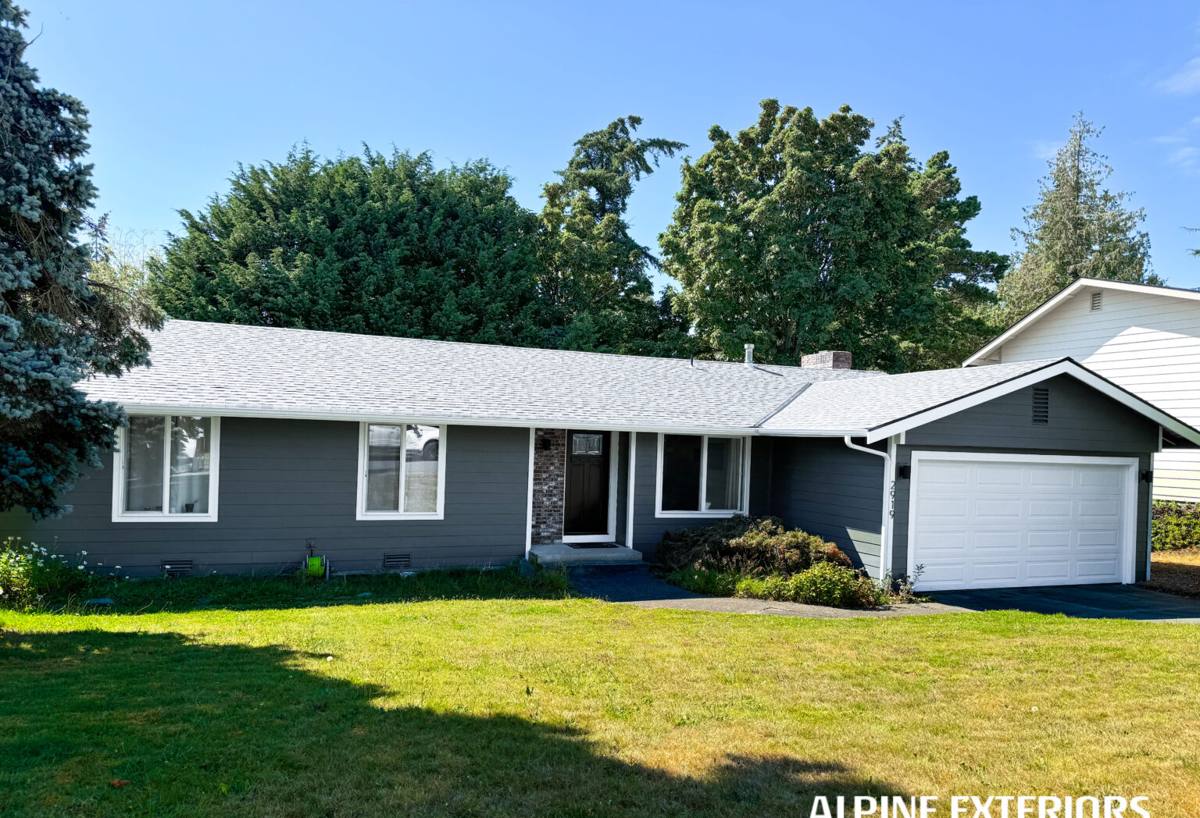
What Correct Siding Installation Requires Here
"Correct installation" isn't a marketing phrase — it's a specific set of details that either get done right or don't, and the difference shows up in five to ten years, not on day one. In a climate like Avon's, a few of these details matter more than they would in a drier region.
Moisture Management Starts Underneath the Siding
The siding itself is the least important layer for keeping water out of your walls. What matters more is the weather-resistive barrier underneath it, how the window and door flashing integrates with that barrier, and whether there's a drainage plane that lets any moisture that does get behind the cladding run back out instead of sitting against the sheathing. On a rainy-climate job, we check this layer before a single piece of siding goes up — because once the siding's on, you can't see it anymore, and mistakes here are the ones that turn into rot behind the wall.
Clearance and Drainage Details That Get Skipped
Fiber cement siding needs specific clearances from the ground, from roof lines, from decks and patios, and from any horizontal trim — usually a minimum of a few inches, per the manufacturer's written instructions, so splash-back and standing water don't sit against the bottom edge of the board. In a valley climate with heavy fog and standing moisture, skipping or shorting these clearances is one of the most common ways siding fails early, even when the product itself is good.
Fastening and Fit
Fiber cement has to be fastened with the right nail type, spacing, and depth — over-driven or under-driven fasteners crack boards or leave gaps that let water in. Butt joints need to be caulked or flashed correctly, not just butted together and painted over. None of this is complicated, but it's exactly the kind of detail that separates a job that looks fine at handoff from one that still looks fine in year twelve.
Why We Install Only James Hardie Fiber Cement
We made a deliberate decision as a company to install James Hardie fiber cement siding exclusively, and not vinyl, not LP SmartSide, not cedar or primed spruce, and not other fiber cement brands. That's not a sales pitch — it's a standard we hold to because of what we've seen this climate do to the alternatives over time. Wood-based siding, even engineered wood, absorbs moisture at cut edges and fastener penetrations; in a climate this wet, that moisture exposure adds up. Vinyl is inexpensive and low-maintenance in the sense that it doesn't rot, but it can't be painted to refresh its look, it becomes brittle over decades of UV and temperature swings, and its seams and drainage behavior are a different (and generally less forgiving) system than fiber cement's.
The HZ10 System Built for This Region
James Hardie engineers its siding by climate zone under what it calls the HardieZone system. Products specified for HZ10 — the wetter, milder zone that covers the Pacific Northwest — are formulated for high-moisture, high-humidity conditions rather than the hot, dry, or freeze-heavy climates other regions deal with. That matters in Avon specifically, because a product engineered for a desert Southwest install schedule and moisture profile isn't optimized for a valley floor with near-constant humidity and a long moss season.
ColorPlus Finish and the Warranty Behind It
Most Hardie products we install carry the ColorPlus factory finish — a baked-on, multi-coat finish applied under controlled conditions rather than painted on site after installation. It resists fading and holds up to UV and moisture better than field-applied paint, and it comes with its own finish warranty layered on top of Hardie's product warranty. Fiber cement itself is non-combustible, which matters for wildfire-adjacent insurance considerations even in a wet climate, and it doesn't feed moss the way bare wood fiber can.
How Siding Materials Compare in Avon's Climate
| Material | Moisture behavior | Moss/algae resistance | Maintenance | Typical lifespan here |
|---|---|---|---|---|
| James Hardie fiber cement | Dimensionally stable; resists swelling | High with proper finish and clearance | Occasional wash; no repainting for years | Decades, with correct install |
| Vinyl | Doesn't absorb, but seams/gaps let water track behind | Moderate; can trap moisture behind panels | Low, but not repairable/repaintable | Variable; degrades with UV over time |
| LP SmartSide (engineered wood) | Absorbs at cut edges and fasteners if not sealed exactly to spec | Lower; wood fiber base | Regular caulk/paint upkeep required | Shorter if maintenance lapses |
| Cedar / primed spruce | Absorbs moisture readily; needs consistent sealing | Low; organic material feeds growth | High; repainting and sealing on a cycle | Shortest without disciplined upkeep |
This isn't a claim that the other materials are defective — vinyl and engineered wood both have legitimate uses and plenty of installers who work with them well. It's a statement of our own standard: given what Avon's climate does to a wall assembly over ten and twenty years, fiber cement engineered for this zone is the product we're willing to put our name behind.
Our Installation Process, Start to Finish
A siding job in Avon follows the same sequence every time, because skipping steps is exactly how the moisture problems described above get built into a wall.
- On-site assessment. We look at the existing siding, sheathing condition, trim, window flashing, and any signs of past moisture intrusion before quoting the job.
- Tear-off. Old siding comes off in sections so we can inspect the sheathing underneath as we go, rather than finding problems after the whole wall is exposed.
- Sheathing and barrier repair. Any soft, rotted, or water-stained sheathing gets replaced. The weather-resistive barrier is repaired or replaced and integrated properly with window and door flashing.
- Layout and fastening. Hardie boards are cut, fitted, and fastened to manufacturer spec — correct nail type, spacing, and clearance at every edge, corner, and penetration.
- Trim and joints. Butt joints, corners, and trim are sealed or flashed as specified, not just caulked over as a finishing step.
- Final walk-through and cleanup. We check clearances, caulk lines, and finish quality, and clear the site of debris and old material.
What Drives the Cost of a Siding Installation
| Factor | Why it matters |
|---|---|
| Home size and wall complexity | More square footage and more corners, gables, and dormers mean more cutting and fitting time |
| Condition of existing sheathing | Rot or water damage found during tear-off adds repair work before new siding can go on |
| Removal and disposal of old siding | Some materials (older wood, certain composites) take longer to strip and haul than others |
| Trim and detail level | Window casings, corner boards, and fascia detail add labor beyond flat wall area |
| Site access | Tight lots, fencing, or second-story sections change scaffolding and staging needs |
| Product line and finish | Board profile and ColorPlus color selection affect material cost within the Hardie lineup |
We won't quote a firm number without seeing the house — anyone who does is guessing before they've looked at your sheathing. What we can say honestly is that the cost of doing the moisture-management details right, the first time, is almost always less than the cost of repairing rot damage that shows up five years after a rushed job.
Choosing a Siding Contractor in Avon: A Checklist
- Ask whether they inspect and repair sheathing during tear-off, or just install over whatever's there
- Ask what weather-resistive barrier and flashing detail they use at windows and doors
- Ask for the specific clearance measurements they follow at grade, roofline, and decks
- Confirm which siding brand and product line they install, and why — and whether they stand behind one system or install whatever's cheapest for the bid
- Ask how they handle joints, corners, and caulking, and who's responsible if a seam fails
- Confirm they carry current licensing and insurance, and ask for references from work done in this region specifically
Maintenance After Installation
Fiber cement done correctly is genuinely low-maintenance, but "low" isn't "none." In Skagit County's climate, we recommend an annual visual check for moss or algae buildup on shaded, north-facing walls, a gentle wash (not a pressure washer aimed directly at joints or edges) if buildup appears, and a look at caulk lines around windows and trim every couple of years to catch any cracking before water gets behind it. ColorPlus finish doesn't need repainting on the schedule wood siding does, but keeping gutters clear and downspouts diverting water away from the wall base does more for siding longevity than any product choice alone.
Why a Local Mount Vernon Crew Matters
A crew that already works Avon and the rest of the Mount Vernon area knows the difference between a house on the valley floor and one on higher ground across town — which walls take the worst of the driving rain, which lots hold fog and moisture longer, and where moss establishes fastest. That's not something a crew based two counties away picks up on the first job. It also means faster response if a warranty question or a callback comes up, and a working relationship with local permitting that a here-today-gone-tomorrow bid doesn't have. We're not the only siding installers in Skagit County, but we're one that shows up on Avon streets regularly enough to know what this specific stretch of valley does to an exterior wall.
If you're weighing a siding replacement or new install on a home in Avon, we're glad to take a look and walk you through what we'd actually do on your walls — no pressure, no inflated estimate to scare you into a decision. Request a free estimate using the form below and we'll set up a time to come take a look.