 Mount Vernon
 Roofing in a Neighborhood That Sits Between Water and Weather
West Mount Vernon homes take on a specific combination of punishment that a lot of roofing crews from outside Skagit County simply don't plan for. You've got moist air moving in off Skagit Bay and the surrounding waterways, driving rain that comes in sideways more often than straight down, and a climate mild and damp enough to keep moss and algae growing on a roof nearly year-round. None of that is dramatic on its own, but stacked together over years, it's exactly the combination that finds every weak point in a shingle roof — the ones a rushed install or a corner-cutting shingle choice will eventually expose.
We work on roofs in this part of Mount Vernon regularly, which matters more than it sounds like. A roof that would hold up fine in a drier inland climate can fail here in half the time if it wasn't detailed for salt-laden moisture and constant dampness. This page covers what an asphalt shingle roof actually needs to hold up in West Mount Vernon, what we do differently because of it, and what to expect if you're getting a repair or full replacement quoted.
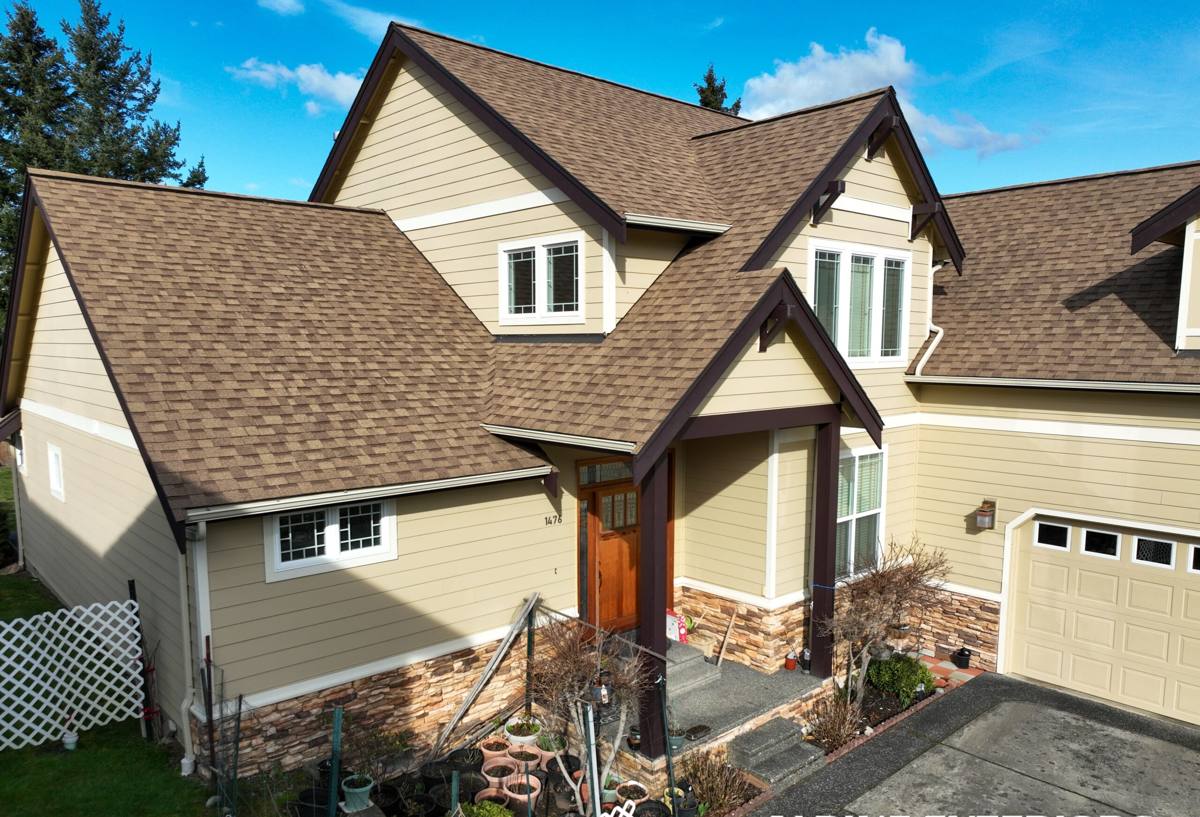
What the Local Climate Actually Does to a Shingle Roof
Salt Air and Moisture
Homes closer to the water and the low-lying areas around Mount Vernon deal with a steady, low-grade dose of salt-carrying moisture in the air. It doesn't corrode asphalt shingles the way it eats through bare metal, but it accelerates the breakdown of exposed fasteners, flashing, and any metal roof components that aren't rated or protected for coastal-adjacent exposure. Over time, unprotected fasteners can rust, stain shingles, and lose their grip.
Driving Rain
Wind-driven rain in this area doesn't just run down a roof slope and off the gutters — it gets pushed sideways and upward under shingle tabs, around chimneys, and into any flashing detail that isn't sealed correctly. A roof that's watertight in a straight-down rain can still leak in a Skagit County storm if the underlayment, flashing laps, and shingle sealant strips weren't installed with that wind direction in mind.
Moss and Algae Season
Western Washington's damp, shaded conditions give moss and algae a long growing window — realistically most of the year on north-facing slopes and anywhere tree cover keeps a roof from drying out between rains. Moss isn't just cosmetic. Its root structure lifts shingle edges, holds water against the shingle mat, and accelerates granule loss. Algae streaking is mostly cosmetic but signals a roof that's staying wet longer than it should.
What a Correctly Installed Roof Needs Here
A shingle roof built for West Mount Vernon isn't a different product than what's sold everywhere else — it's the same materials installed with more attention to the details that matter in a wet, wind-exposed climate. That includes:
- Ice-and-water shield at eaves, valleys, and around every penetration — not just the code minimum, but extended coverage in the spots where wind-driven rain backs up under shingles.
- Synthetic underlayment rated for extended wet exposure, since a roof here can stay damp under the shingles longer than in a drier climate.
- Properly lapped and sealed flashing at every chimney, wall intersection, skylight, and vent — this is the single most common failure point we find on older roofs in this area.
- Balanced attic ventilation so moisture from inside the house isn't adding to what the climate is already throwing at the roof from outside.
- Correct nailing pattern and sealant strip activation — shingles rely on sun warmth to bond their self-sealing strips, and a roof installed in cool, damp weather needs extra attention to make sure that bond actually sets.
Choosing a Shingle for This Climate
Not every asphalt shingle line handles constant dampness and moss pressure the same way. We steer homeowners toward algae-resistant shingles as a standard here, not an upgrade, because the copper- or zinc-infused granules in those products actively slow algae growth on north-facing and shaded slopes. Standard shingles will still perform structurally, but they'll show streaking and moss growth sooner, which means more frequent cleaning to protect the investment.
| Shingle Type | How It Handles Local Moisture and Moss | Trade-Off |
|---|---|---|
| Standard 3-tab | Adequate weather protection; no built-in algae resistance | Shows streaking and moss growth faster; shortest lifespan of the three |
| Algae-resistant architectural (standard choice) | Copper/zinc granules slow algae growth; heavier mat sheds wind-driven rain better | Slightly higher material cost; still needs periodic moss removal |
| Premium/designer laminate | Best wind and moisture performance, thickest mat | Highest material cost; only worthwhile if the roof's visibility or slope justifies it |
For most West Mount Vernon homes, a mid-grade algae-resistant architectural shingle is the honest recommendation — it's the point where climate performance and cost line up best. We'll say so plainly rather than upselling a premium line that doesn't add much for a typical roof.
Our Process, Start to Finish
- On-site inspection. We walk the roof (not just look from the ground) to check decking condition, existing flashing, ventilation, and moss/algae extent before quoting anything.
- Written estimate. Materials, labor, tear-off, disposal, and any decking repair contingencies spelled out — no vague allowances.
- Tear-off and decking check. Old shingles come off down to the deck so we can actually see what's underneath, rather than layering over problems.
- Underlayment and flashing first. This is where most of the long-term protection actually comes from, and it's the step that's easiest to rush.
- Shingle installation. Correct exposure, nailing height, and pattern for wind resistance — details that matter more here than in calmer climates.
- Ventilation check. We confirm intake and exhaust venting are balanced before closing out the job.
- Cleanup and magnetic sweep. Full site cleanup, including a nail sweep of the yard and driveway.
- Final walkthrough. We go over the finished roof with you before calling the job done.
Common Problems We Find on Roofs in This Area
When we're called out to look at an older roof in West Mount Vernon, the issues tend to repeat:
- Moss established at valleys and north-facing slopes, lifting shingle edges
- Rusted or under-sealed flashing around chimneys and roof-wall intersections
- Granule loss and mat exposure from years of retained moisture
- Attic condensation from inadequate or blocked ventilation, sometimes mistaken for a roof leak
- Fastener corrosion on older or lower-grade metal flashing and vents
Most of these are gradual — a roof doesn't fail all at once here, it degrades from these specific pressure points outward. Catching them early is almost always a repair; ignoring them turns into a full replacement.
Repair or Replace? A Practical Way to Think About It
| Factor | Leans Toward Repair | Leans Toward Replacement |
|---|---|---|
| Age | Under 12-15 years | Approaching or past manufacturer's expected lifespan |
| Moss/algae extent | Isolated to one slope or valley | Widespread across most of the roof |
| Granule loss | Localized, patchy | Consistent bald spots across many shingles |
| Decking condition | Solid, no soft spots | Soft, spongy, or visibly stained decking |
| Number of past repairs | First or second repair | Third or more repair on the same roof |
We'll give you a straight answer either way during the inspection — we'd rather quote an honest repair than push a replacement a roof doesn't need yet.
Maintenance That Actually Extends a Roof's Life Here
Given the moss and algae pressure specific to this climate, a little regular attention goes a lot further than it would in a drier region:
- Have moss physically removed (not just treated) from valleys and shaded slopes before it establishes root structure
- Keep gutters clear so wind-driven rain has somewhere to go instead of backing up under the shingle edge
- Trim back tree limbs that keep sections of the roof shaded and damp longer than the rest
- Check attic ventilation isn't blocked by insulation or debris
- Have flashing points looked at every few years, especially around chimneys and skylights
Why It Matters That We Already Work This Neighborhood
A roof detailed for West Mount Vernon's specific mix of salt air, driving rain, and moss pressure isn't guesswork for us — it's what we see and fix week to week in this part of Skagit County. That means we already know which slopes in this neighborhood tend to hold moss longest, which flashing details fail first on older homes here, and how the local building department wants roofing permits and inspections handled. A crew that's not familiar with this area is starting from zero on all of that, usually at the homeowner's expense.
If your roof is showing moss, streaking, granule loss, or you just want an honest read on how much life it has left, we're glad to come take a look. The estimate is free, there's no pressure to sign anything on the spot, and you'll get a straight answer about whether you need a repair or a full replacement — use the form below to get started.