 Mount Vernon
 Siding Repair Built for West Mount Vernon's Climate
West Mount Vernon sits close enough to the Salish Sea and the Skagit River delta that homes here deal with a specific mix of punishment: salt-laden air moving in off the water, long stretches of driving rain that hits siding sideways instead of straight down, and a moss season that can run from October through May in a wet year. None of that is unique to one street or one subdivision — it's a Skagit County reality — but it does mean siding repair in this part of Mount Vernon isn't quite the same job as siding repair on the drier east side of the county. The damage patterns are different, and so is what actually fixes them.
This page covers what siding repair means specifically for West Mount Vernon homes: what causes the damage, how to tell a repair job from a replacement job, what a correct repair involves, and why hiring a crew that already understands this neighborhood's exposure matters more than it might seem.
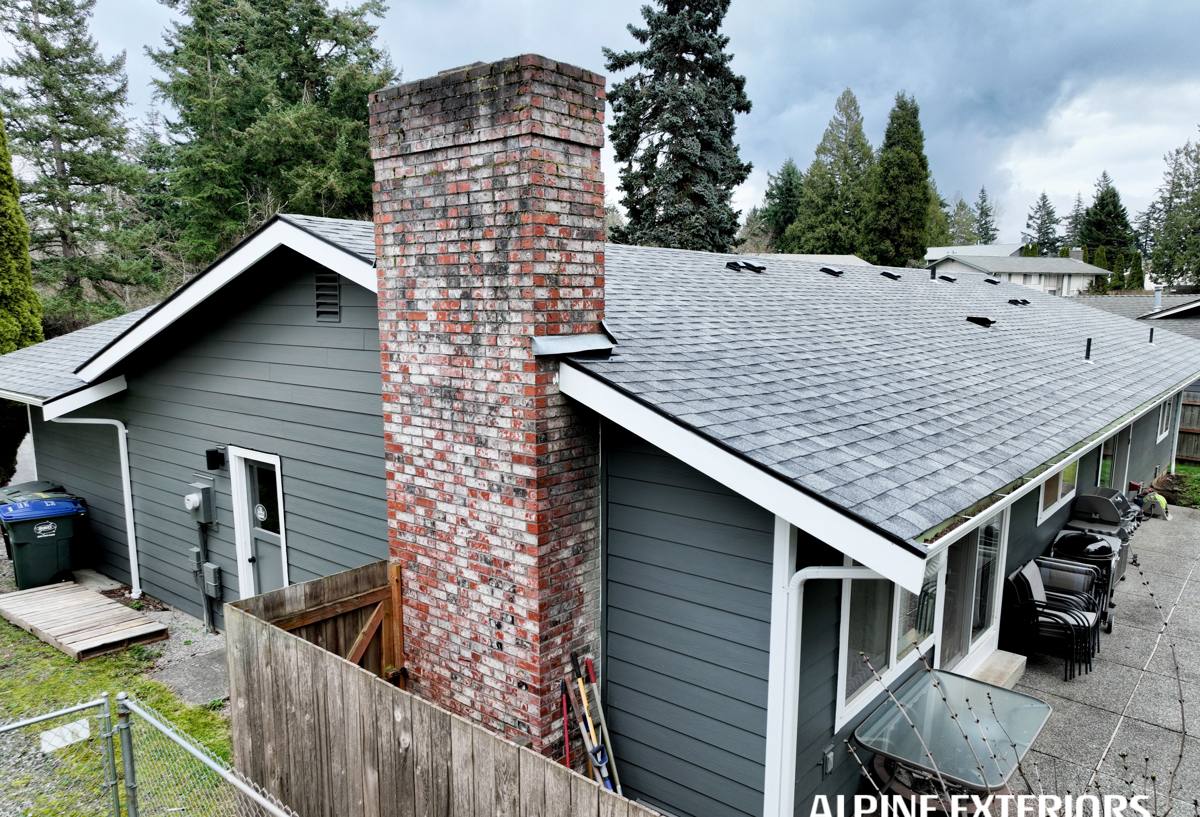
Why Siding Damage Shows Up Differently Here
Salt Air and Metal Fasteners
Salt-carrying moisture doesn't just sit on the surface of siding — it works into nail heads, seams, and any exposed fastener. Over years, that accelerates corrosion in ways that inland homes never experience. A siding panel that looks fine from the ground can be failing at the fastener line, which is exactly where water gets behind it.
Driving Rain and Wind-Driven Moisture
Storms coming off Puget Sound and up the Skagit valley tend to push rain horizontally rather than let it fall straight. That matters because siding systems are engineered to shed water moving downward — laps, flashing, and caulk lines all assume gravity is doing most of the work. Wind-driven rain forces water sideways and upward into seams and butt joints that were never meant to see standing moisture, which is a common root cause of the soft spots and delamination we get called out to fix.
Moss and Sustained Dampness
Moss doesn't damage siding by itself, but it's a signal of a bigger problem: a surface that's staying wet for extended periods, usually because of shade, poor airflow, or a nearby tree canopy. Moss holds moisture against the siding surface long after the rain has stopped, which is exactly the condition that lets rot, mold, and coating failure take hold underneath it — especially on wood-based or engineered wood products that were never rated for constant damp exposure.
Repair or Replace? How We Make That Call
Not every damaged section needs full replacement, and we don't push replacement when a repair will hold. But we also won't patch something that's going to fail again in a year because the underlying problem wasn't addressed. Here's how we think through it on a West Mount Vernon home:
| Situation | Repair Usually Makes Sense | Replacement Usually Makes Sense |
|---|---|---|
| Damage extent | Isolated to a few boards or one wall section | Spread across multiple elevations or hidden behind visible boards |
| Cause | One-time event — impact, a failed sealant joint, a single bad board | Ongoing moisture intrusion, chronic moss, or systemic material failure |
| Material condition | Rest of the siding is sound and holding its coating | Coating is failing broadly, boards are soft or swelling in multiple areas |
| Product type | Sound fiber cement or well-maintained wood siding | Aging wood composite or engineered wood with widespread edge swelling |
| Age of siding | Under 10-15 years, otherwise well maintained | Original siding is at or past its realistic service life |
We'll always tell you honestly which category your home falls into. If a targeted repair will genuinely solve the problem, that's what we recommend — a repair-first approach costs less and disrupts your home less.
What a Correct Siding Repair Actually Involves
A repair that just swaps a bad board for a new one, caulks the edges, and calls it done is a repair that fails again. Here's what we check and address on every repair call:
- Find the water path, not just the visible damage. Damaged siding is often a symptom — the actual entry point (a failed flashing detail, a gap at a trim intersection, a cracked caulk joint) may be a foot or more away from where the rot or staining shows.
- Check the water-resistive barrier and flashing underneath. If the house wrap or flashing behind the damaged section has failed or was installed incorrectly, replacing the siding alone won't stop the problem from coming back.
- Inspect fasteners and framing for corrosion or soft wood. Especially relevant given the salt exposure in this part of Mount Vernon — a repair that reuses corroded fasteners or nails into compromised sheathing won't last.
- Match the repair to the existing material correctly. Different siding products expand, contract, and hold paint differently. A patch that doesn't account for that will telegraph as a visible seam or fail at the joint within a season or two.
- Re-seal and re-flash properly, not just caulk over the gap. Caulk is a backup, not a primary water management strategy. Correct flashing detail does the real work.
Common Repair Scenarios We See in West Mount Vernon
Soft or Swollen Boards at Butt Joints and Corners
These are the seams where wind-driven rain most easily gets pushed in, and they're often the first place engineered wood or older wood siding starts to fail. Left alone, moisture travels along the board and the damaged area spreads well past what's visible from the outside.
Moss-Related Surface Breakdown
On shaded elevations — north-facing walls, areas under tree cover, spots that don't get direct sun or wind to dry them out — sustained moss growth can break down a coating and, on wood-based products, soften the substrate underneath. Repair here often needs to include addressing why that section stays wet, not just replacing the affected boards.
Fastener Corrosion and Popped Nails
Salt air accelerates this. Popped or rusting nail heads let water track behind the siding at a single point, which over time can cause a much larger area of hidden damage than the nail pop itself suggests.
Impact Damage
Storm debris, ladders, landscaping equipment — straightforward physical damage that's usually a clean, isolated repair as long as it's caught before water gets in behind the crack.
Repairing Different Siding Materials — An Honest Look
We're a James Hardie fiber cement installer — it's the only siding product we install new. But repair work is different from new installation, and plenty of homes in West Mount Vernon have vinyl, LP SmartSide, cedar, or other engineered wood siding already on them. When we're called for a repair, we'll work with what's there when a like-for-like patch is the sensible, cost-effective fix.
Where we're honest with homeowners is when a material's underlying weaknesses are the actual reason the damage keeps recurring. Engineered wood products can be prone to edge-swelling and moisture absorption once the factory coating is breached, which is a harder problem to permanently solve with a patch than with fiber cement, which doesn't swell or rot the same way because it isn't wood-based to begin with. Cedar needs ongoing refinishing to keep moisture out, and in a climate with this much sustained dampness, that maintenance schedule is unforgiving. Vinyl repairs are usually straightforward, but color-matching older, sun-faded vinyl is often impossible since it isn't a factory-baked finish the way Hardie's ColorPlus coating is.
None of that means every repair call ends in a sales pitch for replacement — most don't. But if a home has reached the point where repairs are recurring every year or two on the same wall, or the siding is old enough that patching no longer makes financial sense, we'll say so plainly, and explain why fiber cement is what we'd put on that wall going forward.
Our Repair Process
- On-site assessment. We look at the visible damage and probe around it — soft-spot testing, checking fastener condition, and looking for signs the problem extends further than what's obvious.
- Honest scope and estimate. You get a clear explanation of what's actually wrong, what repair option fits, and a straightforward cost range — no upsell, no scare tactics.
- Correct removal. Damaged material comes off cleanly, and we check the barrier and flashing underneath before anything new goes back on.
- Proper reinstallation. New material, correct fasteners, correct flashing and sealant details — built to actually shed West Mount Vernon's wind-driven rain, not just look patched.
- Final check. We walk the repair with you before we call it done.
What Drives Repair Cost
| Factor | Why It Matters |
|---|---|
| Extent of hidden damage | What's behind the siding often determines the real scope, not just what's visible |
| Siding material | Some materials are easier to source and match than others |
| Access and elevation | Second-story or hard-to-reach sections take more time and equipment |
| Flashing or barrier repair needed | Fixing the actual water entry point adds labor but prevents repeat failure |
| Color and finish matching | Factory-finished products can be harder to match than field-painted siding |
We give real ranges after we've actually looked at the damage — not a number pulled from a phone call, since the visible damage rarely tells the whole story.
Signs Your West Mount Vernon Home May Need Siding Repair
- Soft spots when you press on the siding, especially near the bottom edges or seams
- Visible swelling, bubbling, or delamination of the surface
- Persistent moss or algae in the same spots year after year
- Staining or streaking below seams, trim, or fastener lines
- Popped nails or fasteners with visible rust
- Cracked or missing caulk at joints, corners, and trim intersections
- Peeling or bubbling paint concentrated in one area rather than spread evenly
- A musty smell or interior wall staining on the corresponding interior side
Why Local Repair Experience Matters
A contractor who works across Skagit County regularly, and specifically in areas exposed to Salish Sea salt air, knows what to check first because they've already seen how this climate breaks siding down over years. That's the difference between a repair that just covers the visible damage and one that actually stops the water. It's also why we don't treat every repair call as a chance to sell a full replacement — most West Mount Vernon homes we look at need a targeted fix, and we'll tell you that straight.
If you're noticing damage, soft spots, or recurring moss on your siding, we're happy to come take an honest look. The estimate is free, there's no pressure, and you'll walk away knowing exactly what's going on with your siding and what it will actually take to fix it right.