 Mount Vernon
 Decks Built for La Conner's Waterfront Conditions, Not a Generic Climate
La Conner sits right on the water, and that changes what a deck has to survive. A deck built to a generic spec sheet — the kind that works fine in a dry inland climate — starts showing problems here within a few seasons: corroding fasteners, soft spots at the ledger, black streaks and moss on the boards, hardware that seizes up or stains the wood around it. None of that is bad luck. It's what happens when a deck isn't detailed for salt air, near-constant moisture, and long stretches without direct sun to dry things out.
We build and repair decks throughout Mount Vernon and the surrounding Skagit County communities, and La Conner's waterfront exposure is its own animal. The fixes aren't complicated, but they have to be planned in from the start — they're not something you can bolt on later.
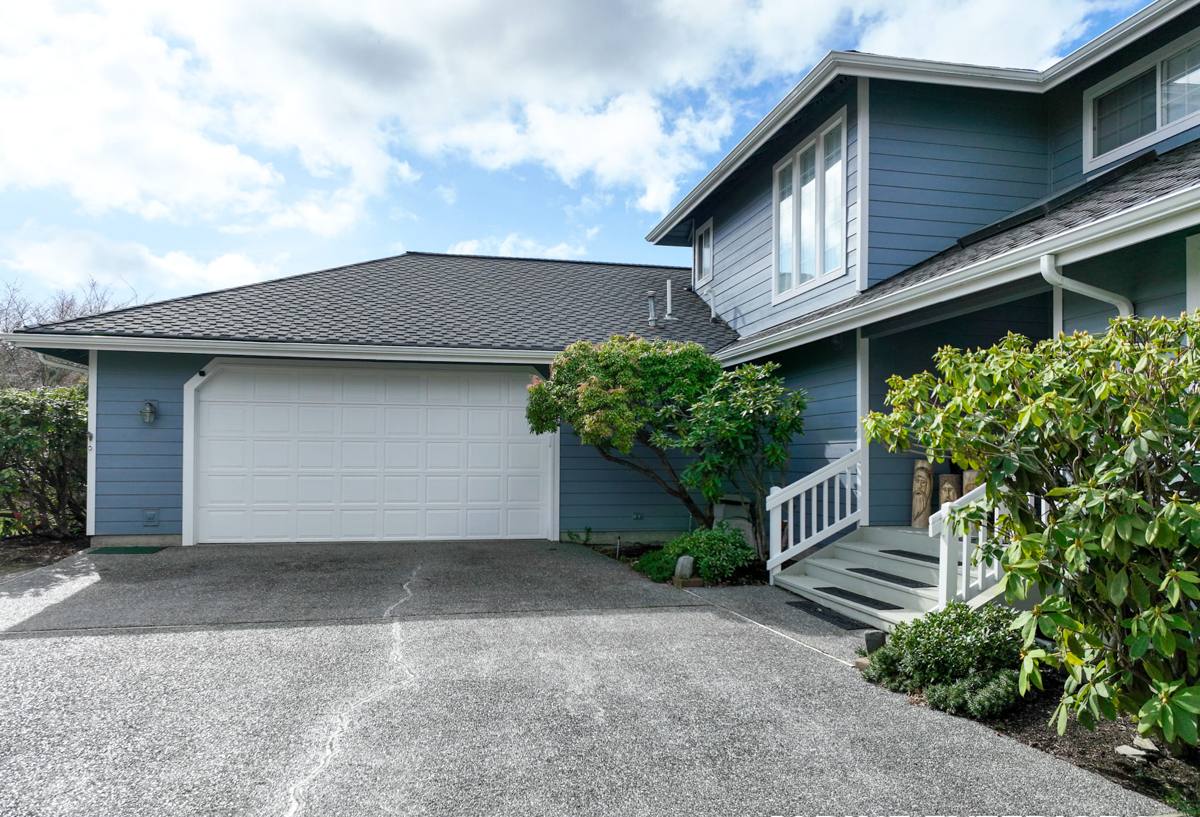
What Salt Air and Driving Rain Actually Do to a Deck
Three things drive almost every deck failure we see near the water:
Corrosion
Airborne salt accelerates corrosion on anything metal — screws, joist hangers, post bases, railing brackets. Standard coated deck screws can start rusting at the head within a couple of years this close to the channel, and once a fastener rusts it weakens the connection and stains the wood around it. This is a material choice, not a workmanship shortcut you can fix after the fact.
Trapped moisture
Skagit County gets long stretches of steady, driving rain rather than short heavy downpours. Water finds its way into any gap it can — around ledger boards, under decking where boards sit tight together, into end grain that isn't sealed. Decks fail from the inside out far more often than they fail on the visible surface.
Low sun angle and shade
Waterfront lots and mature landscaping mean a lot of decks don't get strong, direct sun for much of the year. Without airflow and sun to dry them out between rain events, horizontal surfaces stay damp longer — which is exactly what moss, algae, and mildew need to take hold.
Choosing Decking Material for This Climate
There's no single "best" decking material — there's a best material for your budget, your maintenance tolerance, and how much shade and moisture your specific site deals with. Here's how the common options actually perform in a La Conner-type environment:
| Material | How it handles salt air & moisture | Maintenance | Typical lifespan |
|---|---|---|---|
| Pressure-treated fir/hem-fir | Needs stainless or coated fasteners; prone to checking and moss if not sealed regularly | Annual cleaning, refinish every 2-3 years | 15-20 years with upkeep |
| Cedar | Naturally rot-resistant, but still needs sealing to hold its color and shed moisture | Cleaning and refinishing every 1-2 years | 20-25 years with upkeep |
| Composite decking | Doesn't rot or corrode itself, but low-quality boards can still trap moisture at fastener points | Periodic washing; no staining or sealing | 25-30+ years |
| PVC/capped polymer | Fully sealed surface, best resistance to moss staining and moisture uptake | Washing only | 25-30+ years |
We're honest with clients about trade-offs rather than pushing one product line. Wood decks are less expensive up front and can look great, but in a moss-prone, salt-air environment they demand real annual maintenance to hold up. Composite and PVC cost more initially but take the maintenance burden off the table — that's usually the right call for a deck that gets shade or faces the water directly.
The Substructure Decides How Long the Deck Actually Lasts
The decking boards are what you see, but the framing underneath is what determines whether the deck is still solid in fifteen years. Three details matter more here than in a typical inland build:
Ledger flashing
Where the deck attaches to the house is the single most common failure point on any deck, anywhere. In a climate with this much sustained rain, we flash the ledger properly — with the flashing lapped correctly behind the house's water-resistive barrier, not just caulked and hoped for — so water is directed out and away from the rim joist instead of tracking behind the siding.
Fasteners and hardware
We use stainless steel or hot-dip galvanized fasteners and connectors rated for exterior/coastal exposure, not standard coated hardware. It costs more up front and it's the difference between joist hangers that are still sound in twenty years and ones that are rusting through in five.
Footings and post bases
Footings need to meet Skagit County's minimum depth and bearing requirements for the soil conditions on your lot, and post bases should hold the post above the deck surface rather than letting wood sit in standing water. On low-lying or waterfront-adjacent lots, we also pay attention to drainage around footings so water isn't pooling against concrete through the wet season.
Permits, Guardrails, and Code
Most new deck construction in and around La Conner requires a building permit, and if your lot borders the channel or any tidal wetland, additional shoreline review may apply on top of the standard building permit. We handle the permit submittal and inspections as part of the job so you're not chasing that down yourself.
A few code basics that come up on nearly every project:
- Decks more than 30 inches above grade generally require a code-compliant guardrail, typically 36-42 inches high with baluster spacing that meets current code.
- Stairs need consistent rise and run, and handrails are required past a certain number of steps.
- Ledger attachment to the house has specific fastening and flashing requirements — this is one of the most commonly failed items on deck inspections.
- Footing size and depth are tied to the load the deck carries and the soil conditions on site, not a one-size number.
We design to code from the start rather than treating it as a final hurdle, which avoids delays and change orders mid-project.
Our Process, From First Look to Final Walkthrough
- Site visit and assessment. We look at sun exposure, drainage, existing structure (if it's a rebuild), and how the space will actually be used before we talk materials.
- Design and material selection. We walk through the honest trade-offs between wood, composite, and PVC for your specific site and budget — no upsell, just what fits.
- Permitting. We prepare and submit the permit package and schedule required inspections.
- Framing and structure. Ledger flashing, footings, joist layout, and hardware go in first, all built to the fastener and flashing standard described above.
- Decking, railing, and finish work. Boards, guardrails, stairs, and any trim or lighting are installed and inspected.
- Final walkthrough. We go over the finished deck with you, including what maintenance it needs and when, before we call the job done.
Maintenance That Actually Matters Through Moss Season
Every deck in this climate needs some maintenance — the question is how much. A little attention twice a year keeps a deck looking good and prevents the small issues that turn into structural ones.
- Sweep debris off the deck regularly, especially in fall — trapped leaves hold moisture and are where moss gets its start.
- Clean the surface at least once a year with a deck-safe cleaner; pressure washing wood decks too aggressively can damage the surface, so it should be done carefully or left to a pro.
- Reseal or restain wood decking on the schedule the product calls for — skipping a cycle is when moisture starts getting into open grain.
- Check railing hardware and fastener heads once a year for early rust or looseness.
- Keep gutters and downspouts near the deck clear so runoff isn't dumping directly onto or under the structure.
- Trim back vegetation that's shading the deck surface and keeping it from drying out between rains.
Why a Crew That Already Works in La Conner Makes a Difference
Deck-building fundamentals are the same everywhere, but knowing this specific stretch of Skagit County — how the permitting process runs, which details actually matter for salt air and moss, what the soil and drainage tend to look like on waterfront and near-waterfront lots — comes from doing the work here repeatedly, not from a general spec sheet. A crew passing through for one job doesn't have that context, and it shows up later in the form of avoidable maintenance issues.
When you're vetting any deck contractor for a La Conner project, it's worth asking directly:
- Do you pull permits and handle inspections, or is that left to me?
- What fastener and hardware grade do you use, and is it upgraded for coastal/salt-air exposure?
- How do you flash and detail the ledger board where the deck meets the house?
- Can you walk me through the actual trade-offs between decking materials for my site, not just push one product?
- Are you licensed and insured, and can you provide proof?
- What does routine maintenance look like for the material you're recommending, and who's doing it?
A contractor who answers those clearly and specifically, without hedging, is one who's actually done this work before — not just read about it.
If you're planning a new deck or need to replace one that's showing its age, we're happy to take a look and give you a straightforward, no-pressure estimate. Fill out the form below and we'll get back to you.