 Mount Vernon
 Why Conway Decks Wear Differently Than Decks Inland
Conway sits low, close to the Skagit River and the tidal flats that lead out to Skagit Bay. That location is part of what makes the area beautiful, but it's also why decks here take a beating that a deck in a drier, higher part of Skagit County simply doesn't see. Salt-laden air moves in off the water and settles into fastener heads, hinges, and any exposed end grain. Add in the long stretch of driving rain that defines a Western Washington fall and winter, plus a moss season that can run eight months or more in shaded, damp yards, and you've got three separate forces working against the same deck at the same time.
None of that means a Conway deck is doomed — it means it needs to be built and repaired with those specific conditions in mind, not with a one-size-fits-all approach borrowed from a drier climate.
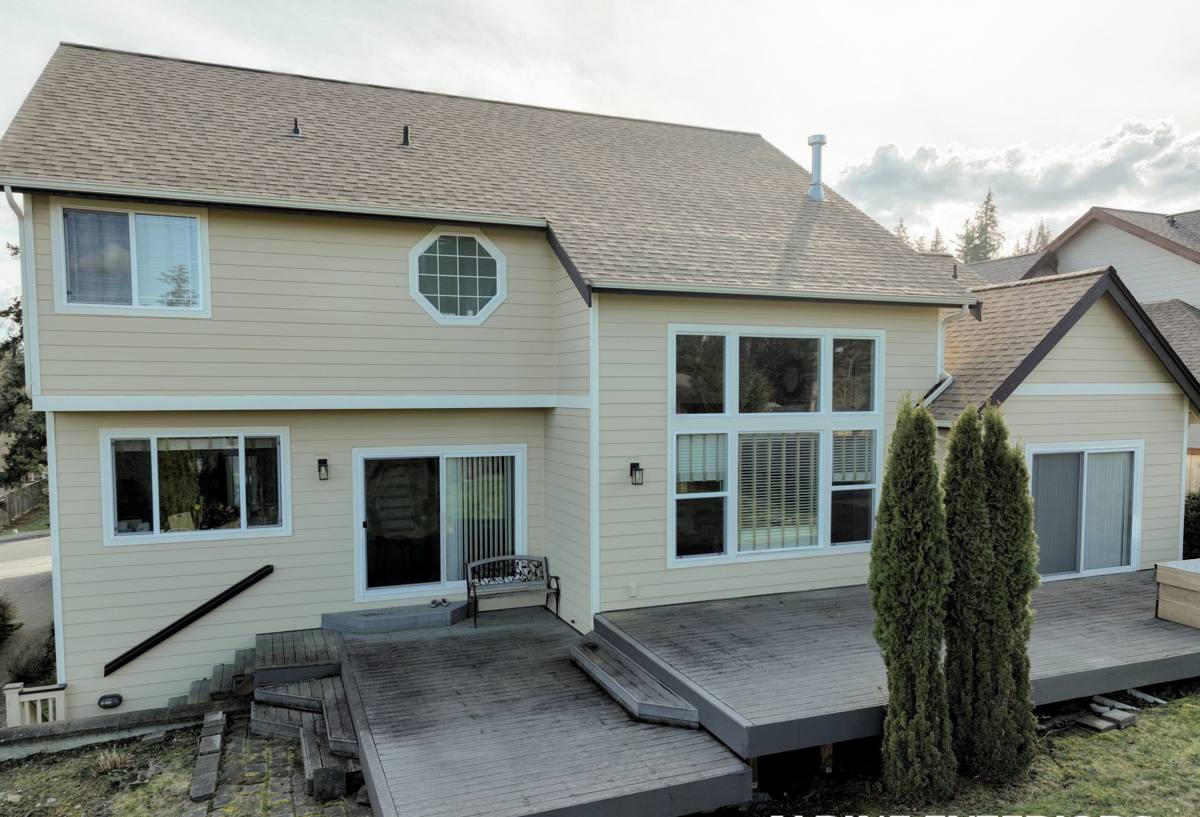
What Salt Air, Rain, and Moss Actually Do to a Deck
Salt Air
Salt exposure accelerates corrosion in anything metal — nails, screws, joist hangers, post bases. A fastener that would last a decade in a dry inland yard can start rusting and weakening in half that time this close to the water. Once a fastener corrodes, it loses grip strength long before it looks obviously bad, which is why so many "surprise" deck failures aren't surprises at all — they were building for years underneath the boards.
Driving Rain
Rain that comes in sideways, rather than straight down, finds its way into places a standard deck design doesn't always account for: under railing caps, behind ledger boards, into the end grain of cut boards that weren't resealed. Once moisture gets past the surface of the wood, it doesn't dry out quickly in our climate — it just sits there, feeding rot from the inside out.
Moss and Algae
Moss doesn't just look bad. It holds water against the deck surface, blocks boards from drying between rain events, and makes stairs and walking surfaces genuinely slick and dangerous. A moss-covered deck is almost always a wetter deck than it looks, which means faster wood breakdown underneath the green.
What We Check on Every Conway Deck Inspection
A proper inspection isn't a walk-around and a nod. We get down and check the parts of the deck that fail first and get noticed last:
- Ledger board attachment to the house — the single most common point of catastrophic failure on older decks
- Joist and beam condition, especially anywhere moss or standing water has been sitting
- Fastener corrosion at hangers, post bases, and railing hardware
- Post bases and any wood-to-concrete contact points where moisture wicks upward
- Board-to-board gaps for proper drainage and airflow
- Railing and stair stability — code compliance and simple safety
- Flashing at the ledger board, which is either doing its job or letting water straight into your house framing
Most of what makes a deck unsafe is invisible from a normal walk-around. That's the point of an inspection — finding it before a board gives way underfoot.
Common Deck Problems We See in Conway
| Problem | Typical Cause | What the Fix Involves |
|---|---|---|
| Soft or spongy boards | Trapped moisture, often under moss | Remove and replace affected boards; address drainage/airflow cause |
| Rusted or failing fasteners | Salt air corrosion over years | Replace with corrosion-rated fasteners and hardware |
| Loose or wobbly railings | Fastener failure, freeze-thaw loosening | Re-secure or rebuild railing posts with proper blocking |
| Rot at the ledger board | Missing or failed flashing | Pull siding as needed, install proper flashing, reattach correctly |
| Slick, green surface | Extended moss and algae season | Clean, treat, and improve conditions that let moss take hold |
| Cupped or splitting boards | Sun/rain cycling on unsealed wood | Replace boards; reseal or reconsider material choice |
Repair or Replace? How We Actually Decide
We don't push full deck replacements when a repair will genuinely hold up — that's a waste of your money and it's not how we want to run a job. But we also won't patch something that's structurally compromised just to make a quote look smaller. Here's the honest breakdown of how that decision usually goes:
| Factor | Leans Toward Repair | Leans Toward Replacement |
|---|---|---|
| Framing condition | Solid, dry joists and beams | Soft or rotted framing members |
| Extent of damage | Isolated boards or hardware | Widespread rot or corrosion |
| Ledger board | Sound, properly flashed | Rotted or never flashed correctly |
| Deck age | Under 15-20 years, well built | Original construction was undersized or outdated |
| Your plans | Keeping current size/layout | Wanting a different footprint or material |
In practice, a large share of the deck calls we get from Conway homeowners turn out to be legitimate repairs — a rotted ledger connection, a handful of bad boards, corroded hardware — rather than full teardowns. We'll tell you straight which category yours falls into and why, in plain terms you can verify yourself if you want to.
Our Repair Process
- Inspection and honest assessment. We identify every problem area, not just the one you called about.
- Written scope and estimate. You see exactly what's being fixed and why before any work starts.
- Demolition of failed material only. We remove what's actually bad, not more than necessary.
- Structural correction. Framing, ledger attachment, and flashing get fixed properly — this is the part that actually determines how long the repair lasts.
- Rebuild with corrosion-appropriate materials. Fasteners, hardware, and boards matched to Conway's salt-air and moisture exposure.
- Final walkthrough. We check rail stability, board spacing, and drainage before we call it done.
Materials That Make Sense for This Climate
There's no universally "right" decking material — there's the right material for your budget, your maintenance appetite, and this specific climate. Pressure-treated wood is affordable and repairable in sections, but it needs regular sealing to keep moisture and moss from getting ahead of it. Cedar looks great and resists rot naturally, but it's a softer wood that shows wear from salt air and foot traffic faster than composite. Composite decking costs more up front and resists moss and moisture better, but it has its own installation sensitivities — proper spacing and ventilation matter more, not less, with composite, because trapped moisture underneath doesn't dry the way it does with solid wood.
What matters more than the brand name on the boards is what's underneath them. We use stainless or hot-dip galvanized fasteners and hardware rated for coastal exposure, not standard interior-grade hardware, because standard hardware is exactly what we find failing on older Conway decks during inspections. That single choice affects how the whole deck ages more than almost anything else.
Keeping Moss and Moisture Out After the Repair
A repaired deck stays repaired longer with a little seasonal attention. None of this is complicated, but skipping it is how a good repair turns into a repeat call:
- Sweep debris off the deck regularly through fall — trapped leaves hold moisture against boards
- Clean moss and algae buildup before it gets thick, especially on shaded sections
- Reseal or restain wood decking on the schedule appropriate to the product — don't wait until it's visibly gray and dry
- Check that board gaps and drainage paths haven't gotten blocked by dirt or plant growth
- Look at fastener heads once a year for early rust — it's easier to catch early than to replace later
- Keep gutters and downspouts near the deck clear so runoff isn't dumping extra water onto it
Why It Matters That We Already Work in Conway
Deck problems in Conway aren't the same as deck problems in a dry inland town, and a crew that mostly works other conditions can miss what's specific here. We know what salt-air corrosion looks like at the six-month mark versus the five-year mark. We know which parts of a low-lying yard near the river hold moisture longest and need extra attention to drainage and airflow. We've seen enough Skagit County decks — in Conway, around Mount Vernon, and along the river corridor — to know which shortcuts from the original build tend to show up as problems first, and we build repairs that don't repeat them.
That local pattern recognition is the difference between a repair that solves the actual problem and one that just covers it up until next winter's rain finds it again.
If you've got a soft board, a wobbly rail, or you just want an honest read on how much life is left in your deck, we're happy to take a look. Reach out for a free, no-pressure estimate using the form below — we'll tell you exactly what we find and what it would take to fix it right.