 Mount Vernon
 Decks Built for West Mount Vernon's Weather, Not Against It
West Mount Vernon sits low in the Skagit Valley, close enough to Skagit Bay and the Puget Sound airflow that homes here deal with a steadier dose of moisture than towns further inland. A deck in this part of town isn't just outdoor furniture on posts — it's a structure that has to shed rain fast, resist a salt-tinged breeze off the water, and stay ahead of the moss that colonizes anything flat and shaded for half the year. We build decks in this neighborhood the way the weather demands, not the way a generic framing spec assumes.
This page is about one job, done right, in one part of Mount Vernon: new deck construction and full rebuilds for West Mount Vernon homes. If you're looking for deck repair on an existing structure, that's a different scope — this is about what goes into building one correctly from the ground up.
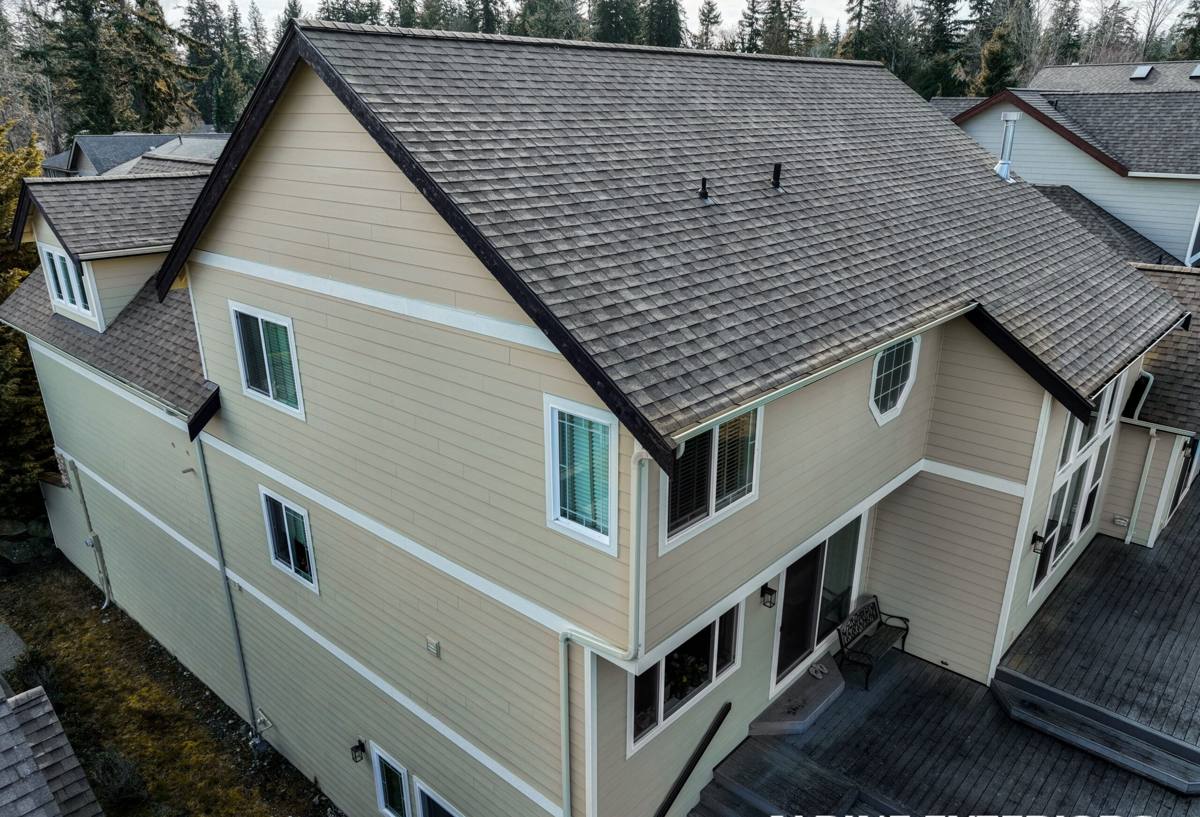
What Skagit County Weather Does to an Outdoor Deck
Salt Air and Metal Fasteners
Homes closer to the bay and the lower Skagit River see a mild but persistent salt content in the air, especially with a west wind. Ordinary electro-galvanized screws and nails weren't built for that — the coating wears through faster than most homeowners expect, and once it does, rust starts at every fastener head. On a deck, that means streaking around screws, weakened hold in the boards, and eventually loose connections you can't see until you're standing on them.
Driving Rain and Water Intrusion
Mount Vernon gets rain that comes in sideways more often than straight down, which pushes water into places a fair-weather build never accounts for — behind ledger boards, under railing posts, into end-grain cuts that weren't sealed. Wood doesn't need to sit in standing water to rot; it just needs to stay damp longer than it gets to dry, and our winters give it plenty of time to do that.
Moss, Algae, and Slick Surfaces
Skagit County's moss season runs long — realistically October through April, sometimes longer in a shaded yard. On a deck, moss isn't just cosmetic. It holds moisture against the board surface, it's slippery underfoot on stairs and ramps, and it thrives fastest in the gaps between boards where debris collects. How a deck is built — spacing, drainage, material choice — determines how much of a moss problem you'll actually have.
The Ledger Board: Where Most Deck Failures Start
If a deck is attached to the house, the ledger board — the beam bolted to the rim joist — is the single most important connection on the project, and it's the one most often done poorly. Water that gets behind an improperly flashed ledger has nowhere to go, and it sits against the house's rim joist and sheathing exactly where you don't want slow rot happening out of sight.
- Ledger flashing has to integrate with the house's existing water-resistive barrier — not just sit on top of the siding.
- We use through-bolts or structural lag screws rated for the load, never nails, at the spacing the engineered span tables call for.
- A ledger flashing tape and metal drip cap keep water moving away from the connection instead of into it.
- Whenever possible, we prefer a freestanding deck design that skips the ledger connection to the house entirely — it removes the single biggest long-term risk point.
Choosing Decking Material for This Climate
There's no single right answer here — it's a real trade-off between upfront cost, maintenance commitment, and how the material handles a long wet season. We walk homeowners through this honestly rather than steering everyone toward the most expensive option.
| Material | Moisture & Moss Resistance | Maintenance | Typical Lifespan |
|---|---|---|---|
| Pressure-treated fir/pine | Good if sealed regularly; end grain is a weak point | Annual cleaning and re-sealing recommended | 15-20 years with upkeep |
| Cedar | Naturally decay-resistant, but surface still hosts moss without cleaning | Periodic cleaning and oil/stain to hold color and repel water | 20-25 years with upkeep |
| Capped composite | Very good — the cap resists moisture absorption and staining | Occasional washing, no sealing or staining | 25-30+ years, manufacturer-warrantied |
| PVC decking | Best moisture resistance of the group — won't absorb water at all | Lowest maintenance, occasional cleaning | Comparable to or longer than composite |
For homes tucked under trees or on the shadier, moister lots common in this part of the valley, we lean toward steering clients away from uncapped wood-composite blends — the wood fiber content in older-style composites can hold moisture and grow mildew almost as readily as real wood, without the ability to sand or re-seal it. Capped composite or PVC avoids that problem at a somewhat higher upfront cost.
Fasteners and Hardware Matter As Much As the Boards
Whatever decking material you choose, we spec hot-dip galvanized or stainless steel structural hardware — joist hangers, post bases, and structural screws — for anything exposed to our climate. It costs more than standard hardware. It's also the difference between a deck that's still tight in fifteen years and one with rust-streaked, weakening connections in five.
Framing, Footings, and Fasteners Built to Last
Skagit Valley soil varies block to block — some lots drain well, others hold water longer, especially closer to low-lying areas near the river and bay. Footing depth and sizing need to match what's actually under the yard, not a one-size assumption, and that's confirmed as part of the permit process with the city.
- Concrete footings set below the local frost depth and sized for the deck's actual load, not guessed.
- Joist tape over the top of every joist before decking goes down, so fasteners don't punch a hole straight into exposed wood.
- Adequate clearance and airflow under the deck so the framing can actually dry out between rain events instead of staying damp.
- Beam and post connections rated for wind and snow load per current code, not just gravity load.
Railings, Stairs, and Code Requirements
Any deck more than 30 inches off grade needs a code-compliant guardrail — generally 36 to 42 inches high depending on application, with baluster spacing that won't pass a 4-inch sphere. Stairs need consistent rise and run, and a graspable handrail on any run of four or more steps. These aren't optional style choices; they're inspected, and getting them wrong means a failed inspection and rework. We build to pass on the first visit.
Mount Vernon requires a permit for most new deck construction, and our process includes preparing and submitting that paperwork so the homeowner isn't the one chasing it down.
Our Deck Building Process in West Mount Vernon
- Site assessment — we look at drainage, sun/shade exposure, soil condition, and how the deck will tie (or not tie) to the house.
- Design and material selection — honest comparison of wood versus composite versus PVC based on your budget and how much upkeep you actually want to do.
- Permitting — we handle the application and coordinate the required inspections with the city.
- Construction — footings, framing, ledger flashing (or freestanding design), decking, and railings, built to the standards above.
- Final walkthrough — we go over the finished deck with you, including basic care so it holds up through its first wet season and beyond.
Keeping a West Mount Vernon Deck Looking Good Year-Round
- Sweep leaves and debris out from between boards regularly — trapped organic matter is what feeds moss and mildew fastest.
- Keep nearby gutters and downspouts clear so runoff isn't dumping directly onto or under the deck.
- Rinse the deck surface periodically, especially through the wet months, rather than letting moss get established.
- Re-seal or re-stain wood decking on a regular schedule — don't wait until it's visibly gray and dry.
- Check hardware and railing connections once a year for early rust or looseness.
- Trim back overhanging branches that keep the deck shaded and damp longer than it needs to be.
Why a Local Crew Makes a Difference on This Project
A deck built to a national average spec will survive most places in the country just fine. It's the wet-season, salt-air, moss-heavy combination specific to the Skagit Valley that catches builders who don't work here regularly off guard — under-flashed ledgers, standard hardware that shouldn't be near this air, decking gaps too tight to shed water. A crew that already builds and maintains decks around West Mount Vernon knows the local soil, the permitting office, and exactly which details in this climate aren't optional. That's the difference between a deck that needs real repair work in eight years and one that's still solid in twenty-five.
If you're planning a new deck in West Mount Vernon, we're happy to walk your property, talk through material options honestly, and put together a straightforward estimate — no pressure, no obligation. Use the form below to get started.