 Mount Vernon
 Roofing Around Big Lake Has Its Own Set of Problems
Big Lake sits in a pocket of Skagit County that gets the worst of both worlds: lake-effect humidity that keeps roof surfaces damp long after a storm passes, and enough proximity to Puget Sound that salt-laden air still reaches shingles, flashing, and fasteners. Add in the tree cover that surrounds much of the lake and you get a roofing environment that's harder on materials than a typical suburban lot. Homes here don't fail because the roofing industry doesn't make good products — they fail because roofs get installed using generic assumptions instead of a plan built for this specific microclimate.
We've installed and repaired roofs throughout Mount Vernon and the surrounding Skagit County communities, and Big Lake properties consistently show the same wear pattern: moss establishing on the north-facing and shaded slopes first, granule loss accelerating on roofs with poor airflow, and fastener corrosion showing up years before it should on roofs that weren't detailed for the salt and moisture combination. A correct install accounts for all of that from day one instead of leaving it for a homeowner to discover later.
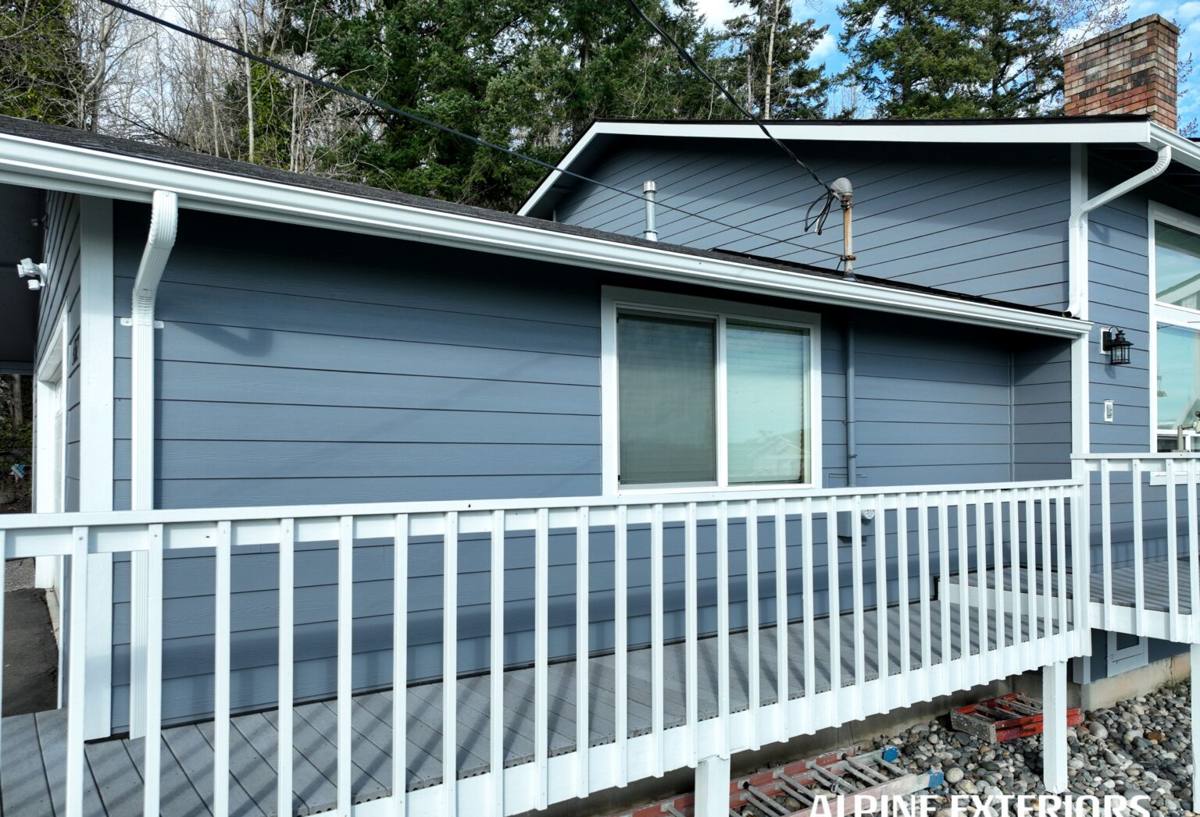
What Driving Rain and Long Moss Seasons Actually Do to a Roof
Driving Rain and Wind-Driven Moisture
Skagit County storms don't always fall straight down. Wind off the lake and out of the valley pushes rain sideways into roof edges, valleys, and wall-to-roof transitions. If flashing, underlayment laps, and fastening patterns aren't installed to handle wind-driven water, moisture finds its way under the roofing material instead of running off it. That's how you get slow leaks that show up as a stain on a ceiling months after the roof was "finished."
Moss and Shade
Big Lake's tree canopy is part of what makes the area attractive, but it also means many roofs stay shaded and damp well into the afternoon, even on clear days. Moss doesn't just sit on the surface — its root structure lifts shingle edges and holds moisture against the roof deck, which accelerates rot underneath. A roof that isn't designed with moss resistance and airflow in mind will need moss treatment or premature replacement years ahead of schedule.
Salt Air and Fastener Corrosion
Even at a distance from open saltwater, airborne salt carried inland through the valley slowly attacks unprotected metal. Standard fasteners, cheap flashing, and uncoated hardware corrode faster here than in drier inland areas. This is a detail that's easy to skip and expensive to ignore.
What a Correctly Installed Roof Includes in This Area
A new roof for a Big Lake home isn't just shingles nailed to a deck. Done right, it's a system where every layer works with the others to shed water, resist moss, and stand up to corrosion. That system includes:
- Ice-and-water shield membrane at eaves, valleys, and any low-slope transitions — not just where code minimums require it
- Synthetic underlayment rated for extended exposure, since Skagit County's wet season means roofs can sit partially covered longer than in drier climates
- Corrosion-resistant flashing and fasteners suited to a salt-air, high-moisture environment
- Balanced intake and exhaust ventilation sized to the actual attic, not a generic ridge vent installed out of habit
- Proper valley construction — closed-cut or open metal valleys installed to handle heavy water volume, not just aesthetics
- Drip edge and gutter apron detailing that directs water away from fascia and soffits instead of letting it wick back under the roof edge
Skip any one of these and the roof will still look finished on installation day. The problems just take a year or two to surface instead of showing up immediately.
Material Options for Big Lake Homes
There's no single "best" roofing material for every home — the right choice depends on the roof's slope, shade exposure, and how much upkeep the homeowner wants to commit to. Here's how the common options compare for this specific environment:
| Material | Moss Resistance | Wind-Driven Rain Performance | Maintenance in Shaded Areas |
|---|---|---|---|
| Architectural asphalt shingle | Moderate — better with algae/moss-resistant granules | Good when flashed and fastened correctly | Periodic cleaning recommended on shaded slopes |
| Standard 3-tab asphalt shingle | Lower — thinner profile holds moisture longer | Adequate, but less margin for error | More frequent moss buildup |
| Metal roofing | High — moss struggles to root on a smooth metal surface | Excellent with proper seam and fastener detailing | Low, but requires correct fastener spec near lake air |
| Composite/synthetic shake | Moderate to high depending on product | Good with manufacturer-specified underlayment | Moderate |
Most Big Lake homes we work on end up choosing an architectural shingle with moss-resistant granules for the balance of cost and performance, or metal roofing for heavily shaded lots where moss has been a recurring, expensive problem. We'll walk your specific roof and tell you honestly which one fits — not which one has the highest margin.
Our Installation Process
1. On-Site Assessment
We look at slope, shade exposure, existing ventilation, decking condition, and any moss or moisture history before recommending a system. A roof on the lake side of a shaded lot needs a different plan than one on an open, sun-exposed slope a half-mile away.
2. Tear-Off and Deck Inspection
Old roofing comes off completely so we can inspect the deck for soft spots, rot, or prior water damage — problems that are invisible from the ground and common on older Big Lake roofs that have dealt with years of shaded moisture.
3. Underlayment and Flashing
This is where most of a roof's long-term performance is decided. We install ice-and-water membrane, underlayment, and flashing to handle wind-driven rain and prevent the slow leaks that generic installs miss.
4. Ventilation Correction
If the existing attic ventilation is undersized or unbalanced — extremely common on older homes in this area — we correct it as part of the install rather than leaving trapped moisture to shorten the life of the new roof.
5. Material Installation and Final Detailing
Shingles, metal, or composite material go on to manufacturer specification, with corrosion-resistant fasteners and hardware appropriate for the salt-air exposure here.
6. Walkthrough and Cleanup
We walk the finished roof and property with you, cover warranty details, and make sure the yard is clear of debris and nails before we leave.
Ventilation: The Detail Most Roofs in This Area Get Wrong
Attic ventilation doesn't get much attention because it's invisible once the roof is done, but it's one of the biggest factors in how long a Big Lake roof lasts. Without balanced intake and exhaust airflow, warm moist air gets trapped against the underside of the roof deck. Combined with the region's humidity, that trapped moisture accelerates deck rot from the inside and keeps the roof's surface temperature and moisture level higher than it should be — which, in turn, gives moss an easier foothold. Correct ventilation is a sizing calculation based on square footage and roof design, not a fixed number of vents installed the same way on every house.
Gutters, Drainage, and Roof Edge Protection
A new roof is only as good as where the water goes after it leaves the shingles. On Big Lake properties surrounded by trees, gutters clog faster and roof edges take more direct water volume during heavy storms. As part of a full roof install, we make sure drip edge, gutter aprons, and fascia protection are installed correctly so water is directed off the roof and away from the structure — not allowed to sit at the edge where it can wick back under the roofing material or rot fascia boards over time.
Why Hire a Crew That Already Works in Big Lake
Roofing standards don't change from neighborhood to neighborhood, but the conditions a roof has to survive absolutely do. A crew that mostly works drier, sun-exposed areas may not think twice about ventilation sizing or moss-resistant materials, because it's never been the deciding factor in a callback. We work throughout Mount Vernon and Skagit County, and Big Lake's shaded, moisture-heavy lots are a large enough part of that work that we plan for moss, wind-driven rain, and salt exposure by default — not as an upsell.
That local pattern recognition also shows up in small decisions during the job: which slopes need extra flashing attention, where ventilation tends to be undersized on homes of a certain age, and which fastener specs actually hold up here long-term. None of that is guesswork — it's what we see, roof after roof, in this specific area.
What Affects the Cost of a New Roof
Every roof is priced individually after an on-site assessment, but the main cost factors on Big Lake homes are consistent:
| Factor | Why It Matters |
|---|---|
| Roof size and number of slopes | More square footage and complexity means more material and labor |
| Material choice | Asphalt, metal, and composite options carry different material and installation costs |
| Deck condition | Rotted or soft decking found during tear-off requires repair before new roofing goes on |
| Ventilation corrections needed | Undersized or unbalanced attic ventilation adds work to bring the system up to spec |
| Access and tree cover | Shaded, tree-lined lots common around Big Lake can add time for tear-off and debris removal |
Broadly, a full roof replacement on a typical home is a mid-five-figure investment for asphalt shingle systems, with metal roofing running higher. We'll give you an exact number after seeing the roof in person — not a phone estimate.
A Simple Checklist Before You Hire Anyone
- Ask specifically how they'll handle ventilation sizing, not just what shingle brand they install
- Confirm ice-and-water shield placement at valleys and eaves, not just minimum code coverage
- Ask what fastener and flashing materials they use, and whether those are rated for coastal/salt-air exposure
- Get a written scope that includes deck inspection and repair terms, not just "tear off and reroof"
- Check that gutter apron and drip edge work is part of the roof scope, not treated as a separate afterthought
- Ask how they've handled moss-prone, shaded roofs specifically — not roofing in general
Let's Look at Your Roof
If your Big Lake home's roof is showing granule loss, moss buildup, or you're just past due for a replacement, we're glad to come take a look. There's no pressure and no sales script — just an honest assessment of what your roof needs and a straightforward estimate. Use the form below to get started.