 Mount Vernon
 Siding Replacement Built for Avon's Delta Climate
Avon sits low in the Skagit River delta, just outside Mount Vernon, surrounded by farmland and river bottomland that stays damp long after the rest of Skagit County has dried out. That geography shapes what siding has to survive here. Moist air moves up the valley from Skagit Bay, fog settles into the low ground overnight, and tree lines and outbuildings keep parts of most lots shaded for a good chunk of the day. For siding, that combination means more days with the surface simply staying wet — and wet, shaded surfaces are exactly where moss, algae, and slow rot get their start.
We replace siding on Avon homes with that specific climate in mind, not a generic "Pacific Northwest weather" assumption. A house on a well-drained, sun-exposed lot in town and a farmhouse tucked against a tree line in Avon's lowlands can need noticeably different attention to flashing, ventilation, and product selection, even though they're a few miles apart.
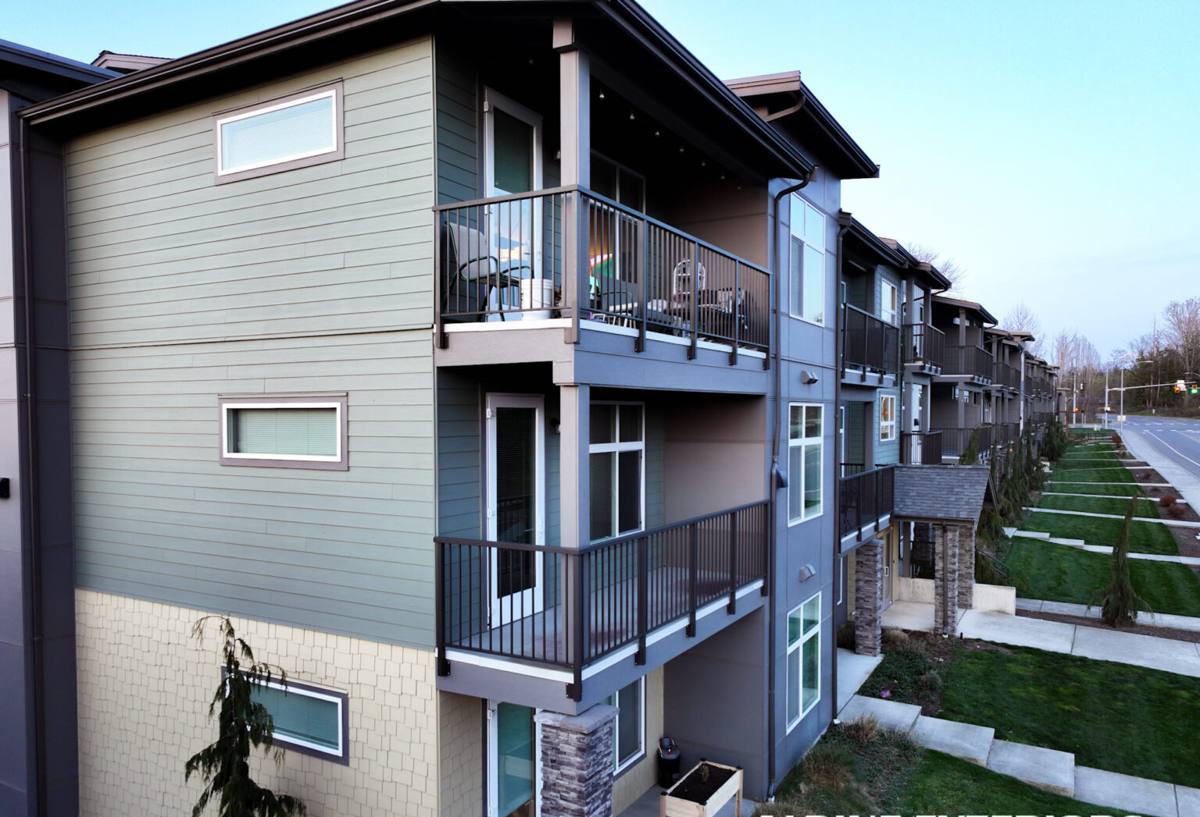
What Salt Air, Driving Rain, and Moss Actually Do to Siding
Salt-Laden Air
Air moving inland off Skagit Bay and the Sound carries fine salt content that settles on exterior surfaces. On its own, salt air is mostly a slow cosmetic and corrosion issue — it accelerates the breakdown of unprotected wood fibers, degrades cheap fasteners and trim metal over time, and works into any crack or seam in the siding's finish. It's rarely dramatic, which is part of the problem: homeowners often don't notice the cumulative damage until a repaint or a section of siding shows it clearly.
Driving, Wind-Blown Rain
Storms coming through the valley don't just fall straight down — wind pushes rain sideways into wall assemblies, especially on the windward side of a house and around window and door openings. Siding that relies on caulk and paint alone to keep water out, instead of proper flashing and a drainage path behind the cladding, eventually lets moisture in. Once water gets behind the siding, it's the sheathing and framing that pay the price, not just the siding face.
A Long Moss Season
Between the shade, the humidity, and the number of overcast days Skagit County sees, moss and algae have a long growing season on north-facing walls, under eaves, and anywhere airflow is restricted. Moss holds moisture against the siding surface for extended periods, which is bad for any material but especially damaging to wood-based products that can absorb that moisture and start to soften or delaminate underneath a coating that still looks fine from the ground.
What a Correct Siding Replacement Involves
Replacing siding correctly is not just pulling off old boards and nailing up new ones. In a climate like Avon's, the assembly behind the siding matters as much as the siding itself.
- Full tear-off and inspection — removing existing siding to inspect the sheathing and framing underneath for hidden water damage, soft spots, or rot before anything new goes on.
- Weather-resistive barrier — installing a proper house wrap or building paper that sheds water down and out, lapped correctly at every seam.
- Flashing at every penetration — windows, doors, hose bibs, vents, and any other wall penetration get flashed so wind-driven rain can't track behind the siding at these vulnerable points.
- Drainage plane / rainscreen detailing — a gap or drainage path that lets any incidental moisture behind the siding drain and dry out instead of sitting against the wall.
- Manufacturer-spec fastening — correct fastener type, spacing, and depth, since under- or over-driven fasteners are one of the most common causes of premature siding failure.
- Proper clearances — siding held up off decks, patios, and grade so it isn't sitting in standing water or constant splash-back.
Skip any one of these steps and the new siding can look perfect for a year or two while the underlying problem — usually moisture management — is still there.
Why We Install James Hardie Fiber Cement, Not Wood or Vinyl
We install James Hardie fiber cement siding exclusively. We don't install LP SmartSide, vinyl, or primed wood products, and in a climate like Avon's, that decision comes down to how each material handles sustained moisture exposure over decades, not just its first few years.
Primed wood and wood-based composite sidings need an intact paint film to stay protected. In a delta climate with a long wet season and heavy moss growth, that film is under constant pressure, and any breach — a nail pop, a hairline crack, a scuff — gives moisture a path into the substrate. Vinyl sheds water reasonably well but is a thin, flexible material that can warp, fade, and become brittle with age and UV exposure, and it isn't a rigid, paintable surface if a homeowner ever wants to change the home's color.
James Hardie fiber cement is cement, sand, and cellulose fiber — it doesn't rot, and it isn't a food source for moss or mildew the way wood fiber can be. It comes with a factory-applied ColorPlus finish that's baked on and warranted separately from the substrate, so the color layer isn't relying on field-applied paint to hold up through Skagit County's wet stretch. It's also noncombustible, which matters directly for a farming community like Avon, where agricultural burning and dry-season brush are a real consideration for insurance and fire risk, even in a generally wet region.
Product Comparison for a Delta Climate
| Factor | James Hardie Fiber Cement | Wood / Engineered Wood Siding | Vinyl Siding |
|---|---|---|---|
| Moisture/rot resistance | Cement-based, not organic — not a rot risk | Depends on intact coating; vulnerable if breached | Doesn't rot, but can trap moisture behind panels if flashing is poor |
| Moss/algae behavior | Factory finish resists staining; not an organic food source | Organic fiber can feed growth once coating fails | Can stain and streak; growth sits on surface |
| Fire resistance | Noncombustible | Combustible | Melts/deforms under heat |
| Finish longevity | Factory ColorPlus finish, separately warranted | Field-applied paint, needs recoating | Color molded in but fades with UV over time |
| Repainting flexibility | Can be repainted if desired | Requires repainting on a maintenance cycle | Limited — painting vinyl is not generally recommended |
Signs Avon Homeowners Should Watch For
- Dark green or black staining, especially on north-facing walls or under eaves
- Soft or spongy spots when you press on siding, particularly near the bottom courses
- Paint that's peeling, bubbling, or failing faster than it used to
- Visible gaps, warping, or boards pulling away from the wall
- Nail pops or fastener heads showing through the surface
- Musty smell or visible staining on interior walls that back up to exterior siding
- Siding that's been repainted repeatedly in the same problem spots
Any one of these on its own isn't necessarily an emergency, but they're worth having looked at before the next wet season adds another cycle of moisture exposure.
Our Siding Replacement Process
- On-site assessment — we walk the exterior, check problem areas, and look at what's driving them (shade, drainage, flashing gaps, product age).
- Tear-off and substrate inspection — old siding comes off and we check sheathing and framing before covering anything back up.
- Repair as needed — any water-damaged sheathing or framing gets addressed before new siding goes on, not hidden behind it.
- Weather barrier and flashing — house wrap and flashing installed at every window, door, and penetration.
- Hardie installation to manufacturer spec — correct fastening, clearances, and joint treatment.
- Final walkthrough — we go over the finished job and clean the site before we're done.
What Affects the Cost of a Siding Replacement
| Cost Factor | Why It Matters |
|---|---|
| Home size and wall complexity | More square footage and more corners, gables, and cutouts mean more labor and material. |
| Condition of the sheathing underneath | Water-damaged sheathing found during tear-off needs repair before new siding can go on. |
| Siding profile and trim details | Lap siding, shingle-style panels, and trim boards vary in material and labor cost. |
| Number of windows, doors, and penetrations | Each one needs proper flashing, which adds detail work. |
| Access and site conditions | Outbuildings, fencing, or tight rural lot layouts can affect staging and scaffolding. |
We give an honest range after seeing the house in person — broad estimates without a site visit tend to be wrong in one direction or the other, and we'd rather give you a real number.
Why Hire a Crew That Already Works in Avon
Avon isn't downtown Mount Vernon, and it doesn't get treated like it. Rural and semi-rural properties in this part of Skagit County often have different access considerations — longer driveways, gravel approaches, outbuildings, well and septic layouts to work around — and a crew that's done jobs out here already knows to ask about that up front instead of running into it on install day. We're also familiar with how the local building department handles permitting for siding work in unincorporated areas versus inside Mount Vernon city limits, which keeps a project from stalling on paperwork.
Just as important, a crew that's replaced siding on farmhouses and newer homes throughout the Avon area has actually seen how moisture and moss behave on real houses here through multiple wet seasons — not just in a training manual. That's the kind of judgment that shows up in where we pay extra attention to flashing, ventilation, and clearance on your specific property.
Get a Free Estimate
If your siding in Avon is showing staining, soft spots, or just isn't holding up the way it used to, we'll come take a look and give you an honest, no-pressure assessment of what it needs. Fill out the form below to schedule a free estimate.