 Mount Vernon
 West Mount Vernon's Climate Is Harder on Siding Than It Looks
West Mount Vernon sits low in the Skagit River delta, close enough to Puget Sound that homes here deal with a steady mix of salt-laden marine air, wind-driven rain off the water, and long stretches of overcast, damp weather that can run from October well into spring. None of that is dramatic on any given day — there's no hurricane season to plan around — but it's relentless, and relentless is what wears siding out. Salt air accelerates corrosion on fasteners and trim. Driving rain finds every gap in a wall assembly that wasn't sealed correctly the first time. And the low light, high humidity, and mild temperatures that define a Skagit County winter are exactly the conditions moss and algae need to take hold on anything that stays damp for more than a day or two.
A siding job that would hold up fine in a drier inland climate can fail here in half the time if it wasn't installed with this specific combination of moisture and salt exposure in mind. That's the whole case for getting the installation details right the first time, rather than treating siding as a cosmetic swap.
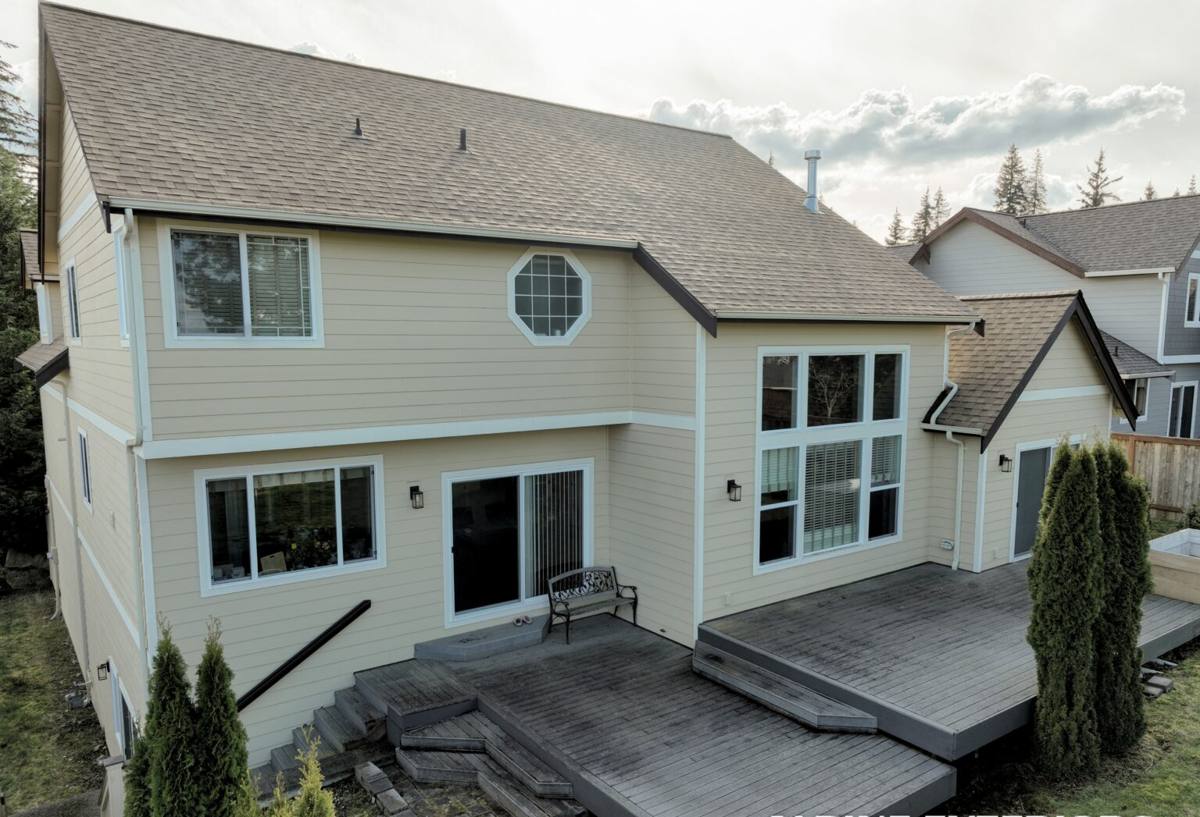
What Correct Installation Actually Involves
Siding is a system, not a single layer. The visible boards get the attention, but the parts nobody sees — the weather-resistive barrier, the flashing, the fastening, the gaps left for drainage — are what actually determine whether a home stays dry. In a climate like West Mount Vernon's, cutting corners on any one of these shows up as a problem within a few wet seasons, not decades.
Weather-Resistive Barrier and Flashing
Every wall needs a continuous water-resistive barrier behind the siding, lapped correctly (upper layers over lower, always shedding water downward) and integrated with flashing at every window, door, and horizontal trim break. Windows in particular need proper head flashing and sill pans — this is where driving rain gets pushed sideways into a wall, and it's the single most common source of hidden rot we find when we tear off old siding in this area.
Drainage Space Behind the Siding
Fiber cement siding needs a way to dry out if moisture does get behind it. That means a gap — either furring strips or a manufactured rainscreen product — between the weather barrier and the back of the siding, so bulk water and vapor have somewhere to go instead of sitting against the wall sheathing. Nailing siding flat against the barrier with no drainage path is a shortcut that saves a day of labor and costs a homeowner a rot repair five to ten years later.
Fastening and Gapping
Fiber cement expands and contracts with temperature and moisture. Manufacturer-specified fastener spacing, proper gapping at butt joints and corners, and sealing only where the manufacturer calls for it (not everywhere, which traps moisture) all matter. Over-caulking is as much of a problem as under-caulking — it can seal water into a joint instead of letting it drain.
Why We Install Only James Hardie Fiber Cement
We standardized on James Hardie siding and don't install vinyl, LP SmartSide, or other fiber cement or engineered wood products, and we're upfront about why. Hardie's fiber cement is non-combustible, doesn't absorb water the way engineered wood substrates can, and holds a factory-applied ColorPlus finish that's baked on rather than field-painted — which matters directly here, because a finish that fails under UV and moisture cycling means repainting a house that's hard to access safely more than once in its life. Hardie also engineers specific product lines (their HZ5 line, for the Pacific Northwest) for regions with sustained moisture exposure, which is a better match for West Mount Vernon's climate than a one-size-fits-all product.
We're not going to tell you vinyl or engineered wood siding is junk — plenty of it is installed correctly and performs adequately elsewhere. But we've made a professional call that the trade-offs (impact and heat sensitivity in vinyl, moisture sensitivity at cut edges in engineered wood, warranty structures that don't hold up as well over decades) aren't worth carrying into a climate this consistently wet. Fiber cement, installed correctly, is the product we're willing to warranty and stand behind on homes in this area.
How Siding Materials Compare in This Climate
| Factor | James Hardie Fiber Cement | Vinyl Siding | Engineered Wood (e.g. LP SmartSide) |
|---|---|---|---|
| Moisture resistance | Cement-based, doesn't swell or rot; needs correct drainage detailing | Not moisture-absorbent itself, but seams and gaps can trap water behind it | Wood-fiber core is moisture-sensitive at cut edges and fastener holes |
| Salt air / coastal exposure | Holds up well; factory finish resists fading and chalking | Can become brittle and discolor faster near salt air over time | Requires diligent field-sealing of every cut edge to prevent swelling |
| Moss and algae growth | Dense surface sheds growth more easily with normal washing | Can host moss and mildew in seams and laps | Porous surface is more prone to moss taking hold if finish wears |
| Fire resistance | Non-combustible | Combustible, can melt or warp near heat sources | Combustible; wood-based core |
| Finish longevity | Factory ColorPlus finish, long repaint interval | Color molded in, but fades and chalks with UV exposure | Requires field paint/primer maintenance on a regular cycle |
Our Installation Process for West Mount Vernon Homes
- On-site assessment: We walk the exterior, check the condition of existing siding and trim, and look specifically for signs of moisture intrusion around windows, roof lines, and grade-level areas — the spots that take the brunt of driving rain here.
- Tear-off and sheathing inspection: Once old siding is off, we inspect the sheathing underneath for soft spots or rot before anything new goes up. This is the point where hidden problems get caught and fixed, not covered over.
- Weather barrier and flashing installation: New water-resistive barrier goes on with correct lapping, and flashing is integrated at every window, door, and penetration.
- Drainage plane: Furring or rainscreen material is installed to give the wall assembly a way to dry.
- Hardie installation: Siding is installed to manufacturer fastening and gapping specs, with trim and corners detailed to shed water rather than collect it.
- Final walkthrough: We review the finished work with the homeowner and confirm everything matches what was scoped.
Signs Your Current Siding Needs Attention
Homeowners in West Mount Vernon often notice one or two of these before realizing the underlying issue is bigger than the surface:
- Persistent moss or algae streaking that comes back within weeks of cleaning
- Soft or spongy spots when you press on the siding, especially near the bottom edges or under windows
- Visible gaps, warping, or buckling boards
- Peeling or bubbling paint that keeps returning in the same spots
- Interior signs like musty smells or discoloration on walls that share an exterior wall
- Rising energy bills that suggest the wall assembly isn't sealing the way it should
Any one of these on its own isn't necessarily an emergency, but they're worth having looked at before the next wet season, since problems behind the siding rarely stay small.
Why Local Experience Matters for This Job
A crew that already works in West Mount Vernon and the surrounding Skagit County area has seen how homes here actually age — which orientations catch the worst of the wind-driven rain, where moss tends to establish first, and how the marine layer affects drying time during installation itself. That experience shapes real decisions on the job: how much drainage capacity to build in, where extra flashing attention is worth the time, and how to sequence work around a wet forecast instead of rushing a step that needs to cure or seal properly. It also means we're not learning the regional permitting and code requirements on your project — we already know them.
Cost Factors to Expect
Every home is different, but the line items that typically drive the price of a siding installation in this area are consistent:
| Cost Factor | Why It Matters Here |
|---|---|
| Tear-off and disposal of old siding | More labor if multiple layers or damaged sheathing are found underneath |
| Sheathing repair | Rot from past moisture intrusion has to be replaced before new siding goes on |
| Drainage plane and weather barrier | Non-negotiable in this climate; not a place to cut cost |
| Trim and flashing detail | Windows, corners, and roof intersections take more time to do correctly than flat wall runs |
| Siding profile and color | Lap width, shingle-style panels, and custom ColorPlus colors affect material cost |
| Home size and wall complexity | More corners, gables, and dormers mean more cutting and detail work |
We won't quote a job without walking the property first — anyone who does is guessing, and guessing on moisture-sensitive work is how homeowners end up with change orders mid-project.
If you're weighing a siding replacement in West Mount Vernon, we're happy to walk the exterior with you, point out anything we see, and put together a straightforward, no-pressure estimate — no obligation, no sales pressure, just an honest look at what your home needs.