 Mount Vernon
 Decking Built for Life Near the Skagit River
Riverside sits close enough to the water that homes here deal with a different moisture load than decks a few miles inland. Add in the marine-influenced air moving up the valley from Puget Sound and you get a combination of driving rain, high humidity, and a long moss and algae season that outlasts most manufacturers' generic care instructions. A deck built for Riverside has to handle standing dampness under and around the boards for months at a time, not just occasional wet weather.
Composite decking has become the practical answer for a lot of Riverside homeowners precisely because it doesn't behave like wood does when it's wet for weeks on end. But "composite" isn't one product — board composition, capping, and installation detail all change how a deck performs here, and getting those choices wrong means a deck that still grows moss, still traps moisture, and still needs work every spring.
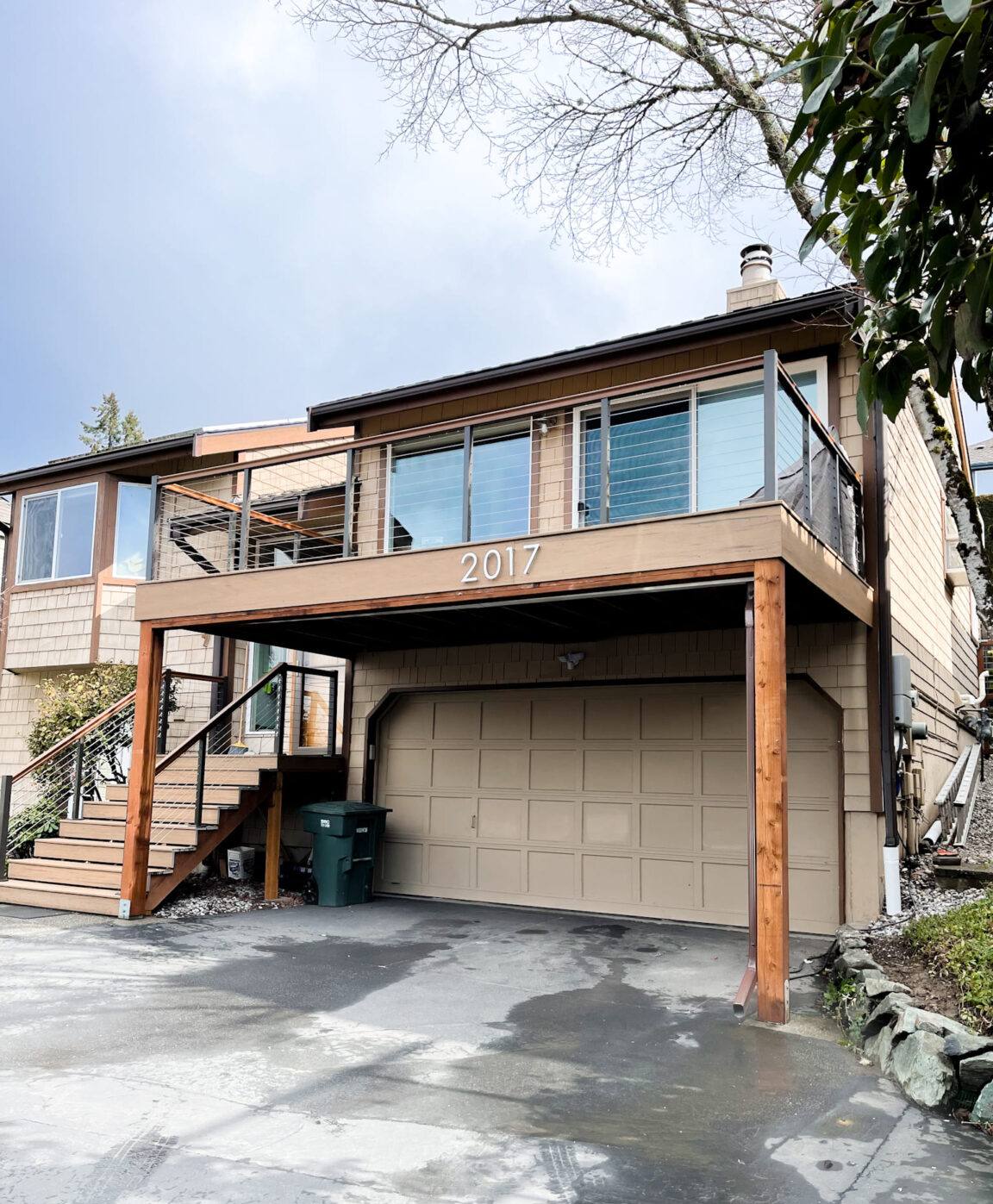
What Skagit County's Climate Actually Does to a Deck
Before talking about materials, it helps to understand the specific stresses a Riverside deck is under:
- Extended damp season: Fall through spring, boards can stay wet for days between dry stretches, which is long enough for organic growth to establish if airflow underneath is poor.
- Driving rain: Wind-driven rain off the valley pushes water sideways into ledger connections, fastener points, and board end grain — areas that dry slowly if not detailed correctly.
- Moss and algae: Shaded decks near mature landscaping or close to the river hold humidity longer, and moss spores are persistent in this part of Skagit County. Surface texture and drainage design matter more here than in a drier climate.
- Seasonal temperature swings: Not extreme, but enough freeze-thaw cycling in a wet deck structure to work loose fasteners or stress poorly fastened boards over several years.
None of this is unusual for the area — it's just the baseline any decking material and installation method has to be judged against.
Why Composite Makes Sense for This Location
Wood decking isn't a bad product, but it asks for a maintenance commitment — annual cleaning, periodic sealing, and vigilance about moisture — that a lot of homeowners don't want to keep up with year after year, especially with Riverside's damp stretches. Composite decking, particularly capped composite with a solid polymer shell around a wood-fiber or polymer core, resists moisture absorption, doesn't require staining or sealing, and holds up better against the moss and algae growth that's common near the river.
That doesn't mean composite is maintenance-free. It still needs periodic cleaning, and board quality varies a lot between manufacturers. Cheaper, uncapped composite can absorb moisture at cut ends and fastener holes, which defeats the purpose in a climate like ours. Our standard is capped composite from manufacturers with a track record in wet Pacific Northwest climates, installed with the moisture-management details below — not just whatever's cheapest at the yard.
Composite vs. Other Common Decking Choices
| Material | Moisture Behavior Here | Maintenance | Typical Lifespan (PNW) |
|---|---|---|---|
| Pressure-treated wood | Absorbs water, needs consistent sealing to resist rot and moss | Annual cleaning and re-sealing | 10–15 years before major repair |
| Cedar | Natural rot resistance but still absorbs moisture; greys and can moss over without upkeep | Regular cleaning, periodic oiling | 15–20 years with upkeep |
| Uncapped composite | Can wick moisture at cut ends and fastener holes | Low, but end-sealing is critical | 15–20 years |
| Capped composite | Best resistance to moisture intrusion and surface staining | Periodic washing only | 25–30 years, manufacturer-warrantied |
What a Correct Composite Deck Build Involves in Riverside
Substructure and Drainage First
The framing underneath a composite deck matters as much as the boards on top, especially in a location prone to sustained dampness. That means pressure-treated or naturally resistant framing lumber, joist tape or a comparable moisture barrier over the joists to keep fasteners from sitting in trapped water, and enough ground clearance and airflow underneath the deck to let it dry out between rain events. A deck built low to damp soil without ventilation is the single biggest reason we see moss and mildew show up on the underside of boards within a couple of seasons.
Fastening and Board Spacing
Composite boards expand and contract with temperature more than people expect, and correct gapping at butt joints and board edges isn't cosmetic — it's what lets water drain through instead of pooling on the surface. Hidden fastener systems rated for composite, installed to the manufacturer's spacing tolerances, keep the deck field looking clean and keep water from sitting around exposed screw heads, which is one of the more common places we see early staining.
Ledger and Flashing Details
Where the deck attaches to the house, correct flashing is what keeps driving rain from working its way behind the ledger board and into the structure. This is a detail that's invisible once the deck is finished but is the difference between a deck that stays dry at the house connection for decades and one that develops a hidden rot problem behind the band board.
Railing, Stairs, and Fascia
Matching composite or coordinated metal railing systems finish the job and should carry the same moisture-management thinking — proper post-base flashing, correctly pitched stair stringers, and fascia board fastening that doesn't trap water against end grain.
Our Process for a Riverside Deck Project
- On-site assessment: We look at drainage, sun/shade exposure, existing structure (if this is a replacement), and how the deck ties into the house.
- Material selection: We walk through capped composite options and finishes based on your budget and how much shade and moss exposure the site actually gets.
- Structural plan: Framing, ventilation, and flashing details are specified up front — not decided on the fly during the build.
- Permitting: Deck projects in Mount Vernon and unincorporated Skagit County often require a permit depending on size and height; we handle that process as part of the job.
- Installation: Framing and moisture barrier, board installation with correct spacing and fastening, then railing, stairs, and trim.
- Final walkthrough: We go over care basics — cleaning frequency, what to expect from the board finish over time, and warranty coverage.
Moss and Algae Management After Installation
Even a well-built composite deck in Riverside will need occasional cleaning — that's the reality of this climate, not a sign of a problem. What good installation does is reduce how often and how aggressively that cleaning has to happen. A few habits keep composite decks looking right through Skagit County's damp season:
- Rinse and lightly brush the deck surface a couple of times a year, more often in heavily shaded areas near mature trees.
- Keep planters and furniture legs from sitting directly on the boards for months without moving — trapped moisture under an object is a common spot for surface growth to start.
- Clear leaves and debris out of board gaps in fall so water keeps draining through instead of pooling.
- Use a cleaner rated for composite decking, not a harsh degreaser or undiluted bleach, which can affect the cap finish over time.
- Check railing post bases and stair connections annually for any sign of standing water or debris buildup.
Why Local Installation Experience Matters
A crew that's only installed decking in drier climates will make different assumptions than one that builds regularly in Skagit County. Ventilation gaps that would be fine in eastern Washington aren't enough here. Flashing details that pass in a drier region can let water in during a real Puget Sound rain event. Board spacing that looks right on a sunny installation day can close up wrong once the material has gone through a wet Riverside winter.
We build decks in this specific climate — same rain patterns, same moss pressure, same freeze-thaw cycling — and we design and install accordingly, from the framing up. That's the difference between a deck that needs real attention in year three and one that still looks and performs the way it should a decade in.
What Affects Cost on a Riverside Composite Deck
| Factor | Why It Matters |
|---|---|
| Deck size and shape | Square footage and complexity (multiple levels, angles) drive material and labor |
| Board tier | Entry-level capped composite vs. premium lines with deeper color/texture options |
| Substructure condition | New framing vs. reusing an existing structure, and how much moisture damage needs correcting first |
| Railing system | Composite, cable, or metal railing all price differently |
| Site access and height | Elevated decks or difficult access add labor time |
| Permitting | Required for most new or significantly rebuilt decks in this jurisdiction |
Rough ballpark ranges for capped composite decking in this region tend to run from the low double digits per square foot for straightforward, single-level projects up into the twenties or more per square foot for larger builds with premium boards and custom railing. Your actual number depends on the site, so we'd rather walk it with you than quote blind.
Get a Straight Answer for Your Property
If you're weighing a deck replacement or a new build in Riverside, we're happy to come take a look, talk through what your specific site needs given the shade, drainage, and exposure it gets, and give you an honest estimate — no pressure, no upsell on materials you don't need. Fill out the form below and we'll get in touch.