 Mount Vernon
 Why Anacortes' Marine Climate Is Hard on Siding
Anacortes sits right up against the water, and that changes what a house needs from its exterior. Homes here deal with a steady mix of salt-laden air, wind-driven rain coming off the strait, and long stretches of gray, damp weather that keep moss and algae growing on north-facing walls for months at a time. That combination is tougher on siding than most inland Skagit County properties ever see.
Salt air is corrosive to fasteners and finishes. Driving rain doesn't just wet a wall — it pushes moisture sideways into seams, laps, and trim joints that would stay dry in a calmer climate. And a long moss season means organic growth has time to take hold on any material that stays damp or holds onto texture. Put those three together over years, not months, and you find out fast which siding products were built for this kind of exposure and which ones were not.
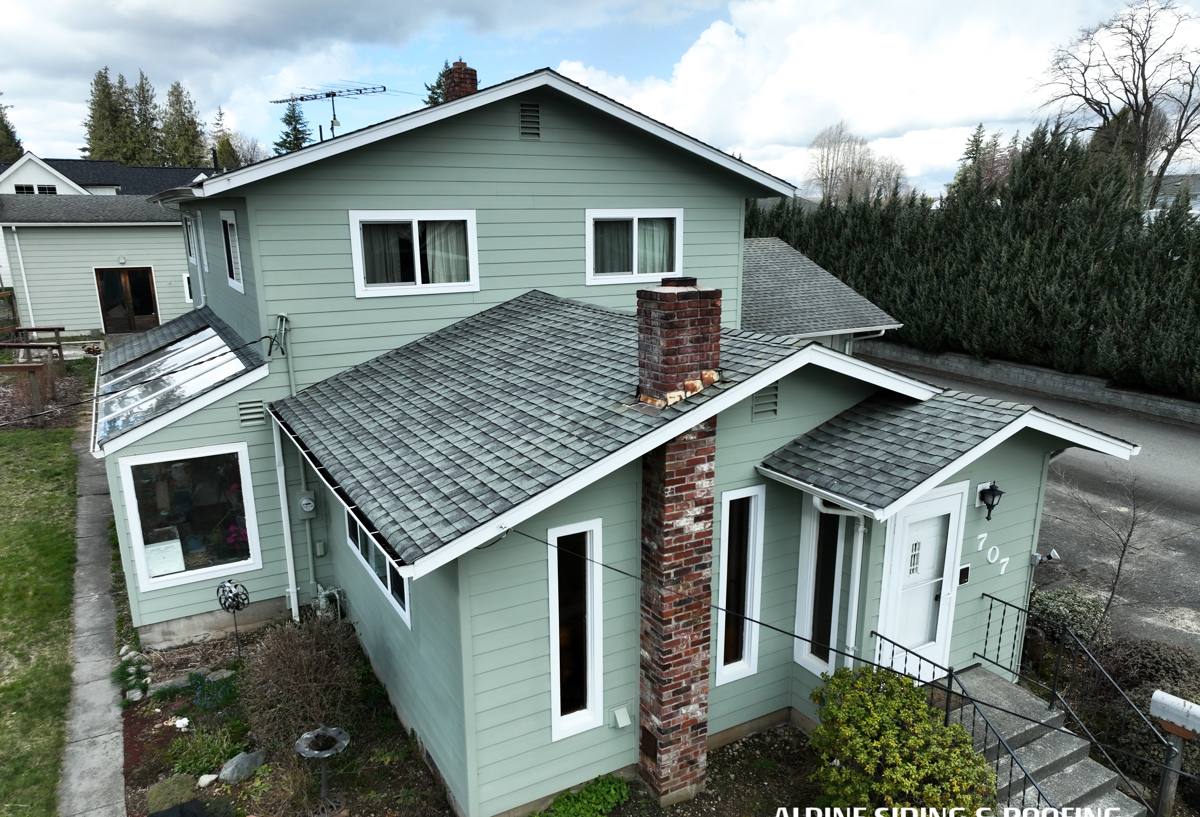
What Fiber Cement Siding Offers Anacortes Homeowners
Fiber cement is a cement, sand, and cellulose fiber composite, engineered specifically to resist the things that break down other siding materials. For a home exposed to salt air and constant moisture, that matters in a few concrete ways:
- It doesn't rot, delaminate, or absorb water the way wood-based products can when moisture gets past a seam.
- It's dimensionally stable — it doesn't expand and contract with humidity swings the way vinyl and some engineered wood products do, so joints stay tighter over time.
- It's non-combustible, which matters given how many Skagit County properties border trees and brush.
- A quality factory finish holds its color and resists the chalking and fading that salt air and UV accelerate on field-painted surfaces.
None of that means fiber cement is maintenance-free. It means it starts from a much stronger baseline than the alternatives, and that baseline holds up better against exactly the conditions Anacortes throws at it.
Why We Install Only James Hardie Fiber Cement
We don't install LP SmartSide, vinyl, Cemplank, Allura, primed spruce, or cedar. That's not a knock on every homeowner who has one of those products on their house — it's a standard we hold for what we're willing to put our name on, especially in a climate like this one.
Vinyl flexes and can crack in cold snaps, and its seams and J-channels give wind-driven rain more places to work its way behind the cladding. Engineered wood products like LP SmartSide use wood strand cores that perform fine in dry climates but are more sensitive to sustained moisture exposure at cut edges and seams — exactly the vulnerability a marine environment finds. Primed spruce and cedar are real wood, which means real wood problems: they need diligent, ongoing refinishing to keep moisture out, and a missed repaint cycle in a wet climate can cost you fast.
James Hardie fiber cement is purpose-built for this kind of exposure. Hardie engineers its HardieZone products by climate — homes in the Pacific Northwest fall under the HZ5 line, formulated for high-moisture, variable-temperature regions. The ColorPlus factory finish is baked on under controlled conditions, which gives it better UV and moisture resistance than field-applied paint, and it carries a stronger, transferable warranty than you'll find on most competing products. When we say we standardized on Hardie, this is why: it's the product that holds up to an honest accounting of what Anacortes weather does to a house.
What a Correct Installation Involves
Fiber cement siding is only as good as its installation. The product resists moisture well, but a house doesn't fail at the field of the wall — it fails at the seams, laps, and penetrations where water finds its way in. In a high-rain, salt-air environment, getting these details right isn't optional.
The details that matter most here
- Weather-resistive barrier and flashing — a correctly lapped water-resistive barrier behind the siding, with proper flashing at windows, doors, and any horizontal trim, so water that does get past the cladding has a clear path back out.
- Rainscreen or drainage gap — a small air gap behind the siding lets bulk water drain and lets the wall assembly dry, which matters enormously given how often walls here stay damp.
- Fastener spec — corrosion-resistant fasteners driven to Hardie's specified pattern and depth; salt air is unforgiving of the wrong fastener choice.
- Caulking and sealant at joints — used correctly, not as a substitute for proper flashing, at trim and penetrations.
- Clearance from grade and hard surfaces — proper gap at the bottom edge so the siding isn't wicking moisture from soil, decks, or patios.
Skip any one of these and you can install genuine Hardie product and still end up with moisture problems in a few years. This is where installation quality matters as much as the material choice.
Product lines suited to this climate
| Hardie Product | Typical Use | Why It Fits Anacortes |
|---|---|---|
| HardiePlank lap siding | Primary wall cladding | Most common choice; factory-finished ColorPlus resists salt-air fading and moisture staining |
| HardiePanel vertical siding | Accent walls, gables | Clean lines for modern or craftsman styling, same HZ5 moisture engineering |
| HardieTrim boards | Corners, window and door trim | Keeps trim details consistent in material and finish with the field siding, reducing weak points at joints |
| HardieSoffit panels | Eaves and overhangs | Resists moss and moisture buildup in shaded, damp overhang areas — a common problem spot here |
Signs Your Anacortes Home's Siding Needs Attention
Because of the moss season and salt exposure, siding problems here tend to show up in specific ways. Worth checking for:
- Persistent moss or algae staining on north- or shade-facing walls that pressure washing doesn't fully clear
- Soft spots, bubbling, or visible warping, especially near the ground or around window trim
- Paint that's chalking, peeling, or fading unevenly, particularly on the sides that catch the most weather
- Gaps opening up at seams, corners, or trim joints
- Rust streaking from fasteners bleeding through the finish
- A musty smell or interior wall staining that suggests moisture is getting past the cladding
Any one of these is worth a look. Several together usually means the siding system — not just the paint — needs real attention.
Our Process From Estimate to Finished Job
We keep the process straightforward. A walk-around of the home to assess the current siding, trim, and any moisture or rot issues underneath. A written estimate that spells out product lines, colors, and scope — no vague allowances. Removal of the old siding down to the sheathing so we can actually inspect and fix what's underneath rather than covering it up. Correct installation of the water-resistive barrier, flashing, and drainage gap before a single piece of Hardie siding goes up. Then the siding, trim, and soffit installation itself, followed by a final walk-through with the homeowner.
We don't skip the sheathing inspection step, even though it's not visible in the finished product. In a climate like this one, what's happening behind the siding matters as much as what's on the surface.
Cost Factors for Fiber Cement Siding in Anacortes
| Factor | How It Affects Cost |
|---|---|
| Home size and wall complexity | More corners, gables, and dormers mean more cutting, trim work, and labor time |
| Condition of existing sheathing | Rot or moisture damage found during removal adds repair scope before new siding goes on |
| Product line and profile | Lap width, panel style, and trim details affect material cost |
| Color and finish | Factory ColorPlus finishes vs. field-painted options carry different pricing and long-term maintenance |
| Site access | Tight lots, steep grades, or limited staging area can add labor time |
Every home is different, which is why we walk the property before quoting rather than pricing off square footage alone. Broad regional ranges are easy to find online; an accurate number for your house takes an actual look.
Why a Crew That Already Works Anacortes Matters
Installation detail work — flashing sequences, drainage planning, fastener choice — should already reflect what a marine, high-rain climate demands. A crew that installs mostly in drier or more sheltered parts of the county may treat those details as optional rather than essential. A crew that regularly works Anacortes and the rest of Skagit County's coastal areas builds the drainage gap and flashing sequence in as standard practice, not an upsell, because they've seen what happens when it's skipped.
That local pattern recognition also shows up in smaller ways — knowing which wall orientations on this kind of site tend to hold moss longest, which trim details need extra attention against wind-driven rain, and how the local weather window affects installation scheduling. None of that replaces a correct install, but it does mean fewer surprises along the way.
Maintenance That Keeps Fiber Cement Performing Here
Fiber cement needs less upkeep than wood or vinyl, but "less" isn't "none," especially in this climate. An annual rinse to clear salt residue and moss spores before they take hold, prompt caulking touch-ups at any joint that opens up, and keeping gutters and downspouts clear so runoff isn't sheeting down the wall all go a long way. A correctly installed system with the drainage plane intact makes this kind of maintenance genuinely easy — most of it is a garden hose and an occasional inspection, not major work.
If your Anacortes home is due for new siding, or you want a second opinion on a bid you've already received, we're happy to walk the property and give you a straightforward, no-pressure estimate. Use the form below to get started.