 Mount Vernon
 Sedro-Woolley's Climate and What It Does to Siding
Sedro-Woolley sits at the edge of the Skagit Valley, close enough to the water and the foothills to catch the worst of both worlds. Homes here deal with long stretches of driving rain off the Puget Sound weather system, high year-round humidity, and the kind of shaded, damp microclimates that let moss and algae take hold on north-facing walls and anything under tree cover. That combination is hard on siding in a way that's easy to underestimate if you're not looking closely.
Wood-based and wood-composite sidings absorb that moisture over time, especially at seams, corners, and butt joints where water collects and doesn't dry out quickly between storms. Paint film breaks down faster in constant damp, and once it does, the substrate underneath starts to swell, delaminate, or rot from the inside out — often before it's visible from the ground. Vinyl handles moisture fine but tends to show its age through warping, fading, and gaps at the seams as the valley's temperature swings work on the material over the years. None of this is exotic — it's just what this specific climate does to siding, year after year, and it's the reason siding replacement here isn't a cosmetic decision so much as a maintenance one.
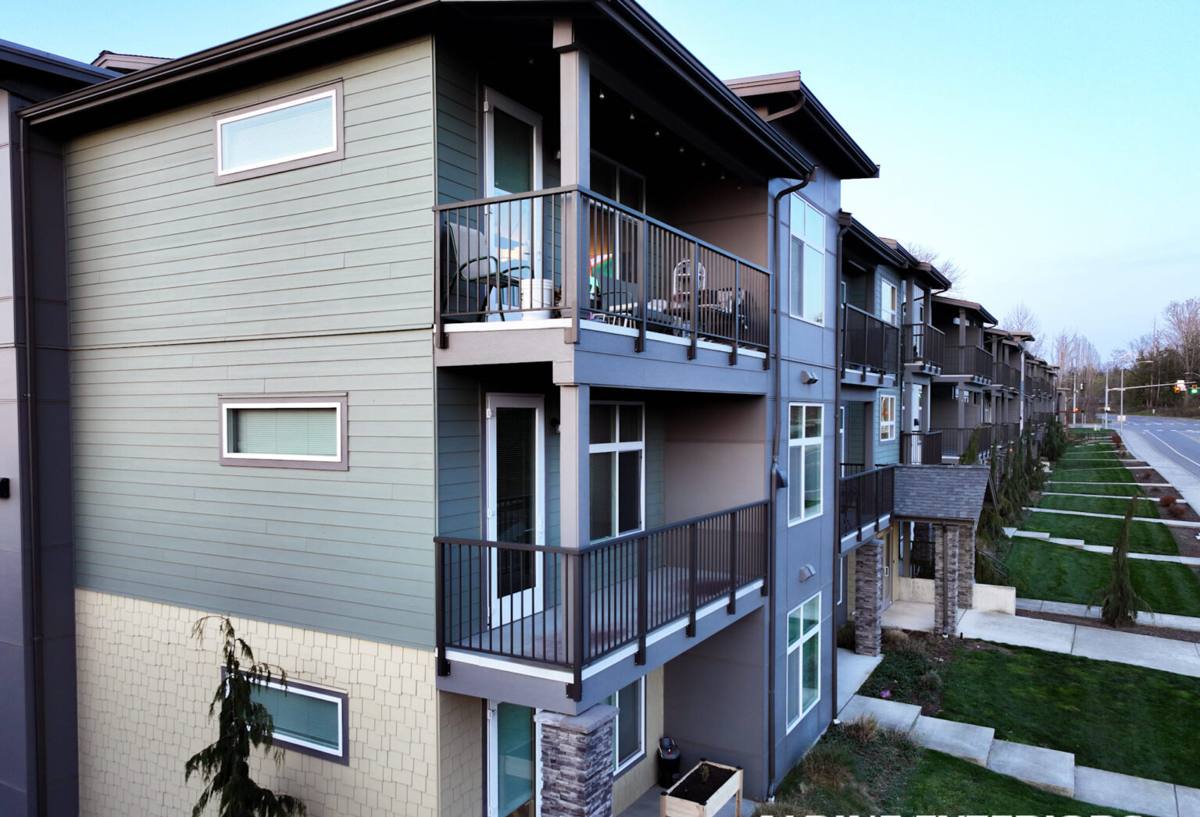
Signs Your Sedro-Woolley Home Needs Siding Replacement (Not Just a Repair)
Not every siding problem calls for a full replacement. But in this climate, certain signs mean patching is just delaying a bigger, more expensive fix:
- Soft or spongy spots when you press on the siding, especially near the bottom courses or under windows
- Paint that keeps failing in the same spots within a year or two of repainting
- Visible gaps, warping, or buckling at panel seams
- Persistent moss or algae growth that comes back within a season of cleaning
- Cracking or splitting that runs along multiple boards, not just an isolated impact spot
- Rising interior humidity, musty smells, or peeling interior paint near exterior walls — a sign moisture has worked its way through
If you're seeing more than one of these, the underlying sheathing and framing may already be affected, and a spot repair won't stop the moisture pathway that caused the problem in the first place.
Why Age Alone Isn't the Best Indicator
A 20-year-old siding job in a well-ventilated, sun-exposed part of Sedro-Woolley can be in better shape than a 10-year-old job on a shaded, north-facing wall near mature trees. Exposure and drainage detail matter more than the calendar. That's why we assess condition wall-by-wall rather than assuming the whole house needs the same treatment.
Why We Install James Hardie Fiber Cement — and Not the Alternatives
We standardized on James Hardie fiber cement siding and don't install LP SmartSide, vinyl, Cemplank, Allura, primed spruce, or cedar. That's not a marketing position — it's a decision based on what actually holds up in this climate with the least ongoing maintenance burden for the homeowner.
| Material | What it gets right | Why it's not what we install |
|---|---|---|
| Cedar / primed spruce | Natural appearance, long track record, repairable | Wood absorbs moisture; needs regular repainting and sealing to survive a wet climate long-term |
| Vinyl | Low cost, no painting required | Warps and fades with age; seams and edges are the weak point in driving rain; limited color depth |
| LP SmartSide / other engineered wood | Lighter weight, easier install, budget-friendly | Still wood-based at its core — edge and seam moisture exposure remains the long-term risk |
| Cemplank / Allura fiber cement | Similar composition to Hardie, competitive pricing | We standardized on one system for warranty consistency, factory finish quality, and installer familiarity |
| James Hardie | Non-combustible, engineered for regional climate exposure, factory-baked ColorPlus finish, strong transferable warranty | This is what we install |
Hardie's fiber cement doesn't absorb moisture the way wood does, and it doesn't warp or soften in constant damp the way vinyl and engineered wood products can over time. The ColorPlus factory finish is baked on under controlled conditions rather than field-painted, which matters in a place where site-painted finishes have a shorter useful life due to humidity during cure. Hardie also builds region-specific HZ5 product lines engineered for exactly this kind of wet, marine-influenced weather pattern — not a generic all-climate product.
What a Correct Siding Replacement Job Involves
The siding itself is only part of the job. In a climate like this, what's underneath it and how it's flashed matters just as much as the product on the outside. A correct replacement includes:
- Full removal of old siding and inspection of the sheathing underneath for hidden rot or water damage
- Repair or replacement of any compromised sheathing before new siding goes on
- Installation of a water-resistive barrier (weather wrap) with correctly lapped and taped seams
- Proper flashing at every window, door, and roofline transition — the most common failure point on poorly installed jobs
- Correct fastener spacing and type per Hardie's installation specifications
- Rain screen or drainage gap detailing where called for, so any moisture that does get behind the siding can drain and dry
- Factory-finished trim and caulking only where Hardie's install guide specifies — not as a substitute for proper flashing
Most siding failures we're called out to inspect aren't a failure of the siding material itself — they're a failure of the water management behind it. That's true whether the old siding was wood, vinyl, or fiber cement installed by someone who skipped steps.
Our Process for Sedro-Woolley Siding Replacement Projects
- On-site assessment. We walk the exterior, check for soft spots and moisture damage, and identify which walls or sections need attention.
- Written estimate. You get a clear scope of work and pricing before anything starts — no surprise change orders for work that should have been scoped up front.
- Tear-off and sheathing inspection. Old siding comes off, and we check the sheathing before covering it back up. Any rot gets addressed, not sealed over.
- Weather barrier and flashing. This is the step that determines how the siding performs for the next 20+ years, and it's where we spend the most care.
- Hardie installation. Installed to manufacturer specification for fastening, gapping, and finish detail.
- Final walkthrough. We review the completed work with you before calling the job done.
Cost Factors for Siding Replacement in Sedro-Woolley
| Factor | Why it affects cost |
|---|---|
| Extent of hidden sheathing damage | Damp climates hide rot behind siding; repair scope isn't known until tear-off |
| Home size and wall complexity | More corners, dormers, and trim detail mean more labor and material cuts |
| Siding profile and finish selection | Lap, shingle, and panel styles carry different material and labor costs |
| Access and site conditions | Slopes, mature landscaping, and tight lot lines around older Sedro-Woolley properties can affect staging and labor time |
| Trim, fascia, and flashing scope | Full replacement of trim and flashing costs more up front but avoids near-term failure points |
We don't publish a flat price because the honest answer depends on what we find once the old siding comes off — but we'll give you a clear, itemized estimate before any work begins, and we'll tell you plainly if we find something during tear-off that changes the scope.
Why Hiring a Crew That Already Works Sedro-Woolley Matters
A crew that regularly works this part of Skagit County knows which details actually matter here — how much drainage gap to build in on a shaded, damp wall, where moss tends to establish first, and which flashing details fail fastest under sustained driving rain. That's different knowledge than a crew that mostly works drier inland climates and treats every job the same way.
It also means faster response if something needs a look after the job is done, and a crew that's already familiar with the permitting and inspection expectations in this area rather than learning them on your project.
Maintaining Your New Hardie Siding Through Skagit Valley Winters
Fiber cement siding is low-maintenance compared to wood or vinyl, but "low-maintenance" isn't "no-maintenance" in this climate. A simple annual routine keeps it performing at its best:
- Rinse siding down once a year to clear pollen, dust, and early moss growth before it takes hold
- Keep gutters clear so overflow doesn't run down siding faces during heavy rain events
- Trim back vegetation and tree limbs that keep any section of wall in constant shade and damp
- Check caulking at trim joints and penetrations every couple of years and re-caulk as needed
- Watch for any impact damage after storms and address chips promptly so moisture can't get behind the finish
None of this is heavy work, but skipping it is how even good siding underperforms its warranty life.
If your Sedro-Woolley home is showing signs of siding failure, or you're planning ahead for a replacement, we're glad to take a look and give you a straightforward, no-pressure estimate — just fill out the form below.