 Mount Vernon
 Why Siding Wears Differently in Riverside
Riverside sits close enough to the water and to the Skagit River corridor that homes here take on a specific combination of weather stress: salt-laden air moving in off Puget Sound, long stretches of driving rain through fall and winter, and shaded, moisture-heavy conditions that keep moss and algae active for most of the year. None of these factors is unusual on its own for Skagit County. Together, on the same house, they shorten the useful life of siding that wasn't built or installed to handle them.
Salt air is corrosive to exposed metal — nail heads, trim flashing, fastener hardware — and it accelerates the breakdown of coatings and caulk joints faster than it would further inland. Driving rain doesn't just wet a wall surface; wind-driven rain pushes water sideways and upward into laps, seams, and butt joints that were only ever designed to shed water moving straight down. And moss doesn't just look bad — a moss mat holds water against the siding face for weeks at a time, which is exactly the kind of sustained moisture exposure that wood-based and improperly sealed products struggle with.
None of that means Riverside is a bad place to own a home. It means siding replacement here has to account for conditions that a generic, one-size-fits-all installation won't.
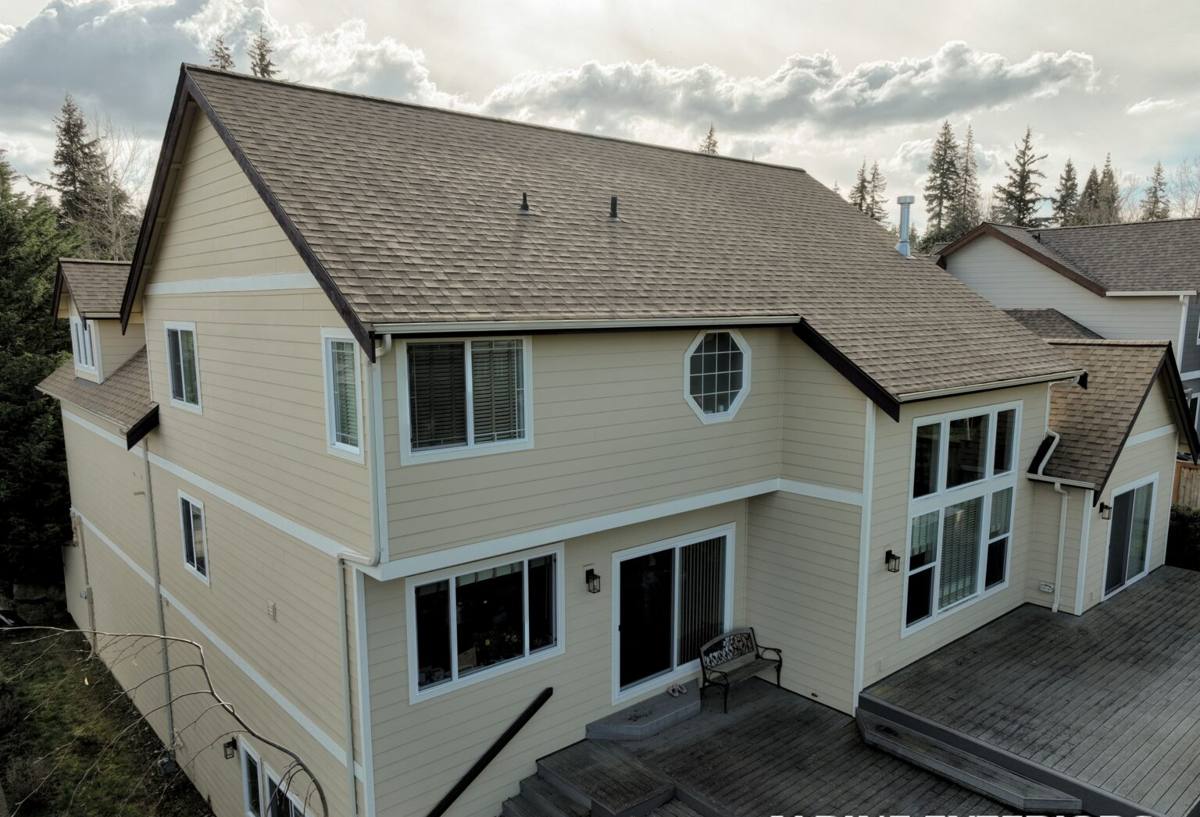
Signs a Riverside Home Needs Replacement, Not Just Repair
Repair makes sense when the problem is isolated — a cracked board, a loose piece of trim, storm damage to one section of wall. Replacement is the right call when the damage is systemic or when the underlying materials have reached the end of their service life. In Riverside, we typically see full replacement become the sensible option when a homeowner notices several of the following at once:
- Soft, spongy, or delaminating spots when you press on the siding, especially near the bottom courses and around window and door trim
- Persistent moss or algae staining that comes back within a season or two of cleaning
- Paint that's failing across large areas rather than in a few isolated spots — peeling, bubbling, or chalking
- Visible gaps, warping, or buckling in the siding profile
- Rising energy bills alongside noticeably colder walls or drafts near exterior walls in winter
- Interior signs — musty smell, staining on interior drywall near exterior walls, or trim that's swelling — that point to moisture getting past the siding
If you're only seeing one or two of these in a small area, a repair may buy you more time. If the pattern is spreading across multiple walls, especially on the sides of the house that take the most weather, that's usually a sign the whole system — not just the surface material — needs to come off and be redone correctly.
What a Correct Siding Replacement Actually Involves
Siding replacement is not a cosmetic swap. The siding itself is the last layer of a system, and in a climate like Riverside's, every layer underneath it matters as much as the finish product.
Full Tear-Off and Sheathing Inspection
We remove the old siding entirely rather than installing over it. That's the only way to actually see the sheathing underneath — and in homes where moisture has been getting behind old siding for years, there's often rot or soft sheathing that needs to be addressed before anything new goes up. Covering that over just locks the problem inside the wall.
Weather-Resistive Barrier and Flashing
Given how much wind-driven rain this area sees, the housewrap and flashing details around windows, doors, and penetrations matter as much as the siding itself. Properly lapped and taped weather-resistive barrier, correctly integrated flashing at every opening, and careful attention to how water is directed away from the wall assembly are what actually keep a home dry — the siding is the visible layer, but it's not the only layer doing the work.
Rainscreen Gap and Ventilation
A small drainage gap between the siding and the weather barrier lets any moisture that does get past the siding drain and dry out instead of sitting against the wall. In a climate with Riverside's rainfall totals and moss-friendly humidity, that detail is the difference between siding that dries out between storms and siding that stays damp long enough to start breaking down.
Fastening and Trim Details
Salt air shortens the life of standard fasteners and unprotected metal trim. Using corrosion-resistant fastening hardware and properly sealed trim details isn't an upgrade in this area — it's a baseline requirement for the job to hold up.
Why We Install Only James Hardie Fiber Cement
We standardized on James Hardie fiber cement siding and don't install vinyl, LP SmartSide, Cemplank, Allura, or primed wood products. That's not a marketing position — it's a decision based on what actually holds up under conditions like Riverside's, and we think homeowners deserve the honest reasoning rather than just a sales pitch.
Fiber cement is non-combustible, which matters for insurance and peace of mind regardless of climate. More specific to this area, Hardie's HZ5 product line is engineered for the freeze-thaw cycles, sustained moisture, and humidity swings typical of the Pacific Northwest — it's built to resist moisture absorption and hold its shape and finish in exactly the conditions Riverside sees most of the year. The ColorPlus factory finish is baked on under controlled conditions rather than field-applied, which means better adhesion and a finish that resists the fading and peeling that field-painted products are more prone to when they're exposed to years of salt air and rain.
We're not going to tell you that other products are worthless — vinyl is inexpensive and low-maintenance in the right setting, LP SmartSide has real engineering behind it, and cedar has genuine appeal for the right homeowner. But each of those comes with a trade-off — moisture sensitivity, expansion and contraction, coating maintenance, or a warranty structure that doesn't hold up the way Hardie's does — that we're not willing to install and then have to explain to a homeowner five or ten years later. Hardie is what we've seen perform, so it's what we put on homes.
What Affects the Cost of a Riverside Siding Replacement
Every home is different, and we won't quote a number without seeing the house, but the factors below are what actually move the price up or down on a typical Riverside project.
| Factor | Why It Matters |
|---|---|
| Condition of existing sheathing | Rot or moisture damage found during tear-off requires repair before new siding goes on |
| Home size and wall complexity | More corners, gables, and trim details mean more labor and material cutting |
| Siding profile and accessories | Lap width, trim style, and soffit/fascia work all affect material cost |
| Number of stories and access | Multi-story homes and limited access sides require more scaffolding and time |
| Existing moisture or moss damage | Homes with long-term water intrusion may need more extensive repair before install |
| Color and finish selection | Factory-finished ColorPlus options vs. field paint affect both cost and long-term maintenance |
We'll walk through each of these during an on-site estimate so you know exactly what's driving the number, not just what the final total is.
How Our Process Works
- On-site inspection where we assess the current siding, sheathing condition where visible, and any moisture or moss patterns specific to your property
- A written estimate that breaks down materials, labor, and any repair work anticipated before installation begins
- Scheduling that accounts for Skagit County's wetter months, since fiber cement installation and finish work go best in dry conditions
- Full tear-off, sheathing inspection and repair as needed, and correct installation of weather-resistive barrier and flashing
- Installation of James Hardie siding to manufacturer specifications, including proper fastening, clearances, and trim detailing
- A final walkthrough with you before we consider the job finished
We don't shortcut the tear-off or the barrier work to save time, even though those steps are invisible once the new siding is up. They're the steps that determine whether the job still looks and performs the way it should in fifteen years, not just on install day.
Why Hiring a Crew That Already Works in Riverside Matters
A contractor who's replaced siding on homes throughout Mount Vernon and elsewhere in Skagit County has already seen how salt air, driving rain, and moss growth interact with different wall orientations, roof lines, and lot conditions in this specific area. That's not something you can fully substitute with general experience from a drier or more inland market. Local familiarity means knowing which sides of a house typically take the worst weather, what moisture patterns tend to show up in older Riverside homes, and how to sequence a job around the wetter stretches of the local calendar so the work isn't rushed or compromised by weather.
It also matters for something more basic: accountability. A crew that works this area regularly has a reputation to protect with your neighbors, not just with you.
Keeping New Siding Looking Right Through Moss Season
Correct installation gets you most of the way to low-maintenance siding, but a little seasonal attention goes a long way in an area prone to moss:
- Keep tree branches and shrubs trimmed back from the siding so walls get airflow and sun exposure
- Rinse siding periodically with a garden hose, especially on shaded or north-facing walls, rather than letting organic buildup sit
- Check gutters each fall so overflow isn't running down the wall face during heavy rain
- Watch caulking around trim and penetrations over time and have gaps resealed before they become entry points for water
These are simple habits, not a maintenance burden — and they matter far less with ColorPlus-finished Hardie siding than they would with a field-painted or moisture-sensitive product, since the factory finish and the material itself are already built to resist this exact set of conditions.
If your Riverside home is showing signs of wear, or you're just trying to plan ahead before the next wet season sets in, we're happy to come take a look. The estimate is free, there's no pressure, and you'll get a straight answer about what your siding actually needs.