 Mount Vernon
 Metal Roofing in La Conner: What the Swinomish Channel Puts a Roof Through
La Conner sits on the Swinomish Channel in Skagit County, a short drive from Mount Vernon, and its waterfront setting is exactly what gives the town its character — and exactly what makes roofing here more demanding than it looks from the street. Salt-laden air moves off the channel and settles on every exposed surface of a home, including the roof. Pacific storm systems push driving rain sideways into laps, seams, and penetrations rather than straight down. And the mix of marine moisture and shade from mature trees on many La Conner properties keeps roofs damp longer after a storm than a drier inland climate would, which is exactly what moss needs to take hold and spread. None of these forces show up as sudden damage. They work on a roof steadily, season after season, until a material that wasn't built for this exposure starts to show it.
As an exterior contractor serving Mount Vernon and the surrounding Skagit County area, we install metal roofing systems specifically because they hold up against that combination better than most other roofing materials available. This page covers what a metal roof needs to do on a La Conner home, what a correct installation actually involves in this setting, and why hiring a crew that already works this specific stretch of waterfront Skagit County changes the outcome.
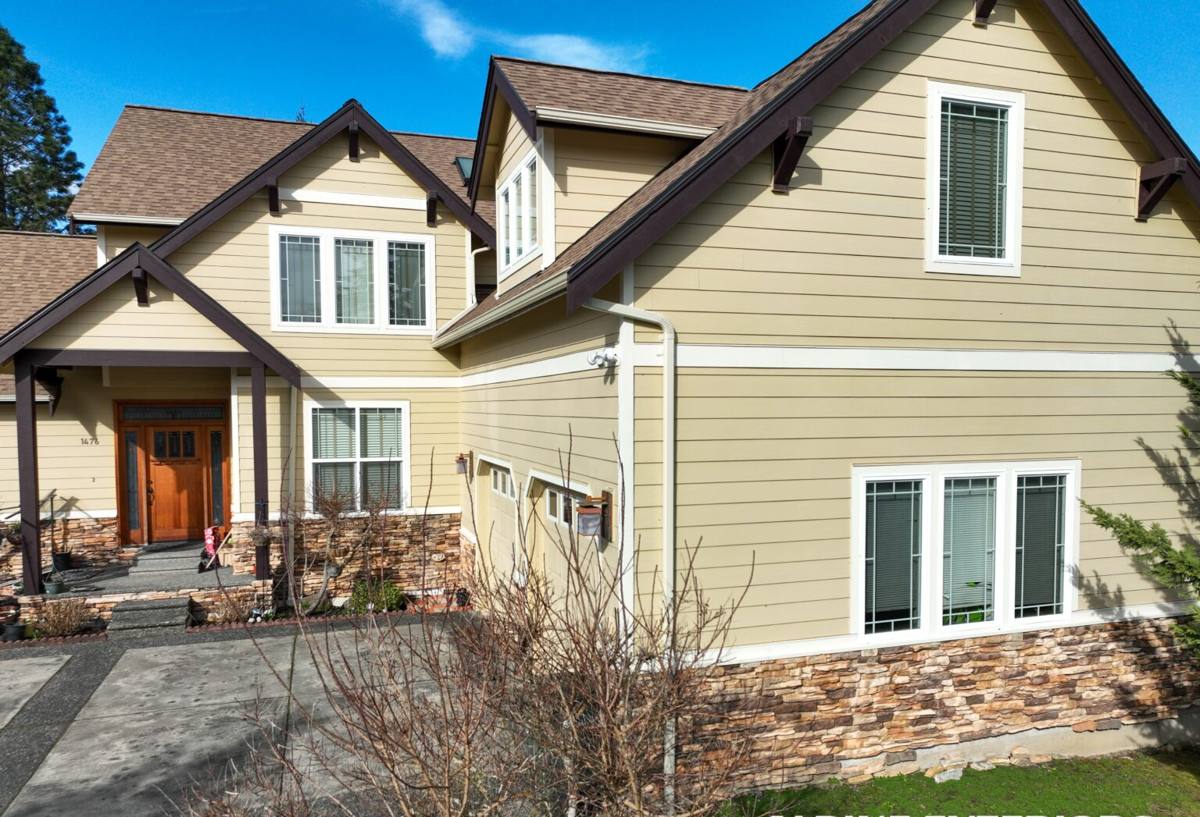
Why La Conner's Waterfront Setting Changes the Calculus
Salt Air and Corrosion
A roof a few blocks from the Swinomish Channel deals with airborne salt in a way that a roof further inland simply doesn't. Salt accelerates corrosion on any exposed metal — fasteners, flashing, panel edges — and it doesn't take a direct waterfront lot for that exposure to matter. Prevailing wind carries salt air well beyond the immediate shoreline throughout La Conner. The practical result is that coating quality and fastener selection matter more here than they would on a roof twenty miles inland.
Wind Off the Water
Open water gives wind a long, unobstructed run before it reaches a roofline, and that means La Conner homes, especially those with more exposed sightlines toward the channel, see higher sustained wind loads than a sheltered in-town lot. Wind doesn't just push down on a roof. It gets under panel edges and ridge details and pulls up. A roofing system that isn't fastened and detailed for real uplift resistance is the one most likely to lose a panel or a ridge cap in a serious wind event.
A Long, Shaded Moss Season
Between the marine humidity and the tree cover on many La Conner lots, roofs here stay damp longer after rain than roofs in a more open, sun-exposed setting. That extended damp period is what lets moss and algae establish themselves on a roof surface and keep growing for more of the year than a drier climate allows. Moss doesn't just look bad. On the wrong material, it holds moisture against the roof surface and can work its way under shingle tabs or lift edges over time.
Why Metal Roofing Fits This Climate
We recommend metal roofing for La Conner homes because it responds to each of the conditions above better than the alternatives, not because it's the only product that exists. Asphalt shingles are a reasonable, widely used product in a lot of climates, but their granulated surface gives moss and algae something to grip, and the mat underneath is an organic material that degrades faster under sustained damp conditions. Metal doesn't give moss a foothold the same way, it sheds water fast off a smooth, continuous surface, and a correctly installed system handles wind uplift better than a shingle roof relying on adhesive strips and exposed nail heads.
That said, metal roofing is only as good as its coating, its gauge, and its installation. A cheap panel with a thin coating in a salt-air environment can corrode at fastener points and cut edges faster than a well-installed asphalt roof would wear out. The material choice matters, but it's not the whole story.
Standing Seam vs. Exposed-Fastener Panels
Standing seam panels use concealed clips and interlocking seams, so there are no exposed fasteners punching through the panel face for salt air and rain to work on over the life of the roof. Exposed-fastener panels are less expensive up front, but every screw penetration is a potential point of corrosion and leak risk as washers age and fastener heads are exposed to the weather. For a channel-facing or otherwise wind- and salt-exposed La Conner property, we generally steer homeowners toward standing seam. On a more sheltered, inland-facing lot with a tighter budget, a quality exposed-fastener system installed correctly can still be a reasonable choice — it just comes with a shorter maintenance-free window and a fastener-replacement conversation down the road.
Coatings and Gauge Matter More Here
In a marine climate, the coating system is doing as much work as the metal itself. A higher-quality paint or coating system resists chalking, fading, and — more importantly here — the kind of coating breakdown that exposes bare metal to salt air. We also pay attention to panel gauge; a heavier gauge resists denting and holds its shape better under wind load and foot traffic during maintenance, which matters on a roof that's going to be inspected and cleaned periodically over its life.
What Correct Installation Actually Involves on a La Conner Home
Metal roofing only delivers on its durability if it's installed correctly, and that standard doesn't bend for a waterfront lot. If anything, the margin for error is smaller here.
Underlayment and Ice-and-Water Protection
A quality synthetic or self-adhering underlayment underneath the panels is the roof's backup line of defense, and it matters more at eaves, valleys, and any low-slope transition where wind-driven rain is most likely to push past the panel seams. We don't treat underlayment as an afterthought layer — on a roof taking this much sustained moisture, it's part of the system.
Fastening and Panel Expansion
Metal expands and contracts with temperature swings, and panels need to be fastened in a way that allows for that movement without loosening clips or backing out screws over time. Getting this wrong doesn't show up on installation day — it shows up years later as leaks at panel ends or ridge details that were never designed to move with the metal.
Flashing at Every Penetration and Transition
Chimneys, vents, skylights, and roof-to-wall transitions all need flashing that's correctly lapped and sealed for a metal system specifically, not adapted from a shingle-roof detail. Wind-driven rain coming off the channel finds exactly the gaps a gentler, drier climate would never test.
- Underlayment installed and lapped correctly across the full roof deck, with extra attention at eaves and valleys
- Panel fastening and clip spacing matched to the specific system and expected wind exposure of the site
- Flashing detailed for a metal roof at every chimney, vent, skylight, and wall transition
- Fastener and trim material selected to resist corrosion in a salt-air environment, not just a standard inland spec
- Ridge and hip details sealed and vented correctly to manage moisture from underneath, not just above
- Panel and trim seams inspected for consistent, tight coverage before the crew leaves the site
Steel vs. Aluminum for a La Conner Roof
Both steel and aluminum are common substrates for quality metal roofing, and both can perform well here when properly coated and installed. The right choice usually comes down to the specific site and the homeowner's priorities rather than one material being categorically better.
| Factor | Steel | Aluminum |
|---|---|---|
| Corrosion resistance | Strong when coating is high quality and maintained; coating breach is the main vulnerability | Naturally corrosion-resistant even without coating, an advantage in direct salt-air exposure |
| Strength and dent resistance | Generally stronger per gauge, holds up well under foot traffic and impact | Lighter and slightly softer; still durable at proper gauge but more dent-prone than steel |
| Weight | Heavier, a consideration on older framing | Lighter, easier on older or marginal roof structures |
| Typical cost | Generally lower material cost | Generally higher material cost |
Cost Factors on a La Conner Metal Roofing Project
We don't publish flat pricing because it wouldn't be honest — every roof and every site is different. The factors below are consistent enough across La Conner projects to lay out plainly.
| Factor | How It Affects Cost |
|---|---|
| Panel system and material | Standing seam runs higher than exposed-fastener panels; steel generally costs less than aluminum |
| Roof complexity | Valleys, dormers, and multiple roof planes add flashing detail and labor time |
| Existing roof condition | Deck repair or moisture damage found during tear-off adds scope |
| Site access | Waterfront or tight-lot properties can add setup and staging time |
| Coating and gauge upgrade | Heavier gauge or premium coatings raise material cost but extend service life in salt air |
Maintenance a Metal Roof Needs in This Climate
Metal roofing needs far less maintenance than asphalt shingles in a moss-prone climate, but "far less" isn't "none." In La Conner's marine air, a periodic look at the roof catches small issues before they become expensive ones.
- Clear debris and organic buildup from valleys and around penetrations, especially on shaded roof sections
- Check fastener heads and washers on exposed-fastener systems for early signs of corrosion
- Inspect sealant at flashing points periodically, since sealant ages faster than the metal itself
- Rinse accumulated salt residue off the roof surface where practical, particularly on channel-facing slopes
Most of this is a once- or twice-a-year visual check rather than a major undertaking, but it's worth doing on a schedule rather than only after a problem shows up inside the house.
Why Hiring a Crew That Already Works La Conner Matters
Metal roofing specifications don't change by neighborhood, but the judgment calls around them do. A crew that already works this stretch of Skagit County knows which La Conner properties face direct channel exposure and need standing seam and upgraded fasteners as a baseline, versus which sheltered, inland-facing lots have more flexibility in system choice. They know how tree cover on a given property affects moss risk and maintenance planning, and they've already worked through the flashing and drainage judgment calls that a crew passing through on a one-off job hasn't seen before. That local pattern recognition is the difference between a roof that's engineered for this exact climate and one that's engineered for wherever the crew normally works.
If you're weighing metal roofing for a La Conner home, we're glad to walk the roof with you, talk through steel versus aluminum and standing seam versus exposed-fastener for your specific site, and put together a straightforward estimate. There's no pressure and no obligation — just an honest look at what your roof actually needs. The form below gets that conversation started.