 Mount Vernon
 Why Little Mountain Homes Put Extra Demands on a Window
Little Mountain sits above the Skagit Valley, close enough to the Sound that homes here catch a steady mix of salt-laced air, wind-driven rain, and the kind of persistent damp that keeps moss growing nearly year-round. That combination is harder on windows than most homeowners realize. It's not one dramatic storm that causes trouble — it's the slow, cumulative exposure. Frames, sills, and seals that would last decades in a drier climate can start failing in half that time here if they weren't specified or installed correctly in the first place.
A custom window job for a Little Mountain home isn't just about picking a style out of a catalog. It's about matching the window assembly, the flashing detail, and the sealant system to what this specific hillside throws at a house all year. Get that wrong and you're looking at fogged glass, soft framing, and drafts within a few winters. Get it right and the windows should be one of the lowest-maintenance parts of the exterior for a long time.
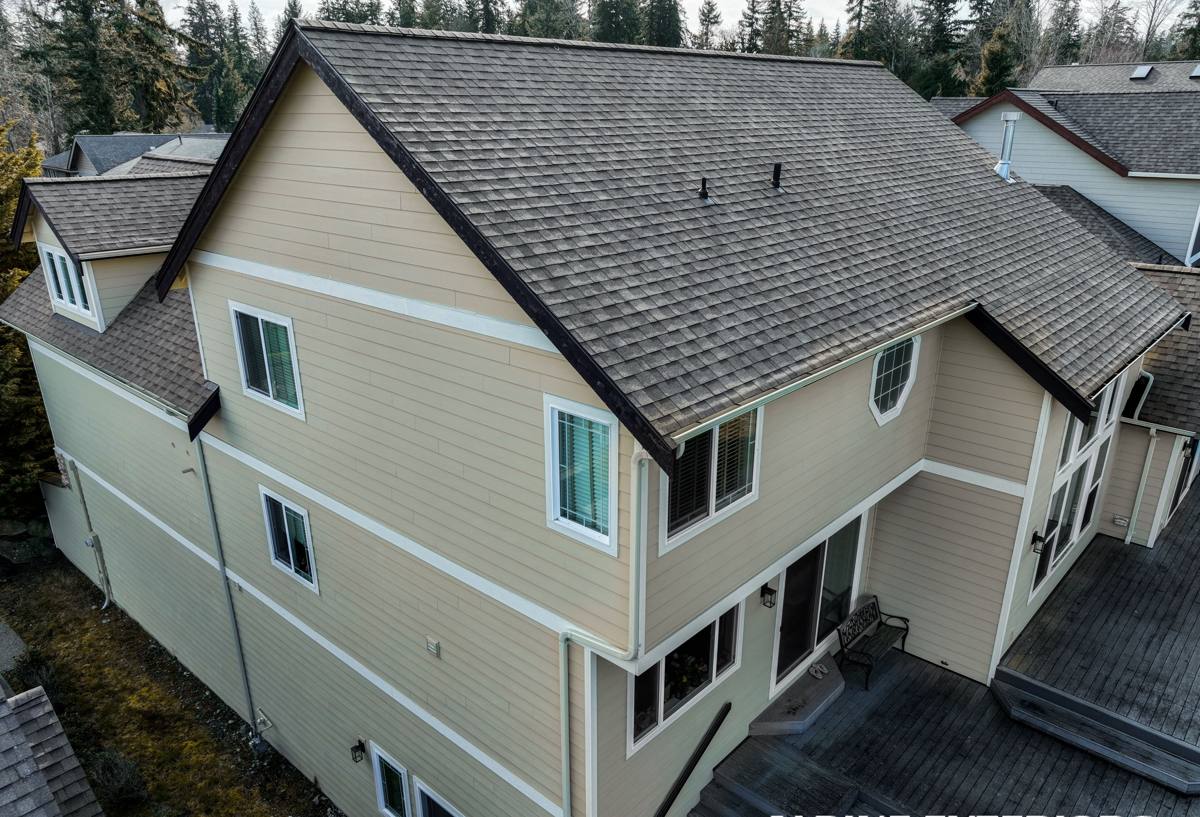
What Salt Air, Driving Rain, and Moss Season Actually Do
Salt Air
Airborne salt is corrosive to unprotected metal hardware — hinges, cranks, locking mechanisms, and some lower-grade aluminum components. Over years it can pit finishes and stiffen or seize moving parts, especially on windows that don't get wiped down regularly. It also accelerates the breakdown of cheaper sealants and finishes that weren't formulated for coastal exposure.
Driving Rain
Little Mountain's elevation and exposure mean rain doesn't just fall here, it gets pushed sideways into wall assemblies during storms. Any weak point in the flashing, the window-to-siding transition, or the sealant joint becomes an entry point for water. Once water gets behind a window frame, it's usually not visible until there's already rot in the framing or staining on interior trim — by then the damage has been building for a while.
Moss and Sustained Damp
The long, wet stretch of the year that lets moss thrive on roofs and siding does the same thing to window sills and the wood trim around openings if it isn't properly sealed and maintained. Constant moisture without enough drying time between rain events is what turns a small gap in caulking into a soft spot in the sill over a couple of seasons.
What "Custom" Actually Means for a Window Job Here
Custom doesn't just mean non-standard sizes, though that matters on older Little Mountain homes where openings are frequently a bit off from today's stock dimensions. It also means:
- Frame material and finish chosen for coastal-adjacent, high-moisture exposure rather than a generic regional spec
- Glass packages (low-E coatings, gas fills, spacer type) matched to how much direct wind-driven rain and temperature swing a specific elevation or exposure sees
- Flashing and sealant details built around how the existing wall assembly actually drains, not a one-size template
- Sill design and pitch that actually shed water away from the house instead of letting it pool
- Hardware finishes that hold up to salt exposure without constant upkeep
A window that's technically a good product can still be the wrong choice if it's installed with a flashing detail meant for a drier, calmer climate.
Comparing Frame Materials for This Exposure
| Material | How It Handles Salt Air & Rain | Maintenance | Where It Fits Best |
|---|---|---|---|
| Vinyl | Won't corrode or rot; performs consistently in damp, salt-adjacent air | Low — occasional cleaning | Most Little Mountain homes, especially where budget and low upkeep matter |
| Fiberglass | Very stable in temperature swings and moisture; strong long-term seal integrity | Low | Larger openings, or homes wanting a stiffer frame with less flex over time |
| Aluminum-clad wood | Attractive, but the wood core is vulnerable if any seal fails and water gets behind the cladding | Higher — depends on seal integrity being maintained | Homeowners set on a wood interior look who understand the trade-off |
| Bare wood | Least forgiving of this climate's sustained damp without diligent upkeep | Highest | Historic character homes where the owner is committed to regular maintenance |
We're upfront with Little Mountain homeowners about this: a beautiful wood window that isn't maintained on schedule in this climate will show problems faster than it would somewhere drier. That's not a knock on the product — it's just an honest maintenance conversation we'd rather have before installation than after.
How We Approach a Correct Installation
1. On-Site Assessment
We look at the existing opening, the condition of the framing and sheathing around it, and how water currently moves across that section of wall. On older Little Mountain homes, this step often reveals prior water intrusion that isn't visible from inside — soft sheathing, deteriorated building paper, or flashing that was never properly lapped.
2. Precise Measurement and Product Selection
We measure the actual opening rather than assuming it matches a standard size, and select frame material, glass package, and hardware finish based on that specific wall's sun, wind, and rain exposure.
3. Removal and Opening Prep
Old windows come out carefully so we can inspect and repair any hidden rot or damaged flashing before a new unit goes in. Installing a new window over a compromised opening just locks the existing problem behind new trim.
4. Flashing and Sealing
This is the step that decides whether a window job holds up through Skagit County winters. Proper flashing tape, correctly lapped with the building paper or house wrap, sloped sills, and the right sealant at every joint — not just a bead of caulk around the outside trim.
5. Setting, Shimming, and Insulating
The window is set plumb and square, shimmed correctly so it doesn't bind or sag over time, and the gap between frame and rough opening is insulated properly — not overpacked, which can bow a frame, and not left hollow, which invites drafts and condensation.
6. Final Weatherproofing and Trim
Exterior trim and any remaining sealant joints are finished, and we walk the homeowner through operation and any maintenance specifics for whatever material was installed.
Signs Little Mountain Homeowners Should Watch For
- Fogging or moisture between panes — a failed seal on an insulated glass unit
- Soft or discolored trim or sill wood around the window
- Visible daylight or a noticeable draft near the frame
- Difficulty opening, closing, or locking that didn't used to be there
- Moss or green staining building up on the sill or lower trim
- Peeling paint or bubbling finish on wood-framed windows
- Noticeably higher heating bills without another clear cause
Any one of these on its own isn't an emergency, but on a Little Mountain home it's worth a look before the next wet season, since problems here tend to progress during the rainy months and only become obvious once they're advanced.
What Drives Cost on a Job Like This
| Factor | Why It Matters |
|---|---|
| Frame material | Vinyl is typically the most economical; fiberglass and clad-wood options cost more upfront |
| Number and size of openings | Larger or non-standard sized windows require more custom fabrication |
| Condition of the existing opening | Hidden rot or flashing failures found during removal add repair scope |
| Glass package | Upgraded low-E coatings or gas fills for better performance in wind and temperature swings cost more but reduce long-term energy loss |
| Access and site conditions | Upper stories, tight setbacks, or difficult hillside access can affect labor time |
Costs on custom window projects vary widely home to home, so rather than quote a number that won't reflect your actual opening and condition, we'd rather walk the site and give a real figure.
Why Local Experience on Little Mountain Matters
A crew that already works this specific area knows how the wind typically hits a given exposure, how far salt-laced air actually reaches up the hillside, and which older construction details in the neighborhood tend to hide moisture problems behind otherwise good-looking trim. That's not something you can fully substitute with a general regional install checklist. We've built our process around Mount Vernon and greater Skagit County conditions specifically, and Little Mountain's exposure is part of that everyday experience — not a special case we have to research from scratch.
It also means we're around after the install. If a seal ever needs attention or a homeowner has a maintenance question a few years down the line, we're a local call, not a distant number attached to a one-time job.
Maintaining Your Investment
Whatever material you choose, a little seasonal attention keeps custom windows performing for the long haul in this climate:
- Rinse salt residue and debris off frames and glass periodically, especially after storms
- Clear moss and organic buildup from sills and tracks before it holds moisture against the frame
- Check caulking and weatherstripping once a year for cracking or gaps
- Keep drainage weep holes clear so water can exit rather than pool
- Address any soft trim, sticking sashes, or fogged glass promptly rather than waiting
If you're weighing custom windows for a Little Mountain home, we're happy to take a look and talk through what your specific openings and exposure actually need. There's no pressure and no cost to get an honest assessment and a straight answer — just fill out the form below and we'll set up a time to come out.