 Mount Vernon
 Building a Deck That Actually Holds Up in Little Mountain
Little Mountain sits close enough to tidal influence and open exposure that decks here take a different kind of beating than decks twenty miles inland. It's not one dramatic storm that wrecks a deck in this part of Mount Vernon — it's the slow, steady combination of salt-tinged air, months of driving rain, and a moss season that seems to start earlier and last longer every year. A deck built with generic, big-box specs might look fine for a season or two. Then the fasteners start weeping rust stains, the boards cup, and moss creeps into every north-facing corner. A deck built for this specific location looks the same on day one and day two thousand.
This page is about custom deck construction specifically for Little Mountain homes — what the site conditions demand, what a correctly built deck involves from the ground up, and how we run the job from first look to final walkthrough.
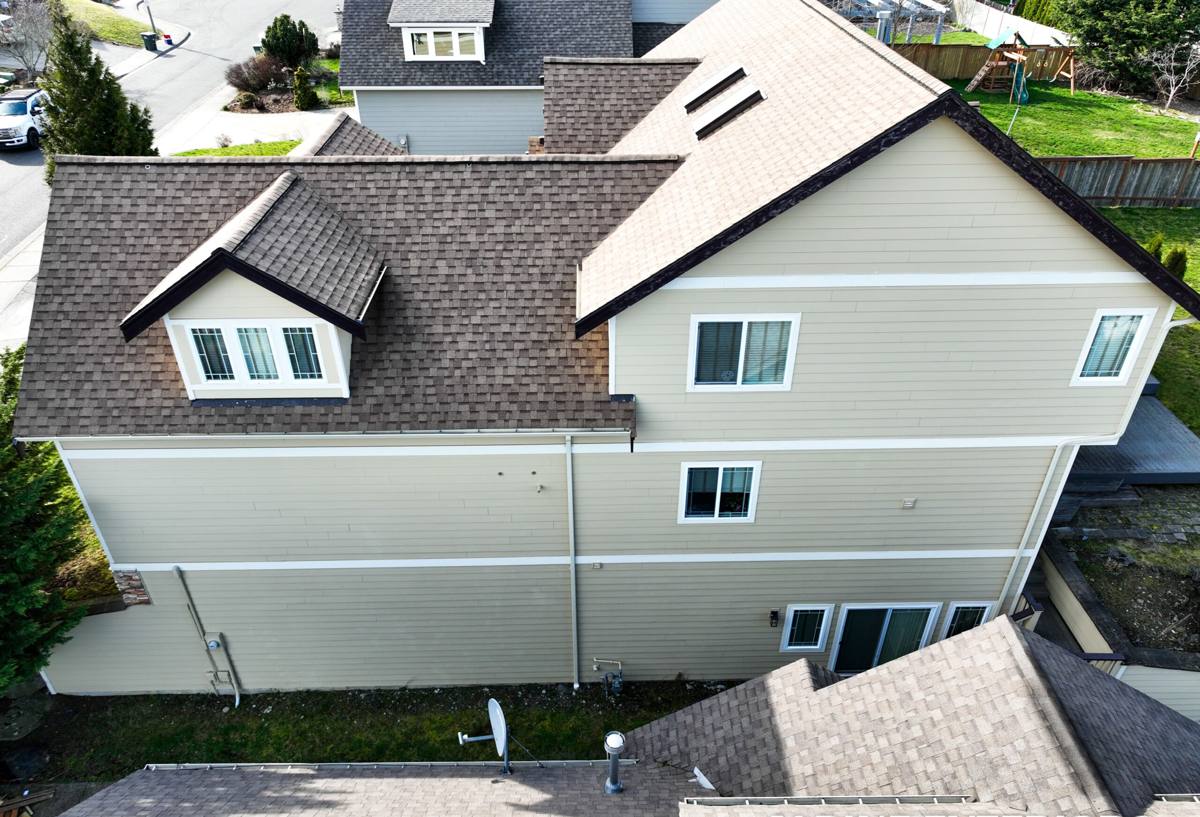
What the Climate Actually Does to a Deck Here
Salt Air and Metal Hardware
Little Mountain's proximity to Puget Sound air means airborne salt reaches further inland than most homeowners expect. Salt doesn't need direct ocean spray to cause damage — a fine mist carried on wind is enough over years to corrode standard fasteners, cheap joist hangers, and unrated screws. Once a fastener starts corroding, it loses holding strength long before it looks obviously bad, which is part of why deck hardware failures often surprise homeowners who thought everything looked fine.
Driving Rain and Water Management
Skagit County gets sustained wet weather for a good chunk of the year, and Little Mountain's exposure means rain often arrives at an angle rather than falling straight down. That matters for deck design because water gets pushed sideways into ledger connections, under poorly flashed rim joists, and into end-grain cuts that weren't sealed. A deck that only manages water falling straight down will still take on moisture from driving rain at these connection points.
Moss and Shade
Between tree cover common in this part of Mount Vernon and the long stretch of damp months, moss and algae growth on decking is a near-constant maintenance issue rather than an occasional nuisance. Moss holds moisture against the board surface, and on the wrong material that trapped moisture accelerates rot, staining, or surface degradation depending on what the deck is built from.
Choosing Decking Material for Little Mountain Conditions
There's no single "best" decking material — there's a best material for this site, this budget, and how the homeowner wants to spend their weekends. Here's how the common options actually perform under Little Mountain's conditions:
| Material | How It Handles Moisture & Moss | Maintenance Reality | Typical Lifespan Here |
|---|---|---|---|
| Pressure-treated lumber | Resists rot when properly sealed; moss still grows on the surface and needs regular cleaning | Annual cleaning and periodic sealing/staining | 15-20 years with upkeep |
| Cedar | Naturally rot-resistant, but the surface still needs treatment to stay ahead of moss and graying | Sealing every 1-2 years to hold color and resist moisture uptake | 15-25 years with consistent care |
| Composite decking | Doesn't rot, but lower-quality composites can still trap surface moisture and grow moss/algae if not cleaned | Periodic washing, no sealing or staining required | 25-30+ years, warranty-backed |
| PVC/capped polymer | Fully sealed surface, best moisture and moss resistance of the common options | Occasional washing only | 25-30+ years, warranty-backed |
We don't push one material on every homeowner. A cedar deck that gets cleaned and sealed on schedule can look excellent for decades, and plenty of Little Mountain homeowners prefer real wood. What we won't do is install wood decking without being upfront about the maintenance commitment it takes to keep it ahead of this area's moss season — that's a decision you should make with full information, not find out about after the fact.
Where Custom Decks Actually Fail — And How We Build Around It
The Ledger Connection
The ledger board — where the deck attaches to the house — is the single most common point of structural failure on decks in wet climates. Water intrusion behind an improperly flashed ledger can rot the rim joist and, in worst cases, the framing behind it, often invisibly for years. We flash every ledger connection properly and use structural fasteners rated for the load and exposure, not just whatever's fastest to install.
Joist Hangers and Fasteners
Given the salt exposure in this part of Mount Vernon, we spec hot-dip galvanized or stainless connectors and coated deck screws rated for ground contact and coastal exposure, not the mill-grade hardware that ships standard with cheaper builds. It costs more upfront. It's the difference between hardware that's still solid in fifteen years and hardware that's rust-streaked and weakening in five.
Footings and Post Bases
Skagit County's soil holds moisture, and post bases sitting in standing water or direct soil contact are a slow-motion rot problem. We set posts on proper concrete footings below frost depth with elevated post bases that keep wood off wet ground and concrete.
Board Spacing and Airflow
Correct gapping between boards isn't cosmetic — it lets water drain through instead of pooling on the surface, and it lets air move underneath to dry the structure out between rain events. Too tight, and you're building a moss farm. Too wide, and you're compromising the walking surface for no benefit.
Railings and Hardware Details
Railing systems face the same salt and moisture exposure as the deck itself, often worse since they're fully exposed on all sides. We look at:
- Metal baluster and cable rail systems rated for coastal/marine exposure, not interior-grade hardware
- Post-to-frame connections that won't loosen or corrode under years of wind load and moisture cycling
- Cap rail materials and finishes chosen to match the decking's maintenance level, so you're not sealing wood rails on a low-maintenance composite deck
- Code-compliant railing height and baluster spacing for the deck's height and use
Our Custom Deck Process
- On-site assessment. We walk the site, look at drainage, sun/shade exposure, existing structure if it's a rebuild, and talk through how you actually use the space.
- Design and material selection. We lay out the deck footprint, discuss material options honestly against your budget and maintenance appetite, and finalize a plan.
- Permitting. We handle the permit application and inspections required through the City of Mount Vernon or Skagit County, depending on your property's jurisdiction.
- Demolition (if applicable). Old decking, damaged framing, and any rotted structural members get removed and disposed of properly.
- Framing and structure. Footings, posts, beams, and joists get built to spec with corrosion-resistant hardware throughout.
- Decking, railing, and finish work. Boards are installed with correct spacing and fastening, railings go on, and any stairs, skirting, or lighting are finished out.
- Final walkthrough. We go over the finished deck with you, including what maintenance it needs and when.
Permits and Local Considerations
Most custom deck projects in Mount Vernon require a building permit, and depending on your property's exact location relative to city limits, that permit runs through the City of Mount Vernon or Skagit County. Decks attached to the house, decks above a certain height, and any deck involving structural changes typically require inspection at the framing stage and again at completion. We handle this as part of the job rather than leaving it for the homeowner to sort out — skipping it isn't worth the risk to your resale value or your safety.
Maintenance Checklist for a Little Mountain Deck
Whatever material you choose, a little seasonal attention goes a long way in this climate. A realistic maintenance rhythm looks like this:
- Clear leaves, needles, and debris from the deck surface and between boards regularly through fall
- Wash the deck surface at least once or twice a year to knock back moss and algae before it takes hold
- Check railing posts and stair connections annually for looseness or corrosion at the hardware
- Inspect the ledger flashing and any visible framing underneath for staining or soft spots
- For wood decking, reseal or restain on the schedule the product actually requires — not "whenever it looks bad"
- Keep gutters and downspouts near the deck clear so roof runoff isn't dumping directly onto or under the structure
Why a Crew That Already Works Little Mountain Matters
Building a deck that holds up here isn't about following a generic manual — it's about knowing which details actually matter for this specific exposure. A crew that's built decks throughout this part of Mount Vernon knows which hardware grade holds up against the salt air, how far driving rain can push under a poorly detailed ledger, and how aggressive the moss really gets in shaded yards through a wet Skagit County winter. That's knowledge you get from doing the work here repeatedly, not from a spec sheet.
It also means someone who's easy to reach if a question comes up two years down the line — not a crew that worked one job in the area and moved on.
If you're planning a custom deck in Little Mountain, we're glad to come take a look and give you a straightforward, no-pressure estimate. Fill out the form below and we'll get in touch.