 Mount Vernon
 Composite Decking Built for La Conner's Waterfront Conditions
La Conner sits right on the Swinomish Channel, which means homes here deal with a combination most Skagit County properties don't: salt-laden air off the water, near-constant humidity, and a rainy season that stretches longer than most homeowners want to admit. A deck built for a dry inland lot doesn't hold up the same way a few miles west, closer to the channel. If you're looking at composite decking for a La Conner property, the material choice matters less than whether the installation actually accounts for what this specific location does to a structure over time.
We install composite decking throughout Mount Vernon and the surrounding Skagit County towns, La Conner included, and the jobs here get built a little differently than a deck going in on a dry hillside lot outside town. This page covers what that actually means — the climate stress, the build details that matter, what a proper job costs to consider, and how our process works from first call to finished deck.
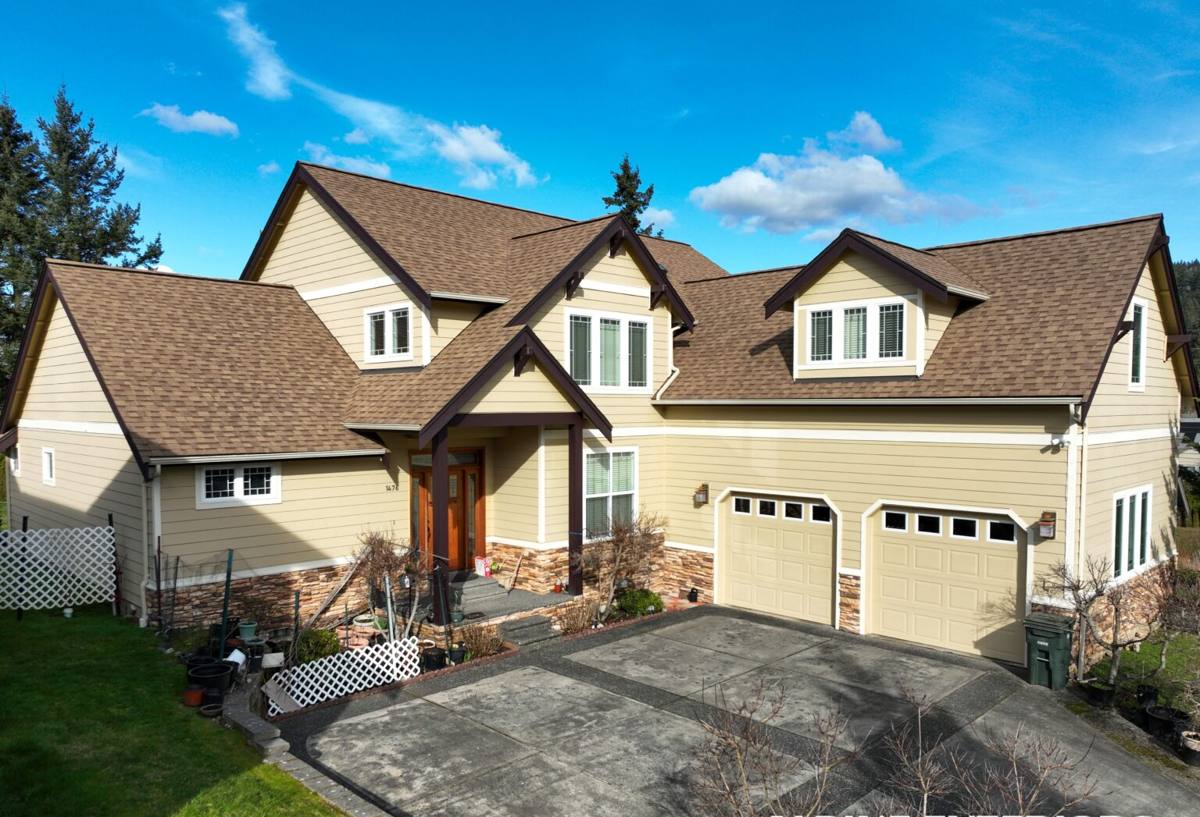
What Salt Air, Rain, and Moss Do to a La Conner Deck
Three things work against outdoor structures in La Conner, and they compound each other.
Salt Air and Metal Fatigue
Airborne salt off the channel accelerates corrosion on anything metal — fasteners, joist hangers, railing brackets, structural screws. On a standard-grade deck, that shows up as rust streaks bleeding through the decking, weakened hardware, and eventually loose railings or squeaking boards where fasteners have started to fail. It's a slow process, which is exactly why it gets ignored until it's a real repair.
Driving Rain and Moisture Intrusion
Skagit County gets a genuinely wet season, and La Conner's exposure to weather coming off the water means rain often arrives at an angle, not straight down. That drives moisture into ledger board connections, under poorly flashed rim joists, and into any end-cut on a composite board that wasn't capped or sealed. Composite decking resists rot far better than wood, but the substructure underneath it — the part nobody sees — is still almost always dimensional lumber, and that lumber needs the same protection it would on any wet-climate build.
The Long Moss Season
Shaded, damp decks in this region grow moss and algae for a good chunk of the year, not just in deep winter. On composite boards this is mostly cosmetic — moss doesn't rot composite the way it rots wood — but it does make surfaces slick, and buildup in the grooves of a grooved-edge board is genuinely harder to clean out than on a solid or hidden-fastener profile. Deck orientation, gaps between boards, and how much sun the deck actually gets all factor into how much moss maintenance a homeowner is signing up for.
What a Correct Composite Deck Build Actually Involves
Composite decking is a forgiving material on the surface, but the parts you don't see determine whether the deck lasts 10 years or 30.
Framing and Ventilation
Composite boards need proper joist spacing — typically closer than what's fine for wood, especially on angled or picture-frame board patterns — and the framing underneath needs airflow. A deck built low to grade with no ventilation traps moisture against the joists, and in a climate as wet as this one, that turns into rot in the substructure even though the decking on top looks fine. We build in ventilation gaps and grade clearance as standard practice, not an upsell.
Fasteners and Hardware
Given the salt air exposure, hardware grade isn't optional here. We use stainless or coated fasteners and corrosion-resistant joist hangers and structural connectors rated for the load and the environment, not the cheapest hardware that happens to fit. Hidden fastener clip systems also reduce the number of exposed metal points on the deck surface, which helps both appearance and long-term corrosion resistance.
Flashing and Ledger Attachment
Where a deck attaches to the house, the ledger board connection is the single most common source of hidden water damage on any deck, anywhere. Proper flashing — installed correctly, not just present — keeps driving rain from working its way behind the ledger and into the house's rim joist. This is a detail that's invisible once the deck is finished, which is exactly why it's worth confirming your contractor does it right rather than takes a shortcut.
Board Selection: Grooved, Solid, or Capped
Composite boards come in grooved-edge (for hidden fastener systems), solid-edge, and fully-capped profiles that wrap the board on all sides versus capped on three sides only. For a shaded or partially shaded La Conner lot with real moss exposure, we generally steer homeowners toward fully-capped boards with tighter board spacing and away from deep-grooved profiles that trap debris and moisture. It's a small spec difference that changes how much scrubbing a deck needs every spring.
Composite vs. Wood vs. PVC: How They Hold Up Here
| Material | Moisture & Salt Air Behavior | Moss/Algae Maintenance | Typical Lifespan |
|---|---|---|---|
| Pressure-Treated Wood | Absorbs moisture, prone to warping and rot without consistent sealing | Needs regular cleaning and re-sealing to resist growth | 10-15 years with upkeep |
| Composite Decking | Doesn't absorb water or rot; hardware and substructure still need marine-grade attention | Cosmetic buildup only; cleans off, doesn't damage the board | 25-30+ years, often warrantied |
| PVC/Cellular PVC | Fully moisture-proof but can be more brittle in temperature swings and shows scratches more | Similar to composite; smooth surface sheds moss faster | 25-30+ years |
For most La Conner homes, composite hits the right balance — genuinely low-maintenance, doesn't rot from the moisture exposure, and doesn't carry the higher material cost or the more particular installation tolerances that full PVC systems can require. We install PVC decking when a homeowner specifically wants it, but we don't push it as an upgrade over composite for most projects here — it's a different trade-off, not a strictly better one.
How We Approach a La Conner Composite Deck Project
- On-site assessment. We look at grade, drainage, sun/shade exposure, and the condition of any existing structure before quoting anything.
- Design and board selection. We walk through board profile, color, and layout with an eye toward how much sun and moisture that specific spot on your property actually gets.
- Permitting. Most deck projects in Mount Vernon and unincorporated Skagit County require a permit, particularly for attached decks or anything above a certain height — we handle that process.
- Demolition and structural prep. If we're replacing an old deck, we assess the ledger and framing underneath rather than just building over it.
- Framing with corrosion-resistant hardware and proper ventilation clearance.
- Decking installation with attention to board spacing, expansion gaps, and clean cuts sealed or capped at every exposed end.
- Railing, stairs, and fascia installed to match the decking system and hardware grade.
- Final walkthrough covering how to clean and maintain the deck through the wet season.
What Drives the Cost of a Composite Deck
| Factor | Why It Matters |
|---|---|
| Square footage and shape | Multi-level decks, angled patterns, and picture-framing add labor and material waste |
| Board tier and brand | Entry-level composite vs. premium capped composite carries a real price spread |
| Substructure condition | Replacing rotted framing or a compromised ledger adds cost but isn't optional if it's found |
| Railing system | Composite or metal railing systems cost more than basic wood but match the low-maintenance goal |
| Site access and grade | Sloped or hard-to-access La Conner lots near the water can add framing or footing work |
| Permitting requirements | Height, guardrail code, and attachment method can all affect scope |
Composite decking generally costs more upfront than pressure-treated wood and less than full PVC systems, but the gap narrows once you account for the sealing, staining, and repair work wood needs every few years just to stay presentable in this climate. We give straight, itemized quotes rather than a single lump number, so you can see what's driving the price.
Maintaining a Composite Deck Through Skagit County's Wet Season
Composite decking is genuinely low-maintenance, not zero-maintenance. In a climate with a long moss season, a little seasonal attention keeps a deck looking good and safe underfoot for its full lifespan.
- Sweep debris off the deck regularly — trapped leaves and needles hold moisture against the board surface
- Rinse or wash the deck a few times a year with a soft-bristle brush and mild soap; avoid pressure washers on composite unless set to a low, wide-fan setting
- Check railing posts and fasteners annually for movement, especially in the first few years after install
- Keep gutters and downspouts near the deck clear so runoff isn't concentrating water onto or under the structure
- Trim back overhanging vegetation that keeps sections of the deck shaded and damp longer than the rest
- Address any moss buildup before it gets thick — it's far easier to clean early than to scrub out of grooved boards later
Why Hire a Crew That Already Works in La Conner
A lot of deck problems in this area trace back to a build that would have been fine somewhere drier — standard hardware, minimal ventilation, a ledger flashed to a generic spec rather than the local weather. We build decks throughout Mount Vernon and the surrounding Skagit County communities, and the La Conner jobs get treated with the salt air and moisture exposure factored in from the framing stage, not patched in afterward. That's not a marketing point, it's just what holds up out here.
If you're weighing composite decking for a La Conner property, we're happy to walk the site, talk through board options, and give you a straight estimate — no pressure, no upsell script, just what the job actually needs.