 Mount Vernon
 Composite Decking in Kulshan Ridge
Kulshan Ridge sits in a part of Mount Vernon where the weather doesn't do decks any favors. Between the marine air moving in off the Skagit River valley and Puget Sound, long stretches of steady rain from fall through spring, and the shade and dampness that let moss take hold on almost any horizontal surface, an outdoor deck here works harder than it would in a drier inland climate. Composite decking has become the material of choice for a lot of homeowners in this neighborhood because it holds up to that pattern better than wood does, but only when it's installed correctly for the conditions it's actually going to face.
This page is about that one job — composite decking, built for Kulshan Ridge homes, done by a crew that already knows what this stretch of Skagit County throws at an exterior surface year after year.
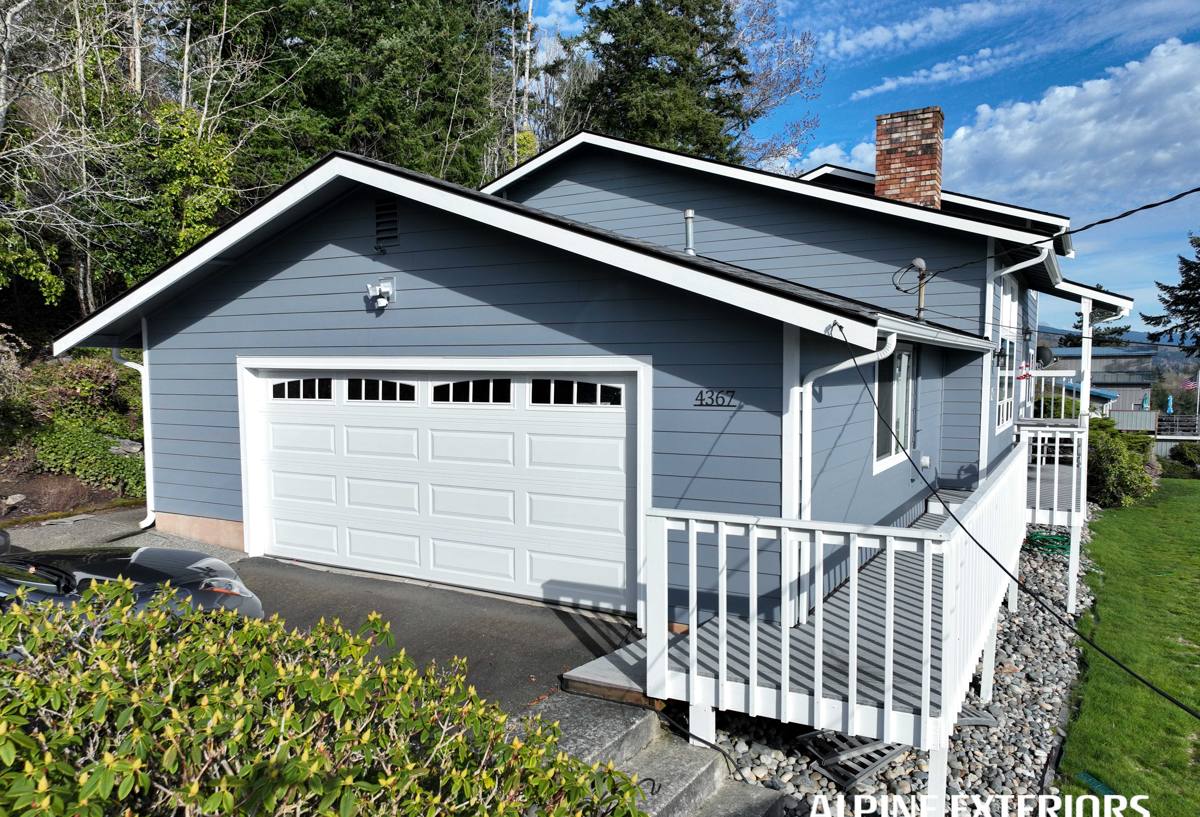
What Kulshan Ridge's Climate Does to a Deck
A few specific conditions matter more here than in a lot of other places:
- Driving rain: Wind-driven rain doesn't just fall straight down — it gets pushed sideways under railings, into ledger connections, and along the edges of boards. Any gap in flashing or fastening becomes a slow leak point.
- Salt-influenced air: Proximity to the Sound and tidal river water means metal hardware, fasteners, and railing components corrode faster than they would further inland. Cheap or mismatched fasteners fail early.
- Extended moss and algae season: Mount Vernon's shoulder seasons run long and damp. Any deck surface that holds moisture — low spots, tight board spacing, shaded corners — will grow moss and algae well before summer, and that growth makes boards slick and starts breaking down surface materials over time.
- Freeze-thaw swings: Skagit County doesn't get brutal winters, but it does get enough freeze-thaw cycling to open up small cracks in framing connections and push fasteners if the substructure wasn't built with movement in mind.
None of this makes composite decking a bad choice for Kulshan Ridge — it makes it a good one, if it's installed with these specific conditions in mind rather than by a generic checklist.
Why Composite Makes Sense Here
Composite decking is a blend of wood fiber and plastic, usually with a protective cap layer on the better products. The appeal for a climate like ours comes down to a few practical points:
It doesn't absorb water the way wood does
Real wood decking soaks up rain, swells, dries, and shrinks in a repeating cycle. Over years, that cycle checks and splits the boards and loosens fasteners. Capped composite resists water absorption at the surface, which matters a lot in a climate where the boards rarely get a long dry stretch to fully recover.
It resists rot, not just weathering
Wood decking in a shaded, damp yard is a rot risk no matter how well it's finished. Composite doesn't feed fungal growth the way untreated or even pressure-treated wood fiber can once the surface finish wears through.
It doesn't need annual refinishing
A wood deck in this climate realistically needs cleaning, brightening, and re-sealing on a yearly or every-other-year schedule to keep water out. Composite still needs regular cleaning — more on that below — but it doesn't depend on a fresh coat of sealer to keep performing.
What a Correct Composite Deck Install Involves
The board itself is only part of the job. Most composite deck problems we get called out to fix in this area trace back to the substructure and detailing, not the decking material.
Ledger and house connection
Where the deck attaches to the house is the single most common leak point on any deck, composite or wood. Proper step flashing, ledger flashing, and a gap or membrane behind the ledger board are what actually keep driving rain from working its way into the rim joist and wall framing. This is not optional in a climate that gets sustained wind-driven rain.
Joist protection
Composite boards are more moisture-resistant than wood, but the wood or engineered joists underneath still need protection. Joist tape over the top of each joist sheds water away from fastener penetrations and slows rot in the framing — framing failure is what actually brings a deck down, long after the boards themselves still look fine.
Drainage and airflow underneath
A deck built tight to the ground or without airflow underneath stays damp longer after every rain, which speeds up moss growth on the surface and mildew underneath. Proper joist height, ventilation, and in some cases a drainage system underneath keep the whole structure drying out between storms instead of staying saturated through the wet months.
Board spacing and fastening
Composite boards expand and contract with temperature more than people expect. Spacing gaps that are too tight lead to buckling; gaps that are too wide collect debris and moss. Hidden fastener systems, installed to the manufacturer's spacing tolerances, keep the surface flat and keep water moving off the deck instead of pooling around exposed screw heads.
Railing and hardware
Given the salt-influenced air here, we spec stainless or coated hardware on railing posts and connections rather than standard fasteners that will streak and corrode within a few seasons.
Composite vs. Wood vs. PVC — Honest Trade-Offs
| Material | Upfront Cost | Maintenance | How It Handles Kulshan Ridge's Climate |
|---|---|---|---|
| Pressure-treated wood | Lowest | Annual cleaning, periodic sealing/staining | Absorbs rain readily; needs consistent upkeep to resist rot and moss staining |
| Capped composite | Mid to upper-mid | Periodic surface cleaning, no sealing | Resists moisture absorption and rot well when substructure is built correctly |
| Uncapped composite | Mid | More cleaning, can fade/stain over time | More moisture-resistant than wood but more prone to surface staining than capped boards |
| PVC/cellular decking | Highest | Low | Very water-resistant, but can feel less natural underfoot and shows scratches more |
For most Kulshan Ridge homeowners, capped composite hits the best balance of upfront cost, low maintenance, and long-term durability against this climate. We'll walk through the trade-offs honestly based on your budget and how the space gets used.
Cost Factors for a Composite Deck
| Factor | Why It Affects Price |
|---|---|
| Deck size and shape | More cuts, angles, and picture-framing add labor time |
| Substructure condition | Reusing sound existing framing costs less than rebuilding it |
| Height and access | Elevated decks need more structural work and safety considerations |
| Railing type | Composite or metal railing systems cost more than basic wood rail |
| Board tier | Entry-level composite vs. premium capped lines carry a real price gap |
| Drainage/under-deck systems | Adding a dry space below increases material and labor cost |
We don't quote composite decking off a square-footage rule of thumb pulled from a different climate — every estimate is based on what your specific site and structure actually need.
Living With a Moss Season This Long
No decking material is moss-proof if it stays wet and shaded long enough, and Mount Vernon's moss season runs longer than a lot of other parts of the state. What changes with a correctly installed composite deck is how much that moss actually damages the material versus just sitting on the surface.
- Rinse and sweep debris off the deck regularly through fall and winter so organic matter doesn't sit and feed moss growth
- Use a soft-bristle brush and a composite-safe cleaner on shaded or slow-drying areas a couple times a year
- Keep nearby vegetation trimmed back so more light and air reach the deck surface
- Check that gaps between boards stay clear so water keeps draining through rather than pooling
- Avoid pressure washing at close range or high pressure, which can damage the cap layer on composite boards
Signs Your Deck Needs a Closer Look
- Soft or spongy spots underfoot, especially near the house connection
- Persistent moss or dark staining that comes back within weeks of cleaning
- Rust streaking around fasteners or railing posts
- Boards that have visibly cupped, bowed, or gapped unevenly
- Standing water anywhere on the surface after rain has stopped
Why Hiring a Crew That Already Works Kulshan Ridge Matters
A composite deck installed exactly to the manufacturer's spec sheet can still fail early in this climate if the crew didn't account for local conditions — wind-driven rain direction, how much shade a given lot gets, or how long moisture actually sits on a north-facing deck in Skagit County compared to a south-facing one elsewhere. A crew that works this neighborhood regularly has already seen which details matter here: ledger flashing that actually holds up to sideways rain, fastener choices that don't corrode in the salt-influenced air, and framing built to shed water instead of trap it.
That local pattern recognition is the difference between a deck that looks right on installation day and one that's still performing correctly five and ten years in.
Our Process
- On-site assessment of the deck area, existing structure if applicable, sun/shade exposure, and drainage
- Honest walkthrough of composite options and trade-offs for your budget and how you'll use the space
- Detailed written estimate covering substructure work, flashing, decking, railing, and hardware
- Proper build sequence — flashing and framing first, joist protection, then decking and railing to manufacturer spec
- Final walkthrough covering care and cleaning specific to our climate
If you're planning a composite deck in Kulshan Ridge, we're happy to take a look and give you a straightforward, no-pressure estimate. Use the form below to get started.