 Mount Vernon
 Why Downtown Mount Vernon Siding Takes a Beating
Downtown Mount Vernon sits low in the Skagit River valley, close enough to the Salish Sea that homes here deal with a mix of weather stresses most inland Washington towns never see. Salt-laden air moves in off the water and slowly attacks anything not built to handle it — fasteners corrode, paint chalks and fades faster, and cheap trim starts showing rust streaks within a few years. Layer on top of that the driving, wind-pushed rain that comes through the valley in fall and winter, and you've got moisture finding every gap, seam, and nail hole a siding job left exposed.
Then there's moss. Skagit County's long, wet, mild-temperature stretch from October through April is close to ideal moss-growing weather, and it doesn't stay on the roof — it colonizes north-facing siding, trim, and anywhere shade and moisture linger. Moss holds water against the wall surface for months at a time. On a material that can't handle sustained moisture contact, that's a slow path to rot, delamination, or paint failure. On a home in Downtown Mount Vernon, siding isn't cosmetic — it's the one system standing between that combination of salt, rain, and moss and your framing.
What Downtown Mount Vernon's Housing Stock Needs
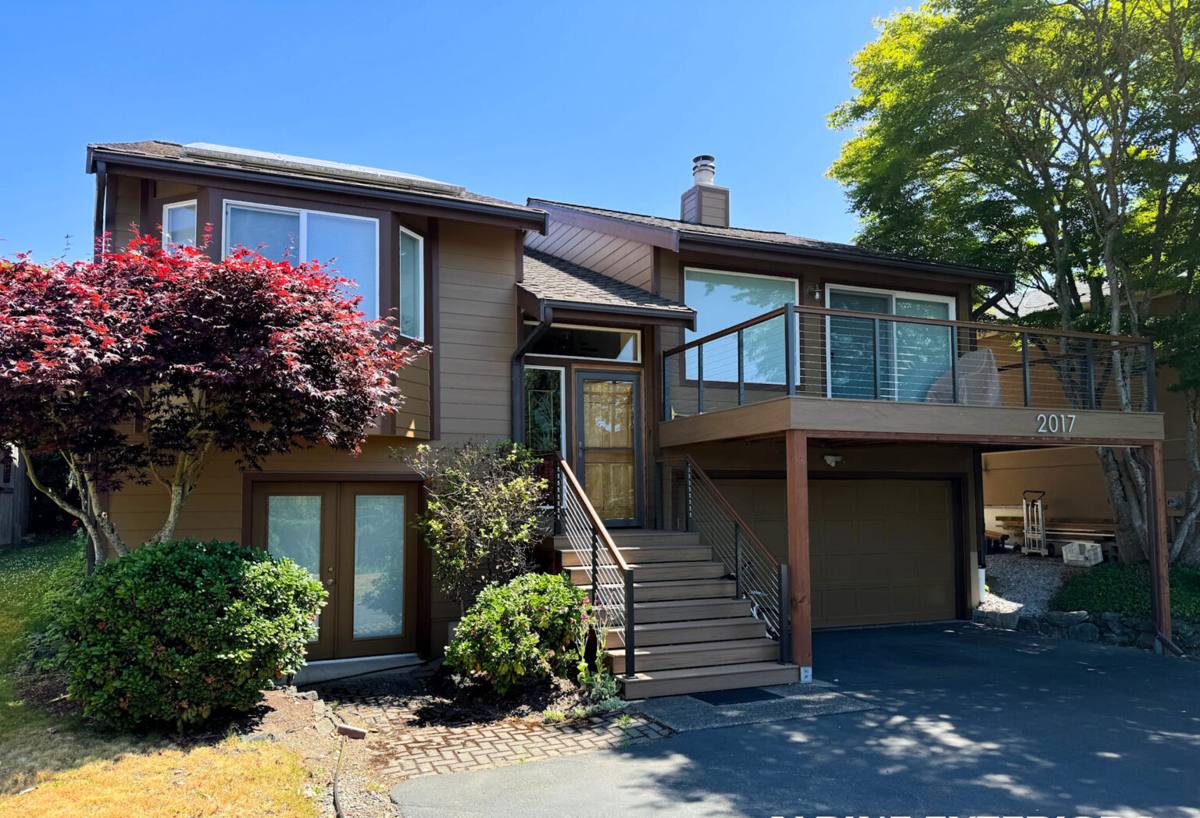
Downtown Mount Vernon has a mix of older homes and newer infill, many with siding that was never really matched to this climate to begin with — vinyl that's gone brittle and faded, old wood or hardboard siding showing soft spots at the bottom courses, or siding that was installed without proper flashing details around windows and trim. We don't guess at what's underneath; every job starts with an honest look at the wall assembly, not just the visible siding.
What holds up here has to do three things well: shed wind-driven rain without relying on caulk alone, resist moisture absorption at the bottom edges and cut ends where water actually gets in, and keep its finish and color without chalking or fading in a few short years of coastal sun and rain cycles. That's the standard we hold every Downtown Mount Vernon installation to.
Why We Only Install James Hardie
We standardized on James Hardie fiber cement for every siding job we do, including here in Downtown Mount Vernon, and we don't install vinyl, LP SmartSide, Cemplank, Allura, primed spruce, or cedar. That's not a marketing line — it's a decision built around what actually survives this climate.
- Non-combustible core — fiber cement doesn't feed a fire the way wood-based products can, which matters for insurance conversations as much as safety.
- Moisture-engineered product lines — Hardie's HZ5 formulation is engineered for wetter, harsher climate zones like the Pacific Northwest, unlike a one-size-fits-all product.
- ColorPlus factory finish — baked-on color that resists fading and chalking far longer than field-applied paint, which matters when your walls face years of salt air and rain.
- Dimensional stability — fiber cement doesn't swell, warp, or cup the way engineered wood products can when moisture gets past the surface.
- Strong transferable warranty — backed by a manufacturer with a long track record, which carries real weight if you sell the home.
We're not going to tell you every other product is worthless — vinyl is cheap and low-maintenance in the right setting, and engineered wood has its fans. But installed on a Downtown Mount Vernon home facing salt air, driving rain, and a long moss season, those products carry trade-offs in moisture behavior, maintenance burden, or long-term appearance that we're not willing to put our name behind. Hardie is what we've seen hold up, and it's the only thing we install.
What a Correct Installation Actually Involves
Hardie siding fails early almost exclusively because of installation mistakes, not product defects. The material is only as good as the details behind it, especially in a climate that gives water every chance to find a way in.
The details that matter most
- Proper weather-resistive barrier and flashing at every window, door, and penetration — this is what actually stops water, not caulk
- Correct clearance between the bottom of the siding and the ground, deck, or roofline (typically a minimum of 6 inches, more where splashback is likely)
- Fastener placement per Hardie's published fastening schedule — over-driven or misplaced nails crack boards and create entry points
- Properly sealed and back-primed cut ends, especially on butt joints and corners, so raw edges aren't left exposed to moisture
- Rain-screen or drainage plane detailing so any water that does get behind the siding has somewhere to go
- Caulking used as a secondary defense, not the primary moisture barrier
Skip any one of these on a Downtown Mount Vernon home and you're not fixing a cosmetic issue in five years — you're looking at rot, mold, or a full re-side.
Our Process for Downtown Mount Vernon Jobs
Every project follows the same sequence, whether it's a small accent wall or a full re-side.
- On-site assessment — we look at the existing siding, sheathing condition, and any moisture or moss damage already present before quoting anything.
- Product and color selection — matched to your home's exposure (north-facing walls that hold moss and shade get different attention than south- or west-facing walls that take the brunt of driving rain).
- Tear-off and sheathing check — we don't cover up rot or soft sheathing; if we find it, we address it before new siding goes up.
- Weather barrier and flashing installation — the part that determines whether the job lasts 10 years or 40.
- Hardie installation to manufacturer spec — correct fastening, clearances, and joint treatment throughout.
- Final walkthrough — trim, caulking, and touch-up finished and reviewed with you before we call it done.
Because we work regularly in and around Mount Vernon, we already know what Skagit County permitting and inspection expects, and we plan around the wet-season scheduling realities of working outdoors here — we're not learning the local conditions on your project.
Cost Factors for a Downtown Mount Vernon Home
| Factor | Why It Moves the Price |
|---|---|
| Home size and wall complexity | More corners, gables, and trim details mean more cutting, flashing, and labor time |
| Tear-off scope | Removing old vinyl vs. old wood vs. old fiber cement changes disposal and prep time |
| Sheathing condition | Rot or moisture damage found underneath adds repair work before siding can go up |
| Hardie product line | Lap siding, panel, and shingle-style profiles carry different material and labor costs |
| ColorPlus vs. field paint | Factory-finished color costs more upfront but avoids a repaint cycle down the road |
| Trim and accessory work | Fascia, soffit, and window trim replacement often gets bundled into a re-side |
We give straightforward, itemized estimates rather than a single vague number — you should know what you're paying for and why.
Moss, Maintenance, and What to Watch For
Correctly installed Hardie siding is low-maintenance, but "low" isn't "none," especially with Skagit County's moss season working against you. A simple annual rinse-down (not pressure-washing directly into seams) and trimming back vegetation or branches that shade north-facing walls goes a long way. Watch for hairline cracking at butt joints, caulk pulling away from trim, or dark streaking that could be moss or mildew getting a foothold — catching these early is a five-minute fix, not a siding replacement.
Signs your current siding is past saving
- Soft or spongy spots when you press on the bottom courses
- Persistent moss or dark staining that returns within weeks of cleaning
- Visible gaps, warping, or bowing along seams and corners
- Paint that's chalking heavily or peeling in sheets rather than fading evenly
- Interior signs — musty smell, staining, or soft drywall near exterior walls
Why Hiring Local Matters Here
A crew that's already worked Downtown Mount Vernon knows which walls take the worst of the driving rain, which lots hold shade long enough to grow moss year-round, and how the salt air off the Sound accelerates fastener corrosion if the wrong hardware gets used. That's the difference between a generic install and one actually built for this address. We stand behind our work with follow-up if something needs attention, and we're not disappearing to the next county over once the job's done.
If your Downtown Mount Vernon home's siding is showing its age, or you're planning ahead before the next wet season hits, we'll come take an honest look and walk you through what we find — no pressure, no upsell on a product we wouldn't put on our own home. Reach out below for a free estimate.