 Mount Vernon
 Siding That Has to Work in Sedro-Woolley's Climate, Not Just Look Good on Day One
Sedro-Woolley sits in the Skagit Valley, close enough to the water that damp coastal air rides up the valley on a regular basis, and far enough inland that homes also catch heavier fog and standing moisture off the river bottoms and surrounding farmland. That combination is hard on exterior materials. Siding here doesn't just need to survive an occasional storm — it needs to hold up to months of low sun, high humidity, and slow-drying surfaces every year. When we talk with homeowners in this area about siding, the conversation almost always comes back to the same three things: moisture that lingers instead of drying off quickly, driving rain that gets pushed sideways into wall assemblies during winter systems, and a moss season that runs longer here than it does in drier parts of the state.
This page is about one service, in one place: installing James Hardie fiber cement siding on homes in and around Sedro-Woolley. We're not going to cover every siding material on the market or every neighborhood in Skagit County. We're going to explain what this climate actually does to a wall, what a correctly installed fiber cement job looks like, and why the details matter more here than they would in a milder, drier region.
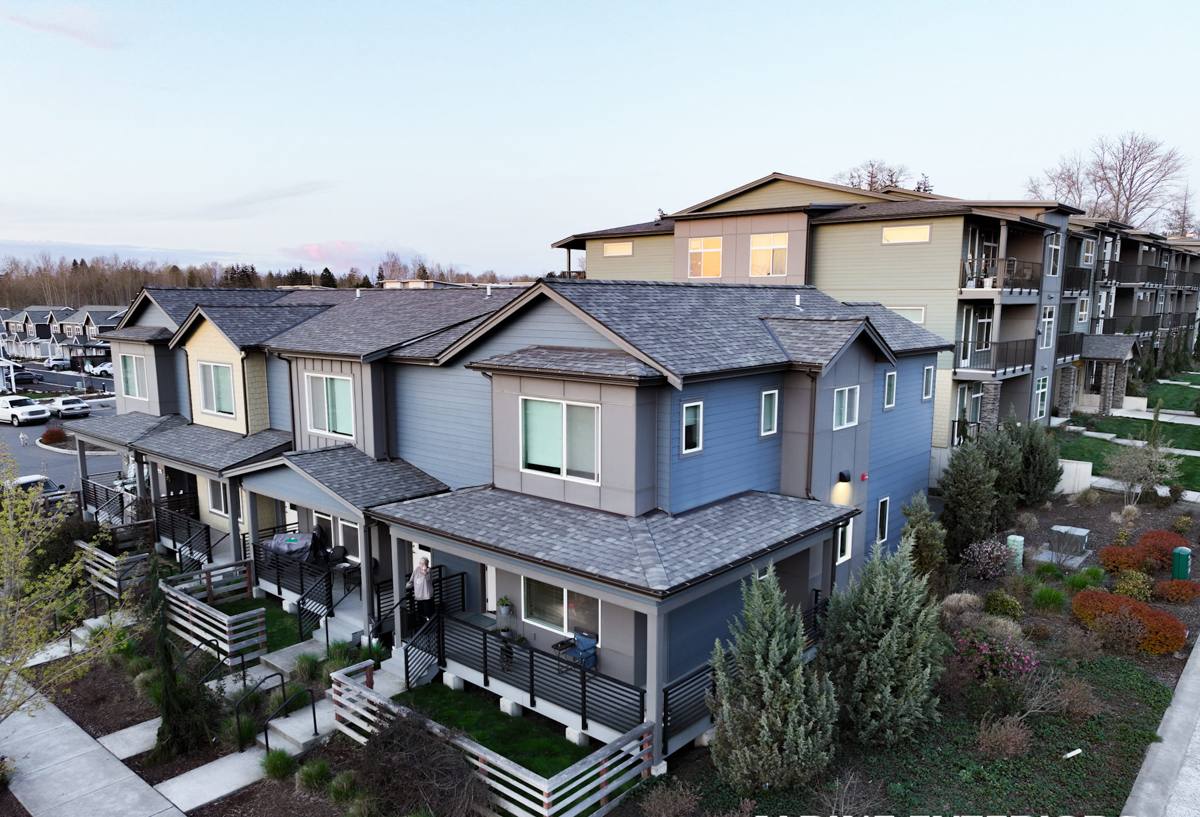
Why We Only Install James Hardie Fiber Cement
We don't install vinyl, LP SmartSide, primed wood, cedar, or other fiber cement brands. That's not a marketing line — it's a standard we hold ourselves to because of what we've seen happen to siding in Western Washington's wet, moss-prone climate over time. James Hardie's fiber cement is cement, sand, and cellulose fiber, engineered specifically for regional moisture exposure through its HZ5 product line built for the Pacific Northwest. It doesn't feed mold or rot the way wood-based products can when they stay damp for extended periods, and it holds paint and factory finish far longer than most alternatives because it doesn't expand and contract with moisture the way wood does.
The factory-applied ColorPlus finish is baked on under controlled conditions and backed by its own finish warranty, separate from the substrate warranty on the siding itself. That matters in a place like Sedro-Woolley, where a field-applied paint job on lesser materials tends to show its age within a handful of years under repeated wet-dry cycling. We'd rather install one product correctly, to spec, than offer a menu of options we don't fully stand behind.
What Skagit Valley Weather Actually Does to a Wall
Driving Rain
Winter storms moving through the valley often come with sustained wind, and that pushes rain sideways into siding joints, corners, and anywhere flashing is missing or undersized. A siding system that isn't detailed for driving rain will eventually let water track behind the cladding, even if the surface material itself is fine.
Moss and Prolonged Dampness
Shaded elevations, tree-lined lots, and the valley's slower drying times all add up to a longer moss season than you'd see east of the mountains. Moss holds moisture against a surface far longer than open air would, and on wood-based siding that constant dampness is often where rot gets its start. Fiber cement doesn't feed moss growth the way wood fiber can, but moss can still take hold on any siding surface where dirt and organic debris accumulate — the material matters less here than proper drainage and airflow behind the cladding.
Salt-Influenced Air
Weather systems moving up the Skagit Valley from the Sound carry a degree of salt-laden moisture with them, more noticeable on some lots than others depending on exposure and elevation. Over years, that moisture cycling stresses fasteners, caulking, and paint film. It's one more reason we spec corrosion-resistant fasteners and won't cut corners on flashing details, even on a straightforward job.
What a Correct Fiber Cement Installation Involves
Water Management Behind the Siding
Before a single board goes up, the wall needs a weather-resistant barrier and correctly lapped flashing at every window, door, and penetration. Most siding failures we get called out to inspect aren't a problem with the siding material — they're a flashing or house-wrap detail that let water in behind it. In a climate that gets as much sustained wet weather as Skagit County, this step isn't optional or something to rush.
Proper Clearances and Fastening
James Hardie specifies minimum clearances from grade, roof lines, decks, and other siding-to-trim transitions, along with fastener spacing and type. Skipping these clearances is one of the most common ways we see fiber cement siding fail prematurely — not from a defect in the material, but from water getting trapped where it wasn't supposed to reach in the first place.
Joint and Seam Treatment
Every butt joint, corner, and penetration needs to be treated correctly — sealed where Hardie calls for sealant, left to drain where it calls for a rain-screen gap. Get this wrong and you've built a place for water to collect behind the very product that was supposed to keep it out.
Factory Finish Integrity
Cutting, nailing, and handling ColorPlus boards without touching up exposed edges or over-driving fasteners compromises the factory finish. A clean installation protects the finish warranty; a careless one voids the protection homeowners are paying for.
Choosing the Right Hardie Product for Your Sedro-Woolley Home
James Hardie makes several profiles, and the right one depends on your home's architecture and exposure, not just personal taste.
| Product Line | Best Suited For | Notes for This Climate |
|---|---|---|
| HardiePlank Lap Siding | Most single-family homes, traditional and farmhouse styles common in the valley | Widest color and texture range; most common choice we install locally |
| HardiePanel Vertical Siding | Modern builds, accent walls, gable ends | Needs correctly detailed battens and drainage plane for this rainfall volume |
| HardieShingle | Craftsman and cottage-style homes | More labor-intensive install; worth it for the right architectural style |
| HardieTrim | Corners, fascia, window and door casing | Pairs with any of the above; keeps trim from being the weak point |
Our Process, Start to Finish
- On-site evaluation of your existing siding, wall assembly, and problem areas specific to your lot's sun and rain exposure
- A written estimate that spells out product line, color, and scope — no vague allowances
- Removal of old siding and inspection of sheathing for any hidden moisture damage before we cover it back up
- Installation of weather-resistant barrier, flashing, and any needed sheathing repairs
- Fiber cement installation to James Hardie's published specifications, including clearances and fastening schedule
- Final walkthrough with the homeowner before we consider the job complete
Cost Factors for Fiber Cement Siding in Sedro-Woolley
We don't publish blanket price-per-square-foot numbers because they mislead more than they help — the real cost drivers are specific to your house. Broadly, expect fiber cement siding to run in the mid-to-upper range compared to vinyl, reflecting both the material and the labor involved in installing it correctly.
| Factor | Why It Moves the Price |
|---|---|
| Existing wall condition | Hidden rot or moisture damage found during tear-off adds repair scope before new siding goes up |
| Home shape and trim detail | More corners, gables, and window/door openings mean more cutting, flashing, and labor hours |
| Product line and profile | Shingle and vertical panel installs generally take longer than straight lap siding |
| Color selection | Factory ColorPlus finishes vary in cost by line; some deep tones cost more than lighter standard colors |
| Accessibility | Multi-story walls, steep grades, or tight lot access add time and equipment cost |
Maintenance Checklist for Hardie Siding in Skagit County
Fiber cement is low-maintenance compared to wood, but "low" isn't "none," especially given how long moss season runs here.
- Rinse siding annually with a garden hose to clear pollen, dirt, and organic buildup before it can hold moisture
- Keep shrubs and tree limbs trimmed back from siding to maintain airflow and sun exposure on shaded walls
- Inspect caulking at joints, trim, and penetrations yearly; recaulk before gaps open up, not after
- Check gutters and downspouts each fall so overflow isn't running down the siding face
- Watch for moss or algae starting on north-facing or shaded walls and address it early with a gentle cleaning, not pressure-washing directly into joints
- Touch up any chips or scrapes near the finish edge promptly to protect the ColorPlus warranty
Why Hiring Local Experience Matters
Fiber cement installation isn't forgiving of shortcuts anywhere, but the margin for error shrinks in a climate that stays wet as long as Skagit County's does. A crew that already works in Sedro-Woolley knows which elevations on a typical lot take the worst driving rain, where moss tends to establish first, and how to detail flashing so it holds up through a full Pacific Northwest winter, not just a dry summer inspection. That local pattern recognition is the difference between a siding job that looks right at handoff and one that still performs correctly ten years later.
If you're weighing a siding replacement or new install in Sedro-Woolley, we're happy to walk your property, look at what your home is actually dealing with, and put together a straightforward, no-pressure estimate — no obligation, just an honest look at what your house needs.