 Mount Vernon
 Board & Batten Siding for East Mount Vernon Homes
East Mount Vernon has a mix of newer construction and older farmhouse-style homes, and board and batten siding shows up on both. It's a natural fit for the area's architecture — the vertical lines read as classic Skagit Valley farmhouse or clean modern build, depending on the trim and color choices around it. But board and batten is also one of the least forgiving siding profiles when the wrong material or the wrong installer is behind it. The vertical seams, the batten-over-board joints, and the flat panel faces all give water more ways to find a way in if the details aren't right.
We install board and batten in East Mount Vernon regularly, and we approach it as a system — substrate, flashing, fasteners, and finish — not just a look. This page covers what that means in practice, and what to expect if you're considering it for your home.
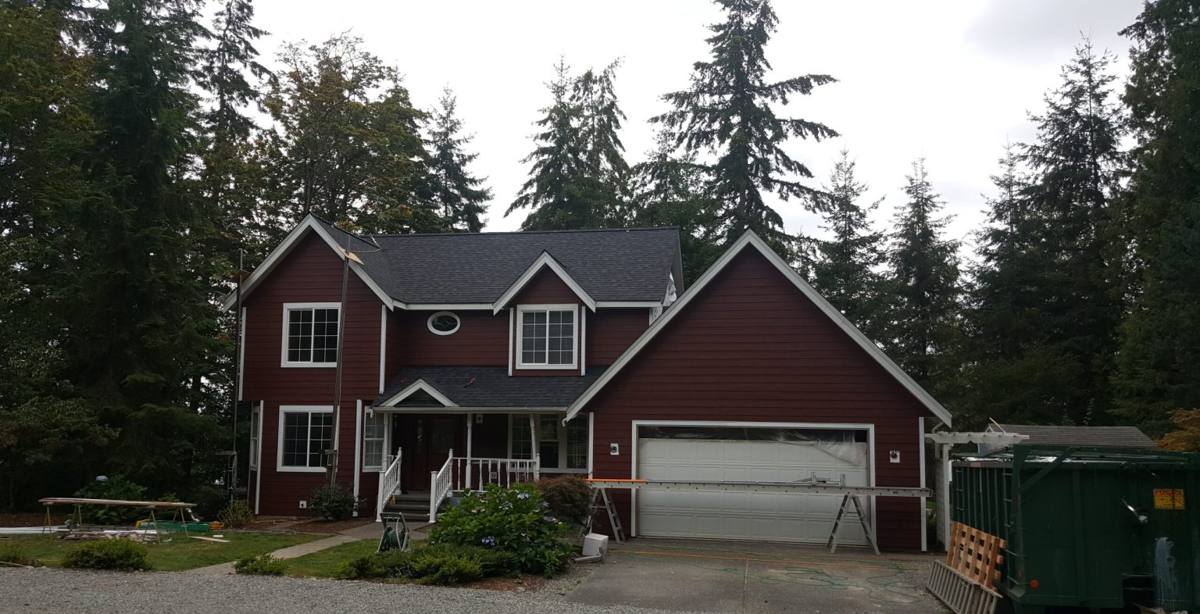
Why the Local Climate Matters for This Profile
Mount Vernon sits in the Skagit River valley, close enough to Puget Sound and the Salish Sea that salt-laden air is a real factor, especially on west- and south-facing walls that catch prevailing weather. Combine that with the long stretch of driving rain we get from fall through spring, and a moss season that can run most of the year on shaded elevations, and you've got conditions that punish any siding product with weak points at its seams.
Board and batten has more vertical seams per square foot than lap siding does. Every batten strip covers a joint between boards (or simulates one), and every one of those joints is a place where wind-driven rain gets pushed sideways into the wall assembly if the gap, fastening, and water-resistive barrier underneath aren't handled correctly. In a drier climate that's a minor risk. Here, with sustained wet weather and salt air accelerating corrosion on fasteners and hardware, it's a real one.
What This Means for Material Choice
This is a big part of why we only install James Hardie fiber cement for board and batten work. Hardie's panel and batten systems are engineered specifically for the vertical-seam profile, with factory-primed or ColorPlus-finished faces that don't rely on field-applied paint to seal the surface. Fiber cement doesn't swell, cup, or rot at the seams the way wood-based or wood-adjacent products can when they take on repeated moisture. That matters more on a board and batten wall than almost any other profile, because there are simply more seams exposed to weather.
What a Correct Board & Batten Installation Involves
Board and batten looks simple from the curb — vertical boards, battens over the joints — but the assembly behind it does most of the work. Here's what we consider non-negotiable on every job:
- Weather-resistive barrier, installed correctly: A continuous WRB behind the siding, lapped shingle-style so water drains down and out rather than behind the barrier.
- Rainscreen gap: A drainage plane between the WRB and the siding so any moisture that gets past the outer layer can drain and the wall can dry. This is especially important in our climate, where walls rarely get a long dry stretch to fully dry out.
- Proper fastening: Corrosion-resistant, code-compliant fasteners driven at the correct spacing and depth — not overdriven, which crushes fiber cement and opens a path for water.
- Batten spacing and fastening into structure: Battens need to land over solid backing, not just decoratively over the board joint, so the whole assembly holds up to wind load off the Sound and valley gusts.
- Flashing at every penetration: Windows, doors, hose bibs, light fixtures, vents — every penetration through a board and batten wall needs its own flashing detail, since there's no lap-siding overlap doing incidental water management for you.
- Clearance at grade and roof lines: Board and batten run down to a foundation or deck needs proper clearance and kickout flashing at roof-wall intersections to keep splash-back and roof runoff from feeding directly into the bottom of the panels.
Skip any one of these and the siding can still look fine for a year or two. The failures we see on poorly installed board and batten in this region — soft spots at the base, staining under battens, paint failure at seams — usually show up two to five years in, once enough wet seasons have worked at a weak detail.
Moss, Algae, and North/Shaded Walls
East Mount Vernon has plenty of mature tree cover and lots of homes with shaded north or east elevations that stay damp longer after a rain. That's prime moss and algae territory. On board and batten, moss tends to establish first in the batten-to-board shadow line, where moisture sits and light doesn't reach.
James Hardie's ColorPlus finish is baked on at the factory and holds up better against sustained moisture and organic growth than field-applied paint, which can micro-crack over a few seasons and give algae and moss something to grip. It won't make a wall moss-proof — nothing does in this climate — but it reduces how fast the finish itself degrades, and it means a homeowner can wash the siding down without worrying about stripping paint in the process.
Simple Maintenance Habits That Help
- Rinse shaded and north-facing walls once or twice a year to knock back early moss and algae growth before it establishes.
- Keep gutters clear so overflow isn't running down the wall face, which is one of the most common causes of localized staining on board and batten.
- Trim back vegetation that's holding moisture against the siding or blocking airflow along a wall.
- Have caulking at trim and penetrations checked every few years — it's a five-minute inspection that catches small gaps before they become water intrusion.
Board & Batten Material Comparison
We get asked why we don't offer board and batten in other materials that are marketed for the look. Here's the honest comparison, focused on how each performs in exactly this climate — not on price alone.
| Material | Seam/Moisture Behavior in Our Climate | Finish Durability | Our Position |
|---|---|---|---|
| James Hardie fiber cement | Non-combustible, dimensionally stable, doesn't swell at seams with repeated wetting | ColorPlus factory finish resists fade and holds up to sustained moisture | What we install |
| Primed wood / spruce board and batten | Absorbs moisture at cut ends and seams; prone to swelling and rot without diligent upkeep | Field paint needs recoating on a shorter cycle, especially on wet-side walls | Not installed by us |
| Vinyl board and batten | Won't rot, but seams and panels can warp or gap with temperature swings; not a true rigid seam system | Color is through-body but can chalk and fade over time; limited repair options | Not installed by us |
| LP SmartSide / engineered wood | Better than raw wood but still an engineered wood core — edge swell is a known failure point if seams aren't perfectly sealed and maintained | Factory finish is decent but relies on field-caulked seams staying intact | Not installed by us |
We're not saying every one of these products fails on every home. We're saying that in a climate with this much sustained wet weather and salt exposure, we don't want our name on an installation where the long-term outcome depends on a homeowner keeping up with caulk and paint on a seam-heavy profile. Fiber cement removes that dependency.
Our Process for a Board & Batten Job in East Mount Vernon
1. On-Site Assessment
We look at wall orientation, existing moisture damage, roof-wall intersections, and how the current siding (if any) has held up. This tells us where extra flashing or drainage detail is needed before a single board goes up.
2. Substrate and WRB Prep
Any damaged sheathing gets addressed before it's covered up — we don't install new siding over a wet or compromised wall. Weather-resistive barrier and flashing go in next, with special attention to window and door openings.
3. Rainscreen and Fastening Layout
We set up the drainage gap and plan fastener and batten layout so everything lands on solid backing and follows Hardie's fastening specifications, which is what keeps the warranty valid and the wall performing correctly for the long run.
4. Installation
Boards and battens go up plumb and true, with correct reveal and spacing, proper caulking only where Hardie specifies it (not as a substitute for good flashing), and clean terminations at trim, corners, and roof lines.
5. Final Walkthrough
We walk the finished job with you, point out anything you should know for upkeep, and make sure every detail — corners, penetrations, base clearance — meets our standard before we call it done.
Why Hire a Crew That Already Works East Mount Vernon
Board and batten forgives almost nothing when it comes to installation quality, and a crew that's worked the specific conditions of this neighborhood — the mix of open, wind-exposed lots and shaded, tree-covered ones, the drainage patterns after heavy Skagit Valley rain events, the way salt air ages hardware near the Sound-facing sides of town — brings judgment that a crew unfamiliar with the area doesn't have going in. That shows up in small decisions: how much rainscreen gap to use on a particularly wet-facing wall, where to add extra flashing on a roof-wall intersection that catches more runoff than usual, which elevations need a heavier hand against moss.
It also means we know how our own past work in this area has held up. We're not guessing at how a Hardie board and batten installation performs in East Mount Vernon after five or ten years — we can point to it.
What to Check Before You Hire Anyone for Board & Batten
- Ask what weather-resistive barrier and rainscreen approach they use — "we caulk the seams well" is not a substitute for a drainage plane.
- Confirm they're installing to the manufacturer's published fastening and flashing specifications, not just "how we've always done it."
- Ask how they handle roof-wall intersections and penetrations specifically, since these are the most common failure points on a board and batten wall.
- Get clarity on warranty — both the material warranty and what's covered on labor if something goes wrong.
- Ask for a straightforward answer about why they use the material they use, and what they'd tell you not to install and why.
If you're weighing board and batten for a home in East Mount Vernon, we're glad to come take a look, walk the exterior with you, and give you a straightforward assessment — no pressure, no upsell, just what your home actually needs. Reach out for a free estimate using the form below.